
India News
The Wire served a ‘gag order’ against story on Amit Shah’s son

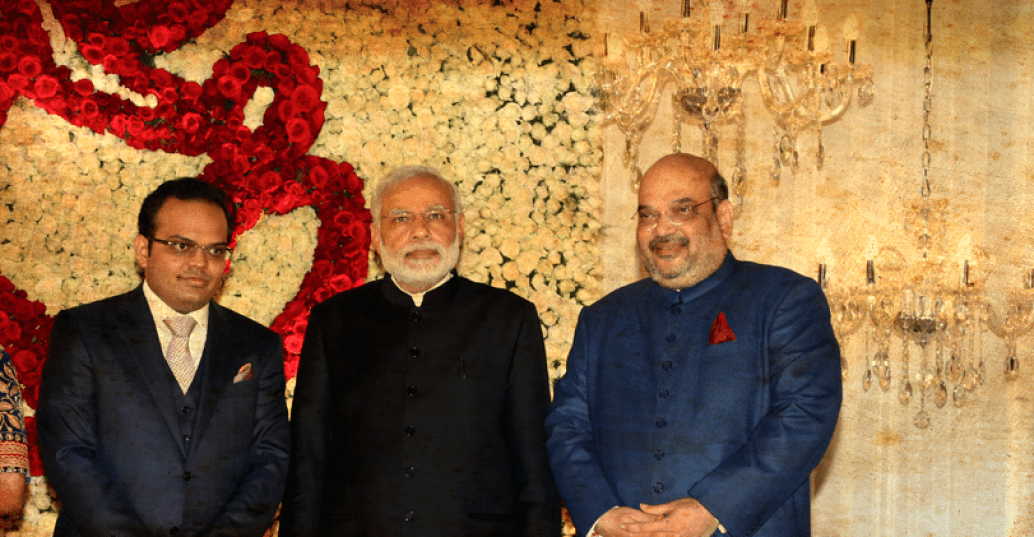
[vc_row][vc_column][vc_column_text]Ad-interim injunction has been reportedly issued by fourth Addl Senior Civil Judge, Ahmedabad Rural, The Wire says order will not go unchallenged
Online news portal The Wire has published what it calls a ‘gag order’ from the lawyer of Jay Amit Shah, son of BJP President Amit Shah. The “order”, of October 12, 2017, is purportedly of B.K. Dasondi, 4th Addl Senior Civil Judge, Ahmedabad Rural (Mirzapur), Ahmedabad.
The Wire had published an article about business dealings of Jay Amit Shah, against which Jay has threatened a Rs 100 crore defamation suit against the portal.
 We produce The Wire’s statement as it has appeared on its website.
Press statement issued by The Wire:[/vc_column_text][/vc_column][/vc_row][vc_row css=”.vc_custom_1508232388764{border-bottom-width: 20px !important;padding-top: 20px !important;padding-bottom: 20px !important;background-color: #a2b1bf !important;}”][vc_column][vc_column_text]The Wire received in the afternoon of today, i.e. October 16, 2017, a set of documents in an envelope sent under the name of Milan S. Bhatt, Advocate, Ahmedabad.
There is no covering letter and the entire set appears to be of photocopies. Among these are the following
- Special Civil Suit No.442/2017 filed by Jay Amit Shah in the Court of the Fourth Additional Senior Civil Judge Ahmedabad Rural (Mirzapur) Ahmedabad .
- Application praying for an interim injunction pending the hearing and final disposal of the suit.
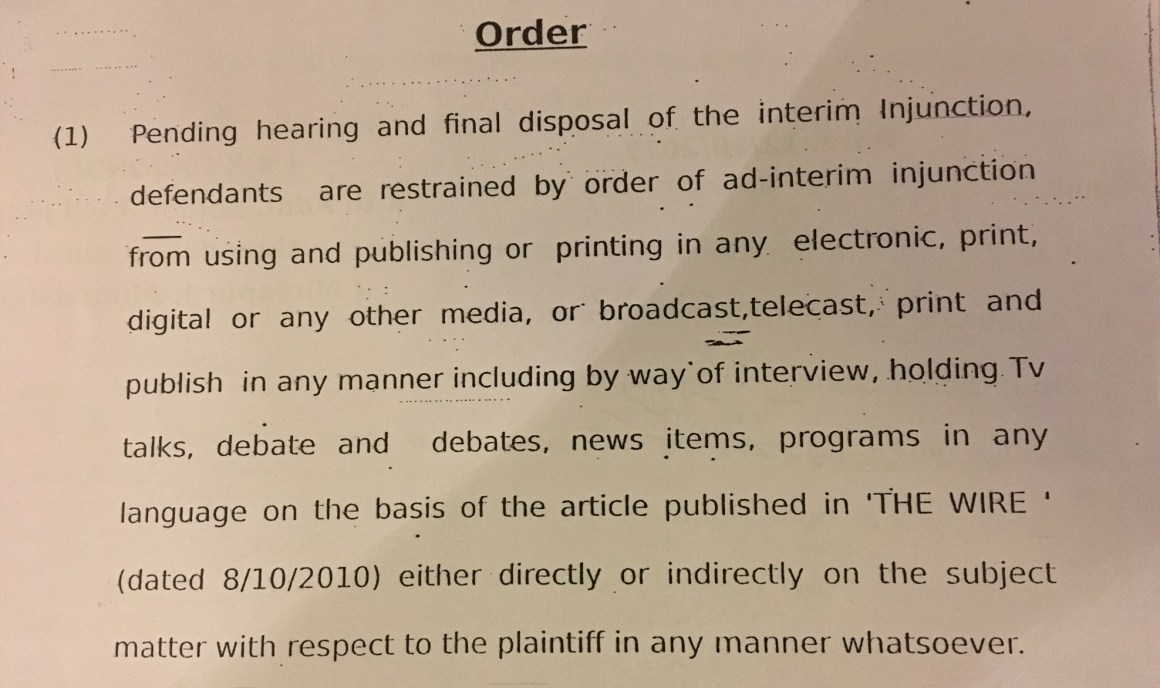
- Text purporting to be Order Below Exhibit 5 SPCS No.442/2017 dated October 12, 2017, of B.K. Dasondi, 4th Addl Senior Civil Judge, Ahmedabad Rural (Mirzapur), Ahmedabad, which reads verbatim as follows:
“Pending hearing and final disposal of the interim Injunction, defendants are restrained by order ad-interim injunction from using and publishing or printing in any electronic, print, digital or any other media, or broadcast,telecast, print and publish in any manner including by way of interview, holding TV talks, debate and debates, news items, programs in any language on the basis of the article published in ‘THE WIRE ‘ (dated 8/10/2010) either directly or indirectly on the subject matter with respect to the plaintiff in any manner whatsoever.”
PICTURE HERE: AHMEDABAD_WIRE)
- The order is signed illegibly and faintly in some script appearing to be Devnagari-like.
The Wire was neither served notice nor given an opportunity to be heard before this ex-parte injunction was sought and granted.
It will be evident to anyone reading the Special Civil Suit that no single factual error has been substantively shown or pleaded against The Wire. No case of untruth has been made out against The Wire. Indeed, the plaint acknowledges that the full text of the lawyer’s exchange with The Wire was available on the website on the date of filing the suit, which is shown as October 12, 2017. Incidentally October 12, 2017 is also the date of the text of Order. The time of filing the suit or of the passing of “Order below Exhibit 5” is not available with The Wire.
It goes without saying that this attempt to gag The Wire will not go unchallenged.[/vc_column_text][/vc_column][/vc_row]




India News
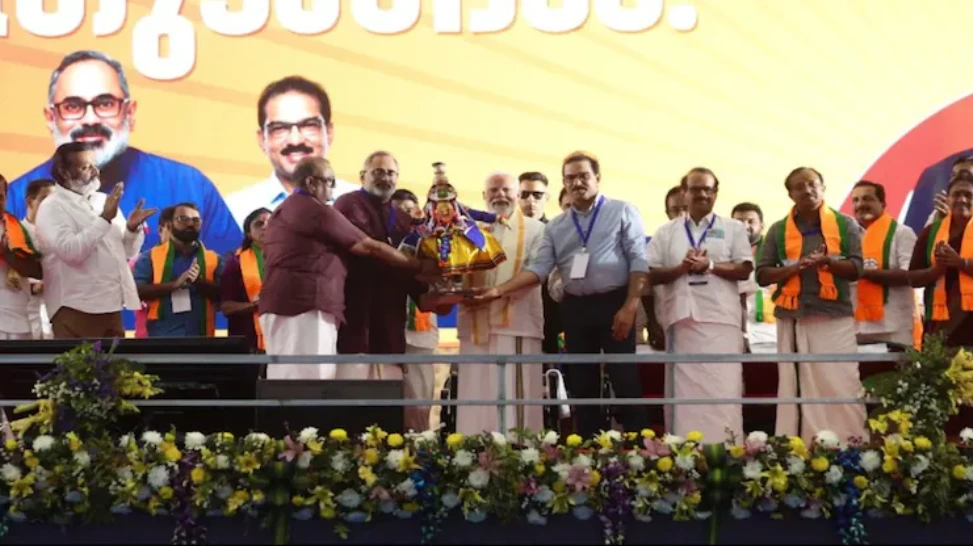
BJP releases first list of 47 candidates for Kerala assembly polls
The BJP has released its first list of 47 candidates for the Kerala Assembly elections scheduled for April 9, including three former Union ministers.

India News
Fire in ICU at SCB medical college hospital in Cuttack kills 10 patients
Ten patients died after a fire broke out in the trauma ICU at SCB medical college hospital in Cuttack early Monday morning. Odisha Chief Minister Mohan Charan Majhi announced compensation and ordered a judicial probe.

India News
Arvind Kejriwal moves Supreme Court against Delhi High Court order in excise policy case
Arvind Kejriwal has approached the Supreme Court challenging a Delhi High Court order related to proceedings in the excise policy case and alleging violation of his fundamental rights.


Fire near Dubai International Airport after drone incident, flights temporarily suspended

Fire in ICU at SCB medical college hospital in Cuttack kills 10 patients

Rajya Sabha elections Voting begins for 37 seats across 10 states

Arvind Kejriwal moves Supreme Court against Delhi High Court order in excise policy case

BJP releases first list of 47 candidates for Kerala assembly polls
BJP releases first list of 47 candidates for Kerala assembly polls
Fire in ICU at SCB medical college hospital in Cuttack kills 10 patients
Arvind Kejriwal moves Supreme Court against Delhi High Court order in excise policy case
Rajya Sabha elections Voting begins for 37 seats across 10 states
Fire near Dubai International Airport after drone incident, flights temporarily suspended

Afghan Men Try To Hang With The Jet Engine Of The Aircraft in Kabul- Afghanistan News – Kabul News
Trending Top 10 News: 10000 Crore Fine on Flipkart, Apple to Launch Unique Feature, Hdfc Bank Job Ad

Trending Top 10 News: Nokia 6310, Apple sales, Bachpan ka Pyar Video Kid, Dainik Bhaskar IT Raid

Trending Top 10 News: Canada bans Indian flights, Rain in Delhi NCR, AIMIM Twitter hacked, Raj Kundra case

Trending Top 10 News: Shein India, Apple New Service, Pocket Oxygen, Oppo Launched New Phone
-
 Latest world news14 hours ago
Fire near Dubai International Airport after drone incident, flights temporarily suspended
-
 India News14 hours ago
Fire in ICU at SCB medical college hospital in Cuttack kills 10 patients
-
 India News14 hours ago
Rajya Sabha elections Voting begins for 37 seats across 10 states
-
 India News14 hours ago
Arvind Kejriwal moves Supreme Court against Delhi High Court order in excise policy case
-
 India News4 hours ago
BJP releases first list of 47 candidates for Kerala assembly polls
