English हिन्दी
Connect with us

India News

Congress names new general secretaries, Azad loses Haryana role

Published

on

Rajya Sabha member and senior Congress leader Ghulam Nabi Azad has been removed from the post of general secretary in-charge of Haryana late on Friday in what is being read as a punishment to the group of 23 leaders who wrote to Congress interim president Sonia Gandhi seeking significant changes in the party. His position in the Congress Working Committee stays undisturbed.

Azad has been replaced by Vivek Bansal. Other general secretaries who were divested of their general secretary posts the 91-year-old veteran Motilal Vora, Ambika Soni, Luizinho Faleiro and former Congress Lok Sabha leader Mallikarjuna Kharge.

Uttar Pradesh Congress leader Jitin Prasada, who along with Azad, Anand Sharma and Mukul Wasnik was among the group of 23, has been appointed the general secretary in-charge for West Bengal, which is going to the polls next year, and Andaman and Nicobar Island. Similarly, party chief spokesperson Randeep Singh Surjewala has been appointed the general secretary in-charge for Karnataka. 

Priyanka Gandhi Vadra will now be the general secretary in-charge for Uttar Pradesh. She was earlier general secretary for Uttar Pradesh East, but was practically taking care of the entire state after Jyotiraditya Scindia, who was general secretary for Uttar Pradesh (West), quit from the congress party and joined the BJP.

The new general secretaries are Pawan Kumar Bansal (administration), Harish Rawat (Punjab), Tariq Anwar (Kerala and Lakshadweep), Ajay Maken (Rajasthan), Jitendra Singh (Assam), HK Patil (Maharashtra) and Oommen Chandy (Andhra Pradesh).

The members of the special committee that will advise Sonia Gandhi will comprise AK Antony, Ahmed Patel, KC Venugopal, Mukul Wasnik, Ambika Soni and Randeep Surjewala.

Read Also: After Uddhav Thackeray, Kangana Ranaut has things to say about Sonia Gandhi

The CWC’s new members will be Digvijaya Singh, Rajeev Shukla, Manickam Tagore, Pramod Tiwari, P. Chidambaram, Randeep Surjewala, Jairam Ramesh, Tariq Anwar, Jitendra Singh, HK Patil, Salman Khurshid, Pawan Bansal, Dinesh Gundu Rao, Devender Yadav, Vivek Bansal, Manish Chatrath, Bhakta Charan Das and Kuljit Nagra. Ghulam Nabi Azad and Anand Sharma will continue to be on the CWC.

India News

APN News-Hansraj College launch future-ready AI media courses, provide industry and legal news exposure

Published

on

In a historic initiative for media and education, Delhi University’s prestigious Hansraj College has joined hands with APN News’ Global Foundation for Media and Innovation Institute (GFMI) and Balaji Foundation to launch industry-oriented advanced diploma courses in Artificial Intelligence and digital innovation.

Earlier, an MoU was signed between Ms. Rajshri Rai, Editor-in-Chief, APN News and Chairperson, Balaji Foundation, and Prof. Rama, Principal, Hansraj College. 

On Tuesday, both launched the future-ready AI media courses in a formal ceremony. On the occasion of the launch, a special industry seminar on the theme “New Age Media and Marketing” was organised, which witnessed enthusiastic participation from students.

On the occasion, Ms. Rajshri Rai, Editor-in-Chief, APN News, Ms. Jyotsna Das Nanda, AVP-Corporate Communications, DS Group, and Mr. Abhinav Pandey, Founding Editor, The Newspinch, addressed the students.

The programmes focus on Artificial Intelligence, media, communication and digital innovation. The courses integrate media education with Artificial Intelligence to train students in new technology-based journalism, content creation and digital media. 

Along with this, courses in AI Digital Marketing, Branding and Advertising have also been launched.

The curriculum will offer Live Newsroom Exposure, Project-Based Learning and Internship Opportunities along with expertise in legal news, enabling students to enter the media world with practical experience.

Speaking on the occasion, Ms. Rajshri Rai said, “The main objective of this partnership is to integrate emerging technologies into professional education like Mass Communication, Advertising, Marketing, Legal Studies and Digital Media. Under this initiative, students will be given special training in skills like AI-powered journalism, digital branding, OTT production and strategic communication, so that the gap between studies and industry needs can be bridged.”

Prof. Rama, Principal, Hansraj College, said, “Hansraj College has always believed in academic innovation and future-focused learning. Through this partnership, our aim is to give students practical exposure, new technology skills and an opportunity to connect with industry as per global trends.”

To make the courses accessible to students across the country, they will be available in both online and offline modes. Apart from classroom teaching, the programme will have special focus on internship, mentorship, career counselling, live industry exposure and placement assistance. 

The faculty comprises experienced and renowned professors.The response from students has been highly encouraging, with more than two-thirds of seats already filled and enquiries still pouring in.

The initiative is expected to become a new and pioneering model for AI-integrated media education in India, connecting education with technology, employment and the practical needs of the industry.

Continue Reading

India News

Rahul Gandhi attacks Punjab AAP government over man’s death, alleges dangerous pattern

Rahul Gandhi accused Punjab’s AAP government of failing on the drug issue and demanded an independent probe into Gulzar Singh’s death.

Published

on

Rahul_Gandhi_

Congress MP Rahul Gandhi has launched a fresh attack on the Aam Aadmi Party (AAP) government in Punjab over the death by suicide of Gulzar Singh, a 50-year-old man from Sangrur district.

Gandhi alleged that Singh was pressured by police to apologise after questioning Punjab Finance Minister Harpal Singh Cheema over the state’s handling of the drug menace. Singh later consumed pesticide and died after being taken to different hospitals, according to Gandhi’s account.

What Rahul Gandhi said about Gulzar Singh

Rahul Gandhi described the incident as part of what he called a “dangerous pattern” emerging under the Punjab AAP government.

He alleged that people who question the government’s performance on issues such as drugs are facing threats and torture.

According to Gandhi, Gulzar Singh belonged to the Dalit community and had seen his son become a victim of drugs. He said Singh questioned the finance minister about the government’s failure to stop the drug trade.

Gandhi alleged that Singh was subsequently humiliated and pressured to apologise, following which he consumed poison. He also claimed that Singh struggled to receive treatment after being taken from one hospital to another before eventually dying.

Rahul Gandhi demands action against Punjab government

Gandhi also referred to the case of Mohanjeet Singh, whom he said he had spoken with the previous week.

According to Gandhi, Mohanjeet Singh was allegedly subjected to custodial torture after protesting against Chief Minister Bhagwant Mann by carrying a black flag at an event attended by the chief minister.

Gandhi said the government should respond to questions from citizens rather than suppress those raising concerns.

He called for Punjab Chief Minister Bhagwant Mann to demand the resignation of Finance Minister Harpal Singh Cheema and sought an independent and impartial investigation into Gulzar Singh’s death. Gandhi also demanded that Cheema’s name be registered in the FIR. These are Gandhi’s demands and allegations; the NDTV report does not establish them as proven findings.

Drug de-addiction admissions rise in Punjab

The report also cited government data showing a significant increase in admissions at state-run de-addiction and rehabilitation centres.

Admissions rose from 9,577 in 2024 to 25,290 in 2025, an increase of more than 164 per cent. More than 14,000 people had already been admitted to such centres by July this year, according to the data cited in the report.

The Congress has said that people in Punjab will vote out the AAP in the state election, which is due in the coming months.

Continue Reading

India News

PM Modi pushes for global expansion of UPI at Fintech Fest

PM Modi has called for wider global adoption of UPI, highlighting India’s digital payments success and fintech growth at Fintech Fest.

Published

on

PM Modi

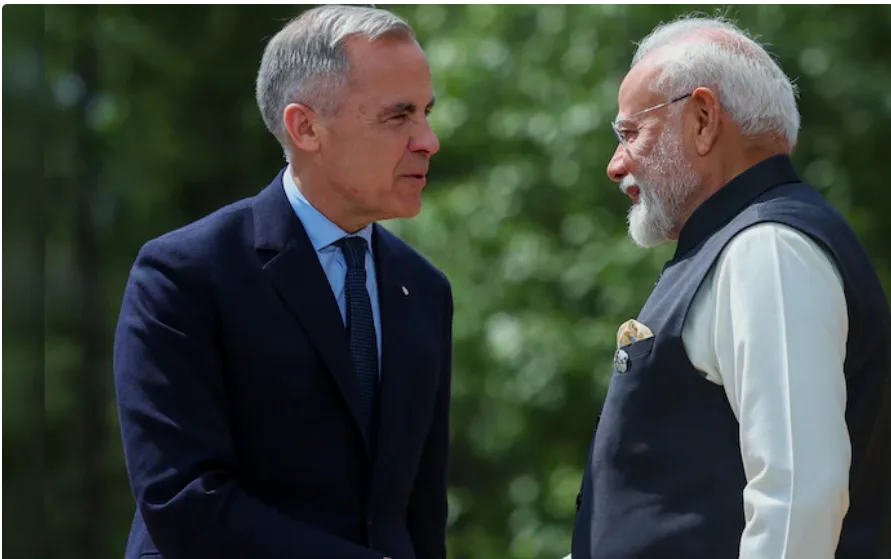
Prime Minister Narendra Modi has called for greater global expansion of the Unified Payments Interface (UPI), highlighting India’s digital payments infrastructure and its potential to connect people and businesses across borders.

Speaking at the Fintech Fest, PM Modi emphasised the role of technology and financial innovation in transforming India’s payments ecosystem. He said India’s experience with digital payments offers an opportunity to take the country’s homegrown payment infrastructure to a wider international audience.

PM Modi highlights India’s digital payments journey

The Prime Minister pointed to the rapid growth of digital payments in India and the way UPI has become an important part of everyday transactions.

He stressed that India’s fintech ecosystem has demonstrated how technology can make financial services more accessible and convenient for people.

UPI has emerged as one of India’s key digital public infrastructure platforms, allowing users to make instant bank-to-bank payments through participating applications.

Push for wider international adoption of UPI

PM Modi also underlined the importance of taking India’s digital payment capabilities beyond the domestic market.

The push for wider UPI adoption comes as India has been working to establish digital payment linkages with other countries, enabling easier cross-border transactions.

Such international expansion can support Indian travellers, businesses and consumers by making digital payments more convenient in participating countries.

India’s fintech ecosystem in focus

The Prime Minister’s remarks came as the fintech sector continues to play a major role in India’s digital transformation.

India’s experience with UPI has attracted international attention because of the scale at which real-time digital payments are being used.

At the event, the broader fintech ecosystem and the potential of technology to improve access to financial services were also central to discussions.

Why UPI’s global expansion matters

A wider international footprint for UPI could strengthen India’s digital payments ecosystem while making cross-border transactions simpler in countries where UPI-linked systems are available.

The expansion also reflects India’s broader effort to promote its digital public infrastructure and fintech capabilities internationally.

Continue Reading

Trending

© Copyright 2022 APNLIVE.com