Planning to hoist tricolour? Here’s the Indian flag code, and the risks of getting it wrong
There are codes that govern its use and as well approach Independence Day weekend, here’s a quick reminder. Several incidents of flag code violation have been reported in India. Sachin Tendulkar, Sania Mirza, Amitabh Bachchan, Shahrukh Khan and Mandira Bedi are the accused of insulting the Tricolour.
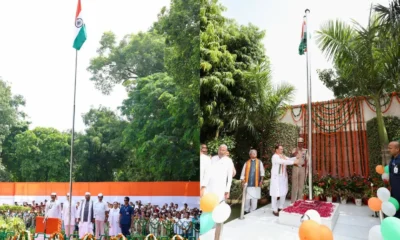
India is gearing up to celebrate its 75th Indian Independence Day, the most significant milestone in the country’s history. On this day, the Prime Minister hoists the ‘Tiranga’ or the tricolour on the Red Fort.
There are codes that govern its use and as well approach Independence Day weekend, here’s a quick reminder.
Do’s
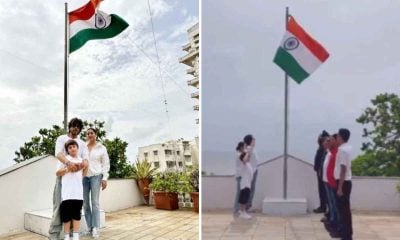
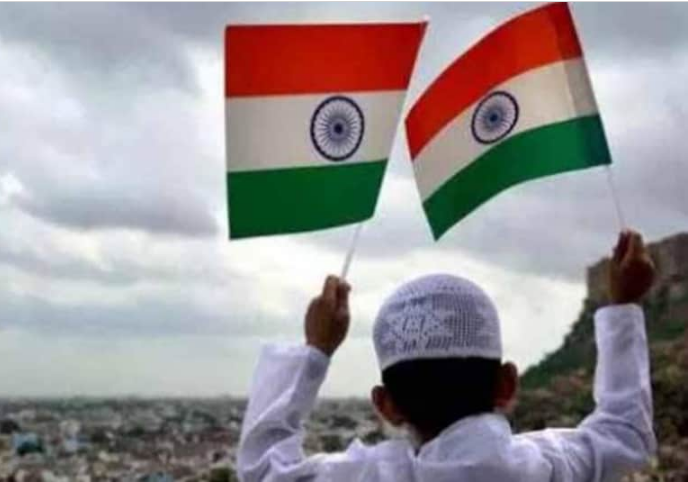
Section 2 of the new code accepts the right of all private citizens to fly the tricolour on their premises.
With the dignity and honour, a member of any public or private organisations such as schools, colleges, sports camps, scout camps may hoist the national flag on all days and occasions.
An oath of allegiance has been included in the tricolour hoisting in schools.
Don’ts
The tricolour cannot be used for communal gains, drapery, or clothes.
The tricolour should be flown from sunrise to sunset.
The tricolour can’t be intentionally allowed to touch the ground in anyway.
No other flag or bunting can be placed higher than the tricolour.
No object, including flowers or garlands or emblems, can be placed on or above the tricolour.
The tricolour can’t be used as a festoon, a rosette or a bunting.
Over the years, several incidents of flag code violation have been reported in India.
Sachin Tendulkar, Sania Mirza, Amitabh Bachchan, Shahrukh Khan and Mandira Bedi are the accused of insulting the Tricolour.
In 2007, Tendulkar were given legal notice for cutting a cake with the Tricolour on it while in the same year an FIR was also lodged against Mandira Bedi for wearing tricolour Sari.
A year later, Sania Mirza got embroiled in a controversy after a photo in which she was seen sitting with her feet up on a table next to the national flag.
In 2011, a case was filed against Amitabh Bachchan for wrapping himself up in the tricolour while celebrating India’s victory against Pakistan in the Cricket World Cup.
A complaint was filed against Shahrukh Khan as well for insulting the flag after photos showed that he had held the tricolour upside down while celebrating India’s World Cup win.
More recently, the UP Police had booked family of a farmer, Balvinder Singh, who died this year near Ghazipur in farmer protest, following allegations that the body had been draped in the national flag. There were similar allegations of flag code violations when the body of farmer Navreet Singh, who died in Delhi on January 26.
Ravin Sisodia, who was an accused in the killing of Mohammad Akhlaq in 2015, were reportedly wrapped in tricolour after their death.
Prime Minister expresses regret over bill’s defeat, blames opposition parties and says efforts to empower women were stalled
Prime Minister Narendra Modi on Saturday addressed the nation following the defeat of the women’s reservation bill in the Lok Sabha, launching a sharp attack on opposition parties including Congress, Trinamool Congress (TMC), DMK and Samajwadi Party (SP).
In his televised speech, the Prime Minister said that despite the government’s efforts, the bill could not secure the required support in Parliament. He held the opposition responsible for blocking what he described as a significant step towards women’s empowerment in politics.
PM Modi expressed disappointment over the outcome and said that the aspirations of millions of women had been affected by the failure of the legislation. He also conveyed regret that the government’s attempt to ensure greater representation for women in legislatures could not be realised.
The Prime Minister criticised opposition parties for what he indicated was a lack of commitment to women’s empowerment, alleging that political considerations had taken precedence over progress. He urged the public to recognise what he described as an “anti-women” stance taken by those opposing the bill.
The proposed legislation aimed to provide 33% reservation for women in the Lok Sabha and state assemblies, a long-pending reform intended to increase female representation in governance. Its failure marks a significant political setback and has intensified the confrontation between the ruling government and opposition parties.
Reaffirming his government’s commitment, Modi said efforts to strengthen the role of women in politics would continue, despite the setback.
Prime Minister Narendra Modi is set to address the nation at 8:30 pm on Saturday, April 18, in a development that has drawn significant attention across political and public circles.
According to official information, there is no clarity yet on the subject of the address. The Prime Minister’s Office has not disclosed the agenda, leading to speculation about the key issues that may be discussed.
The announcement comes shortly after a major legislative development in Parliament, where a proposed constitutional amendment linked to the women’s quota law failed to pass the Lok Sabha following a division of votes.
Earlier, the Prime Minister had appealed to Members of Parliament to support the amendment, emphasising that millions of women across the country were closely watching the proceedings and decisions taken by lawmakers.
While the timing of the address has been confirmed, officials have not indicated whether the speech will focus on political developments, governance issues, or broader national concerns.
The Prime Minister’s national addresses are typically used to communicate key policy decisions or respond to important developments, making this announcement one to watch closely.
Congress leader Priyanka Gandhi Vadra on Friday sharply criticised the Centre after the women’s quota amendment bill failed to pass in the Lok Sabha, alleging it was part of a “conspiracy to rule forever.”
Addressing a press conference, she claimed the government had attempted to use the legislation for political advantage rather than genuine women’s empowerment. According to her, the strategy was designed in a way that the ruling side would benefit regardless of the outcome.
She argued that if the bill had been passed, the government would have claimed credit, and if it failed, it would portray opposition parties as being against women’s rights.
Calling the development a “victory for democracy,” she said the failure of the constitutional amendment stopped what she described as an attempt to weaken democratic institutions and alter the federal structure.
The bill required a two-thirds majority to pass but fell short in the Lok Sabha, with 298 members voting in favour and 230 against.
The proposed amendment was linked to broader changes, including delimitation of constituencies, which became a key point of contention between the government and opposition parties. Critics argued that tying women’s reservation to delimitation raised concerns about political advantage and representation balance.
Priyanka Gandhi also described the day as a setback for the ruling alliance, saying it reflected resistance from opposition parties and highlighted concerns over the bill’s structure and intent.
Despite opposing the amendment in its current form, she reiterated support for women’s reservation and called for its implementation without conditions that could delay or complicate the process.
APN News is today the most watched and the most credible and respected news channel in India. APN has been at the forefront of every single news revolution. The channel is being recognized for its in-depth, analytical reportage and hard hitting discussions on burning issues; without any bias or vested interests.