
Latest Politics News
Politics Yearender 2022: From BJP’s record win in Gujarat to splitsville in Maharashtra and Bihar, and a Bharat Jodo triumph
Let us take a look at the unexceptional political events that were witnessed in India in 2022


By Divyansh Thakur
With 2022 coming to an end, the Narendra Modi government has just one-and-a-half years left in its second term. That leaves hopes that 2023 will see heightened political activity with the Congress’s Bharat Jodo Yatra coming up with better than expected public support.
The political sphere has been full of upheavals during the last one year. Many assembly elections and bypolls were held where the states witnessed changes in regime. Some regimes changed when a party either split or chose to swap partners, like in Maharashtra and Bihar, respectively.
Yearender 2022: Cars | Films | Trending | Sports
No surprises in spring Assembly results
In March, the election results of Uttar Pradesh, Uttarakhand, Punjab, Goa and Manipur were out. The BJP retained power in Uttar Pradesh, Uttarakhand, Goa and Manipur. The Aam Aadmi Party wiped out the opposition in Punjab and formed its first government outside Delhi. By the end of the year, new governments were formed in two more states, Himachal Pradesh and Gujarat. While the BJP registered a record victory in Gujarat, the tradition of changing the ruling party remained intact in Himachal Pradesh, with the Congress putting up a strong showing.

All eyes were on Uttar Pradesh as people were expecting a change, but the results surprised everyone. Under the leadership of Yogi Adityanath, the BJP once again retained power in the state. The Congress’s strong pre-poll showing in Uttarakhand didn’t amount to much as Pushkar Singh Dhami returned as CM of a rampant BJP.
Mann to Mann in Punjab
The results of the Punjab Assembly elections were unexpected. The ruling Congress in Punjab had to face a humiliating defeat. The way in which the Aam Aadmi Party government was formed under the leadership of Arvind Kejriwal in Delhi, the same result was seen in the Punjab elections.

The ruling Congress was brutally defeated here. The Aam Aadmi Party won 92 of the total 117 seats in the state and Bhagwant Mann was sworn in as Chief Minister. The Congress and the Shiromani Akali Dal were left blinking in the AAP tsunami that smashed all regional and family loyalties in Punjab.
Security lapse during PM Modi’s Punjab visit
On January 5, 2022, Prime Minister Narendra Modi was on his Punjab tour when some farmer protesters blocked the road in Ferozepur on which the Prime Minister’s motorcade was to pass.

Because of this, the Prime Minister was stuck on a flyover for 20 minutes. The Prime Minister returned to Delhi after the incident. He neither attended any programme nor could he address his first rally in the state after two years. This was a major security lapse.
Historic victory of BJP in Gujarat, Congress in Himachal Pradesh

Results for the assembly elections in Gujarat and Himachal Pradesh were out in early December. The people of Himachal Pradesh voted out the ruling BJP and voted in the Congress with a majority. Some say the state alternates between the two parties in a long-standing custom.
In Gujarat, the BJP registered a historic victory by winning 157 of the 182 seats. This was the first time in the history of Gujarat that a political party has registered a huge victory.
Hijab: To wear or not to wear it
This controversy started from a government inter-college in Udupi, Karnataka. Muslim girl students were said to have violated a new government order mandating a dress code by wearing a hijab.

This saw many saffron organisations blockade Muslim institutions while the Muslim girls were no pushovers either. The case against this reached the High Court and the Supreme Court, the apex court returned a split verdict with one judge upholding the government mandate and the other supporting the right of Muslim girls to wear the hijab.
Nupur Sharma and the Prophet
Nupur Sharma, a BJP spokesperson, made a lot of headlines this year. She made a controversial comment on Prophet Muhammad during a TV debate leading to demonstrations against Nupur Sharma across the country.

Violence took place in many parts of the country. Later, Nupur Sharma had to resign due to this controversial statement and BJP suspended her from the party for 6 years.
Shiv Sena Split
Maharashtra’s Maha Vikas Aghadi government headed by Shiv Sena chief Uddhav Thackeray was derailed mid-term by Shiv Sena minister Eknath Shinde and 28 party MLAs. They camped in Gujarat and then to Guwahati, hosted by Assam CM Himanta Biswa Sarma.

Initially, the Thackeray faction tried to pacify them, but in the end the Shiv Sena split and Uddhav Thackeray was out of power. After this Shiv Sena rebel Eknath Shinde formed his government with the support of the BJP. The legal battle between the two factions is still going on for the name and symbol of the party, which was one of the big surprises of 2022. The party had been cast in a monolith form by its founder Bal Thackeray, now split into factions though nephew Raj Thackeray had already struck out on his own in the patriarch’s lifetime.
Nitish glues up Mahagathbandhan again
Politics in Bihar lives true to the idiom which says 2 plus 2 need not be 4 all the time. The relations between the BJP and the JDU broke down and Nitish Kumar left the BJP and joined forces with old ally Lalu Prasad Yadav’s RJD.

In a single move, Nitish took the oath of the post of CM again by dissolving the entire cabinet and forming a grand alliance, pushing his ally BJP to the opposition. In Nitish’s new cabinet, Tejashwi Yadav returned as Deputy CM and his elder brother Tej Pratap Yadav became a cabinet minister.
The unpopular front
The government banned the Popular Front of India (PFI) in September and arrested more than 100 active members. The organisation was banned for allegedly being involved in terrorist activities.

According to a notification issued by the Home Ministry, the Central Government was apprehensive that the PFI and its affiliates have been involved in destructive acts affecting public order, undermining the constitutional framework of the country and terror-based governance is being encouraged. Also trying to implement it. PFI was formed on November 22, 2006 in Kozhikode, Kerala.
Beating Nitish at his own game but this time in Manipur
In Manipur this year, the Janata Dal United, the party of Bihar CM Nitish Kumar, suffered a severe blow.

Five JDU MLAs switched sides and joined the ruling Bharatiya Janata Party (BJP). K Meghjit Singh, Secretary of the Manipur Legislative Assembly, issued a statement in this regard. Significantly, JDU had won 6 of the 38 seats in the Assembly elections held in March this year.
A non-Gandhi Congress chief
2022’s signal achievement for the Congress was an open election for its president. Mallikarjun Kharge became the first non-Gandhi president of the party after 24 years and after Sitaram Kesri.

Mallikarjun Kharge defeated Shashi Tharoor by a huge margin. Kharge got a total 7,897 votes while Shashi Tharoor won 1,072 votes. Many will dispute how Kharge, a Gandhi family loyalist, can be seen as an independent leader. Kharge’s newfound enthusiasm was seen in the Gujarat campaign where his quote on Ravan was misrepresented to the people by the BJP and ended up nearly decimating the Congress performance there.
Bharat Jodo Yatra
Rahul Gandhi’s Bharat Jodo Yatra made a lot of headlines this year. Initially dismissed by both the media and the BJP, the increasing numbers joining the yatra made both of them sit up and take note. Such a padayatra is taking place in Indian politics after a long time. This journey started from Kanyakumari on September 7, 2022. Covering a distance of 3,570 km in 150 days, the journey will end in Srinagar.
Opposition unity which will be needed for the 2024 campaign was fractious when the yatra wound its way through Kerala. The CPI(M) which runs the Kerala government was quick to point out the yatra was not taking UP and Gujarat seriously and was hurting Opposition unity by hurting the CPI(M). But the yatra persevered, Rahul Gandhi grew a longish beard a la Forrest Gump but unlike Forrest, the man’s resolve grew with each step. Snaking through the South, the Vindhyas and into the Hindi belt to a grand entry into Delhi. But like Nizamuddin Auliya’s message to Muhammad bin Tughlaq: Hanuz Dilli Dur Ast. The yatra’s fine and grand, but votes will tilt the scales in 2024.
CBI reopens probe against Lalu Prasad Yadav in railway projects corruption case


India News
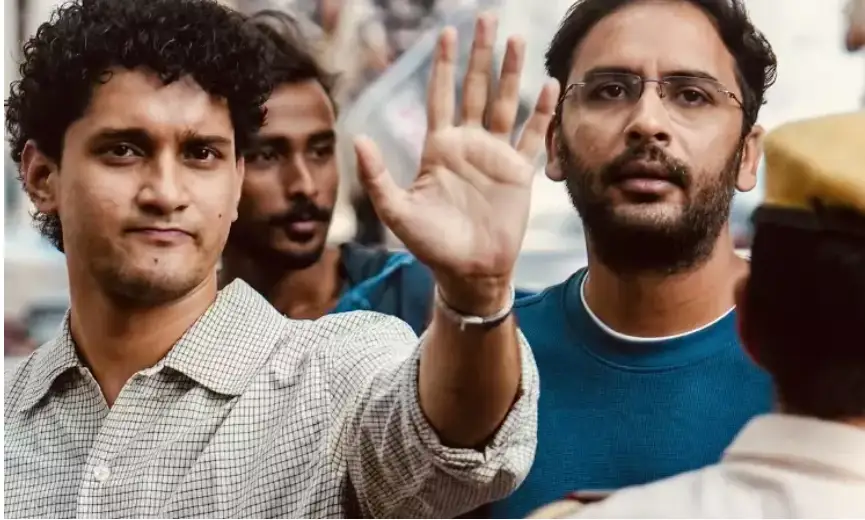
CJP leaders Saurav Das, Ashutosh Ranka, Ajinkya Shinde sent to 5-day judicial custody
Three CJP leaders, Saurav Das, Ashutosh Ranka and Ajinkya Shinde, were placed under preventive arrest following a protest at Delhi’s Jantar Mantar over Chief Election Commissioner Gyanesh Kumar.

India News
BJP focuses on religion as opposition pushes BDM strategy in UP
The BJP is emphasising religious issues ahead of the Uttar Pradesh Assembly elections, while opposition parties are seeking to consolidate Backward, Dalit and Minority voters. Recent exchanges involving Yogi Adityanath, Akhilesh Yadav and Asaduddin Owaisi have added to the political contest over the state’s electoral narrative.
India News
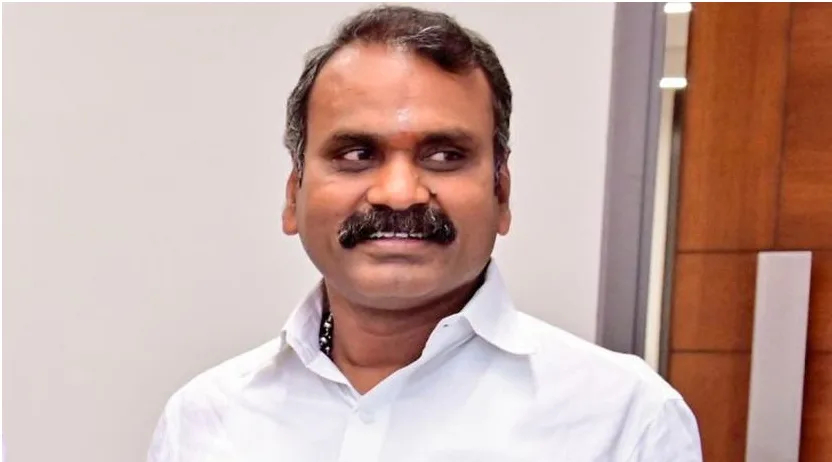
L Murugan quits Union ministry to strengthen BJP in Tamil Nadu
L Murugan has resigned from his Union ministerial post and Rajya Sabha membership, saying he wants to return to grassroots politics and dedicate himself to strengthening the BJP in Tamil Nadu before the 2029 Lok Sabha elections.

Nobody can browbeat judiciary, Chief Justice warns over Rahul Gandhi’s march

India-US trade deal first phase finalised, drafting underway

Election Commission orders voter roll revision in 17 states, UTs

Actor Imran Khan asked to leave India after CJP protest

Delhi Police offers 11-person limit for CJP’s Connaught Place protest

Magnitude 7 earthquake strikes Russia’s Kamchatka Peninsula

Delhi deploys 25,000 personnel, installs CCTV cameras ahead of CJP march

Mallikarjun Kharge’s ‘Your Friends’ jab at Rahul Gandhi over congress exits
Delhi Police offers 11-person limit for CJP’s Connaught Place protest
Actor Imran Khan asked to leave India after CJP protest

Afghan Men Try To Hang With The Jet Engine Of The Aircraft in Kabul- Afghanistan News – Kabul News
Trending Top 10 News: 10000 Crore Fine on Flipkart, Apple to Launch Unique Feature, Hdfc Bank Job Ad

Trending Top 10 News: Nokia 6310, Apple sales, Bachpan ka Pyar Video Kid, Dainik Bhaskar IT Raid

Trending Top 10 News: Canada bans Indian flights, Rain in Delhi NCR, AIMIM Twitter hacked, Raj Kundra case

Trending Top 10 News: Shein India, Apple New Service, Pocket Oxygen, Oppo Launched New Phone
-
 India News22 hours ago
Nobody can browbeat judiciary, Chief Justice warns over Rahul Gandhi’s march
-
 India News17 hours ago
India-US trade deal first phase finalised, drafting underway
-
 India News15 hours ago
Election Commission orders voter roll revision in 17 states, UTs
-
 India News15 hours ago
Actor Imran Khan asked to leave India after CJP protest
-
 India News13 hours ago
Delhi Police offers 11-person limit for CJP’s Connaught Place protest
-
 India News2 hours ago
Mallikarjun Kharge’s ‘Your Friends’ jab at Rahul Gandhi over congress exits
-
 India News2 hours ago
Delhi deploys 25,000 personnel, installs CCTV cameras ahead of CJP march
-
 Latest world news1 hour ago
Magnitude 7 earthquake strikes Russia’s Kamchatka Peninsula
