English हिन्दी
Connect with us

Latest Politics News

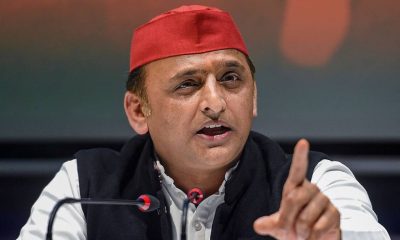
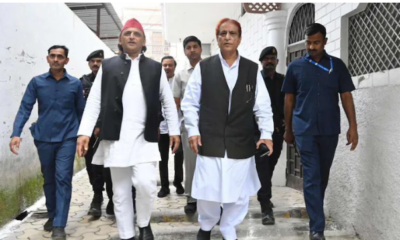
Akhilesh’s Uncle Shivpal says, will not field any candidate against nephew

Published

on

Akhilesh’s Uncle Shivpal says, will not field any candidate against nephew

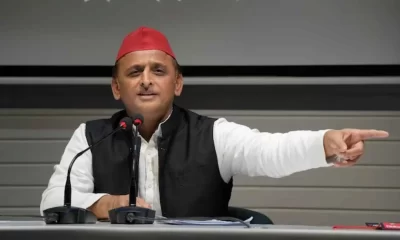
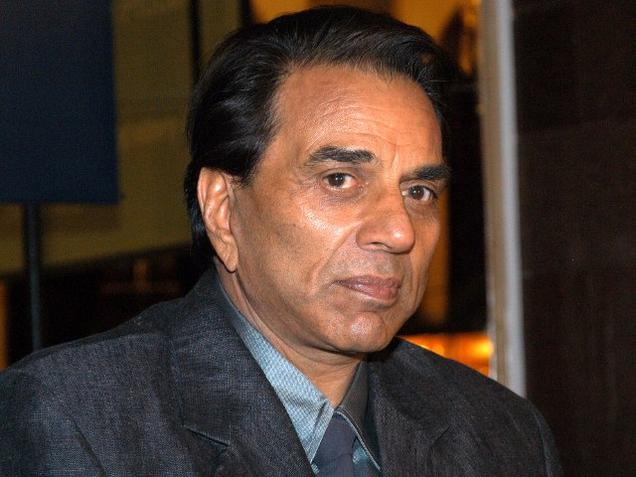
[vc_row][vc_column][vc_column_text]The Samajwadi Party family is contesting five seats in the state, with party chief Akhilesh Yadav replacing party patriarch and father Mulayam Singh Yadav from Azamgarh seat, Mulayam himself from Mainpuri, Akhilesh’s wife Dimple from Kannauj and his cousins Dharmendra and Akshay from Badaun and Firozabad, respectively.

While Shivpal Yadav, who formed new party Pragatisheel Samajwadi Party (PSP), separating himself from Samajwadi Party has said that that he is not fielding any candidate against nephew Akhilesh and daughter-in-law Dimple, the family has always been a matter of gossip especially at the time of elections.

It is clear from the Samajwadi Party family that they are hoping for big win in the elections and have placed their candidates accordingly. It is to be noted that SP is contesting election in an alliance with Mayawati’s Bahujan Samajwadi Party and Ajit Singh’s Rashtriya Lok Dal (RLD).

In Kannauj, two-time MP from the constituency Dimple has again been fielded from the seat. With the BSP becoming its alliance partner and Congress not fielding candidates where the Yadav family members are contesting, the SP’s only rival is BJP as SP rebel and Akhilesh’s uncle, Shivpal Yadav, recently withdrew his party, Pragatisheel Samajwadi Party’s (PSP) candidate against “pariwar ki bahu” Dimple.

In 2014, Dimple had won the seat by a narrow margin of 19,907 votes against the the BJP’s Subrat Pathak. The BJP candidate is the only competition for Dimple after PSP candidate Sunil Kumar Singh Rathore decided not to file his nomination at the last moment.

Pathak had also contested the 2009 Lok Sabha polls and had stood third behind Dimple and BSP candidate Mahesh Chandra Verma, who lost the poll by 1.15 lakh votes to Dimple. The seat has been with the SP since 1999 after Mulayam won it. After that, Akhilesh won the seat thrice – 2000, 2004, and 2009. He vacated the seat in 2012 and Dimple contested the bypoll and won the seat. The seat is likely to see a two-way contest between Dimple and Pathak and considering the fact that Pathak lost by a very narrow margin in 2014, it would be a tough task for SP to retain the seat.

In Badaun, the BJP has this time fielded UP cabinet minister Swami Prasad Maurya’s daughter Sanghmitra to take on Dharmendra. She had contested the 2014 Lok Sabha polls on a BSP ticket from Mainpuri and had secured 14.29 per cent votes and stood third. She joined the BJP in 2016.[/vc_column_text][/vc_column][/vc_row]

India News

Renaming MGNREGA removes core spirit of rural employment law, says Shashi Tharoor

Published

on

Shashi Tharoor

Congress MP Shashi Tharoor has strongly criticised the renaming of the Mahatma Gandhi National Rural Employment Guarantee Act (MGNREGA), saying the move strips the rural employment programme of its core essence. His remarks came after Parliament cleared the Viksit Bharat Guarantee for Rozgar and Ajeevika Mission (Gramin) Bill, also referred to as the VB-G RAM G Bill.

Speaking to media, Tharoor said the decision to remove Mahatma Gandhi’s name from the scheme “takes out the heart” of the rural employment programme that has been in place for years. He noted that the identity and philosophy associated with Mahatma Gandhi were central to the original law.

Tharoor also objected to the way the new name was framed, arguing that it unnecessarily combined multiple languages. He pointed out that the Constitution envisages the use of one language in legislation, while the Bill’s title mixes English and Hindi terms such as “Guarantee”, “Rozgar” and “Ajeevika”, along with the conjunction “and”.

‘Disrespect to both names’

The Congress leader said that inserting the word “Ram” while dropping Mahatma Gandhi’s name amounted to disrespecting both. Referring to Mahatma Gandhi’s ideas, Tharoor said that for Gandhi, the concepts of Gram Swaraj and Ram Rajya were inseparable, and removing his name from a rural employment law went against that vision.

He added that the name of Lord Ram could be used in many contexts, but questioned the rationale behind excluding Mahatma Gandhi from a programme closely linked to his philosophy of village self-rule.

Protests over passage of the Bill

The VB-G RAM G Bill was passed by the Lok Sabha on December 18 and cleared by the Rajya Sabha in the early hours of December 19 amid protests from Opposition members. Several MPs opposed the manner in which the legislation was pushed through, with scenes of sloganeering and tearing of papers in the House.

Outside Parliament, members of the Trinamool Congress staged a sit-in protest near Samvidhan Sadan against the passage of the Bill. Congress also announced nationwide protests earlier this week, accusing the government of weakening rights-based welfare schemes.

Despite opposition criticism, the government has maintained that the new law will strengthen rural employment and livelihood security. The Bill raises the guaranteed employment from 100 days to 125 days per rural household and outlines a 60:40 cost-sharing formula between the Centre and states, with a higher central share for northeastern, Himalayan states and certain Union Territories.

Continue Reading

India News

Rahul Gandhi attacks G RAM G bill, says move against villages and states

Rahul Gandhi has criticised the G RAM G bill cleared by Parliament, alleging it dilutes the rights-based structure of MGNREGA and centralises control over rural employment.

Published

on

Rahul Gandhi

Leader of the Opposition Rahul Gandhi has launched a sharp attack on the Modi government after Parliament cleared the Viksit Bharat Guarantee for Employment and Livelihood Mission (Rural) Bill, commonly referred to as the ‘G RAM G’ bill. He described the proposed law as “anti-state” and “anti-village”, arguing that it weakens the core spirit of the Mahatma Gandhi National Rural Employment Guarantee Act (MGNREGA).

The new legislation, which is positioned as an updated version of MGNREGA, was passed amid protests by opposition parties and is expected to replace the existing scheme once it receives presidential assent.

‘Bulldozed without scrutiny’, says Rahul Gandhi

Rahul Gandhi criticised the manner in which the bill was cleared, saying it was pushed through Parliament without adequate debate or examination. He pointed out that the opposition’s demand to refer the bill to a standing committee was rejected.

According to him, any law that fundamentally alters the rural employment framework and affects crores of workers should undergo detailed scrutiny, expert consultation and public hearings before approval.

Claim of dilution of rights-based guarantee

Targeting the central government, the Congress leader said the proposed law dismantles the rights-based and demand-driven nature of MGNREGA and replaces it with a rationed system controlled from Delhi. He argued that this shift undermines the autonomy of states and villages.

Rahul Gandhi alleged that the intent behind the move is to centralise power and weaken labour, particularly impacting rural communities such as Dalits, OBCs and Adivasis.

Defence of MGNREGA’s impact

Highlighting the role of MGNREGA, Gandhi said the scheme provided rural workers with bargaining power, reduced distress migration and improved wages and working conditions, while also contributing to rural infrastructure development.

He also recalled the role of MGNREGA during the Covid period, stating that it prevented crores of people from slipping into hunger and debt. According to him, any rationing of a jobs programme first affects women, landless workers and the poorest communities.

Opposition to name change and provisions

The Congress has also objected to the renaming of the scheme, accusing the government of attempting to erase the legacy associated with Mahatma Gandhi. Opposition MPs staged a dharna within the Parliament complex, questioning provisions of the bill that they claim dilute the “soul and spirit” of the original law enacted in 2005.

Under MGNREGA, the government guaranteed 100 days of work in rural areas along with an unemployment allowance if work was not provided. The ‘G RAM G’ bill proposes to raise the guaranteed workdays to 125, while retaining other provisions. However, critics have flagged concerns over employment being linked to pre-approved plans.

The bill was cleared after a midnight voice vote in the Rajya Sabha, following its passage in the Lok Sabha amid protests and walkouts. It will become law once approved by the President.

Continue Reading

India News

AAP dominates Punjab zila parishad polls, leads in most panchayat samiti zones

AAP has won 201 out of 317 declared zila parishad zones in Punjab so far and is leading in a majority of panchayat samiti seats, with counting still underway.

Published

on

Punjab Zila Parishad Polls

The ruling Aam Aadmi Party (AAP) has recorded a strong performance in the Punjab zila parishad elections and is leading in the majority of panchayat samiti zones, as per results declared so far on Thursday. The counting process is still underway and complete results are awaited, officials said.

Polling for the rural local bodies was held on December 14 to elect representatives across 347 zones of 22 zila parishads and 2,838 zones of 153 panchayat samitis in the state.

AAP secures clear edge in zila parishads

According to the available results, outcomes have been declared for 317 zila parishad zones so far. Of these, the AAP has won 201 zones, placing it well ahead of other parties.

The Congress emerged second with victories in 60 zones, followed by the Shiromani Akali Dal (SAD) with 39 zones. The BJP won four zones, the BSP secured three, while independents claimed 10 zones.

District-wise data shows that the AAP won 22 zones in Hoshiarpur, 19 each in Amritsar and Patiala, 17 each in Tarn Taran and Gurdaspur, and 15 zones in Sangrur. The Congress registered its best performances in Gurdaspur and Ludhiana with eight zones each, followed by Jalandhar with seven zones. The SAD performed strongly in Bathinda with 13 zones, while the BJP managed to win four zones in Pathankot.

AAP leads in panchayat samiti results

In the panchayat samiti elections, trends declared so far indicate that the AAP is leading in a majority of zones. However, officials clarified that counting is ongoing and the final picture will be clear only after all ballot papers are tallied.

Kejriwal, Mann reject opposition allegations

Reacting to the trends, AAP supremo Arvind Kejriwal said the party’s performance reflected strong rural support for the Bhagwant Mann government’s work. Addressing the media in Mohali along with Chief Minister Bhagwant Mann, Kejriwal dismissed allegations of irregularities raised by opposition parties.

He said the elections were conducted in a fair and free manner and claimed that the results so far showed a clear wave in favour of the AAP in rural Punjab. Kejriwal stated that nearly 70 per cent of the zila parishad and panchayat samiti seats had gone in favour of the party.

Congress, SAD question poll conduct

The Congress and the Shiromani Akali Dal, however, accused the ruling party of misusing official machinery. Punjab Congress chief Amrinder Singh Raja Warring alleged that the AAP had “stolen” the rural mandate and claimed that the results did not reflect genuine public support.

Opposition parties had earlier also accused the AAP government of high-handedness during the polling process, allegations that the ruling party has strongly denied.

Continue Reading

Trending

© Copyright 2022 APNLIVE.com