English हिन्दी
Connect with us

Latest Politics News

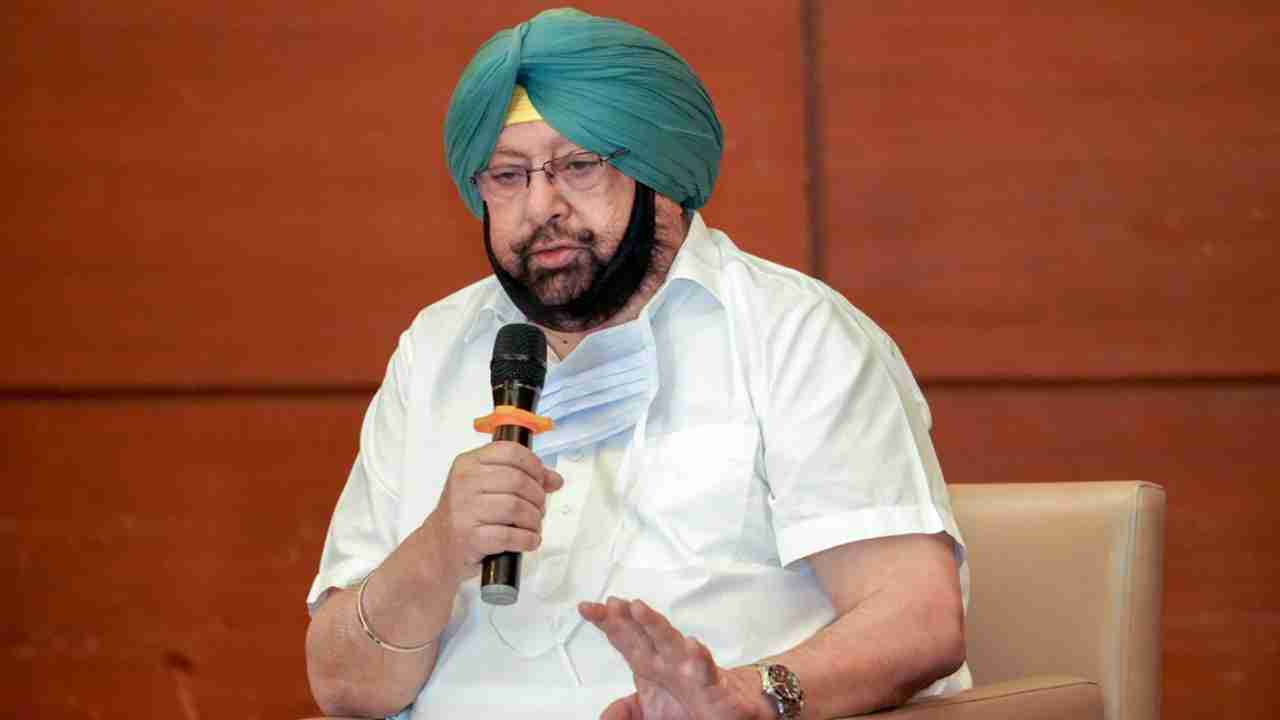
Tip of the iceberg: Amarinder Singh hints at more exits after 5 Congress leaders join BJP

Captain Amarinder Singh’s cryptic tweet is being seen as an indication to more likely exits from the Congress.

Published

on

Amarinder Singh

Amarinder Singh, whose exit from the Congress was one of the biggest developments that Punjab saw last year ahead of the state elections, has congratulated the party leaders who joined the BJP yesterday.

Taking a swipe at his former party, Singh called the move a tip of the iceberg.

Five Congress leaders and former ministers Raj Kumar Verka, Balbir Singh Sidhu, Sunder Sham Arora, Gurpreet Singh Kangar and Kewal Dhillon joined the BJP on Saturday ahead Union Home Minister Amit Shah’s visit in Chandigarh.

Apart from these leaders, 2 former Shiromani Akali Dal MLAs Sarup Chand Singla and Mohinder Kaur Josh had also joined the BJP yesterday.

Taking to twitter, Amarinder Singh congratulated the Congress leaders Balbir S. Sidhu, Gurpreet S. Kangar, Dr Raj Kumar Verka, Sunder Sham Arora and Kewal Singh Dhillon for taking a step in the right direction and joining BJP today. This is just the tip of the iceberg, he tweeted.

Former Congress leader’s cryptic tweet is being seen as an indication to more likely exits from the grand old party.

Another exits from the Congress comes days after the former Punjab chief Sunil Jakhar joined the BJP in the presence of party national president JP Nadda on May 19. However, the BJP is gaining footprint in Punjab, where farmers’ movement over minimum support price had been in the discourse for quite some time.

In this year’s assembly elections in Punjab, Arvind Kejriwal’s Aam Aadmi Party, which was the second largest party in the state, had received people’s mandate and win the election with a thumping majority in the state. The Congress was voted out of power in the Punjab assembly elections earlier this year.

Singh had left Congress last year after he stepped down as Chief Minister and formed his own party Punjab Lok Congress months before the Punjab assembly elections. He has been a critic of the Gandhis.

In his letter to Congress president Sonia Gandhi, Singh had raised many questions about the party leadership in Punjab. Apart from the part, he had also made allegations against the Congress’ individual leaders – including her son Rahul Gandhi and daughter Priyanka Gandhi Vadra.

India News

BJP raises seat offer to Eknath Shinde’s Shiv Sena to nearly 90 ahead of Mumbai civic polls, talks continue

The BJP has raised its seat offer to Eknath Shinde’s Shiv Sena to nearly 90 for the upcoming BMC elections, but fresh talks are needed as differences persist within the Mahayuti.

Published

on

With the Brihanmumbai Municipal Corporation (BMC) elections drawing closer, the seat-sharing tussle within the Mahayuti alliance continues, with the BJP increasing its offer to Eknath Shinde-led Shiv Sena but failing to reach the party’s expectations.

According to sources, the BJP has now proposed close to 90 seats for the Shinde faction in the upcoming Mumbai civic polls. This is a significant jump from its earlier offer of 52 seats but still falls short of what Shinde is seeking. The Shiv Sena leader has reportedly reduced his demand from an initial 125 seats to 112, yet remains dissatisfied with the latest formula.

Chief Minister Devendra Fadnavis is expected to hold another round of discussions with Shinde to break the deadlock. Sources indicate that the BJP is unlikely to stretch its offer much further, especially after its strong showing in recent statewide local body elections.

BJP firm after strong local poll performance

The BJP has emerged as the single largest party in the recent local polls, securing 117 municipal president posts. In comparison, the Shinde-led Shiv Sena won 53 posts, while Ajit Pawar’s faction of the NCP secured 37. These results have strengthened the BJP’s negotiating position ahead of the BMC elections.

However, the current seat-sharing calculations could change if Ajit Pawar decides to contest the Mumbai civic polls as part of the alliance. Senior NCP leader Sunil Tatkare confirmed that no final decision has been taken yet, noting that discussions with alliance partners are ongoing.

Nawab Malik factor complicates alliance talks

A major point of contention within the Mahayuti is the issue of senior NCP leader Nawab Malik, who is facing multiple corruption cases, including a money laundering case linked to underworld activities. While the alliance has made it clear that Malik is unacceptable as part of its Mumbai setup, Ajit Pawar is reportedly firm on backing him.

Mumbai BJP chief Ameet Satam has publicly stated that the party would not align with any group that includes Malik. Sources added that if the NCP joins the alliance in Mumbai, it may be asked to project a different leader and contest a limited number of seats.

BMC elections timeline

The countdown to the Brihanmumbai Municipal Corporation elections has already begun, with less than a month left for polling. Voting is scheduled for January 15, with counting set to take place the following day. A total of 2,869 municipal seats will be contested, including 227 seats in the BMC.

Continue Reading

India News

Yogi Adityanath’s do namoone remark sparks Akhilesh Yadav’s jab on BJP infighting

Yogi Adityanath’s ‘do namoone’ comment in the UP Assembly has been countered by Akhilesh Yadav, who termed it a confession of BJP’s internal power struggle.

Published

on

Yogi Adityanath

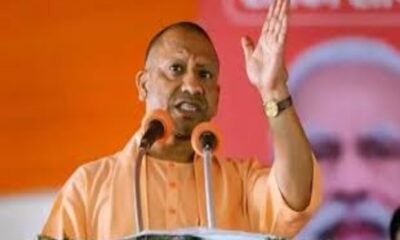
Uttar Pradesh Chief Minister Yogi Adityanath’s recent “do namoone” comment in the state Assembly has triggered a sharp political exchange, with Samajwadi Party chief Akhilesh Yadav turning the remark into an attack on the Bharatiya Janata Party’s alleged internal discord.

The comment was made during a heated Assembly discussion on allegations of codeine cough syrup smuggling in Uttar Pradesh. Opposition members had accused the state government of inaction, claiming that timely steps could have saved the lives of several children. Rejecting the allegation outright, Adityanath said that no child in the state had died due to consumption of the cough syrup.

While responding to the opposition benches, the Chief Minister made an indirect jibe, saying there were “two namoone”, one in Delhi and one in Lucknow. Without naming anyone, he added that one of them leaves the country whenever there is a national debate, and suggested that a similar pattern applied to the Samajwadi Party leadership. The remark was widely interpreted as being aimed at Leader of Opposition Rahul Gandhi and Akhilesh Yadav, a former Uttar Pradesh chief minister and current Lok Sabha MP

Akhilesh Yadav calls remark a ‘confession’

Akhilesh Yadav responded swiftly on social media, calling Adityanath’s statement a “confession” that exposed an alleged power struggle within the BJP. He said that those holding constitutional posts should maintain decorum and accused the ruling party of bringing its internal disputes into the public domain. Yadav posted his response shortly after the Chief Minister shared a video clip of the Assembly remarks online.

The Samajwadi Party has, on several occasions, claimed that there is a tussle between the Uttar Pradesh government and the BJP’s central leadership. Party leaders have cited the appointment of deputy chief ministers and certain bureaucratic decisions as evidence of attempts to curtail the Chief Minister’s authority.

Adityanath has consistently dismissed these claims, maintaining that he holds the post because of the party’s trust in him. The latest exchange has once again brought the narrative of BJP infighting into political focus, even as both sides continue to trade barbs ahead of key electoral contests

Continue Reading

India News

Sonia Gandhi calls weakening of MGNREGA a collective moral failure, targets Centre in op-ed

Sonia Gandhi has accused the Centre of weakening MGNREGA, calling it a collective moral failure with serious consequences for crores of working people.

Published

on

Sonia Gandhi

Congress Parliamentary Party chairperson Sonia Gandhi has sharply criticised the Central government over what she described as the steady dismantling of rights-based legislation, with a particular focus on the Mahatma Gandhi National Rural Employment Guarantee Act (MGNREGA).

In a recent opinion article published in a leading English daily, Sonia Gandhi argued that MGNREGA was envisioned as more than a welfare measure. She said the rural employment scheme gave legal backing to the constitutional right to work and was rooted in Mahatma Gandhi’s idea of Sarvodaya, or welfare for all.

Calling its weakening a serious failure, she wrote that the decline of MGNREGA represents a “collective moral failure” that will have lasting financial and human consequences for crores of working people across India. She stressed that safeguarding such rights-based frameworks is crucial at a time when, according to her, multiple protections are under strain.

Concerns raised over education, environment and land laws

Sonia Gandhi also flagged concerns beyond rural employment. Referring to education policy, she claimed that the Right to Education has been undermined following the National Education Policy 2020, alleging that it has led to the closure of around one lakh primary schools across the country.

On environmental and land-related legislation, she stated that the Forest Rights Act, 2006, was weakened through the Forest (Conservation) Rules, 2022. According to her, these changes removed the role of the gram sabha in decisions related to the diversion of forest land.

She further alleged that the Right to Fair Compensation and Transparency in Land Acquisition, Rehabilitation and Resettlement Act has been significantly diluted, while adding that the National Green Tribunal has seen its authority reduced over the years.

Warning on agriculture and food security laws

Touching upon agriculture reforms, Sonia Gandhi referred to the now-repealed three farm laws, claiming they were an attempt to deny farmers the right to a minimum support price. She also cautioned that the National Food Security Act, 2013, could face similar threats in the future.

Reiterating her central argument, she urged unity to protect statutory rights, stating that the erosion of such laws has implications that extend well beyond policy, affecting livelihoods and dignity on the ground.

Continue Reading

Trending

© Copyright 2022 APNLIVE.com