English हिन्दी
Connect with us

India News

Assembly Elections 2021: Third phase of polling ends, Assam records 82% voter turnout, Bengal 78%, Kerala 70%, Puducherry 78%, Tamil Nadu 65%

This is the third and final phase of polling for Assam, Bengal has five more. For the southern two states and one Union Territory, this is the first and only phase of polling.

Published

on

assembly election 2021

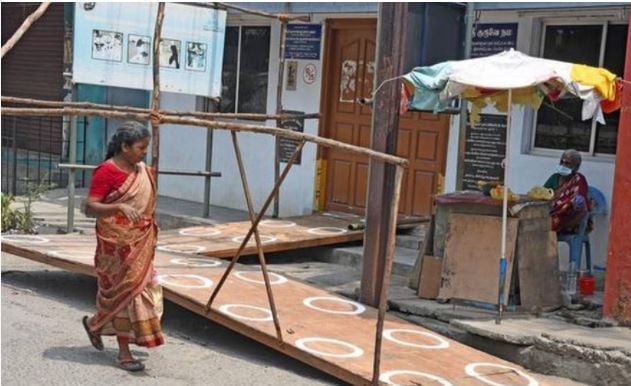
Polling began in Tamil Nadu, Kerala, Assam, West Bengal and Puducherry at 7 am on Tuesday. The final polling percentage recorded in the following states is — Assam (82.33%), Kerala (70.29%), Tamil Nadu (65.19%), West Bengal (77.68%), and Puducherry (78.90%).

Voting concluded in more than 750 constituencies of Kerala, Assam, Tamil Nadu, West Bengal and Pudducherry on Tuesday. Over 20 crore people from Assam, West Bengal, Kerala, Tamil Nadu and Puducherry exercised their electoral rights on Tuesday.  

A total of 475 seats spread across Tamil Nadu, Assam, West Bengal, Kerala and Puducherry voted on Tuesday. This was the third and final phase of polling for Assam, Bengal has five more. For the southern two states and one Union Territory, this was the first and only phase of polling.
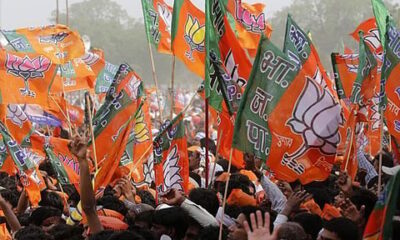
Before polling in the five states, Prime Minister Narendra Modi appealed to the voters to exercise their right in record numbers. Also, the Election Commission suspended a sector officer after three EVMs and four VVPAT machines were found at TMC leader Goutam Ghosh’s residence.

In Tamil Nadu, the ruling AIADMK has tied up with the BJP to seek re-election while DMK led by MK Stalin has emerged as a strong contender challenging a third term for the AIADMK government. The ruling AIADMK is contesting on 191 seats, with 23 given to the PMK and only 20 for the BJP. Kamal Haasan’s MNM is contesting on 142 seats, with 85 divided between some allies – and the AMMK of TTV Dhinakaran, who is the nephew of expelled AIADMK chief Sasikala. The AMMK will contest 165 seats and leave 60 for the DMDK.

Kerala’s, 2.74 crore voters will lock the fate of about 957 candidates, including high-profile leaders and independents, are in the fray in 140 Assembly constituencies across the state. Kerala will be deciding the fate of the Pinarayi Vijayan-led LDF government that is seeking a re-election going against the trend of the state alternating between LDF and UDF in every election. With the LDF government led by Chief Minister Pinarayi Vijayan looking to retain power.

The 31 seats that are voting in Bengal on Tuesday include some of the key TMC bastions such as Diamond Harbour and South 24 Parganas that will decide the fate of the Mamata Banerjee government. In Bengal, the BJP is seeking to dethrone the Trinamool Congress government while the Left Front-ISF-Congress alliance is hoping to make a mark. A total of 205 candidates are on the battlefield, with the prominent among them being BJP leader Swapan Dasgupta, TMC minister Ashima Patra and CPI(M) leader Kanti Ganguly — in three districts — Howrah, Hooghly and South 24 Parganas.

In Assam, a direct contest between the BJP-led NDA and Congress-headed Grand Alliance is on the cards in 20 constituencies while there is a triangular fight in the remaining seats with the Assam Jatiya Parishad (AJP) being considered as the third force. The ruling BJP is targeting a second term in Assam while the Congress, at the head of an opposition alliance, contested on 24 seats with Badruddin Ajmal’s AIUDF 12, the BPF eight and CPM 1.

Read Also: After Covid-19 recovery, Kartik Aaryan buys Lamborghini Urus worth Rs 3.4 crore

Puducherry is also voting to elect a new government following the collapse of its Congress-led administration due to an array of resignations. It will witness a battle between the Congress party and the opposition led by a former chief minister N Rangasamy, who has allied with the BJP, the party accused of orchestrating the defection of ministers from the previous government by ‘purchasing’ and ‘threatening’ the Congress MLAs.

India News

Priyanka Gandhi and Prashant Kishor held talks in Delhi after Bihar election setback

Priyanka Gandhi Vadra and Prashant Kishor reportedly met in Delhi days after both Congress and Jan Suraaj suffered setbacks in the Bihar Assembly election.

Published

on

Priyanka Gandhi

Congress MP Priyanka Gandhi Vadra and Jan Suraaj chief Prashant Kishor met in Delhi last week, days after the Bihar Assembly election delivered a setback to both political outfits, sources said. The meeting reportedly took place at Sonia Gandhi’s 10, Janpath residence and lasted several hours.

While the interaction has triggered political speculation, both leaders have publicly played down any significance. When asked about the meeting, Priyanka Gandhi said there was little interest in who she meets or does not meet. Prashant Kishor, on the other hand, denied that any such meeting had taken place

Bihar rout brings renewed focus on opposition strategy

The reported interaction followed disappointing election outcomes in Bihar. Jan Suraaj contested 238 Assembly seats but failed to secure a single win, while the Congress managed only six victories out of the 61 seats it contested, a drop of 13 seats compared to the previous election

Sources familiar with the developments indicated that the poor showing by both sides has reopened conversations about future political strategy, especially with several major state elections scheduled over the next two years

A relationship marked by past cooperation and friction

Prashant Kishor has previously worked with the Congress, with mixed outcomes. In 2017, he played a key role in the Congress’s victory in Punjab, but the same year saw the party suffer defeat in Uttar Pradesh. The contrasting results led to internal disagreements, with some party leaders later questioning Kishor’s approach and influence

Talks of Kishor formally joining the Congress resurfaced ahead of the 2022 Uttar Pradesh election, with discussions involving senior party leaders. However, those negotiations collapsed amid differences over organisational reforms and decision-making authority. Kishor later described his experience with the party as unsatisfactory and ruled out joining it, citing resistance to structural change

Jan Suraaj’s debut and future calculations

After parting ways with the Congress, Kishor launched Jan Suraaj with the aim of reshaping Bihar’s political discourse. Despite claims that the party shifted focus from caste-based politics to employment issues, its electoral debut failed to translate into votes

Sources suggest that recent defeats across the opposition spectrum have prompted fresh assessments ahead of upcoming elections in Tamil Nadu, West Bengal and Assam in 2026, followed by Uttar Pradesh in 2027. The longer-term focus remains the 2029 Lok Sabha election, where the ruling party is expected to seek another term

Continue Reading

India News

Omar Abdullah distances INDIA bloc from Congress’s vote chori campaign

Omar Abdullah has clarified that the INDIA opposition bloc is not linked to the Congress’s ‘vote chori’ campaign, saying each party is free to set its own agenda.

Published

on

Jammu and Kashmir Chief Minister and National Conference leader Omar Abdullah has drawn a clear line between the INDIA opposition bloc and the Congress’s ongoing ‘vote chori’ campaign, stating that the alliance has no role in the issue being raised by the grand old party.

Speaking to the media, Abdullah said every political party within the alliance is free to decide its own priorities. He underlined that the Congress has chosen to focus on alleged irregularities linked to voter lists and electoral processes, while other parties may pursue different agendas.

According to Abdullah, the INDIA bloc as a collective is not associated with the ‘vote chori’ narrative. He added that no party within the alliance should dictate what issues another constituent should raise in public discourse.

The remarks came days after the Congress organised a large rally in the national capital to intensify its campaign. The party has alleged that the Election Commission is working in favour of the BJP to influence electoral outcomes. Both the poll body and the ruling party have rejected these claims.

INDIA bloc cohesion under scrutiny

Abdullah’s comments have gained significance as they follow his recent observation that the INDIA bloc is currently on “life support”. That remark, made during an interaction at a leadership summit in Delhi, triggered mixed reactions from alliance partners.

At the event, Abdullah had said the opposition grouping revives intermittently but struggles to maintain momentum, especially after electoral setbacks. He also pointed to the Bihar political developments, suggesting that decisions taken by the alliance may have contributed to Nitish Kumar returning to the NDA fold. He further cited the inability to accommodate the Hemant Soren-led Jharkhand Mukti Morcha in Bihar seat-sharing talks as a missed opportunity.

Allies respond to Omar Abdullah’s remarks

Reactions from within the INDIA bloc reflected differing views on Abdullah’s assessment. RJD leader Manoj Jha termed the remarks “rushed” and said responsibility for strengthening the alliance lies with all constituents, including Abdullah himself.

CPI general secretary D Raja called for introspection among alliance partners, questioning the lack of coordination despite the stated objective of defeating the BJP and safeguarding democratic values.

Samajwadi Party MP Rajeev Rai disagreed with the “life support” analogy, saying electoral defeats are part of politics and should not demoralise opposition forces. He cautioned that internal pessimism only serves the BJP’s interests.

BJP targets opposition unity

The BJP seized on the comments to attack the opposition bloc’s unity. Senior leader Shahnawaz Hussain dismissed the INDIA alliance as defunct, claiming it lost relevance after the Lok Sabha elections and lacks leadership and a clear policy direction.

Abdullah’s latest clarification on the ‘vote chori’ campaign reinforces the visible differences within the opposition alliance, even as its constituents continue to debate strategy and coordination ahead of future political battles.

Continue Reading

India News

Nitin Nabin terms BJP working president role a party blessing, thanks leadership

BJP national working president Nitin Nabin has termed his appointment a blessing of the party, thanking its leadership and pledging to work on the ideals of his late father.

Published

on

Nitin Nabin

Newly appointed BJP national working president Nitin Nabin on Monday described his elevation as a blessing bestowed by the party and expressed gratitude to its top leadership for placing faith in him.

Speaking to reporters in Patna after paying floral tributes to a statue of his late father, former BJP MLA Nabin Kishor Prasad Sinha, the Bihar minister said he would continue to work on the principles he inherited from his family and the organisation.

“I have always worked on the ideas of my father, who treated the party like his mother and put the nation above everything else. I believe that is why the party has given me this responsibility,” Nabin said. He later visited Mahavir Mandir in the city to offer prayers.

Gratitude to Prime Minister, focus on Antyodaya

Thanking Prime Minister Narendra Modi for his guidance, Nabin said development under the current leadership has reached towns and villages across the country. He added that the party has expanded its presence and emerged as a platform representing the poor.

According to Nabin, no section of society has remained untouched by the welfare initiatives of the NDA government. He said the idea of Antyodaya has now reached every corner of India, recalling the contributions of Deendayal Upadhyaya, Syama Prasad Mookerjee and Atal Bihari Vajpayee in shaping the philosophy.

On elections and party organisation

Responding to questions on upcoming elections, including in West Bengal, Nabin said BJP workers remain active at all times. He remarked that unlike other parties, BJP cadres work round the year and remain prepared in every state.

At 45, Nabin is a five-time MLA from the Bankipur assembly constituency and has served twice as a minister in the Bihar government. He comes from an RSS background and is currently part of the Nitish Kumar-led state cabinet.

A generational shift in the party

Nabin’s appointment as national working president on Sunday was seen as a significant organisational move. The position, though not mentioned in the party constitution, has earlier served as a transition role before elevation to the top post.

Prime Minister Modi publicly endorsed the decision, describing Nabin as a hardworking and grounded leader with strong organisational experience. Party leaders have projected the move as part of a generational shift, with Nabin expected to follow a trajectory similar to that of the current national president, who had earlier served as working president before taking charge of the organisation.

Continue Reading

Trending

© Copyright 2022 APNLIVE.com