English हिन्दी
Connect with us

Latest Politics News

Better chance of peace talk with India if BJP wins Election: Imran Khan

Published

on

Imran Khan Prime Minister of Pakistan

[vc_row][vc_column][vc_column_text]Pakistan PM Imran Khan said that he feels that there may be better chance of peace talks with India if Bharatiya Janata Party (BJP) wins the 2019 Lok Sabha polls.

“There may be a better chance of peace talks with India if Prime Minister Narendra Modi’s Hindu nationalist Bharatiya Janata Party (BJP) wins the general election due to begins there on Thursday (April 11),” Khan said.

Khan said that if the next Indian government were led by the opposition Congress party, it might be too scared to seek a settlement with Pakistan over Kashmir, fearing a backlash from the right.

“Perhaps if the BJP – a right-wing party – wins, some kind of settlement in Kashmir could be reached,” Khan told a small group of foreign journalists in an interview.

This was despite the massive alienation that Muslims were facing in India, said Khan, who took office last August. “I never thought I would see what is happening in India right now,” said the former international cricket star. “Muslim-ness is being attacked.”

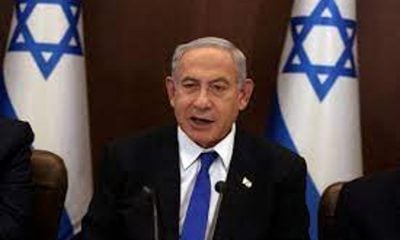
Khan said Indian Muslims he knew who many years ago had been happy about their situation in India were now very worried. He said Modi, like Israeli Prime Minister Benjamin Netanyahu, was electioneering based on “fear and nationalist feeling”.

Khan did appear to offer India an olive branch, saying Islamabad was determined to dismantle all Pakistan-based militias in the country, and that the government had full support from Pakistan’s powerful army for the programme. Those to be dismantled include groups involved in Kashmir. Nuclear-armed neighbours Pakistan and India both claim Kashmir in full but rule in part.

Khan said Kashmir was a political struggle and there was no military solution, adding that Kashmiris suffered if armed militants from Pakistan came across the border, leading to Indian army crackdowns.

Relations between Pakistan and India, which have fought three wars since gaining Independence from Britain in 1947, reached a crisis point in February after a suicide bombing killed 40 CRPF men in Kashmir.

Islamabad denied responsibility for the February 14 attack, which was claimed by Pakistan-based militant group Jaish-e-Mohammed, but the bombing prompted India to carry out a cross border air strike against what it said was a militant training camp in Pakistan. Pakistan responded with air strikes of its own.

Pollsters say Modi and the BJP’s re-election bid got a boost from a wave of patriotism after the suicide bomb attack and the Indian government’s fast response. Khan said there was still the possibility if the polls turn against Modi in the next few weeks that India could take some further military action against Pakistan.

Pakistani Foreign Minister Shah Mahmood Qureshi warned on Sunday that Islamabad had ‘reliable intelligence’ that India would attack again this month. On the other hand,India described the claim as irresponsible.

Khan said that it was vital for Pakistan to have peace with its neighbours, Afghanistan, India and Iran, if it was to have the kind of economy needed to pull 100 million people out of poverty.

(With Reuters Inputs)[/vc_column_text][/vc_column][/vc_row]

India News

Rahul Gandhi attacks Centre ahead of Vladimir Putin’s India visit

Rahul Gandhi alleged that the government discourages visiting foreign dignitaries from meeting Opposition leaders, calling it a sign of “insecurity,” hours before Russian President Vladimir Putin arrives in Delhi.

Published

on

Rahul Gandhi

As Russian President Vladimir Putin arrives in Delhi today for the India-Russia Annual Summit, Leader of the Opposition Rahul Gandhi has renewed his charge that the Centre discourages visiting foreign leaders from meeting Opposition representatives. He called it a sign of “insecurity” within the government.

Rahul Gandhi alleges break in long-followed tradition

Speaking outside Parliament, Rahul Gandhi said that it has traditionally been the norm for visiting foreign leaders to meet the Leader of the Opposition, a practice he claims continued during the tenures of Atal Bihari Vajpayee and Manmohan Singh.

He alleged that the present government advises foreign dignitaries against such meetings. “When foreign leaders come, the government suggests they should not meet the Leader of the Opposition. This is their policy,” Gandhi said. He added that a meeting with the Opposition offers visiting leaders a broader perspective, as “we too represent India.”

Gandhi further stated that this approach reflects the government’s reluctance to allow engagement between the Opposition and foreign guests.

Former Foreign Secretary counters Gandhi’s remarks

Responding to Gandhi’s allegations, former Foreign Secretary and Rajya Sabha MP Harsh Vardhan Shringla said visiting leaders operate on very tight schedules and there is no protocol mandating a meeting with the Leader of the Opposition. He stressed that such interactions depend entirely on the guest’s time and preference, noting that the required meetings are those with the President and the Prime Minister.

Putin’s schedule packed with bilateral engagements

Russian President Vladimir Putin is set to land in Delhi this evening on Prime Minister Narendra Modi’s invitation. His itinerary includes:

  • A private dinner with PM Modi
  • Visit to Mahatma Gandhi’s memorial at Raj Ghat
  • Engagements at Bharat Mandapam and Hyderabad House
  • A banquet hosted by President Droupadi Murmu

The visit forms part of the 23rd India-Russia Annual Summit.

Continue Reading

India News

TMC MLA Humayun Kabir suspended after Babri Mosque replica proposal sparks row

TMC suspended MLA Humayun Kabir after he proposed building a Babri mosque replica in Murshidabad, a move that drew criticism from the party and sparked political tension.

Published

on

Trinamool Congress on Thursday suspended MLA Humayun Kabir after he publicly announced plans to construct a replica of the Babri Masjid in West Bengal’s Murshidabad district. Party leaders said Kabir had earlier been cautioned for making such statements but continued to push ahead with the controversial proposal.

Kolkata Mayor Firhad Hakim said the MLA’s remarks were unacceptable, stressing that the party stood firmly by its secular stance. “We noticed that one of our MLAs suddenly declared he would build the Babri masjid. We had warned him before. As per the party’s decision, we are suspending him,” he said.

Kabir vows to continue project, may form new party

Kabir had planned to lay the foundation stone for the mosque replica in Beldanga on December 6. Sources indicated he is likely to resign from Trinamool on Friday and float a new party while continuing with the project.

The choice of date and nature of the project drew sharp criticism from the Trinamool leadership. Hakim alleged the move reflected a “divisional politics” strategy aligned with the BJP. “Why December 6? He could build a school or college. This is divisional politics,” he said.

Sources also said Chief Minister Mamata Banerjee was “hugely annoyed” by Kabir’s remarks and informed him that the party would not support or associate with such activities.

Governor raises concerns, administration on alert

West Bengal Governor Ananda Bose questioned why action was not being taken if the MLA’s statements risked creating a law-and-order issue. He said intelligence inputs suggested attempts to turn Murshidabad into a “hub of scandal,” adding that authorities would not remain silent if communal tensions were provoked.

Officials confirmed that while Kabir has permission to hold the December 6 event, the administration is maintaining a high-level alert in Murshidabad.

Minutes after his suspension, Kabir withdrew from Mamata Banerjee’s rally in the India–Bangladesh border district, where she was protesting against the Special Intensive Revision (SIR) of voter lists.

BJP attacks Kabir over remarks

BJP spokesperson Pratul Shah Deo condemned Kabir’s comments, claiming they were intended to “create communal tensions.” He said any attempt to raise structures linked to historical rulers would trigger disputes similar to the Babri Masjid conflict.

Continue Reading

India News

Karnataka Power Shift: What Siddaramaiah–DK Shivakumar compromise formula means

A closer look at the emerging ‘compromise formula’ between Karnataka’s top leaders Siddaramaiah and DK Shivakumar, and how it may shape the state’s political future.

Published

on

A possible settlement between Karnataka Chief Minister Siddaramaiah and Deputy Chief Minister DK Shivakumar has emerged, signalling a calmer phase in the leadership tussle within the state Congress. While the final decision rests with the party leadership in Delhi, details of the so-called “compromise formula” are gradually becoming clearer.

Breakfast diplomacy calms tensions

After weeks of speculation over friction between the two top leaders, Siddaramaiah and Shivakumar met over breakfast today. The meeting, aimed at projecting unity, served as a symbolic reset after their strained ties over the chief ministership question.

Analysts believe the optics were crucial — the Congress successfully avoided a public showdown by diffusing tensions before they escalated further.

A transition of power likely, say analysts

According to political observers, the compromise indicates a strong possibility of Shivakumar taking over as Chief Minister in a smooth transition, potentially as early as March–April 2026.
For now, sources say the arrangement requires Shivakumar to continue as Deputy Chief Minister without pushing for immediate change.

In return, the formula reportedly includes more cabinet positions for leaders loyal to Shivakumar and continuation of his role as the state Congress chief. Siddaramaiah is also expected to back Shivakumar as the party’s face for the 2028 Assembly election.

Why the Congress prefers this route

Replacing Siddaramaiah abruptly would not only upset internal balance but could also weaken the party, given his stature and mass appeal. Shivakumar, despite his influence, does not have the numbers within the legislature to force a takeover, making compromise the most viable path.

Siddaramaiah has already stated that this will be his final term as Chief Minister. With his legacy secure and his position as one of Karnataka’s tallest leaders intact, he appears willing to enable a dignified transition when the time comes.

Variables that could shape the final outcome

The success of the formula depends on three key factors:

1. Trust between the two leaders

Whether Shivakumar believes Siddaramaiah will keep his word remains uncertain. Karnataka’s political history is full of last-minute shifts, giving rise to the phrase “natak in Karnataka”.

2. Decision-making by the Congress high command

Delhi’s leadership must ensure the transition happens on time and without internal resistance, especially in the run-up to the 2028 Assembly polls.

3. Caste equations and political alignment

Siddaramaiah is the strongest face of the AHINDA bloc, while Shivakumar represents the OBC Vokkaliga community. The Congress cannot afford to alienate either group, making the timing and execution of any transition extremely delicate.

Continue Reading

Trending

© Copyright 2022 APNLIVE.com