English हिन्दी
Connect with us

Latest Politics News

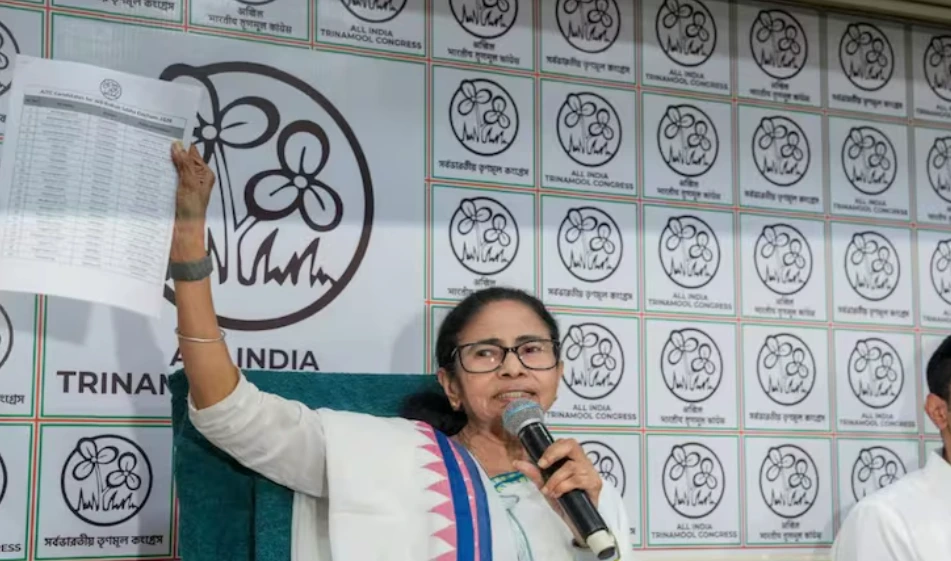
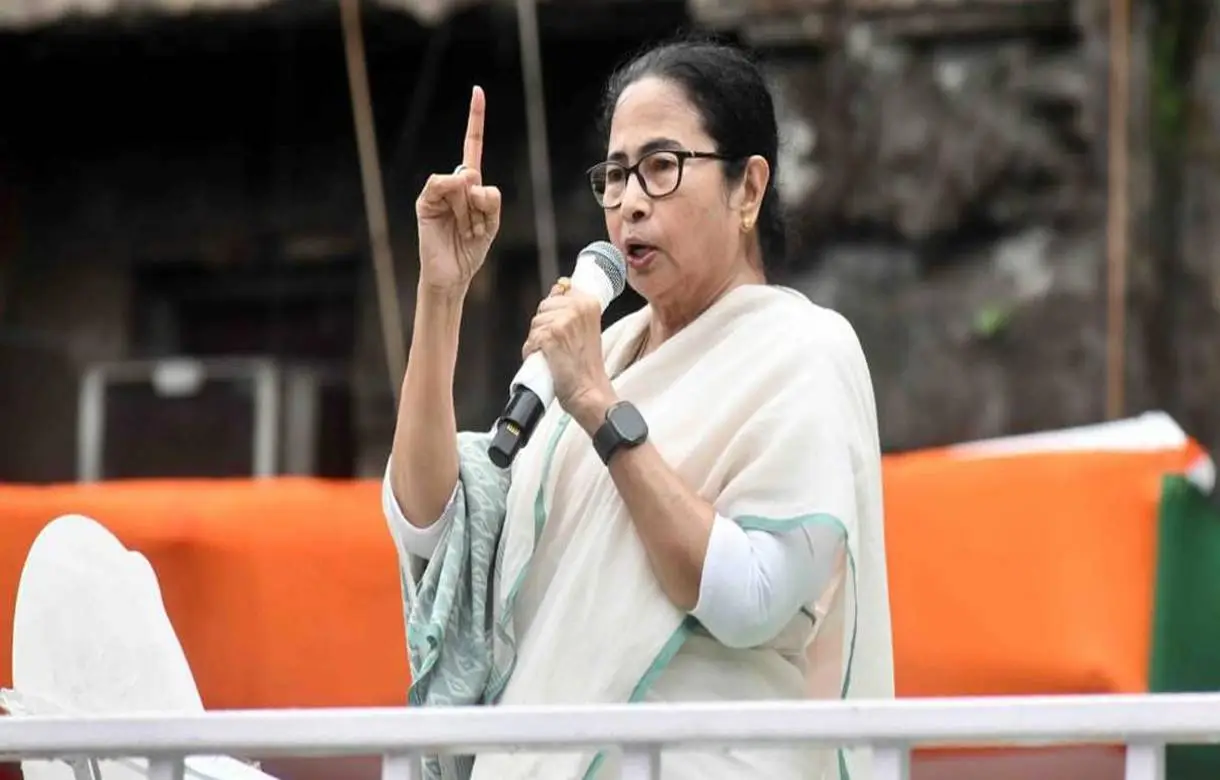
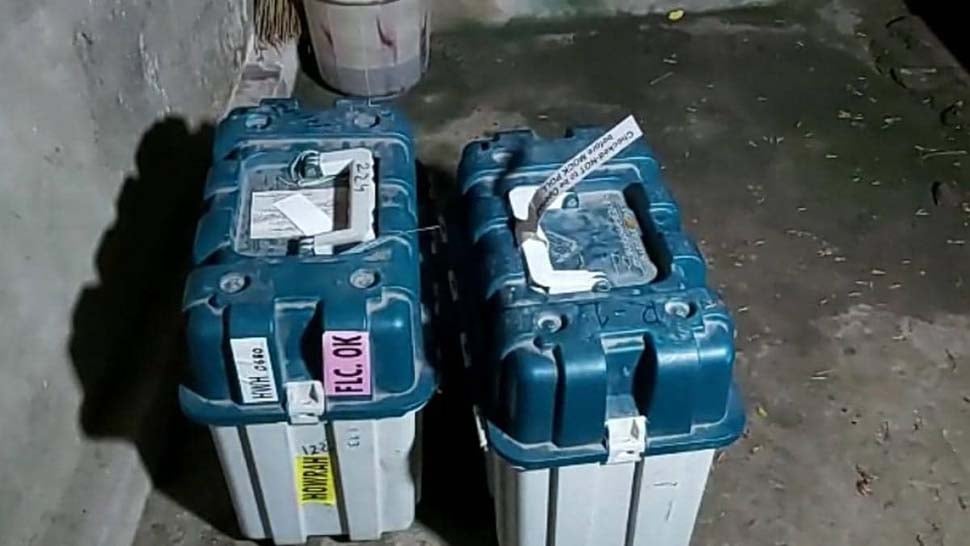
Election Commission suspends Bengal Poll Officer who slept over at Trinamool leader’s home with EVM

The Election Commission on Tuesday suspended a Bengal election officer who claimed that he slept overnight at the home of his relative, a Trinamool Congress leader with an electronic voting machine (EVM)

Published

on

EVM

The Election Commission on Tuesday suspended a Bengal election officer who claimed that he slept overnight at the home of his relative, a Trinamool Congress leader with an electronic voting machine (EVM). The EVM and VVPAT will not be used in the polls, the election body said this morning.

Tapan Sarkar, the deputed electoral officer for Howrah’s Sector 17 in AC 177 Uluberia Uttar, was found to have taken a reserve EVM for a sleepover to his relative’s home who is a politician from Trinamool Congress. The authorities have said charges for major punishment will now be framed against the official. Police officials attached to him will also face action, they said. 

The Election Commission in a release said that this is a gross violation of the Election Commission of India’s instructions for which the Sector Officer has been suspended and charges will be framed for major punishment.

The EC has also said that the reserved EVM found at the TMC leader’s home has been removed from the election process for the assembly elections. EC has also said that the sector police attached to the election officer has also been directed to be suspended. General Observer Neeraj Pawan has checked all seals of the EVM, which has now been stored in a separate room under the observer’s custody, the Commission has said.

Read Also: India reports 96,982 new Covid cases, 446 deaths, night curfew in Delhi

News agency ANI reported that Union Minister Prakash Javadekar demanded a full inquiry into the matter, saying it is more serious because today is the voting day and this may be a bigger thing than it seems. So the government demands that there should be a full inquiry of these VVPATs and EVMs found in his house, he said.

India News

PM Modi accuses Congress of anti-Sikh bias over Rahul Gandhi’s ‘traitor’ remark

Prime Minister Narendra Modi accused Rahul Gandhi of targeting BJP MP Ravneet Singh Bittu with a ‘gaddar’ remark because of his Sikh identity while speaking in the Rajya Sabha.

Published

on

PM Modi

Prime Minister Narendra Modi on Wednesday launched a sharp attack on Leader of the Opposition Rahul Gandhi, alleging that his “traitor” remark against BJP MP Ravneet Singh Bittu reflected the Congress party’s animosity towards the Sikh community.

The Prime Minister made the remarks in the Rajya Sabha while replying to the motion of thanks on the President’s address. Referring to an incident in the Parliament complex a day earlier, Modi said Gandhi’s comment had crossed all limits of political decency.

The controversy stems from a protest by suspended Opposition MPs, during which Ravneet Singh Bittu — a former Congress leader who joined the BJP ahead of the 2024 Lok Sabha elections — allegedly made a remark suggesting the protesters were behaving as if they had won a war.

In response, Rahul Gandhi was heard saying, “A traitor is walking by, look at his face,” before approaching Bittu and extending his hand. Gandhi then reportedly added, “Hello, brother. My traitor friend. Don’t worry, you will come back.”

Bittu refused to shake hands with the Congress leader and instead described him as an “enemy of the country” before walking away from the scene.

While the Congress later clarified that Gandhi’s remark was aimed at Bittu for leaving the party, the BJP seized upon the comment, calling it an insult to the Sikh community. Protests were subsequently held by members of the Sikh community outside the Congress headquarters and at other locations.

Addressing the House, Prime Minister Modi said that many leaders had quit the Congress in the past and that the party itself had split multiple times, but none of those leaders had been labelled a traitor. “He called this MP a traitor because he is Sikh,” the Prime Minister alleged, as treasury bench members raised slogans condemning the remark.

Continue Reading

India News

PM Modi skips Lok Sabha reply as protests force repeated adjournments

PM Modi did not deliver his Lok Sabha reply today after sustained Opposition protests led to repeated adjournments over a dispute involving Rahul Gandhi’s proposed speech.

Published

on

PM Modi

Prime Minister Narendra Modi did not deliver his scheduled reply to the Motion of Thanks on the President’s address in the Lok Sabha today after sustained Opposition protests led to multiple adjournments of the House.

The disruption followed an escalation of tensions linked to Congress leader Rahul Gandhi’s proposed speech and the suspension of eight Opposition MPs a day earlier. The situation worsened after remarks made by BJP MP Nishikant Dubey during the proceedings.

Dispute over references to books sparks fresh ruckus

The controversy intensified when Nishikant Dubey responded to Rahul Gandhi’s demand to speak on national security and references to the unpublished memoirs of former Army chief General MM Naravane. Dubey said that while Gandhi wanted to quote from an unpublished book, he himself had brought several books that, according to him, made claims about the Gandhi family.

As Dubey began listing these books and their contents, strong protests erupted from Opposition members. Krishna Prasad Tenneti, who was presiding over the House at the time, cited Rule 349, which restricts members from reading out books, newspapers, or letters unless directly related to parliamentary business. Despite repeated warnings, the matter remained unresolved, leading to another adjournment.

Rahul Gandhi accuses government of silencing debate

Earlier in the day, Rahul Gandhi alleged that he was being prevented from speaking on an issue of national importance. He claimed the government was uncomfortable with references to General Naravane’s memoirs, which he said discussed the handling of the 2020 China border crisis.

In a social media post, Gandhi said he intended to present the Prime Minister with a book authored by the former Army chief, adding that some cabinet ministers had even questioned the existence of the book. He also wrote to Lok Sabha Speaker Om Birla after the suspension of eight Opposition MPs, alleging that parliamentary debate was being curtailed.

After it became clear that the Prime Minister would not speak in the House today, Gandhi posted that PM Modi had avoided Parliament because he was “scared” to face the truth. Congress MP Priyanka Gandhi Vadra echoed the allegation, claiming the Prime Minister was unwilling to enter the House.

Proceedings disrupted throughout the day

Lok Sabha proceedings were first adjourned until 2 pm amid loud protests over the issue linked to Naravane’s memoirs. Even after the House reconvened, disruptions continued, preventing normal business from resuming.

Later, Congress MPs staged a demonstration outside the Parliament complex, demanding that Rahul Gandhi be allowed to speak on the President’s address.

Continue Reading

India News

President’s Rule revoked in Manipur as NDA set to form new government

President’s Rule has been withdrawn in Manipur nearly a year after its imposition, paving the way for a new NDA-led government under Yumnam Khemchand Singh.

Published

on

President rule invoked in Manipur

President’s Rule has been revoked in Manipur nearly a year after it was imposed, clearing the way for the formation of a new government led by the BJP-led National Democratic Alliance (NDA). The decision came hours before the scheduled oath ceremony of the new council of ministers.

Chief minister-designate Yumnam Khemchand Singh is set to take oath later this evening, along with other NDA legislators who will formally join the new government. The revocation brings an end to central rule that had been in place since February 2025, following the resignation of then chief minister N Biren Singh.

Assembly status during central rule

During the period of President’s Rule, the Manipur Legislative Assembly remained in suspended animation, meaning it was neither functioning nor dissolved. With the restoration of the elected government, legislative activity is expected to resume.

Khemchand Singh, 61, belongs to the Meitei community. Two deputy chief ministers have been named to reflect Manipur’s ethnic diversity. Nemcha Kipgen, from the Kuki community, and Losii Dikho, from the Naga community, are set to take charge as deputy chief ministers.

According to people with direct knowledge of the matter, Nemcha Kipgen is likely to take oath from a Manipur government guesthouse in Delhi.

Key portfolios and leadership choices

Seven-time MLA from Bishnupur district, Govindas Konthoujam, said he has been entrusted with the Home portfolio. Emphasising stability and law and order, he said he remains committed to serving the state with discipline and restraint.

Sources said Khemchand Singh is viewed within the party as a non-polarising leader who is acceptable across internal factions at a time of political transition. While he is yet to be tested in governance, he is seen as a steady administrative choice capable of providing organisational discipline and continuity amid uncertainty.

Uneasy peace continues in Manipur

The formation of the new government comes against the backdrop of continued tension in Manipur, nearly three years after violence erupted between the Meitei community in the valley areas and the Kuki tribes in several hill districts.

A section of Kuki groups has been demanding a separate administrative arrangement, with negotiations involving multiple insurgent groups operating under two umbrella organisations that are signatories to the suspension of operations agreement.

In recent weeks, some Kuki civil society organisations have stated they would not participate in the Manipur government and have distanced themselves from Kuki MLAs expected to join the new administration.

A day before the announcement of the new government, Kuki leader Paolienlal Haokip posted on X that representatives of the Kuki Zo people could not take part in leadership selection without justice and a written commitment for political settlement.

Diverging demands from communities

Meitei civil society groups have maintained that all internally displaced persons should be allowed to return home safely, even as dialogue continues. However, Kuki leaders have insisted that a political solution in the form of a separate administration must come first, before discussions on rehabilitation and return from relief camps.

Meitei leaders have countered this position, arguing that the demand reflects an ethnocentric territorial claim and that humanitarian issues should be addressed alongside negotiations, as no area is exclusively inhabited by a single community.

Continue Reading

Trending

© Copyright 2022 APNLIVE.com