English हिन्दी
Connect with us

India News

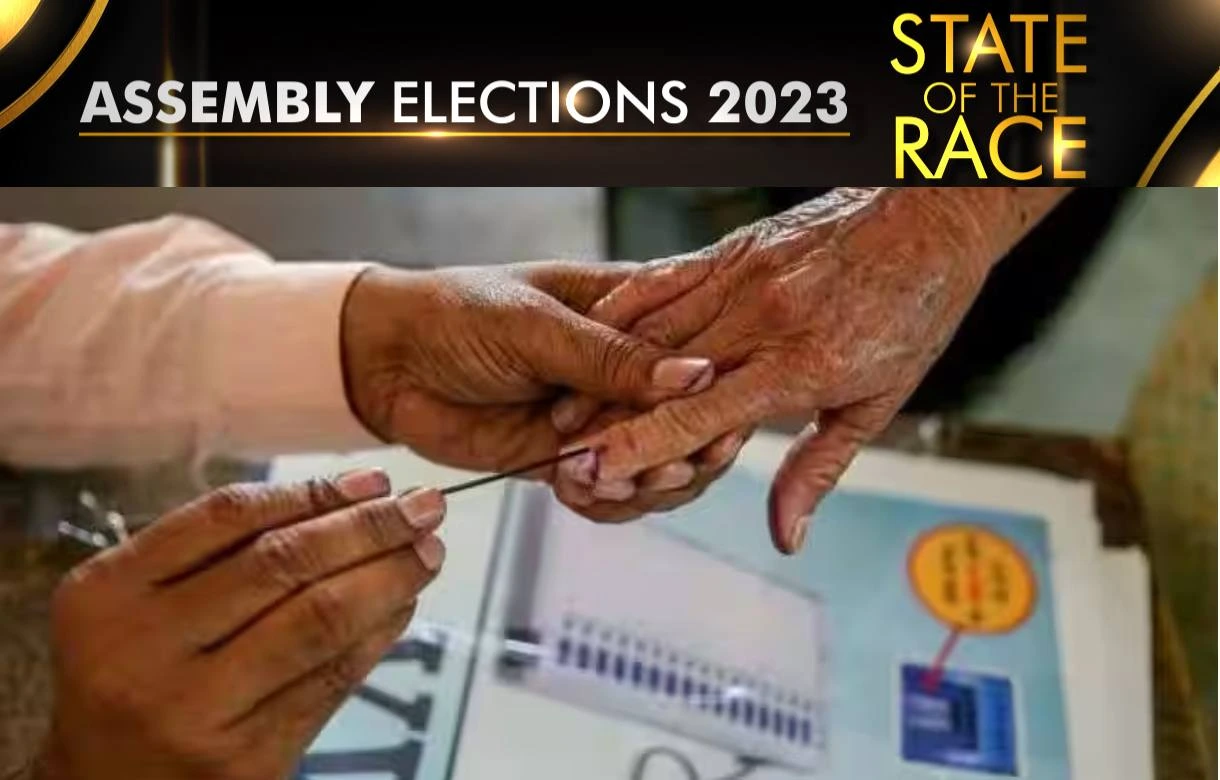
5 state elections: Exit poll projections range from a farce to the far-fetched

Pollsters run full time advisories on election management charging hundreds of crores. They can make or break political careers with their advice “based on research” leading to denial or offer of party tickets.

Published

on

By Neeraj Mishra

Every year, some states have elections and every year, a farcical drama is played out on television channels, for days adding up to the actual counting hour. Familiar faces create and discuss highly improbable situations, stereotyped characters indulge in violence of words and extravagant exaggeration.

It is all aimed at creating confusion in the voter’s mind, infusing satta markets with more punters and general joy at the expense of viewers. This year is no different. India Today thinks the BJP can get 162 seats in Madhya Pradesh bettering its previous tally by more than 50. It does not pause to think why and how this is possible. The perceived anti-incumbency of 20 years has been turned on its head and a Gujarat-like result is possible without a similar communal situation or voter mindset.

At the same time, there are three other channels which think it’s a close race giving an average of only 100 seats to the BJP, 16 short of majority. Psephology is now a full time business with at least a dozen big companies that employ innumerable fake scientists.

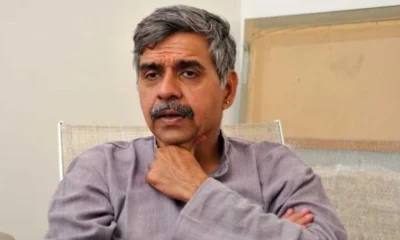
Some of these companies have taken this to the next level like Prashant Kishor. They run full time advisories on election management charging hundreds of crores. They can make or break political careers with their advise “based on research” leading to denial or offer of party tickets. Clearly, winning is the only thing that matters as stakes are too high and the prize is control over the entire system at the state level.
Back to the exit polls though, the song on Chhattisgarh is quite identical in every channel. Every psephologist worth his salt knows that the BJP was so far behind in 2018 at 15 seats compared to the Congress’ 70 that to recover and beat it would be next to impossible, so every channel has the Congress ahead. But in a house of 90 to say that BJP will get between 36-46 seats and Congress will get 40-50 seats is a joke at the very least.

It would mean both parties are forming the government and the researcher is not sure so he has played safe. Keeping a two per cent margin in predictions is absolutely unacceptable here, since traditionally the difference between the two parties has been less than 2 per cent, except in 2018. Even a 0.75 per cent difference in votes can lead to a BJP-50 and Congress-38 situation in 2013. So to say, the BJP can get between 36 to 46 seats is absurd.

It’s the difference between losing and forming the government. After having covered more than two dozen elections, one has seen that the safest way to predict results is based on the prevailing mood about three months before the elections are announced. Barring something as drastic as Pulwama, people are unlikely to change their mind at the last moment.

So to say all along the campaign period that such and such party is improving its position is mostly low conjecture. Another noticeable thing in this elections has been the freebies on offer by sitting governments in all states. Shivraj Singh Chouhan beat them all by announcing he would give Rs 3000 per month to every married woman if voted back to power.

He even delivered two installments during the campaign period while the Election Commission did nothing about it, it did stop K. Chandrashekhar Rao from dispensing his pro-farmer cash. So have the labharthis (beneficiaries) then appropriated this round of elections? They certainly have caused a major rift among psephologists.

The wide difference in their predictions is perhaps also caused by which set of Labharthi they talked to. Labharthis also tend to aggregate their votes regionally. For instance in famine-ridden Bundelkhand in Madhya Pradesh, Rs 3000 means a lot but not so much in more affluent Malwa-Nimad.

The Congress’ offer of loan waiver may trump the BJP’s offer of Rs 12000 per annum to every woman over 18 in the Chhattisgarh plains but in the hilly tribal areas, it still rings a bell. Exit poll is an effective salve to pacify nervous candidates and supporters. No one really remembers or credits the channels with anything even if they were spot on. It is only a three-day carnival and should be treated as such. Real life happens on counting day.

India News

Congress, BJP attack Bhagwant Mann over remarks on Punjab blasts

Congress and BJP have jointly criticised Punjab CM Bhagwant Mann after he linked recent blasts near defence sites to political motives, triggering a controversy.

Published

on

Bhagwant Mann

A political row has erupted in Punjab after Chief Minister Bhagwant Mann linked recent blast incidents to political motives, drawing sharp criticism from both the Congress and the Bharatiya Janata Party (BJP).

The controversy follows two low-intensity explosions reported within a short span of time — one near the Border Security Force (BSF) headquarters in Jalandhar and another close to an army cantonment area in Amritsar. The incidents raised concerns over security, particularly given the sensitive nature of the locations.

In response, Mann suggested that the blasts could be part of a larger political strategy. His remarks triggered a strong backlash, with opposition parties accusing him of politicising a serious security issue.

Leaders from the Congress criticised the Chief Minister’s statement, calling it inappropriate and alleging that such comments undermine the gravity of the situation. They stressed that matters related to national security should be handled with caution and responsibility.

The BJP also joined the criticism, questioning the basis of Mann’s claims and urging the state government to focus on investigation and law enforcement instead of making political allegations.

The developments have led to an unusual moment where both Congress and BJP appear aligned in their criticism of the Aam Aadmi Party-led government in the state.

Meanwhile, the blasts themselves have intensified concerns over safety in border regions, with authorities continuing their investigation into the incidents. No casualties were reported, but the proximity to defence establishments has made the issue particularly sensitive.

The episode has further escalated political tensions in the state, with security and accountability emerging as key points of debate.

Continue Reading

India News

Himanta Biswa Sarma resigns as Assam chief minister, oath ceremony likely after May 11

Himanta Biswa Sarma resigns as Assam Chief Minister after BJP-led NDA’s victory. He will continue as caretaker CM until the new government is sworn in after May 11.

Published

on

Himanta sharma

Assam Chief Minister Himanta Biswa Sarma resigned from his post on Wednesday, paving the way for the formation of a new government after the BJP-led NDA secured a decisive victory in the 2026 Assembly elections.

Sarma submitted his resignation to Governor Lakshman Prasad Acharya at Lok Bhawan in Guwahati. The Governor accepted the resignation and asked him to continue as the caretaker Chief Minister until the new government takes charge.

The resignation comes after the NDA’s strong electoral performance, where the alliance won a clear majority in the 126-member Assembly, ensuring its return to power for another term.

Oath ceremony expected after May 11

Speaking to reporters after submitting his resignation, Sarma said the swearing-in ceremony for the new government is likely to be held after May 11.

He indicated that Prime Minister Narendra Modi has been invited to attend the ceremony but is unavailable until May 11, which has influenced the tentative schedule.

Decision on next chief minister soon

Sources suggest that central observers, including senior BJP leaders, are expected to arrive shortly to oversee the selection of the legislature party leader. The newly elected MLAs will then decide on the next Chief Minister.

Despite the formal resignation, party sources indicate that Sarma is likely to continue in the role for another term, given the BJP’s strong mandate in the state.

The move marks the beginning of the government formation process in Assam following the election results declared earlier this week.

Continue Reading

India News

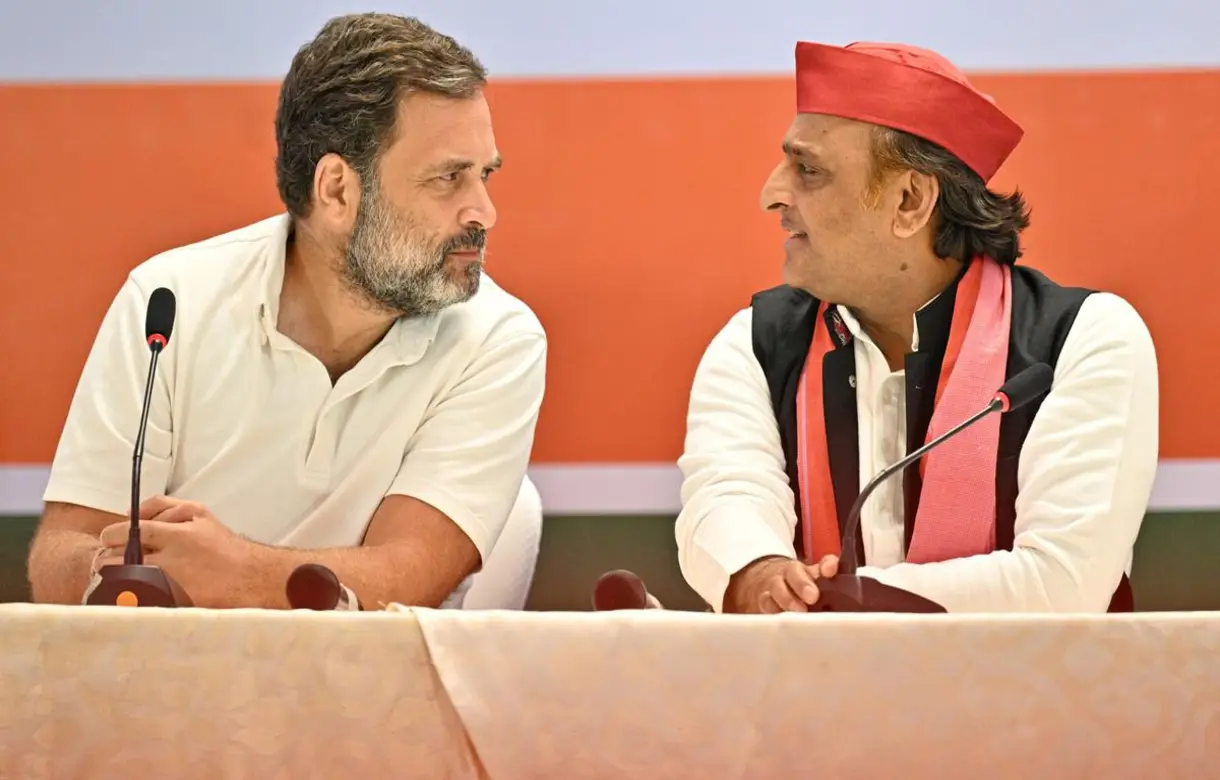
Rahul Gandhi and Vijay alliance took shape through backchannel talks, early signals from Congress leaders

Congress outreach and political calculations led to Rahul Gandhi and Vijay coming together after the Tamil Nadu 2026 election results.

Published

on

The coming together of Rahul Gandhi and actor-politician Vijay in Tamil Nadu after the 2026 Assembly elections was not sudden, but the result of behind-the-scenes political manoeuvring and early signals within the Congress.

According to media reports, some leaders in the Tamil Nadu Congress had already sensed the scale of Vijay’s surge during the campaign, anticipating what was later described as a “wave” in favour of his party.

After the results, where Vijay’s Tamilaga Vettri Kazhagam (TVK) emerged as the single largest party but fell short of a majority, communication channels between the Congress leadership and Vijay quickly became active.

A key moment in this evolving political equation was a phone call from Rahul Gandhi to Vijay, congratulating him on the party’s strong performance. The conversation was seen as more than a courtesy, signalling the possibility of cooperation at a time when government formation required additional support.

Reports indicate that discussions within Congress weighed the political benefits of supporting Vijay, especially given the shifting dynamics in the state where traditional dominance by major Dravidian parties has been challenged.

With TVK needing allies to cross the majority mark, Congress emerged as a potential partner, leading to a broader political realignment in the state. This development also triggered tensions within opposition alliances, highlighting the strategic importance of the decision.

The evolving partnership reflects a mix of electoral pragmatism and changing voter sentiment, particularly the growing influence of younger voters, which leaders acknowledged as a key factor in the election outcome.

Continue Reading

Trending

© Copyright 2022 APNLIVE.com