English हिन्दी
Connect with us

Latest Politics News

Gujarat assembly elections: Prime Minister Narendra Modi urges people to vote in large numbers, voting begins for 93 seats in second phase

BJP’s counterpart, Aam Aadmi Party chief Arvind Kejriwal has also come forward to urge the public to do something different this time, in a bid to see a change in the voting trends.

Published

on

Prime Minister Narendra Modi

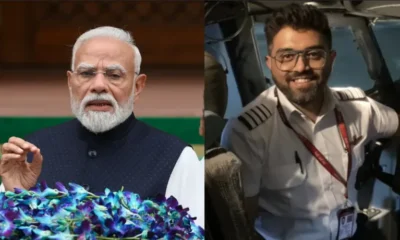
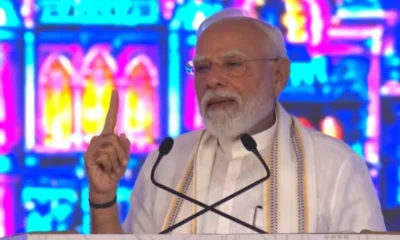
Prime Minister Narendra Modi on 5 December urged the people of Gujarat to show up in large numbers to vote for the second phase of the Gujarat assembly elections. Prime Minister in his Tweet also highlighted the need for the youth and the women to turn out in large numbers.

Prime Minister in his Tweet also added that he would be casting his vote from Ahemdabad today at 9 am.

The voting for 93 constituencies will be held today for which the ruling BJP and the Aam Aadmi Party are contesting all 93 seats, whereas the Congress party will be contesting for 90 of the 93 seats. Today marks the second phase of the election whereas, in the first phase which was held on 1 December, the voter turnout stood at 63.14%,

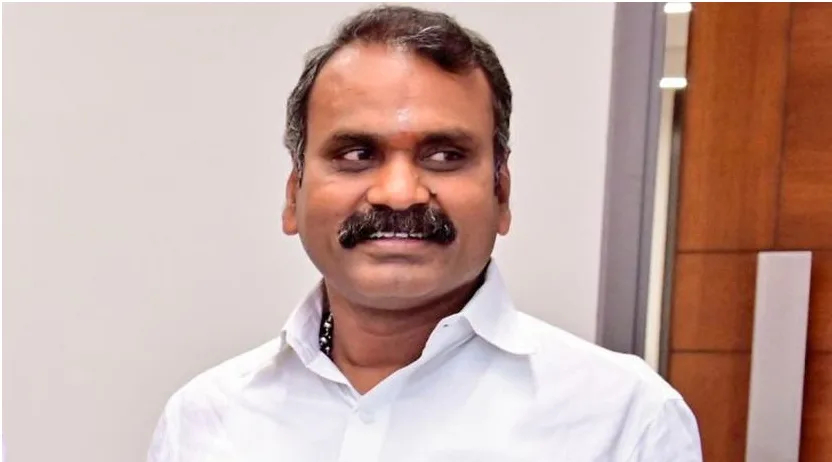
Read Also: Gujarat Congress MLA Kanti Kharadi alleges BJP workers attacked him, attackers include BJP’s Ladhu Parghi

Read Tweet here:

Arvind Kejriwal’s Tweet

BJP’s counterpart, Aam Aadmi Party chief Arvind Kejriwal has also come forward to urge the public to do something different this time, in a bid to see a change in the voting trends. Delhi CM Arvind Kejriwal in his Tweet also wrote that this election will bring new hopes and aspirations for Gujarat and marked it to be a great opportunity after decades.
He further urged the Public to vote for the progress of Gujarat and urged them to do something different and wonderful, suggesting a change in their voting ideals.

Read Tweet here:

Assembly Election result

The results of the Gujarat Assembly elections will be declared on the 8 December along with the Himachal Pradesh Assembly elections which also held their assembly election in November. The ruling BJP is expecting to retain its power and come out as a winner in the assembly polls, whereas the grand old party is anticipating a change in voting trends owing to the Bharat Jodo Yatra.

Aam Aadmi Party, which is contesting the Gujarat Assembly elections for the first time is expecting to enjoy the same support from the public in Gujarat that they have in the national capital.

Bigg Boss 16: Priyanka, Shiv and Archana cry their heart out in confession room, fans say Rs 50-50 kato overacting ka

Aamir Khan cries while talking about his father Tahir Hussain’s financial woes

India News

No uniform civil code provisions will be imposed on tribals, clarifies Amit Shah

Union Home Minister Amit Shah has assured tribal communities that the proposed Uniform Civil Code will not interfere with their customs, urging them not to be misled by misinformation.

Published

on

Union Home Minister Amit Shah on Sunday declared that the proposed Uniform Civil Code (UCC) will not impact tribal populations in any manner. He called upon the community to stay vigilant against “conspiracies” and misinformation circulating on the subject.

Addressing the Janjati Sanskritik Samagam—a tribal conclave organized by the Janjati Suraksha Manch at the Red Fort grounds to mark the 150th birth anniversary year of Birsa Munda—Shah stated that specific provisions have been implemented in states ruled by the ruling party to exclude tribal communities from the scope of the code.

Clarification on customs and traditions

The Home Minister highlighted that a deliberate narrative has emerged suggesting the proposed legislation would strip tribal societies of their distinct culture, traditions, and customary lifestyles.

He explicitly clarified that the central government has no intention of forcing UCC regulations upon tribal or Vanvasi communities. Shah pointed out that where regional administrations have initiated the code, care has been taken by the leadership to ensure that indigenous populations remain fully outside its jurisdiction. He requested attendees to disseminate this assurance deeply into forest zones and rural villages to erase lingering apprehensions.

Focus on security and community development

Beyond the legislative framework, Shah detailed the progress made toward curbing internal security threats, stating that the nation is steadily advancing toward eradicating Naxalism entirely. He noted that violent disruptions had severely restricted progress in these belts for decades, leading to the loss of thousands of tribal lives. According to the minister, regional stability will now pave the way for accelerated development across remote hills and forests.

The address also covered constitutional rights regarding personal faith. Shah mentioned that the original framework of the Constitution grants every citizen the dignity to practice their traditional beliefs without facing coercion, temptation, or material inducement for religious conversion.

Reflecting on financial allocations, the minister criticized earlier political administrations for keeping tribal welfare funding low. He underscored that the current administration under Prime Minister Narendra Modi significantly elevated the dedicated tribal budget from a previous Rs 28,000 crore to Rs 1.54 lakh crore. Terming the vast gathering a historical movement for cultural preservation, Shah described the societal awakening as a major step toward safeguarding tribal heritage for future generations.

Continue Reading

India News

Karnataka withdraws 42 criminal cases including 2022 Aland Dargah clashes, sparks massive BJP backlash

The Congress-led Karnataka government has cleared the withdrawal of 42 criminal cases, including those linked to the 2022 Aland Dargah clashes, drawing intense fire from the BJP over allegations of encouraging violent elements.

Published

on

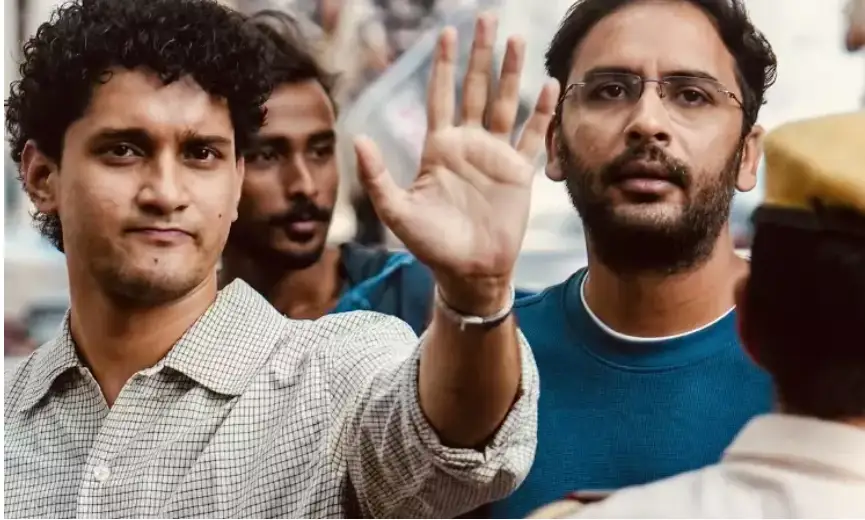
The Congress-led Karnataka government has officially cleared the withdrawal of 42 criminal cases, including several sensitive cases tied to the 2022 communal clashes at the Ladle Mashak Dargah in Aland town, Kalaburagi district. The decision has triggered an intense political confrontation, with the Bharatiya Janata Party (BJP) launching a fierce attack against the ruling administration.

Aland Dargah Clashes Under Focus

A major portion of the dropped cases involves 13 specific files connected to the communal violence that erupted in 2022. The tension originally ignited following allegations that a Shivling located inside the disputed Ladle Mashak Dargah premises had been desecrated. The situation rapidly escalated into large-scale unrest when a group of Hindu activists made attempts to enter the dargah to clean the structure.

During the ensuing rioting, extensive damage was inflicted on public and private property. Several vehicles were completely vandalised, including official transport vehicles used by high-ranking political figures such as Union Minister Bhagwanth Khuba and the Kalaburagi Deputy Commissioner.

Overruling Departmental and Legal Objections

According to internal sources, the state home department had initially strongly resisted the move to drop the riot-related cases. The department cited highly adverse legal opinions and expressed deep reservations regarding the suspension of prosecution in matters of sensitive communal violence.

Despite these departmental objections and legal warnings, a specialized Cabinet sub-committee reviewed and subsequently approved the withdrawal of the cases. The recommendation was then fast-tracked to the state Cabinet, which formally ratified and cleared the final decision.

“Encouraging Violent Elements,” Alleges BJP

The opposition BJP reacted sharply to the development, accusing the government of actively fostering lawlessness. Speaking on the decision, BJP spokesperson S. Prakash noted that this marks the third instance where the Congress administration has stepped in to drop severe criminal cases across the state.

“Cases linked to rioting and attempts to burn police stations were also withdrawn earlier,” Prakash stated, emphasizing that prior state actions of a similar nature had been legally contested and stayed by courts. He added that the administration has failed to learn any lessons from past judicial interventions.

The opposition spokesperson went on to allege that the decision was heavily influenced by senior party leadership, pointing toward pressure from leaders like Priyank Kharge or Mallikarjun Kharge. He claimed that by repeatedly withdrawing such cases, the government is effectively encouraging fringe elements to continue executing violence without fear of legal consequences.

State Government Stands Firm on Review Process

Defending the executive action, Karnataka Home Minister G Parameshwara clarified that the decision was neither rushed nor arbitrary. He emphasized that the Cabinet Sub-Committee meticulously reviewed approximately 52 total cases involving various socio-political organizations across the entire state.

“In the Cabinet Sub-Committee, every case was discussed individually to examine whether it could be legally withdrawn,” Parameshwara asserted. He explained that the panel moved forward only after establishing that there was concrete legal scope to do so. While refusing to delve deeper into the specific details of the Aland Dargah incident, he stated that the final step was a collective Cabinet decision where all pertinent parameters were fully evaluated.

Slamming the opposition’s narrative, Minister Satish Jarkiholi also stood by the administration’s choice. He noted that the beneficiaries of the 42 dropped cases span across multiple communities and groups, including farmers, local political leaders, and Muslims. Jarkiholi dismissed the BJP’s criticism as a standard, predictable allegation that is routinely leveled whenever such broad administrative reviews take place.

Continue Reading

India News

PM Modi urges shift to alternative energy and fuel austerity amid Middle East crisis

In response to severe energy and supply chain strains caused by the ongoing war in West Asia, Prime Minister Narendra Modi has ordered an intensive push toward alternative energy sources while urging the public to cut down on fuel consumption.

Published

on

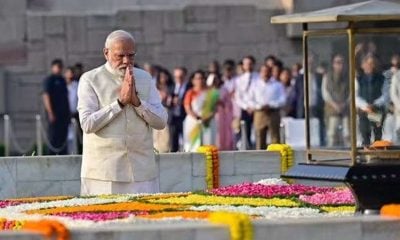
As the escalating conflict in West Asia continues to disrupt international supply chains and impact global markets, Prime Minister Narendra Modi has urged senior ministers and citizens to aggressively explore alternative energy sources and adopt conservation practices. Chaired by the Prime Minister, a high-level meeting of the Cabinet Committee on Security (CCS) evaluated the short, medium, and long-term economic and strategic implications of the ongoing Middle East war involving the US, Israel, and Iran.

The government’s primary focus remains on safeguarding citizens from the economic shockwaves of the conflict, which has heavily strained global petroleum, power, and fertiliser sectors. Media reports indicate that the blockade of critical trade lifelines like the Strait of Hormuz has sent oil marketing companies into severe daily revenue losses to keep domestic prices regulated, prompting a nationwide call for energy self-reliance and behavioral transformation.

High-Level review targeting energy security and supply stabilization

During the top-tier strategy session, the Prime Minister reviewed the immediate and prolonged steps required to guarantee uninterrupted supplies of essential commodities. Senior cabinet members—including the ministers of finance, external affairs, petroleum, and defense—assessed India’s overall preparedness.

“Chaired a meeting of the CCS to review the mitigating measures in the wake of the ongoing conflict in West Asia,” the Prime Minister stated in a digital update. He added that discussions heavily emphasized diversifying import sources for key industrial segments, boosting domestic distribution logistics, and establishing a robust shield against international market volatility.

The continuous monitoring of geopolitical developments is aimed at protecting both public consumption interests and large-scale industrial requirements.

A call for public fuel conservation and alternative energy

Addressing the wider public, the Prime Minister described the current global context as a challenging period that demands unified national resilience. He appealed to the citizens of the country to voluntarily cut back on petrol and diesel consumption, highlighting fuel austerity as a national responsibility to conserve precious foreign exchange reserves.

Suggested measures echo the structural adaptations utilized during the pandemic, including encouraging carpooling, optimizing the use of public urban metro systems, and transitioning back to remote work, virtual meetings, and online conferences where applicable.

Simultaneously, the administration is pressing forward with structural energy sector upgrades. Efforts are being channeled into accelerating non-fossil fuel power generation, advancing battery energy storage systems, and scaling up strategic petroleum reserves to ensure that India remains insulated from future external maritime and geopolitical chokepoints.

Continue Reading

Trending

© Copyright 2022 APNLIVE.com