Narendra Modi’s Bharatiya Janata Party has taken a historic lead in the Gujarat Assembly Elections 2022, with a total of 156. They have won 140 and are leading in 16 constituencies.
On the other hand, the Indian National Congress got limited at a total of 17 seats, where they have won 15 and are leading in 2 constituency. Aam Aadmi Party won 5 seats, Independent has 3 and Samajwadi Party has just 1 win in the Gujarat Assembly Elections 2022.
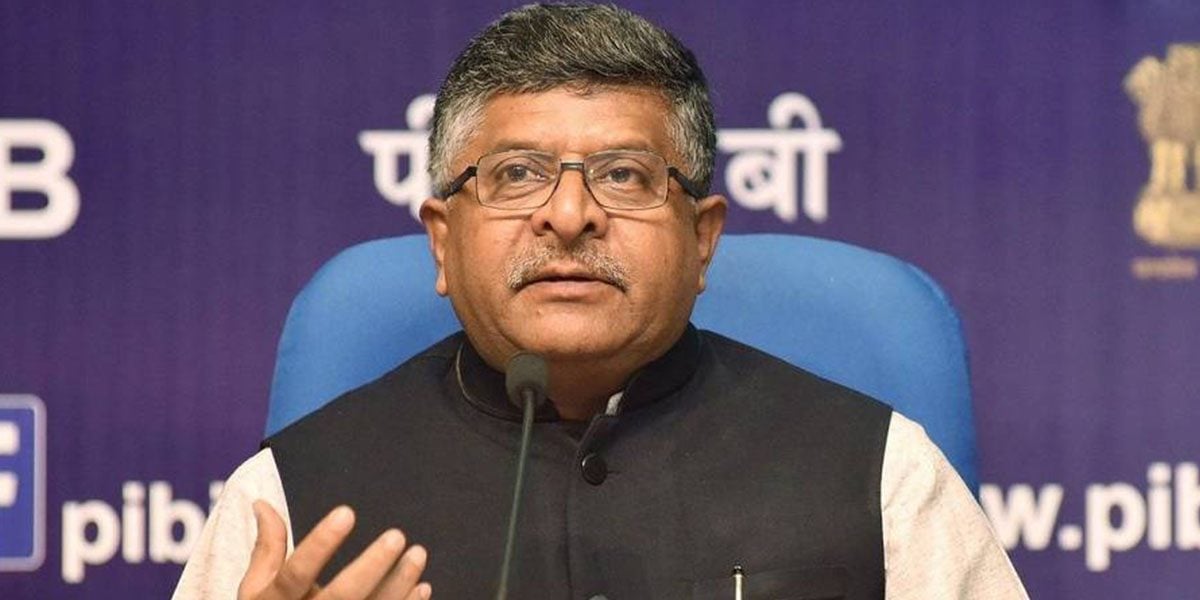
Prime Minister Narendra Modi expressed his happiness by thanking his home, state Gujarat today after party’s record-breaking victory. He wrote that people blessed politics of development and at the same time expressed a desire that they want this momentum to continue at a greater pace. “I bow to Gujarat’s Jan Shakti,” PM Modi wrote in a series of tweets.
The newly inducted grand old party’s Vadgam candidate Jignesh Mevani has turned the tables on BJP as the Congress candidate leads with a stellar support of votes of 69,801.
Fresh trends show that BJP is leading at 157 seats, while Congress is at 16, AAP is still at 5 and others are at 4. BJP’s Ritaben Ketankumar Patel is leading from Gandhinagar North.
BJP has taken over Gujarat Assembly Elections as the saffron party is leading with 156 seats, while Congress is struggling at 14 and AAP is still at 4 despite huge campaigning.
BJP’s Amitbhai Shah has won at Ellisbridge whereas, Kunvarji Bavalia has won the Jasdan seat.
Gujarat Home Minister Harsh Sanghvi won the Majura seat. A total of 4 candidates this year including AAP’s PVS Sarma, BSP’s Rameshprasad Kashiram Chamar, and Congress’ Balwant Shantilal Jain.
As per the latest trends by the Election Commission, BJP won eight seats in Gujarat so far and is leading in 150 seats.
Congress’ Jignesh Mevani is now trailing in Vadgam, early trends by the EC suggested.
Dalit leader and Vadgam’s sitting MLA from Congress Jignesh Mevani took a lead from the BJP’s Manibhai Vaghela. Mevani contested the 2017 assembly elections independently and won the Vadgam seat which has Dalit and Muslim-dominated voters.
Union Minister Rajnath Singh said there is pro-incumbency in Gujarat and the BJP is creating a new record as the people of the state have immense faith in Prime Minister Narendra Modi.
The AAP’s CM candidate, Isudan Gadhvi is leading over Congress’ sitting MLA Vikram Madam from Khambhalia with 13,658 votes. However, the party flopped in the state despite of massive campaign.
Arvind Kejriwal-led AAP failed to find their momentum as they trail behind at just 6 seats whereas the Congress Party stagnated at 18. The Incumbent BJP continues to dominate as they further move ahead in 154 seats.
BJP’s Kantilal Amrutia is leading from Morbi against Congress-fielded Patel Jayantilal Jerajbhai. Gujarat’s Morbi recently jumped the to headlines after the recent bridge collapse which led to 135 deaths.
BJP is set to break its own 2002 Gujarat Assembly 127 seats record as the Saffron party leads in 151 seats. Whereas the grand old party stagnated at 22 and AAP at 8.
Congress’s Jignesh Mevani continues to trail as the Vadgam candidate trails from his constituency according to trends. On the other hand, BJP’s 4-time MLD Babubhai Bokhiria trails from Porbandar.
The incumbent BJP further gains at 145 whereas the Congress fail to stir up any momentum as they lead in 22 seats. The AAP also improves as they gain 11 seats and other independent candidates gain 4.
Congress’s Jagdish Thakor claims that the grand old party will form government despite the poor performance by the Congress. The BJP continue to dominate as they gain 143 seats according to trends.
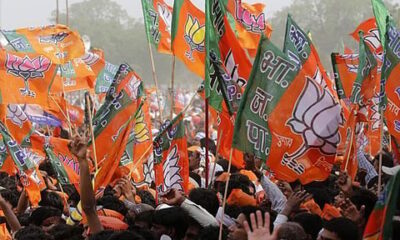
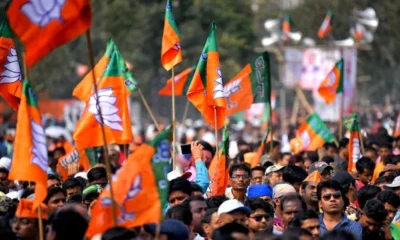
BJP workers reach the party office to claim early victory owing to the recent trends. According to reports, the workers reached the party office in heavy numbers and were seen performing Garba.
BJP further gains 144 seats as the Saffron Party continue to dominate, whereas the grand old party trail behind by leading in 26 seats. AAP stagnated in 10 according to recent trends.
Jignesh Mevani from Vadgam trails according to recent trends, however, Congress’s Arjun Modhwadia leads from Porbandar. BJP’s Rivaba Jadeja, the wife of cricketer Ravindra Jadeja, leads from Jamnagar.
The Grand old party continue to further catch up on the ruling BJP as they lead on 38 seats, while the Saffron party pulls further ahead at 141. AAP changes momentum and catches up on to Congress by leading in 9 seats. Others lead on 2 seats.
The grand old party fail to continue the momentum as they lead in 34 seats whereas the ruling BJP had 139 seats. Congress’s Jignesh Mevani holds strong as he continues to lead from Vadgam. Aam Aadmi Party gains on 8 seats while others are at 2.
A slight change trends according to NDTV as BJP gains 137 seats whereas Congress slows down and leads in 37 seats. AAP gains on 6 seats. BJP’s Alpesh Thakor leading from Gandhinagar South.
Congress slowly catching on behind the ruling BJP as they lead in 40 seats while its counterpart, the saffron party leads in 135 seats.
Cricketer Ravindra Jadeja’s wife Rivaba Jadeja leads from her constituency as the BJP leads in 118 seats whereas the grand old party lead in 34 seats according to NDTV. AAP gaining traction as they lead in 4 seats.
CM Bhupendra Patel leading from Ghatlodia, whereas Congress’s Jignesh Mevani is leading in Vadgam. AAP’s Isudan Gadhvi leads from Khambalia according to NDTV.
Narendra Modi-led BJP is leading in 91 seats, whereas Congress follow slowly behind by leading in 34 seats. AAP is still in at 1 according to the Times of India.
The voting trends according to NDTV have given a big lead to BJP in 61 seats, whereas its counterpart, Congress can be seen chasing behind in 19 seats. AAP continue to lead in 1 seat.
The ruling party continue to pull ahead as they can be seen leading in 29 seats, whereas Congress fail to chase behind at 10. AAP also leads by 1 seat.
The early trends according to NDTV, show the ruling Bhartiya Janta Party pulling ahead of others as they are leading at 9 seats, whereas, Congress can be seen chasing behind in 4.
The vote counting for the Gujarat assembly election has begun, stay tuned for more updates. The main parties who will be contesting for 182 seats are BJP, Congress, AAP, AIMIM, TMC, CPI, BTB, and NCP.
Results of the elections to the Gujarat Assembly will be out on December 8, Thursday. The second and last phase of the Gujarat Assembly Elections concluded on December 5. The first phase of voting took place on December 1.
According to the Election Commission of India, approximately 58.68 per cent of polling was recorded till 5 pm in the second phase of voting.
For the seventh consecutive year, the Bharatiya Janata Party is likely to clean sweep in Gujarat, exit polls predicted. The News X-Jan Ki Baat Exit Polls 2022 says BJP will win 117-140 seats while Congress+NCP will secure 34-51 seats and AAP is likely to win 6-13 seats.
Exit Polls of TV9 Gujarati predicted BJP to win 125-130 seats, Congress+NCP 40-50 seats, and AAP 3-5 seats. The Republic- P-MARQ exit polls had BJP winning between 128-148 seats, Congress+NCP 30-42 seats, and AAP 2-10 seats.
The Times Now-ETG exit polls say the BJP is likely to win 131 seats, the Congress+NCP is expected to secure 41 seats, and AAP is likely to win 6 seats.
Prominent seats in the second phase of voting were Viramgam from where Hardik Patel is contesting on the BJP ticket, Chief Minister Bhupendra Patel’s Ghatlodia in Ahmedabad, and Gandhinagar South from where BJP’s Alpesh Thakor is contesting.
For those unversed, exit polls are surveys carried out by media organisations outside the polling booths through sampling methods to forecast the likely results of the elections before the final outcome is declared. The counting of votes for the Gujarat Assembly polls will be conducted on December 8.
Read Also: Rampur Bypolls: Voters say they were denied their voting rights, allege brutality by police | Watch
Arvind Kejriwal-led Aam Aadmi Party fielded candidates in all 16 seats this year while Congress is contesting in 90 seats and the Nationalist Congress Party (NCP) has pitted candidates in 2 seats.
Reports said around 833 candidates contested across the 93-seat polling for the second phase of voting in the state. These are prominent seats for the Bharatiya Janata Party which has dominated for almost three decades now.
This year, Gujarat witnessed a three-way tough fight between the Bharatiya Janata Party, Aam Aadmi Party, and Congress. Prime Minister Narendra Modi and Chief Minister Bhupendra Patel also cast their votes and PM Modi also urged people to step out to vote.
Reports said the first phase of the Gujarat Assembly polls saw low turnout with a 34.7 per cent turnout was recorded till 1 pm on December 1.
The Exit Polls hint at a clean sweep for the ruling BJP in the Gujarat Assembly election as according to Aaj Tak-Axis My India the saffron party is at 140 and the grand old party is trailing behind at 23, the Aam Aadmi Party has predicted to have performed poorly as they are at 15.
As per the ABP News-Cvoter, the BJP is again sweeping the election at 134 as opposed to Congress, who are at Congress 37 as per exit polls; the Aam Aadmi Party is also falling behind at just 7.
MP: Congress top leaders Kamal Nath, Digvijaya Singh hug each other after Rahul Gandhi urges them | WATCH
Gujarat elections: CM Bhupendra Patel, Amit Shah cast vote, voter turnout 19.17 pc till 11 am