
Latest Politics News
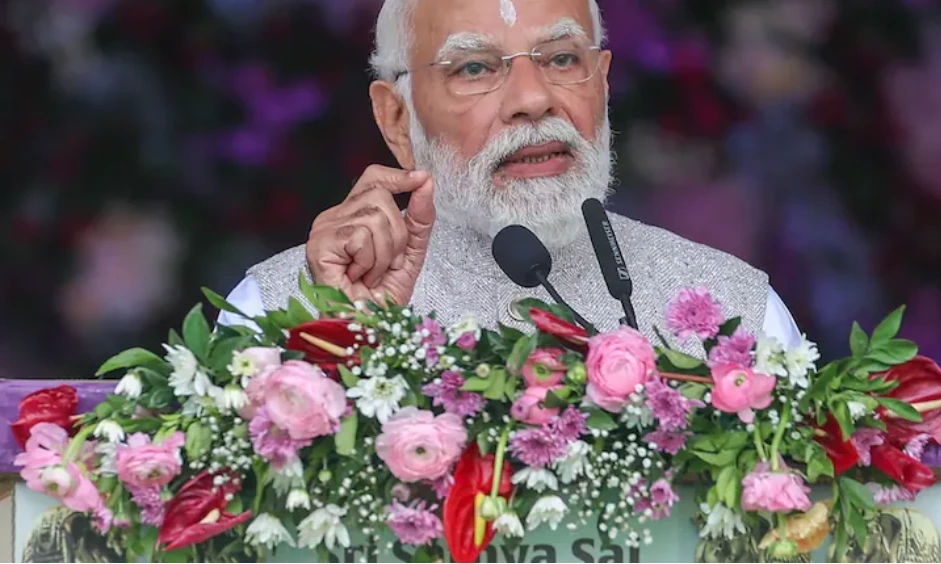
Himachal polls: CM Jairam Thakur casts vote with family, PM Modi appeals to voters to turn out in huge numbers
Sulah assembly constituency in Kangra district has the highest number of 1,06,976 voters and Lahaul Spiti has the lowest number of 24,744 voters.


Sixty-eight assembly seats in Himachal Pradesh haved turned to polls and citizens will cast their votes till 5 pm. As voters have not reached the polling booth in expected numbers in the morning, Prime Minister Narendra Modi and Chief Minister Jairam Thakur have urged the citizens to turn out in huge numbers.
There are 412 candidates from all over Himachal whose fate will be decided today. About 56 lakh voters in the state will cast their votes. Of these, as many as 28,54,945 are males and 27,37,845 are female voters while 38 voters are of other categories. Counting of votes will take place on December 8.
Live updates of voting in Himachal Pradesh…
• Prime Minister Narendra Modi has tweeted, today is the polling day for all the assembly seats in Himachal Pradesh. He has requested all the voters of Devbhoomi to participate in this festival of democracy with full enthusiasm and create a new record of voting. My special wishes to all the youth of the state who voted for the first time on this occasion, PM Modi added.
• Himachal Pradesh Chief Minister Jairam Thakur, while writing a message to the people in the state, tweeted that the people in the state should participate with full enthusiasm in this festival of democracy. Vote in large numbers. Your one vote will make a prosperous Himachal.

Most voters on Sulah seat
Sulah assembly constituency in Kangra district has the highest number of 1,06,976 voters and Lahaul Spiti has the lowest number of 24,744 voters.
Most polling booths in Kangra
Kangra district has the maximum number of polling booths at 1,625 and Lahaul-Spiti has the least number of polling booths at 92. All the polling stations have been made ready for polling. 15 per cent polling parties and 15 per cent EVM reserve have been kept, so that in case of EVM failure, it can be replaced immediately.
Webcasting at 50 per cent polling booths
For the purpose of transparency in elections, web-casting will be done at 50 per cent polling booths, so that no mischievous elements can obstruct the voting process. Through web-casting, the Central Election Commission will keep an eye on the state assembly elections from Delhi itself.
Women workers will conduct elections at 142 booths
At least 142 polling booths in Himachal Pradesh will be operated by women employees. Women police personnel will also take care of the security on them. Its purpose is to promote women empowerment. Similarly, 37 polling booths will be manned by Divyang personnel only.
33k security personnel are handling the responsibility
More than 33 thousand security personnel are handling the responsibility of assembly elections in the state. These include CRPF, SSB, ITBP, Police and Home Guard personnel.
The main contest in the state is between the Congress and the BJP. BJP is currently in power in the state and the party has put in full force to ensure their party sustains in these elections. The Congress currently has 20 MLAs, while the BJP has 45, 2 Independents and 1 MLA is of CPIM.






India News
BJP seals Assam seat-sharing pact, Modi to hold 3 rallies in April
BJP has finalised its Assam seat-sharing plan with allies and is gearing up for an intense campaign led by PM Modi and Amit Shah.

India News
Mamata Banerjee warns BJP, EC over Bengal polls, says they will be accountable
Mamata Banerjee holds BJP and Election Commission responsible for any incidents during Bengal polls, raising concerns over officer transfers.

India News
Mamata Banerjee writes to poll chief over officers’ reshuffle, calls move arbitrary
Mamata Banerjee has written to the Chief Election Commissioner, calling the reshuffle of senior Bengal officials arbitrary and raising concerns over constitutional norms.


Mamata Banerjee warns BJP, EC over Bengal polls, says they will be accountable

Top US counterterrorism official resigns over Iran war, cites conscience

US strikes Iranian missile sites near Hormuz with 5,000-pound bunker buster bombs

Netanyahu dismisses death rumours in video with US envoy, says I’m alive

Centre mandates 60% free seat allocation on flights, caps selection fees

Centre pushes states to cut levies to boost PNG adoption

BJP seals Assam seat-sharing pact, Modi to hold 3 rallies in April

Delhi Palam fire leaves 6 dead, massive rescue operation underway
Centre mandates 60% free seat allocation on flights, caps selection fees
Netanyahu dismisses death rumours in video with US envoy, says I’m alive

Afghan Men Try To Hang With The Jet Engine Of The Aircraft in Kabul- Afghanistan News – Kabul News
Trending Top 10 News: 10000 Crore Fine on Flipkart, Apple to Launch Unique Feature, Hdfc Bank Job Ad

Trending Top 10 News: Nokia 6310, Apple sales, Bachpan ka Pyar Video Kid, Dainik Bhaskar IT Raid

Trending Top 10 News: Canada bans Indian flights, Rain in Delhi NCR, AIMIM Twitter hacked, Raj Kundra case

Trending Top 10 News: Shein India, Apple New Service, Pocket Oxygen, Oppo Launched New Phone
-
 India News23 hours ago
Mamata Banerjee warns BJP, EC over Bengal polls, says they will be accountable
-
 Latest world news23 hours ago
Top US counterterrorism official resigns over Iran war, cites conscience
-
 Latest world news10 hours ago
US strikes Iranian missile sites near Hormuz with 5,000-pound bunker buster bombs
-
 Latest world news10 hours ago
Netanyahu dismisses death rumours in video with US envoy, says I’m alive
-
 India News9 hours ago
Centre mandates 60% free seat allocation on flights, caps selection fees
-
 India News8 hours ago
Delhi Palam fire leaves 6 dead, massive rescue operation underway
-
 India News56 mins ago
BJP seals Assam seat-sharing pact, Modi to hold 3 rallies in April
-
 India News46 mins ago
Centre pushes states to cut levies to boost PNG adoption
