English हिन्दी
Connect with us

India News

16-month-old Koo crosses 10 million users, here’s how

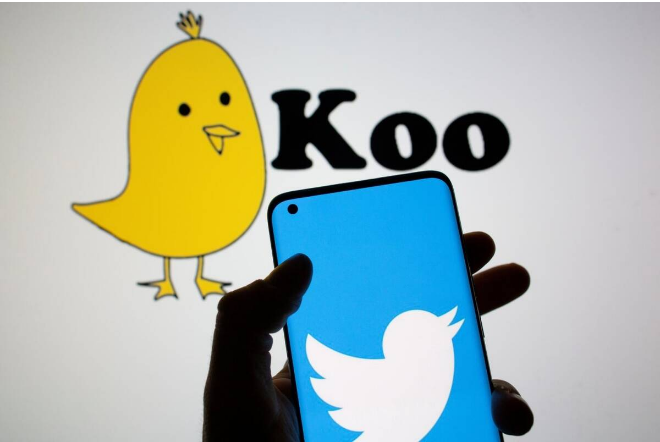
Koo, India’s alternative to Twitter Inc., has surged past 10 million users to narrow the gap with the US microblogging site after its repeated clashes with government over the past few months.

Published

on

koo

Koo, Twitter’s alternative in India, has registered a massive growth since its launch in March, 2020 as the multi-language micro-blogging app surged past 10 million users.

With such growing number of users, the made in India app has narrowed the gap with the US microblogging site Twitter.

Koo has achieved this milestone due to Twitter’s repeated clashes with government over the past few months.
After crossing 10 million app downloads in 16 months, it aims to touch 100 million downloads next year, fuelled by its expansion in multiple languages.

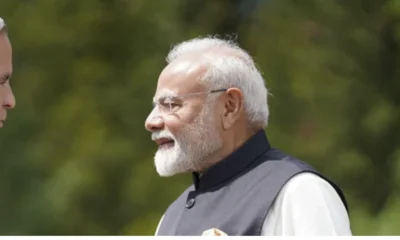
Around 85% of Koo users join the multi-language micro blogging app since February, when Twitter’s disputes with PM Modi led government escalated. Ministers, opposition politicians, cricket stars and Bollywood celebrities have since begun posting in Indian languages on Koo.

What is Koo?

Koo, which allows users to send tweet-like posts in English and seven languages such as Hindi and Kannada, was launched 16 months ago in March 2020 by a Bengaluru based start-up. Koo is currently available in 8 languages including Hindi, Kannada, Marathi, Tamil, Telugu, Assamese, Bangla, and English.

Who made Koo?

Koo was co-founded by Aprameya Radhakrishna (who is also the CEO of the company) and Mayank Bidwatka in March 2020.

Who are on Koo?

Koo has a 4.7 rating with 2.5 million downloads on the Play Store. Union Ministers such as former IT minister Ravi Shankar Prasad, Karnataka Chief Minister BS Yediyurappa, MPs Tejasvi Surya, Shobha Karandlaje are already on Koo. Apart from Ministers, several government handles such as NITI ayoga, MeitY, MyGov, Digital India, India Post and National Informatics Centre (NIC) among others are also on Koo.

Why the government is shifting to Koo?

In line with the Narendra Modi government’s push for Atma Nirbhar Bharat, the government and its ministers is moving to Koo, a homegrown version of Twitter. The app won the Aatmanirbhar App Challenge organised by the government last year in August to encourage homegrown innovation, soon after it banned a series of Chinese apps like TikTok. The app was getting special mention by the Prime Minister Narendra Modi in Mann Ki Baat episode.

Read Also: JD(U) national council wants Nitish Kumar as PM but not for 2024

What happened with twitter?

The sudden shift to Koo coincides with the government’s ongoing tussle with the Twitter. The company is currently engaged in a tough face-off with the Centre over the issue of free speech after it asked the platform to block the accounts of users posting inflammatory content. Indian users angry with Twitter’s free speech or rampant blocking laws have for a while been looking for other alternatives to Twitter.

In other India News, Bihar Chief Minister Nitish Kumar has all the qualities that a Prime Minister should have, but he is not in the PM race, his party, Janata Dal (United) said.

India News

BJP and Shiv Sena reach broad seat-sharing deal ahead of BMC elections

BJP and Shiv Sena are close to finalising seat-sharing for 200 wards ahead of the BMC elections, while opposition parties intensify alliance talks across Maharashtra.

Published

on

BJP Shivsena

The BJP and Shiv Sena have almost sealed their seat-sharing arrangement for the upcoming Brihanmumbai Municipal Corporation (BMC) elections, with an understanding reached on 200 of the total 227 wards in Mumbai, according to sources. The civic body polls are scheduled to be held on January 15.

The agreement was discussed during a late-night meeting of the Mahayuti alliance, which includes the BJP, Shiv Sena and the Ajit Pawar-led NCP. The meeting took place at Maharashtra Chief Minister Eknath Shinde’s residence in Thane and focused on strategy for several key municipal corporations, including Thane, Kalyan-Dombivli and Navi Mumbai.

Sources said similar meetings are lined up for Mumbai and other civic bodies such as Chhatrapati Sambhaji Nagar, Panvel and Mira-Bhayandar, as alliance partners work to finalise ward-level arrangements and campaign planning.

Congress explores new alliances in Mumbai

In Mumbai, Congress leaders are scheduled to meet Prakash Ambedkar’s Vanchit Bahujan Aghadi as the party looks to rebuild its alliance structure after parting ways with the Shiv Sena (Uddhav Balasaheb Thackeray faction). The distancing followed Sena (UBT)’s decision to join hands with the Maharashtra Navnirman Sena led by Raj Thackeray.

Sena (UBT) MP Sanjay Raut has confirmed that the party will contest the BMC elections in alliance with the MNS and the NCP led by Sharad Pawar. The inclusion of the NCP (Sharad Pawar faction) comes after Sharad Pawar rejected a proposal from the Ajit Pawar-led faction that offered limited seat allocation.

Despite the split, sources indicated that discussions may continue, with meetings expected between Sharad Pawar’s daughter Supriya Sule and her cousin Ajit Pawar to determine future political moves.

Local body strategies take shape across Maharashtra

Meanwhile, MNS chief Raj Thackeray is set to hold a meeting with party leaders at his Shivtirth residence to finalise the party’s election strategy, including campaign issues and candidate selection.

In Chhatrapati Sambhaji Nagar, Shiv Sena MLA and minister Sanjay Shirsat will meet BJP leaders, including state ministers Chandrakant Bawankule and Atul Save, to discuss preparations for the civic polls.

Seat-sharing talks are also underway in Mira-Bhayandar, where Shiv Sena leader Pratap Sarnaik and BJP MLA Narendra Mehta are expected to hold discussions. The Ajit Pawar-led NCP, however, is planning to contest the elections independently in the region.

Panvel is set to witness a major opposition meeting involving Sena (UBT), Congress, MNS, NCP (SP), Samajwadi Party and the VBA. The gathering, led by the Peasants and Workers Party, will focus on finalising seat-sharing arrangements and joint election strategies.

Continue Reading

India News

Op Aaghat 3.0: Delhi police arrest over 280 accused ahead of New Year celebrations

Delhi police arrested over 280 accused and detained more than 1,300 individuals under Operation Aaghat 3.0 ahead of New Year, seizing weapons, drugs, liquor and stolen items.

Published

on

Op Aaghat 3.0: Delhi police arrest over 280 accused ahead of New Year celebrations

Delhi police carried out a large-scale preventive crackdown across sensitive pockets of the national capital ahead of New Year, arresting hundreds of accused and detaining over a thousand individuals to ensure peaceful celebrations.

The overnight operation, conducted under Operation Aaghat 3.0, focused on crime-prone areas and resulted in major seizures, including illegal weapons, narcotics, illicit liquor, cash and stolen property, according to police officials.

Major arrests and seizures during the drive

As part of the intensified security drive, at least 285 accused were arrested under various legal provisions, including the Arms Act, Excise Act, NDPS Act and Gambling Act. In addition, 504 people were detained as a precautionary measure to prevent any untoward incidents during the festive period.

Police officials said the operation led to the recovery of 21 illegal weapons, including country-made pistols, along with 20 live cartridges and 27 knives. Authorities also seized over 12,000 quarters of illicit liquor, around Rs 2.5 lakh in cash, and nearly 7 kg of cannabis from different locations.

Focus on habitual offenders and vehicle theft

The crackdown also targeted repeat offenders. Under the operation, 116 habitual offenders, referred to by police as “bad characters,” were taken into custody, while 10 property offenders were arrested.

To curb vehicle-related crimes during New Year celebrations, police dismantled auto-lifting networks and arrested five auto-lifters. During the raids, 231 two-wheelers and one four-wheeler were seized.

Action against gambling and stolen goods

In a parallel action against gambling activities, police recovered Rs 2.3 lakh in cash. The operation also led to the recovery of about 210 stolen or lost mobile phones, offering relief to several complainants.

Apart from arrests and detentions, a total of 1,306 individuals were rounded up under preventive measures, officials added, stating that the coordinated effort was aimed at maintaining law and order and ensuring a crime-free New Year in the capital.

Continue Reading

India News

Over 2,000 Maoists surrender under Chhattisgarh rehabilitation policy, says CM Vishnu Deo Sai

Chhattisgarh Chief Minister Vishnu Deo Sai said more than 2,000 Maoists have surrendered under the state’s rehabilitation policy, which offers skill training, financial assistance and land support.

Published

on

CM surrender Maoist

Chhattisgarh Chief Minister Vishnu Deo Sai on Friday said that more than 2,000 Maoists have surrendered so far under the state’s rehabilitation policy, asserting that the government is committed to treating surrendered cadres fairly and supporting their reintegration into society.

Addressing the issue, the Chief Minister said the state government has repeatedly appealed to Maoists to abandon violence and gunfire and return to the mainstream of development. He said the impact of these efforts is now visible, with a large number of cadres laying down arms.

According to Vishnu Deo Sai, the rehabilitation framework focuses on long-term welfare. Surrendered Maoists are being provided skill training along with monthly financial assistance of Rs 10,000. He added that the new policy also includes provisions for allotment of land for farming and land to build houses in urban areas, aimed at securing their future and livelihood.

Fresh surrenders reported from Bijapur

Earlier, 34 Naxals surrendered in Chhattisgarh’s Bijapur district under the state government’s rehabilitation initiative titled Poona Margham: Punarvas Se Punarjeevan (Return to the Mainstream: Social Reintegration through Rehabilitation). Police officials said the surrendered cadres were carrying a cumulative reward of Rs 84 lakh.

Officials noted that the latest surrenders reflect the growing impact of sustained anti-Naxal measures combined with confidence-building initiatives focused on welfare and reintegration.

Centre’s target to eliminate Naxalism by March 2026

The Chief Minister’s remarks come amid the Central Government’s stated goal to eradicate Naxalism from the country by March 2026 under the leadership of Prime Minister Narendra Modi. Authorities believe that rehabilitation-driven policies, along with security operations, are playing a key role in weakening the influence of Left-wing extremism in affected regions.

Continue Reading

Trending

© Copyright 2022 APNLIVE.com