English हिन्दी
Connect with us

Latest Politics News

AAP vs BJP dare for 2024: After CBI raid, Manish Sisodia says not scam, their problem is Kejriwal

Arvind Kejriwal’s deputy has denied any wrongdoing in Excise Policy and said that the liquor policy was implemented with complete transparency.

Published

on

manish sisodia cbi

A day after CBI raid over allegations of corruption in the liquor policy, Delhi’s Deputy Chief Minister Manish Sisodia slammed Prime Minister Narendra Modi for misusing the central agencies. He also thanked the CBI officials for not causing any inconvenience to his family during raid at his residence on Friday

Speaking at the press conference on Saturday, Sisodia said not the scam but their problem is Kejriwal. He was not worried about the excise fraud, but about Chief Minister Arvind Kejriwal who they see as a challenge to Prime Minister Modi in the 2024 general elections.

Delhi Deputy CM said the raids at his residence and offices are being done to stop Arvind Kejriwal. Maybe within the next 3-4 days, CBI-ED will arrest him. They won’t be able to break his party and the elections of 2024 will be AAP vs BJP. He has not done any corruption, Sisodia said at a press conference.

Read Also: Cloudburst hits Dehradun, flood-like situation near Tapkeshwar Mahadev temple

The CBI officers came to his residence yesterday and also raided the education ministry’s office. All officers were great people, they behaved with his family very nicely, Sisodia said.

Arvind Kejriwal’s deputy has denied any wrongdoing in Excise Policy saying that the liquor policy was implemented with complete transparency. It was the best excise policy and could have benefitted Delhi by crores, but the issue is not the excise policy. Had excise been the issue, the CBI would have been in Gujarat, Sisodia said while defending the excise policy.
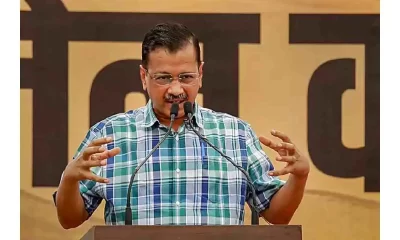
Answering the much-debated question of Modi versus who? he said it’s Modi versus Kejriwal. Now, a nationwide atmosphere in favour of Kejriwal is being created, he said.

Hitting at Manish Sisodia, Union Minister Anurag Thakur called Delhi’s AAP government a Bevri Sarkat (the government of drunkers) and said he is an accused in the liquor scam but Chief Minister Arvind Kejriwal is the kingpin.

Cloudburst hits Dehradun, flood-like situation near Tapkeshwar Mahadev temple

Vaishno Devi Yatra resumes after being stopped due to flash floods

India News

PM Modi takes a dig at Congress after zero wins in MLC bypolls

Prime Minister Narendra Modi took a swipe at Congress after the party failed to win a single seat in Legislative Council by-elections across four states. He highlighted that the elections were conducted using ballot papers.

Published

on

PM Modi

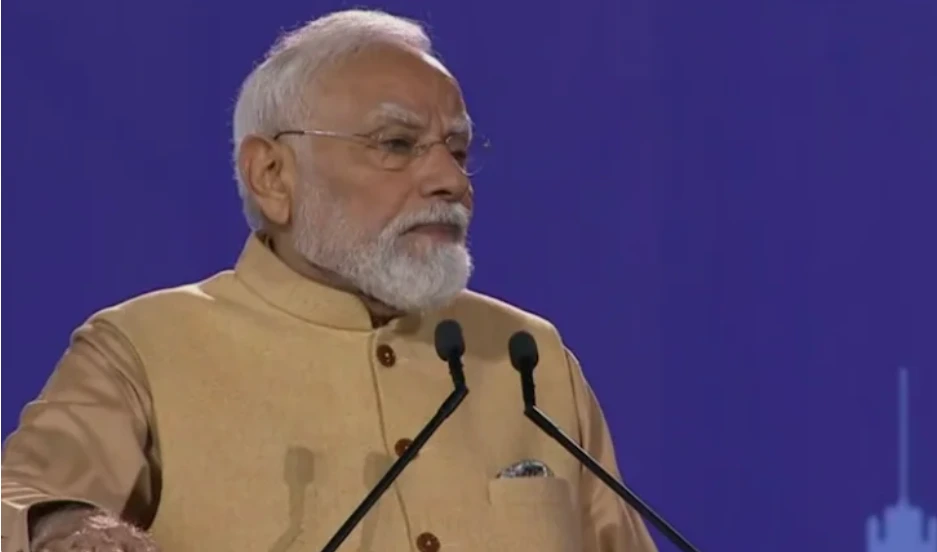
Prime Minister Narendra Modi took a swipe at the Congress on Wednesday after the party failed to win any seats in Legislative Council by-elections held across four states. Referring to the use of ballot papers in the elections, the Prime Minister questioned the party’s performance in the contests.

The by-elections covered 28 Legislative Council seats across Uttar Pradesh, Maharashtra, Bihar and Karnataka. Congress contested 12 seats, including four that it had previously held, but failed to secure a victory in any of them, according to the reported results.

The setback was particularly notable in Karnataka, where Congress is in power but did not win any of the four Legislative Council seats contested in the state.

What PM Modi said about the MLC election results

In a post on X, Modi referred to the elections held across the four states and highlighted that ballot papers had been used for voting.

“MLC elections in 28 seats across 4 big states – Uttar Pradesh, Maharashtra, Bihar and Karnataka. Elections held using ballot papers. Guess how many seats Congress won?” the Prime Minister wrote.

He accompanied the post with a monocle emoji, adding a mocking tone to his question about the party’s performance.

The reference to ballot papers came amid the Congress’s broader objections to electronic voting machines and its demands for a return to paper ballots. Modi’s post drew attention to the party’s failure to win any of the seats it contested in these particular elections.

Congress draws a blank across four states

The Legislative Council by-elections covered constituencies in Uttar Pradesh, Maharashtra, Bihar and Karnataka.

Congress contested 12 of the 28 seats but could not secure a win. Four of the seats it contested had previously been held by the party.

Karnataka emerged as a significant setback for Congress, which governs the state. The party failed to win any of the four seats contested there.

The overall outcome provided the context for Modi’s remarks, which linked the election results to the use of ballot papers rather than electronic voting machines.

Why the ballot paper reference matters

Congress has raised concerns about the use of electronic voting machines and called for a return to ballot papers. Modi’s post drew a contrast between those demands and the party’s performance in elections conducted using paper ballots.

However, the results of these Legislative Council by-elections relate to the specific seats contested across the four states. They do not, by themselves, establish any broader conclusion about the integrity of other elections or the merits of different voting systems.

The Prime Minister’s remarks were a political swipe at Congress following its performance in the MLC bypolls.

Continue Reading

India News

Karnataka MLC election results 2026: NDA wins all 4 Seats

The BJP-JD(S) alliance won all four seats in the Karnataka Legislative Council elections held on October 23, 2026. The BJP secured three seats, while the JD(S) won one, dealing a setback to the ruling Congress.
Published

on

BJP

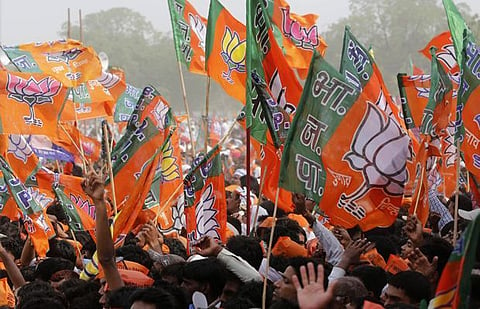
The BJP-led National Democratic Alliance (NDA) has won all four seats in the Karnataka Legislative Council elections, with the Bharatiya Janata Party (BJP) securing three seats and its ally Janata Dal (Secular), or JD(S), winning one.

The results are a setback for the ruling Congress, which failed to win any of the four seats contested in the elections held on October 23.

The contest was closely watched as a test of coordination between the BJP and JD(S), which fought the elections as alliance partners. The outcome also drew attention to the Congress’s support among voters in teachers’ and graduates’ constituencies.

BJP wins three seats, JD(S) secures one

The BJP won the North-East Teachers’ constituency, the South-East Graduates’ constituency and the West Graduates’ constituency. The JD(S), meanwhile, won the Bengaluru Teachers’ constituency.

The Bengaluru Teachers’ constituency contest was particularly significant because the JD(S) candidate, A P Ranganath, defeated sitting Congress MLC Puttanna. Ranganath had previously contested the constituency against Puttanna, who had switched to the Congress before the previous Assembly elections.

The results demonstrated the electoral outcome of the BJP-JD(S) alliance in these four constituencies. However, the results alone do not establish how the outcome will affect the parties’ performance in future state-wide elections.

BJP leader targets Congress government

Reacting to the results, BJP leader Ashok Gowda described the outcome as a success for the NDA and criticised the Congress government in Karnataka.

“This is a success for the NDA and all the narratives spread by the Congress have been exposed,” Gowda told media.

He also alleged that the Congress government had failed in the state and claimed that the results reflected public dissatisfaction with the ruling party.

These remarks were Gowda’s political assessment of the election outcome and should be understood as statements by a BJP leader.

Election tests BJP-JD(S) coordination

The elections were seen as an important test of whether the BJP and JD(S) could coordinate their campaigns and consolidate support behind their respective alliance candidates.

The JD(S) was allocated the Bengaluru Teachers’ constituency, while the BJP contested the other three seats. The alliance’s victory across all four constituencies gave both parties a favourable result in this round of Legislative Council elections.

The Congress, which governs Karnataka, did not win any of the four seats. Nevertheless, the Legislative Council results should be distinguished from a state Assembly election, as the contests involved specific teachers’ and graduates’ constituencies rather than the entire electorate.

Continue Reading

Latest Politics News

Israel election exit polls show Netanyahu and rival blocs in deadlock

Israel’s general election has produced no clear winner in exit polls, with Prime Minister Benjamin Netanyahu’s bloc and the opposition led by Gadi Eisenkot both falling short of a parliamentary majority.
Published

on

PM Benjamin Netanyahu

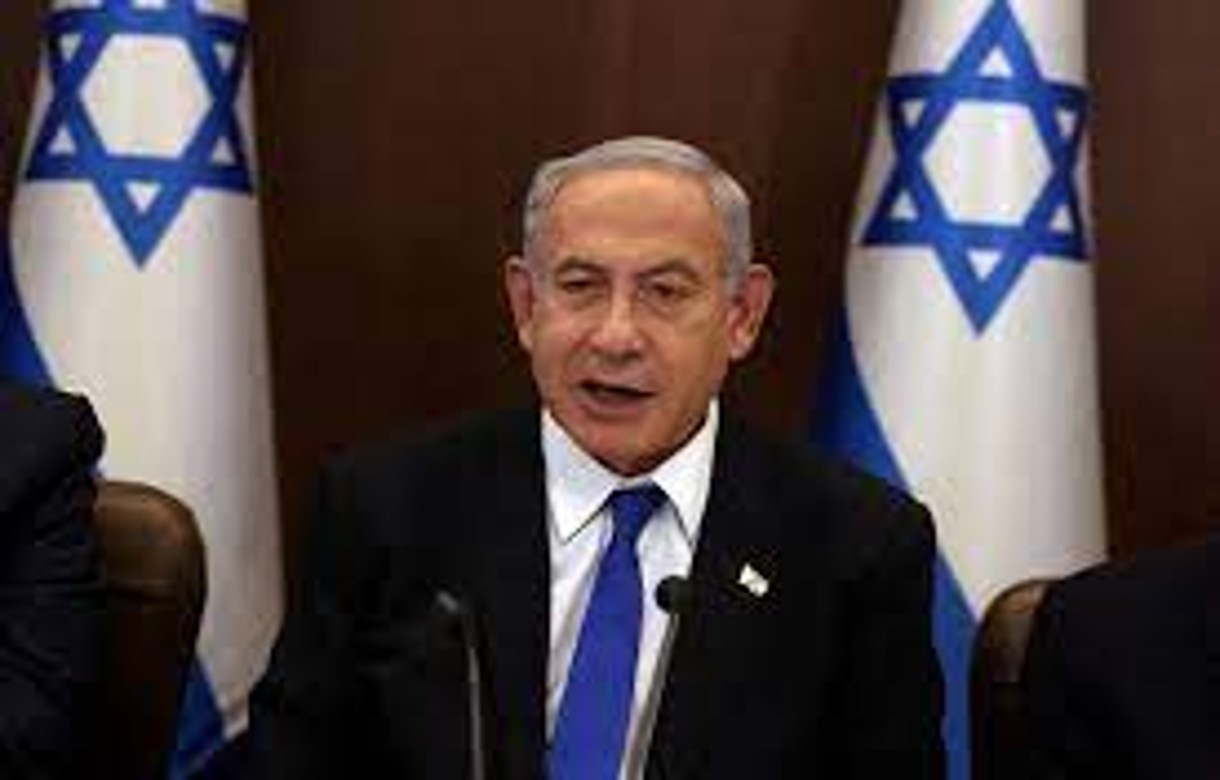
Israel’s general election has produced no clear winner, with exit polls indicating that Prime Minister Benjamin Netanyahu’s governing bloc and the opposition led by former military chief Gadi Eisenkot are both short of the numbers required to form a majority government.

Projections released by Israeli broadcasters Kan 11 and Channel 13 put the two rival blocs at 51 seats each in the 120-member Knesset, Israel’s parliament. Arab parties are projected to win around 18 seats, potentially making them important to efforts to form the next government.

A majority requires 61 seats, leaving both sides facing uncertainty over whether they can secure sufficient support to govern. The exit poll figures also differ between broadcasters, highlighting that the final outcome remains unsettled.

Netanyahu and Eisenkot face a difficult path to government

The projections point to a closely contested election, with neither Netanyahu’s coalition nor Eisenkot’s opposition bloc demonstrating a clear route to a parliamentary majority.

The Channel 12 exit poll presented a slightly different picture, placing Netanyahu’s bloc at 50 seats and Eisenkot’s bloc at 52. Other projections showed the two sides level, underscoring the differences between the broadcasters’ estimates.

Netanyahu’s political future will depend on the final seat count and the negotiations that follow. Even if one bloc performs better than projected, it would still need sufficient parliamentary backing to form a government.

The results could lead to an extended period of political uncertainty as parties explore possible alliances. If neither side can assemble a viable coalition, another election could become a possibility.

Arab parties could influence coalition negotiations

Arab parties are projected to win approximately 18 seats, giving them potential influence in the post-election negotiations.

One possible route for Eisenkot’s camp would involve cooperation with Arab-led parties. However, such an arrangement could face political obstacles and risk alienating other opposition groups.

The extent to which these parties can influence the next government will depend on the final results and the willingness of rival political factions to negotiate.

Final results remain uncertain

The exit polls are preliminary estimates and may differ from the official results. The final seat distribution will determine which political leader has the strongest opportunity to form a governing coalition.

The election has therefore left Israel facing uncertainty over its next government, with both major blocs short of the majority required to govern independently.

Until the final count and coalition discussions clarify the numbers, Netanyahu’s return to power and the opposition’s ability to replace his government remain unresolved.

Continue Reading

Trending

© Copyright 2022 APNLIVE.com