English हिन्दी
Connect with us

India News

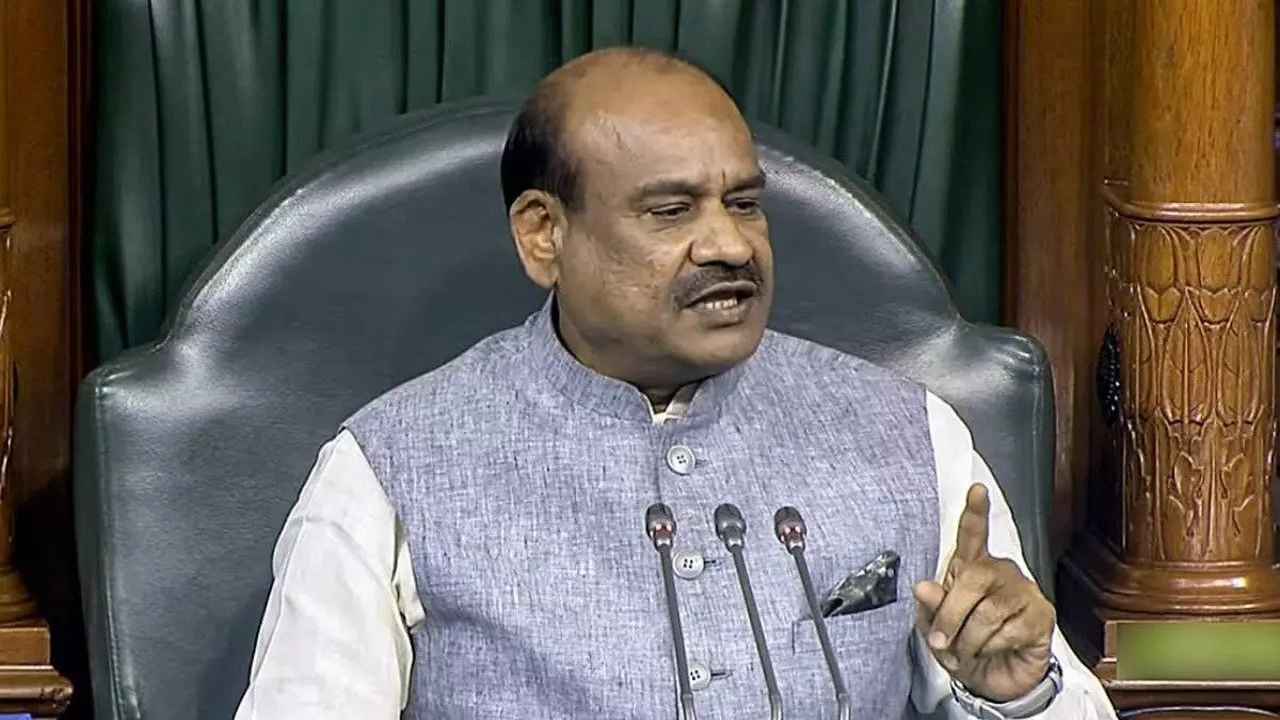
Nitish Kumar claims drinking alcohol causes AIDS, Tejashwi Yadav says CM’s knowledge ridiculous

Quoting WHO report, Kumar said drinking alcohol causes 200 diseases including cancer, Tuberculosis, AIDS, liver, heart diseases and mental illness. He said that violence against women also takes place due to alcohol.

Published

on

Nitish Kumar

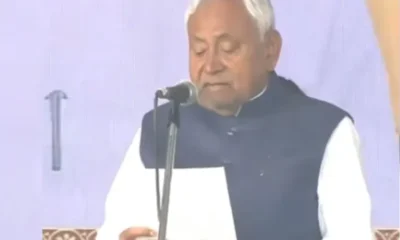
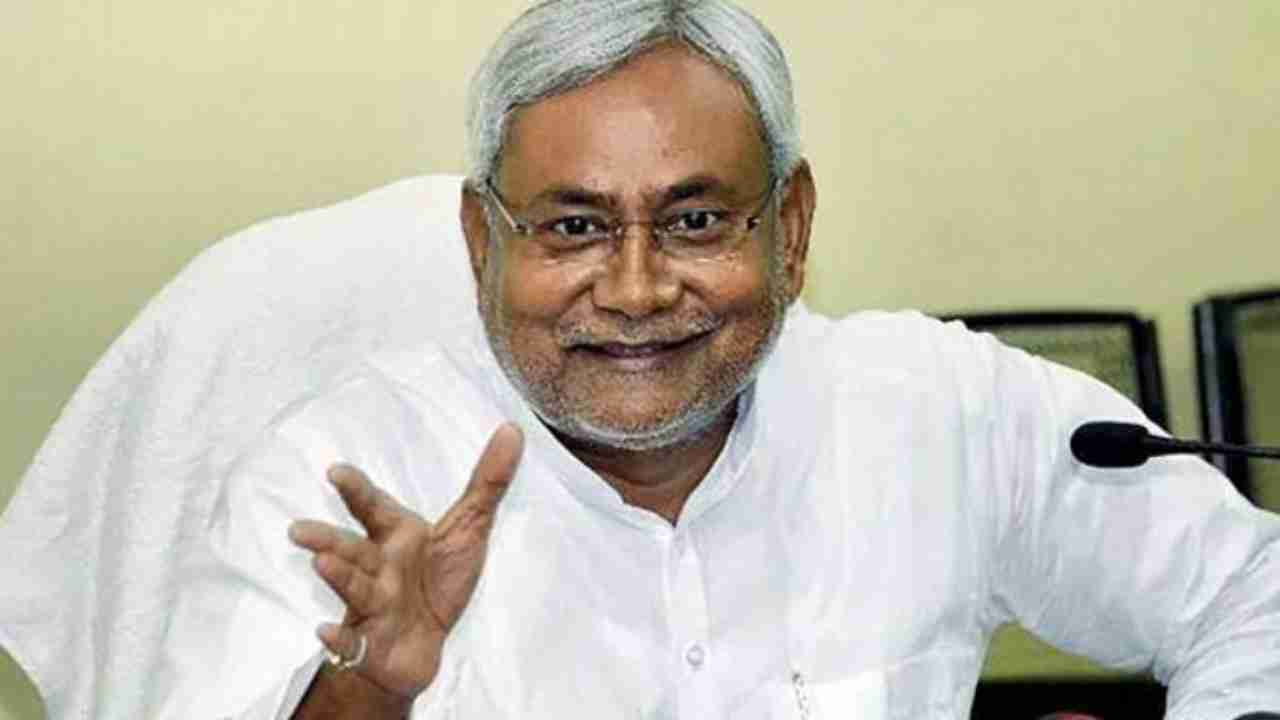
Chief Minister Nitish Kumar, who initiated social reform campaign in Bihar to bring public awareness about the prohibition law, has claimed that drinking alcohol causes 200 diseases including AIDS. Listing out the diseases names, he said drinking alcohol causes cancer, hepatitis, tuberculosis and heart diseases as well as AIDS.

Significantly, prohibition of liquor is one of the main priorities of Nitish Kumar.

Quoting WHO report, Kumar said drinking alcohol causes 200 diseases including cancer, Tuberculosis, AIDS, liver, heart diseases and mental illness. He said that violence against women also takes place due to alcohol.
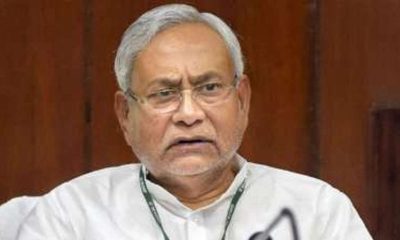
Bihar CM had earlier said that those who face difficulty in coming to Bihar due to non-availability of liquor, they do not need to come to the state.

However, his statement has been termed as ridiculous by the Leader of Opposition in the Bihar Legislative Assembly Tejashwi Yada.

Read Also: After Bihar’s Muzaffarpur, 27 lose vision in UP’s Saharanpur after cataract surgery

Tejashwi Yadav, who returned to Patna after celebrating Christmas with his wife Rajshree Yadav (Rachel), criticized the liquor prohibition policy, saying that Nitish Kumar would have reformed his government first and then talked further.

Tejashwi Yadav said that it is the responsibility of the police department to stop the liquor and the department works under Nitish Kumar. He also alleged that liquor bottles found in Bihar assembly.

Apart from Tejashwi Yadav, the Lok Janshakti Party spokesperson Rajesh Bhatt said Bihar CM has lost his mental balance.

India News

Tej Pratap Yadav meets family, invites Lalu and Tejashwi for Dahi-Chura feast

Tej Pratap Yadav’s visit to his family ahead of Makar Sankranti and his Dahi-Chura invitation has sparked renewed talk of reconciliation within the Lalu family.

Published

on

Tej Pratap Yadav

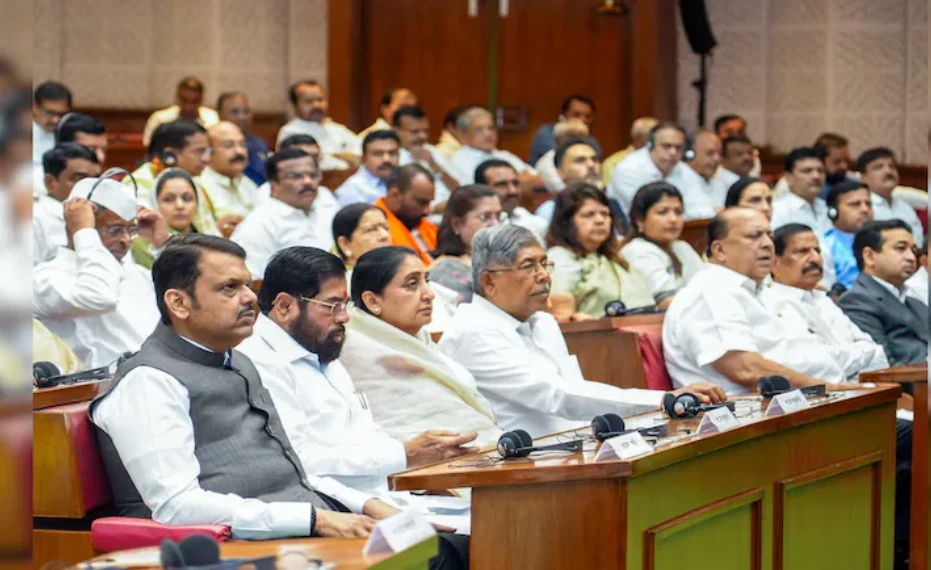
A rare and emotionally charged family moment played out on Tuesday when Rashtriya Janata Dal leader Tej Pratap Yadav visited 10 Circular Road, the residence of former Bihar Chief Minister Rabri Devi, to meet his parents and younger brother Tejashwi Yadav.

The visit marked a notable departure from months of visible distance within the Lalu Prasad Yadav family and was centred around a formal invitation for a Dahi-Chura feast scheduled for January 14 on the occasion of Makar Sankranti.

Tej Pratap personally handed over the invitation letter to Tejashwi Yadav, the Leader of the Opposition in the Bihar Assembly, in a gesture widely interpreted as an attempt at reconciliation and reaffirmation of family unity.

Upon his arrival, Tej Pratap sought blessings by touching the feet of RJD supremo Lalu Prasad Yadav and Rabri Devi, underscoring the personal significance of the meeting.

Rare public warmth between the brothers

The meeting was particularly striking as it was the first time in a long while that Tej Pratap and Tejashwi were seen together with visible warmth in front of the media. For several months, the two brothers had been living separately and maintaining a noticeable distance on public platforms, fuelling speculation of a rift.

A deeply personal moment during the visit drew widespread attention when Tej Pratap lifted Tejashwi’s daughter, Katyayani, in his arms. The images of the interaction quickly circulated on social media, presenting a softer picture of family bonds beyond political equations.

Tej Pratap later described the moment as a memorable experience, reinforcing the impression that familial ties remain intact despite past differences.

Political and symbolic significance

Political observers see the visit as a significant shift after a prolonged phase of strained relations, often described as a “cold war” between the brothers. The timing of the outreach, on the eve of Makar Sankranti, has also blunted opposition narratives of a deep and irreversible divide within the Lalu family.

Attention has now shifted to the Dahi-Chura feast scheduled for Wednesday. Beyond its cultural importance, the event is being viewed as a symbolic display of unity within the family and the party.

The outreach has generated renewed enthusiasm among RJD workers, with many keenly watching how Tejashwi Yadav and other family members participate in the celebration, which could further cement this much-discussed rapprochement.

Continue Reading

India News

Centre asks Blinkit, Zepto and Swiggy to stop 10-minute delivery claims

The Centre has urged Blinkit, Zepto and Swiggy to remove 10-minute delivery claims, citing safety concerns for delivery partners, government sources said.

Published

on

10 minutes delivery

The Centre has asked quick commerce platforms such as Blinkit, Zepto and Swiggy to remove claims related to 10-minute deliveries, citing concerns over the safety of delivery partners, according to government sources.

The issue was discussed during a meeting between Union Labour Minister Mansukh Mandaviya and representatives of major food and grocery delivery aggregators. Executives from platforms including Zomato, Swiggy, Blinkit and Zepto were present at the meeting, sources said.

Safety of delivery partners discussed in meeting

Government sources indicated that the minister raised concerns about strict delivery timelines and their potential impact on the safety and well-being of delivery partners. Platforms were advised to prioritise safe working conditions instead of promoting ultra-fast delivery promises.

The discussion focused on delivery expectations, rider pressure and the broader responsibility of aggregators towards their workforce, sources added.

Blinkit revises tagline after government intervention

Following the meeting, Blinkit has revised its marketing tagline. The platform earlier promoted “10,000 plus products delivered in 10 minutes” but has now changed it to “30,000 plus products delivered at your doorstep,” according to sources.

The revision reflects a shift away from highlighting delivery speed as a key promise, in line with the concerns raised during the discussions.

The government is expected to continue engaging with aggregators on labour welfare and safety-related issues, sources said.

Continue Reading

India News

AI errors in voter list digitisation causing hardship during SIR, Mamata writes to EC chief

Mamata Banerjee has written to the chief election commissioner alleging that AI-driven digitisation errors in electoral rolls are causing hardship, harassment and distress to genuine voters during the SIR process in West Bengal.

Published

on

mamta banerjee

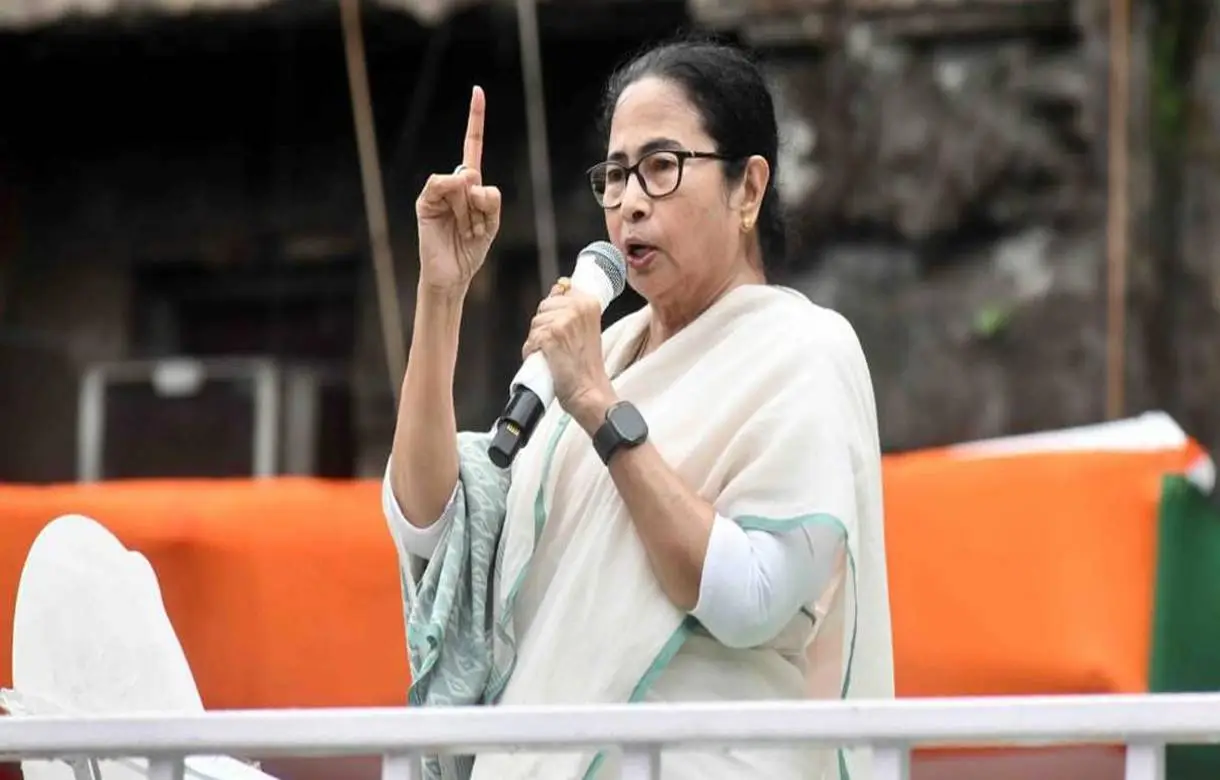
West Bengal Chief Minister Mamata Banerjee has once again written to Chief Election Commissioner Gyanesh Kumar, alleging that errors arising from AI-driven digitisation of the 2002 electoral rolls are causing widespread hardship to genuine voters during the ongoing Special Intensive Revision (SIR) exercise in the state.

In her fifth letter since the SIR process began, Banerjee claimed that the use of artificial intelligence tools to digitise older voter lists led to serious inaccuracies in electors’ personal details. According to her, these errors have resulted in large-scale data mismatches, with many genuine voters being wrongly flagged as having “logical discrepancies”.

The chief minister accused the Election Commission of disregarding statutory processes that had been followed over the past two decades. She said voters were now being forced to re-establish their identity despite corrections having been made earlier through quasi-judicial hearings.

Calling the approach arbitrary and illogical, Banerjee alleged that it went against the constitutional spirit by effectively disowning the commission’s own past actions and mechanisms. She further claimed that voters submitting documents during the SIR exercise were not being given proper acknowledgements, terming the procedure “fundamentally flawed”.

Raising concerns over the nature of hearings, Banerjee said the SIR process had become largely mechanical and overly dependent on technical data, lacking sensitivity, human judgment and compassion. She argued that such an approach undermines democratic values and the constitutional framework.

Highlighting the human impact of the exercise, the chief minister claimed that the revision process had already seen 77 deaths, four suicide attempts and 17 cases of hospitalisation. She attributed these incidents to fear, intimidation and excessive workload caused by what she described as an unplanned exercise by the Election Commission.

Banerjee also criticised the treatment of several eminent citizens, alleging that they were subjected to harassment during the process. She further expressed concern over the handling of cases involving women voters, particularly those who had changed their surnames after marriage or shifted to their matrimonial homes.

According to her, women electors were being questioned and summoned to prove their identity, reflecting a lack of social sensitivity and amounting to an insult to women and genuine voters. She questioned whether a constitutional authority should treat half of the electorate in such a manner.

Urging immediate corrective steps, Banerjee called on the Election Commission to address the issues arising from the SIR exercise to end what she described as harassment and agony for both citizens and officials, and to safeguard democratic rights.

Continue Reading

Trending

© Copyright 2022 APNLIVE.com