Instead of protecting victims of such incidents, the perpetrators not only enjoy immunity from the law, but also the administration in BJP-ruled states punishes victims. The use of false cases and arrests under draconian laws like UAPA are the preferred weapons.
2021 is about to melt into 2022 in less than 48 hours. Majoritarian politics continued to hold its way over the country this year. But this year, it was not just Muslims but also Christians who felt the heat of Hindutva attacks across India as right-wing Hindu groups waged a culture war against them. Several churches have been attacked and statues of Jesus broken, the latest being in Ambala’s Army Cantonment, the scene of many a Rudyard Kipling work.
December saw targeted hate speeches against minorities. The one at Haridwar saw many participants vow to even take up weapons to redeem their faith by killing non-Hindus. The Hindu right-wing has waged war against Christians accusing them of religious conversion through their missionary work and Muslims for Love Jihad, an Islamophobic trope singling out Muslim men for falling in love with Hindu women and then converting them into Islam. However, such allegations targeting minorities have become a cornerstone of Hindu right-wing nationalism.
The Association for the Protection of Civil Rights, United Against Hate, and United Christian Forum jointly released a fact-finding report highlighting the series of attacks on churches and hate speech against Christians across India. According to the report, India has recorded more than 300 attacks on Christians and worship places within the first nine months of 2021.
Of the 305 incidents, 66 took place in Uttar Pradesh, 47 in Chhattisgarh and at least 32 in Karnataka.
While another report of the United Christian Forum had claimed that India reported more than 400 incidents of violence against Christians across the country. Among those, the incident involved storming churches, burning Christian literature, attacking schools and assaulting worshipers.
However, it is shocking that only 30 FIRs have been registered so far in these cases. On many occasions, restrictions were imposed on people to carry out religious ceremonies.
First on the list of attacks is the one on October 3, where a mob of 250-300 persons barged into a Roorkee church in Uttarakhand and attacked people, destroyed CCTV cameras, and vandalized church premises. Many reports said there were only 12 inside the church for prayers when the attack took place.
Apart from this, the attacks on churches were also reported from BJP-ruled states Haryana, Uttar Pradesh, Madhya Pradesh and Karnataka. And these attacks have taken place over allegations of religious conversion. Christians prayers meetings have also been stopped by the same Hindu mob who had stopped Jumma namaz in the so-called Millennium City, Gurugram. The city also saw an attack on a school’s Christmas celebration.
In the last week of 2021, the bank accounts of Mother Teresa’s Missionaries of Charity were frozen over FCRA claims, West Bengal Chief Minister Mamata Banerjee tweeted about the heartlessness behind the move affecting the charity of the outfit.
Some 22,000 patients and employees have been left without food and medicines, the West Bengal Chief Minister had tweeted.
The Missionaries of Charity was founded in 1950 by the late Mother Teresa, a Catholic nun from Macedonia, who moved to India and took care of the destitute and the poor and won the Nobel Peace Prize in 1979 for her work.
Hate speeches have been curtailed by some norms, keeping them among friends and family. The last week of 2021 saw more public hate speeches in the country. The controversial Dharam Sansad organized in Haridwar, other such events in Delhi and Chattisgarh saw where priests and leaders taking an oath to kill Muslims, and even urged Hindus to arm themselves against the Muslims to make India a Hindu Rashtra.
With next year’s assembly elections in Uttar Pradesh, Uttarakhand, Punjab, Goa and Manipur due shortly, the increase in such hate is an attempt at reviving polarisation.
The violence in Tripura, where VHP hoodlums attacked Muslims and vandalized some of their mosques and Friday prayers disruptions at designated places at Gurugram were also the prime example of rising hate against Muslims.
Anti-Hindu violence in parts of Bangladesh triggered violence in Tripura. The communal riots erupted on October 26 after a rally organized by the Vishwa Hindu Parishad to protest against the attacks on Hindus in Bangladesh turned violent.
The VHP and the Hindu Jagran Manch organized rallies in different parts of the state to protest against the violence in Bangladesh. Later, the VHP and other right-wing groups denied any role in the violence.
The anti-Hindu violence in Bangladesh, which erupted during the Durga Puja festival, was triggered by rumours that the Quran had been insulted in one of the pavilions set up for the celebrations. Seven people were killed, several temples desecrated, and hundreds of houses and business establishments of the Hindu minority were torched.
However, many Muslim groups alleged political conspiracy claiming that the minorities were being targeted in the north eastern state. There were many arrests and some journalists covering the riots in Tripura were also detained. Those who tweeted in favour of Tripura’s Muslims also found themselves being served notices by the state police.
The Uttar Pradesh government had faced severe criticism from the opposition over the killings of Kasganj youth Altaaf in mysterious circumstance. He had been arrested on suspicion of eloping with a Hindu woman. Again, the smoldering love jihad theory. The law and order in Uttar Pradesh, which had earlier won so much praise from PM Modi and other BJP leaders, has been roundly criticized by opposition parties in Uttar Pradesh.
The family of the deceased had alleged that he was tortured by police in the lockup, which led to his death. Police claimed the accused killed himself using the drawstring of his jacket’s hood when he went to the lockup washroom.
Apart from mob lynching, Muslim street vendors in Ahmedabad and some parts of Madhya Pradesh and other parts of the country have been threatened and disallowed from pursuing their livelihood. In Ahmedabad, the Hujarat High Court stepped in to tell off the civic authority to desist from such measures. In Assam, poor peasant families cultivating land for decades were brutally evicted only because they belonged to the Muslim minority. The point-blank shooting of Moinal Haque by police personnel caught on video and the subsequent death dance by a photographer with the remains indeed were a mirror for the crumbling facade of secular India, now overtaken by an aggressive mindless herd mentality spewing hate and violence.
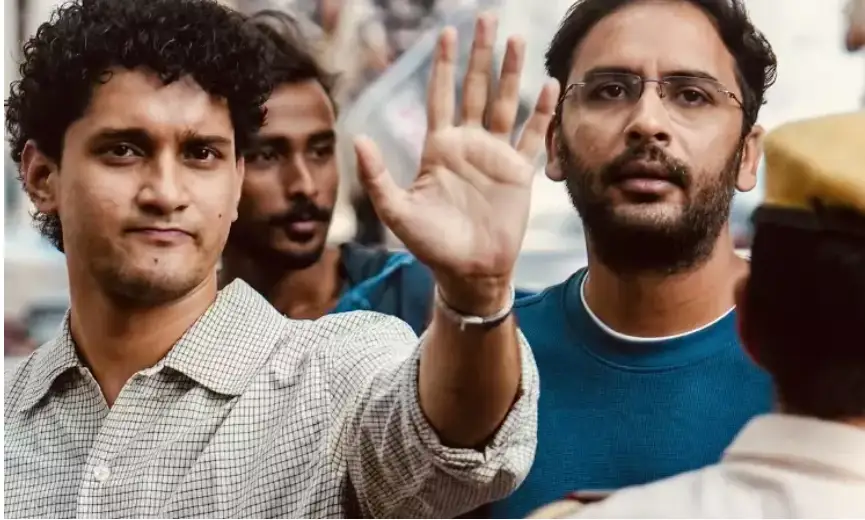
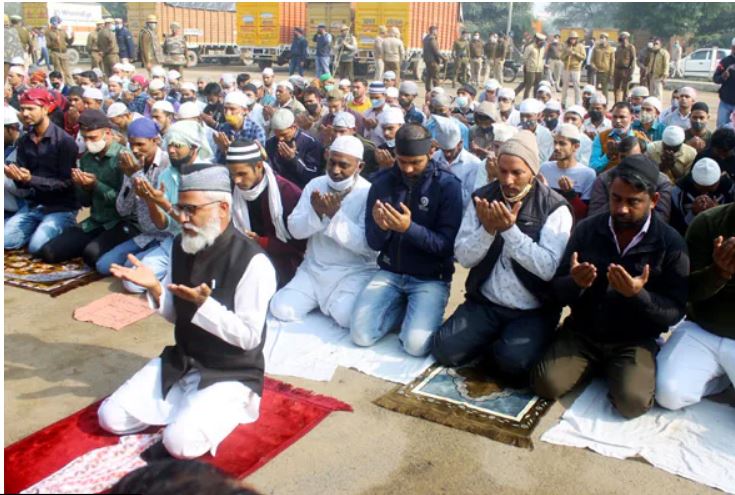
An empty desolate car park outside Sector 37 police station in Gurugram where Muslims had performed Friday prayers for more than a decade turned into a battleground of faith. Hindu right-wing groups staged protests, sloganeered during Friday prayers and held a Govardhan puja at the namaz site just to deny namaz here.
Instead of protecting victims of such incidents, the perpetrators not only enjoy immunity from the law, but also the administration in BJP-ruled states punishes victims. The use of false cases and arrests under draconian laws like UAPA are the preferred weapons.
BJP likely to get chief minister in Bihar as Nitish Kumar plans Rajya Sabha move
Bihar may see a BJP chief minister for the first time as Nitish Kumar prepares to contest the Rajya Sabha elections. JD(U) is likely to receive 15 cabinet positions in the new government.
Bihar may soon witness a major political transition as a leader from the Bharatiya Janata Party is likely to become the state’s chief minister, following Nitish Kumar’s decision to step down and contest the Rajya Sabha elections, according to sources.
Nitish Kumar, who has served as Bihar’s chief minister for more than two decades and held the post a record ten times, filed his nomination papers for the Rajya Sabha on Thursday. His move comes only four months after he was sworn in for his tenth term as chief minister.
If the reported arrangement goes ahead, it would mark the first time that the BJP occupies the chief minister’s post in Bihar, a state where leadership has largely alternated between the Janata Dal United and the Rashtriya Janata Dal.
Possible cabinet structure being discussed
Sources indicated that the proposed government structure may include one deputy chief minister. Nitish Kumar’s son Nishant Kumar is likely to be given that role, which would mark his entry into electoral politics.
The Janata Dal United is expected to receive 15 ministerial positions in the new cabinet.
Apart from the JD(U), coalition partners may also get representation. Two ministers from the Lok Janshakti Party Ram Vilas, and one each from the Rashtriya Lok Morcha and the Hindustani Awam Morcha are likely to be included, sources said.
The Speaker of the Bihar Assembly is expected to remain from the BJP.
Nitish Kumar has also called a meeting of all JD(U) Members of Parliament and senior party leaders to discuss the developments.
Rajya Sabha elections scheduled for March 16
Announcing his decision to contest the Rajya Sabha elections, the 75 year old leader wrote on X that he intends to continue contributing to Bihar’s development.
“I seek to become a member of the Rajya Sabha in the elections being held this time. I want to assure you with complete honesty that my relationship with you will continue in the future as well, and my resolve to work together with you to build a developed Bihar will remain steadfast,” he said.
He added that the new government would have his full cooperation and guidance.
Along with Nitish Kumar, several leaders also filed their nominations for the Rajya Sabha elections. These include BJP leader Nitin Nabin, Union minister Ram Nath Thakur from the JD(U), Rashtriya Lok Morcha chief Upendra Kushwaha, and BJP state general secretary Shivesh Kumar.
Polling for the Rajya Sabha elections will be held on March 16 to fill 37 seats across 10 states. The counting of votes is scheduled to take place the same day at 5 pm.
Siddaramaiah presents record 17th Karnataka budget with Rs 4.48 lakh crore spending plan
Karnataka CM Siddaramaiah presented his record 17th budget, outlining a Rs4.48 lakh crore spending plan for 2026–27 with focus on infrastructure, welfare and technology.
Chief Minister Siddaramaiah on Friday presented his 17th State Budget, the highest number delivered by any Karnataka chief minister, outlining a Rs 4.48 lakh crore spending plan for the financial year 2026–27.
The budget indicates that the state will continue to run a revenue deficit for the third consecutive year, even as the government focuses on welfare programmes, infrastructure development and technology investments.
According to the budget estimates, total revenue receipts are projected at Rs3,15,050 crore. This includes Rs 2,20,000 crore from the state’s own tax revenue, Rs16,000 crore from non-tax revenue, and Rs79,050 crore in transfers from the Government of India.
The government has also projected gross borrowings of Rs 1,32,000 crore and non-debt capital receipts of Rs190 crore, taking total receipts to Rs 4,47,240 crore for the fiscal year.
Meanwhile, overall expenditure is estimated at Rs 4,48,004 crore, divided into Rs 3,38,007 crore in revenue expenditure, Rs 74,682 crore in capital expenditure, and Rs 35,316 crore towards loan repayments.
The state has projected a revenue deficit of Rs 22,957 crore, while the fiscal deficit is estimated at Rs97,449 crore, which equals 2.95% of the Gross State Domestic Product (GSDP).
Total liabilities by the end of the year are expected to reach Rs 8,24,389 crore, accounting for 24.94% of the state’s GSDP. The government said both deficit levels remain within limits set under the Karnataka Fiscal Responsibility Act, indicating adherence to fiscal discipline.
Mekedatu project and student protection law
The government said a revised Detailed Project Report for the Mekedatu Dam Project will soon be submitted to the Centre along with a request for forest clearance. The project is intended to improve drinking water supply for Bengaluru but has faced opposition from Tamil Nadu in the past.
Another major announcement was the proposed Rohith Vemula Act, which aims to prevent caste-based discrimination and atrocities against students in government, private and deemed universities across the state.
Welfare and infrastructure focus
Under tribal welfare initiatives, the government will construct the Sri Maharshi Valmiki Administrative Soudha in Bengaluru’s Sumanahalli at an estimated cost of Rs 50 crore. The building will house offices of the Scheduled Tribes Welfare Department.
The budget also proposed the development of Waqf properties located in prime commercial areas through a Public-Private Partnership model, aiming to unlock their economic potential.
For urban infrastructure, Rs 1,255 crore has been allocated for ward-level road and infrastructure projects across five city corporations in Bengaluru.
The government also plans to develop 100 Miyawaki urban forests, which use dense plantations of native species to create green spaces in urban areas.
Push for technology and innovation
To encourage investment and improve ease of doing business, the state launched a unified investment portal developed with the support of Microsoft, providing more than 100 services across 30 departments for investors.
The Indian Institute of Science will host the Bangalore Robotics and AI Innovation Zone (BRAIN) under ARTPARK in collaboration with the Indian Space Research Organisation and Karnataka State Electronics Development Corporation Limited.
Additionally, a drone testing and performance evaluation facility will be established in Chikkaballapur to support the state’s growing drone technology ecosystem.
Mysuru to be developed as second IT hub
The government also announced plans to develop Mysuru as Karnataka’s second IT hub, aiming to reduce congestion in Bengaluru while promoting technology-driven growth in other regions of the state.
Rajnath Singh says abnormality becoming new normal amid Iran–Israel war
Rajnath Singh says the Iran–Israel conflict shows how abnormal situations are becoming routine, warning of risks to global energy supply through the Strait of Hormuz.
India’s defence minister Rajnath Singh on Thursday expressed concern over the escalating conflict involving Iran, Israel and the United States, warning that the ongoing situation reflects how “abnormality is becoming the new normal” in global geopolitics.
Speaking at the maritime conclave Sagar Sankalp maritime conclave in Kolkata, Singh described the evolving security environment as increasingly complex and unpredictable.
“The current situation has become quite complex, and it seems it will become even more dynamic in the future. The way different countries are competing with each other on land, in the air, at sea, and now even in space is truly a matter of concern,” Singh said.
He added that the growing instability in global affairs shows how unusual situations are gradually becoming routine.
Concern over Strait of Hormuz and global energy supply
Singh highlighted the strategic importance of the Strait of Hormuz, calling it a crucial chokepoint that carries around one-fifth of the world’s oil supply.
According to reports, Iran has shut down the vital shipping route, allowing only Chinese vessels to pass through the region. The development has raised concerns about disruptions to global energy flows across the Persian Gulf.
“When there is disruption or interruption in this region, it directly impacts the supply of oil and gas. These uncertainties affect the global economy and trade,” Singh said.
He noted that oceans are no longer viewed only as channels of trade but are increasingly becoming arenas of strategic competition among nations.
Call for stronger maritime leadership
Against the backdrop of shifting geopolitical equations, Singh said India must strengthen its role as a maritime power and demonstrate leadership in ensuring stability in the region.
“In this era of changing global geopolitics, oceans have once again come to the centre of the world’s power balance. As a major maritime nation, it is India’s responsibility to provide leadership with confidence, capability and a clear vision,” he said.
The minister emphasised that achieving self-reliance remains critical for protecting supply chains and strengthening national defence capabilities. He said the government sees defence public sector undertakings as a key pillar in advancing this vision.
Escalation of Iran-Israel-US conflict
Tensions in the Middle East escalated after the United States and Israel carried out coordinated airstrikes across Iran on February 28 following stalled nuclear talks and allegations that Tehran had resumed nuclear activity.
The strikes, carried out under the name Operation Epic Fury, targeted several Iranian cities including the capital Tehran.
Iran’s Supreme Leader Ali Khamenei was reportedly killed during the strikes on his compound in Tehran. Members of his family were also among those killed, while his wife Mansoureh Khojasteh Bagherzadeh later died from injuries sustained in the attack.
Following the airstrikes, Iran launched retaliatory missile attacks across parts of the Gulf region, including Dubai, Abu Dhabi, Qatar, and Bahrain.
The conflict has now entered its seventh day, with Iran continuing to fire multiple rounds of missiles while vowing to avenge the killing of its Supreme Leader. Meanwhile, US President Donald Trump said it was “too late” for Iran to seek talks to avoid the conflict.
APN News is today the most watched and the most credible and respected news channel in India. APN has been at the forefront of every single news revolution. The channel is being recognized for its in-depth, analytical reportage and hard hitting discussions on burning issues; without any bias or vested interests.