English हिन्दी
Connect with us

India News

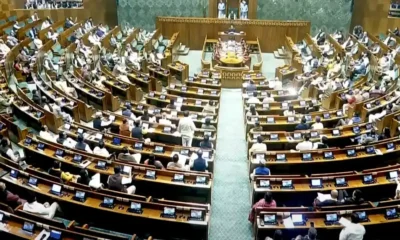
Opposition says Union Budget 2024 ignores many states but Bihar and Andhra Pradesh, Nirmala Sitharaman reacts

States like Tamil Nadu have made it clear that they won’t be part of the NITI Aayog meeting as the state was ignored in the budget.

Published

on

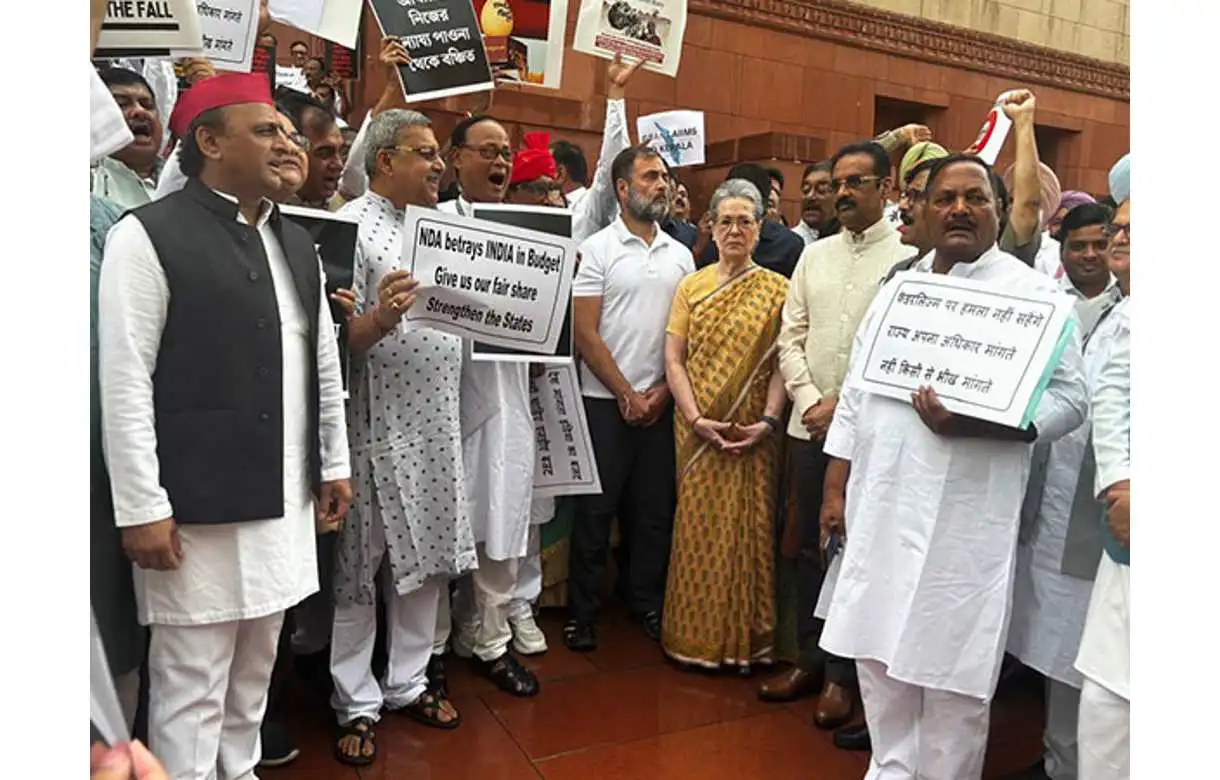
The Opposition has slammed the Union Budget 2024, saying it has inadequate policies that have favoured only the NDA allies to strengthen Prime Minister Narendra Modi’s position.

Trinamool Congress MP Kalyan Banerjee tagged this budget as a “saving the chair” budget. The opposition in the Rajya Sabha walked out of the budget session because of the unfair policies presented by the Central government.

Congress President and Rajya Sabha leader of the opposition Mallikarjun Kharge, stated the policies have been made to impress a few people and to remain in power, adding that they have left all states high and dry, barring two.

States like Tamil Nadu have made it clear that they won’t be part of the NITI Aayog meeting as the state was ignored in the budget. Karnataka, Himachal Pradesh, and Telangana will be backing this boycott. West Bengal CM Mamata Banerjee had yesterday slammed the budget, calling it unfair to the poor and politically prejudiced.
Congress leader P. Chidambaram accused the NDA government of imitating the Congress manifesto and added he is happy they included employment-linked incentives in the budget from their manifesto. Shashi Tharoor, Congress MP, expressed his concern that the budget did not address the alarming unemployment in the country.

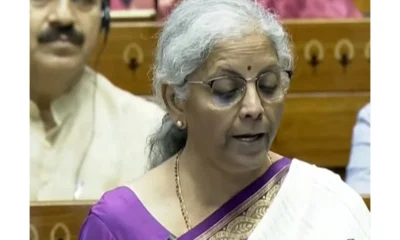
Finance Minister Nirmala Sitharaman responded to the allegations on X, saying, “In every budget, it is impossible to include all the states.” She backed her argument with an example, stating that Rs 76,000 crore have been allotted to set up a port in Vadhavan, Maharashtra, yet its name was not mentioned in yesterday’s budget. Does that mean Maharashtra was ignored, she wondered.

She also replied to the Trinamool Congress charges that their state didn’t get anything in the budget. Sitharaman, in turn, claimed several schemes given to West Bengal over the past 10 years have not been implemented till date. She added that not mentioning several states in the speech doesn’t mean they have been ignored. She dismissed all the fuss about budget 2024 as an attempt of opposition parties to mislead citizens.  

India News

Markets tumble as oil crosses $110, sensex falls over 1,900 points

Markets opened sharply lower with Sensex plunging over 1,900 points as crude oil crossed $110 and global factors weighed on sentiment.

Published

on

Sensex

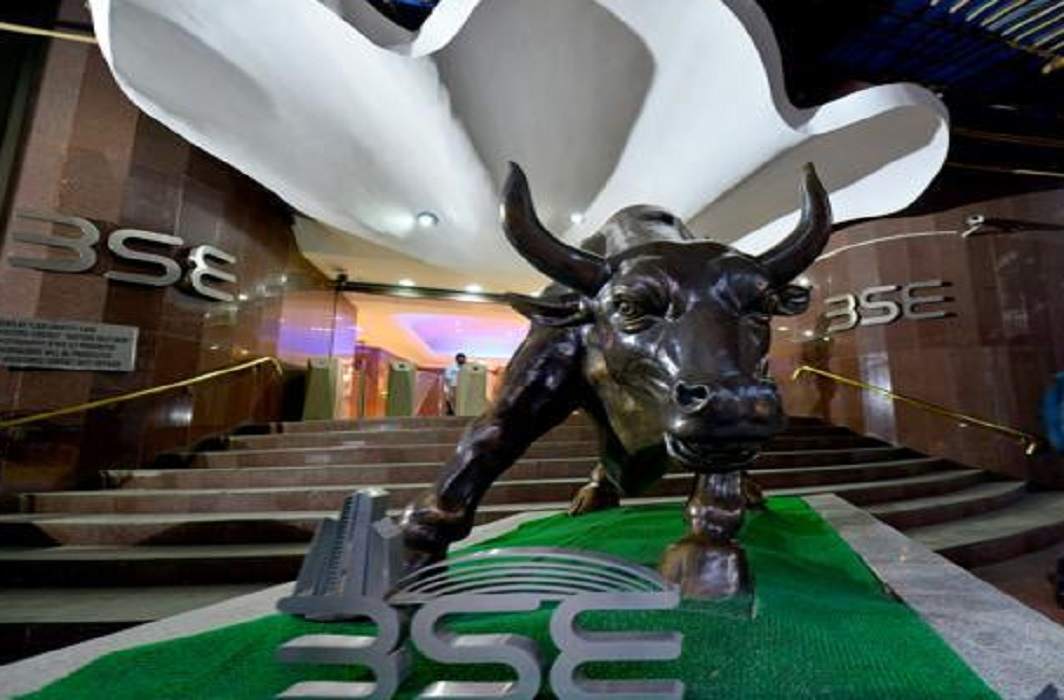
Indian stock markets opened sharply lower on Thursday, snapping a three-session gaining streak, as rising global crude oil prices and geopolitical tensions weighed heavily on investor sentiment.

Benchmark indices witnessed a gap-down opening, with the Sensex plunging over 1,900 points at the open, while the Nifty dropped more than 450 points. The decline follows reports of Iran targeting key energy infrastructure in the Gulf region, pushing Brent crude oil prices above the $110 per barrel mark.

At around 9:17 AM, the Sensex was trading at 75,235.05, down by 1,469.08 points. Meanwhile, the Nifty stood at 23,291.85, slipping 485.95 points.

Oil spike, global cues pressure equities

The surge in crude oil prices is a major concern for Indian markets, as higher oil costs can widen the current account deficit and fuel inflation. This often leads to cautious investor behaviour and triggers selling in equities.

Adding to the negative sentiment, the US Federal Reserve maintained its interest rates at current levels. Stable rates in the US tend to keep bond yields attractive, which can result in foreign institutional investors (FIIs) pulling money out of emerging markets like India.

Early indicators had already pointed to a weak start. GIFT Nifty futures were trading at 23,324, down 453 points, signalling a negative opening for domestic indices.

Expert view signals sectoral shift

According to InvestorAi’s strategic outlook, there has been a noticeable shift in market positioning towards IT large-cap stocks. The move reflects a preference for companies with stable earnings visibility, especially those earning in dollars amid a weakening rupee.

The analysis highlights that IT exporters benefit from currency depreciation, as revenues are largely dollar-denominated while costs remain in rupees. However, the outlook remains sensitive to crude prices. A sustained rise above $110 could force policy tightening and impact valuations.

Key stocks in focus

Among the top conviction picks highlighted:

  • Mphasis seen as a strong mid-cap IT play with AI and cloud exposure
  • Wipro emerging as a turnaround candidate with improving margins
  • TCS acting as a sector bellwether reflecting broader IT trends
  • PB Fintech offering a high-margin digital growth story
  • KEI Industries representing domestic infrastructure and electrification demand

What investors should watch

Market participants are closely tracking the rupee’s movement against the US dollar. A sustained breach beyond 90.5–91 levels could further support IT stocks but may also signal broader macroeconomic stress.

Additionally, crude oil prices and geopolitical developments will remain key triggers for market direction in the near term.

Continue Reading

India News

Delhi-NCR sees second spell of rain and thunderstorms in four days

Delhi-NCR experienced another spell of rain and thunderstorms on March 18, with IMD forecasting more showers over the next few days.
Published

on

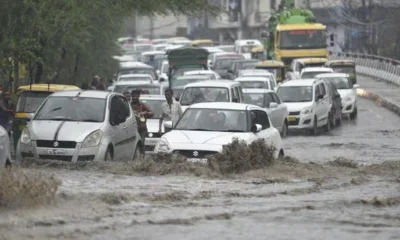
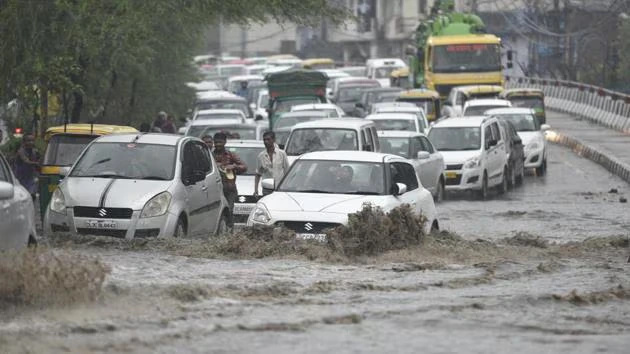
Delhi and parts of the National Capital Region witnessed another spell of rain, thunderstorms, and strong winds on Wednesday evening, marking the second such weather event in the past four days.

The sudden change brought relief from unusually high temperatures recorded earlier this month. According to officials, the temperature at Safdarjung — the city’s base weather station — was recorded at 24 degrees Celsius at 7 pm.

The India Meteorological Department had earlier issued an alert predicting light to moderate rainfall accompanied by thunderstorms and lightning on March 18. Several areas across the capital experienced gusty winds along with brief but intense showers.

More rain likely over next two days

The weather department has forecast partly cloudy skies for March 19 and 20, with chances of light rain or thundershowers occurring once or twice during the day. On March 21, skies are expected to remain cloudy with the possibility of light showers continuing.

Conditions are likely to stabilise from March 23 onwards, with forecasts indicating a return to partly cloudy to clear skies across the region.

Weather activity across India to intensify

The IMD has also indicated widespread weather activity across multiple regions of the country in the coming days. Rainfall is expected to intensify in several states, accompanied by thunderstorms, lightning, and gusty winds.

In the northeastern region, heavy rainfall is likely over Arunachal Pradesh, Assam, and Meghalaya during the early part of the week.

Meanwhile, the western Himalayan region is also set to witness a shift in weather patterns. Himachal Pradesh is likely to receive heavy rainfall on March 19 and 20, while Uttarakhand and Jammu and Kashmir may experience heavy showers around March 20.

Continue Reading

India News

Centre pushes states to cut levies to boost PNG adoption

The Centre has asked states to reduce local levies and streamline approvals to accelerate PNG adoption and city gas infrastructure growth.
Published

on

LPG Cylinder

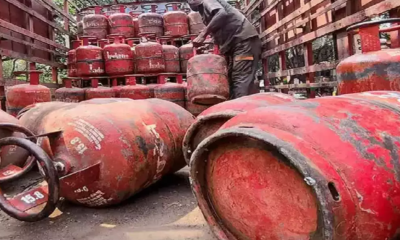
The Ministry of Petroleum and Natural Gas has urged states and Union Territories to ease local levies and procedural barriers affecting City Gas Distribution (CGD) projects, in a bid to accelerate the adoption of piped natural gas (PNG) as a cleaner fuel alternative.

In a communication sent to Chief Secretaries, Petroleum and Natural Gas Secretary Neeraj Mittal highlighted that high right-of-way charges, road cutting fees, lease rentals and other local levies imposed by urban bodies are discouraging investments in CGD infrastructure.

High costs slowing expansion

The ministry pointed out that the CGD sector, particularly PNG supply to households and commercial establishments, does not receive direct subsidies. As a result, it depends heavily on viable returns, which are being impacted by excessive and inconsistent local charges across states.

It noted that these financial and procedural hurdles are slowing down infrastructure expansion and affecting the broader adoption of natural gas.

Gap between connections and usage

According to the government, while around 12.63 crore PNG connections have been recorded, only about 1.6 crore are currently active. The ministry stressed that improving ease of doing business at state and local levels could help bridge this gap and expand the consumer base.

Officials believe that rationalising levies may initially reduce local revenues but could lead to higher long-term gains through increased gas consumption and economic activity.

LPG shortage adds urgency

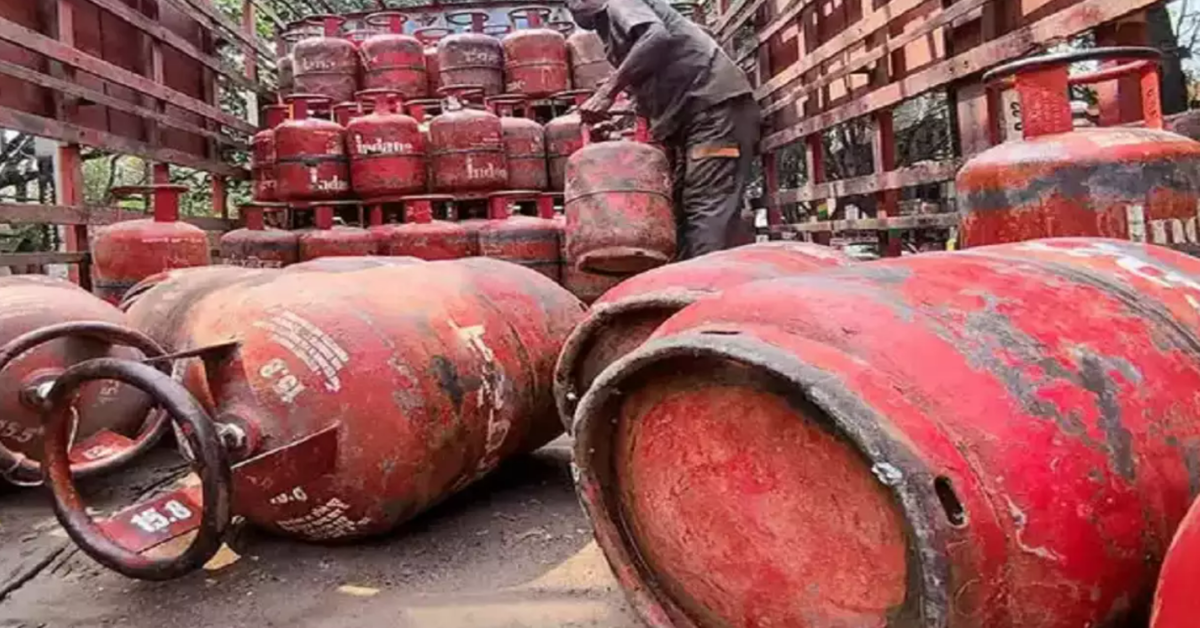
The push for PNG adoption comes amid supply constraints in liquefied petroleum gas (LPG), linked to ongoing tensions in the Middle East. Oil marketing companies are currently supplying only 20 per cent of normal commercial LPG demand to states.

To address this, the ministry has proposed increasing LPG allocation to 30 per cent for states that implement reforms supporting PNG and CGD expansion.

Reform-linked incentives for states

The Centre has suggested a set of measures that states can adopt to qualify for higher LPG allocations. These include:

  • Setting up empowered state and district-level committees for faster approvals
  • Introducing single-window clearance with deemed approvals within 24 hours
  • Implementing a dig-and-restore model using bank guarantees instead of restoration charges
  • Eliminating annual rental or lease charges for CGD infrastructure

The ministry said compliance with these reforms would be verified before granting additional LPG allocations.

Industry support measures

The communication also noted that GAIL and its subsidiaries have already allocated full gas supply to the commercial PNG segment to support businesses affected by reduced LPG availability.

The government reiterated that expanding natural gas usage aligns with its broader push for cleaner and domestically sourced energy.

Continue Reading

Trending

© Copyright 2022 APNLIVE.com