[vc_row][vc_column][vc_column_text]
Rahul Gandhi launches all out attack at PM Narendra Modi, BJP on last day of his 3-day Saurashtra campaign, set to meet Dalit leader Jignesh Mevani
On the last day of his three-day-long election campaign in Gujarat’s Saurashtra region, Congress vice-president Rahul Gandhi, on Friday, launched an all out attack against the incumbent BJP government of the poll-bound state and Prime Minister Narendra Modi, attacking the saffron party for spreading falsehoods while asserting that his party would win with the truth on its side.
“This is a fight between truth and falsehood. Prime Minister Narendra Modi has the police, the Army as well as the government in Gujarat, Centre, Uttar Pradesh, Chhattisgarh, Goa and many other states. However, despite of all this, the Congress is going to win the Gujarat elections because we have truth on our side,” Rahul said while addressing a public meeting in Pardi district.
Joining the campaign trail and his party’s the ongoing Gujarat Navsarjan Yatra on Friday, after a brief absence caused by his emergency visit to Rae Bareli to take stock of the aftermath of the NTPC boiler explosion incident which claimed 29 lives in his mother’s Lok Sabha constituency earlier this week, the Congress vice president held no punches while attacking the BJP.
“Gujarat’s truth is youth unemployment, farmers’ helplessness, expensive private education, expensive medical care, corruption in every field, land stealing, bullets on Patidar, sticks on Dalits in Una, and hunger of Adivasis. However, the BJP’s truth is their relation with 5-10 high profile industrialists who use money, electricity, water, and land of the Gujarat public,” Rahul alleged while addressing the electorate at different venue across South Gujarat.
[/vc_column_text][vc_row_inner css=”.vc_custom_1509715095764{margin-bottom: 20px !important;background-color: #a2b1bf !important;}”][vc_column_inner][vc_custom_heading text=”Rahul set to meet Dalit leader Jignesh Mevani in Navsari” font_container=”tag:p|font_size:20PX|text_align:left” google_fonts=”font_family:Open%20Sans%3A300%2C300italic%2Cregular%2Citalic%2C600%2C600italic%2C700%2C700italic%2C800%2C800italic|font_style:700%20bold%20regular%3A700%3Anormal” css=”.vc_custom_1509715107150{margin-top: 20px !important;}”][vc_column_text]
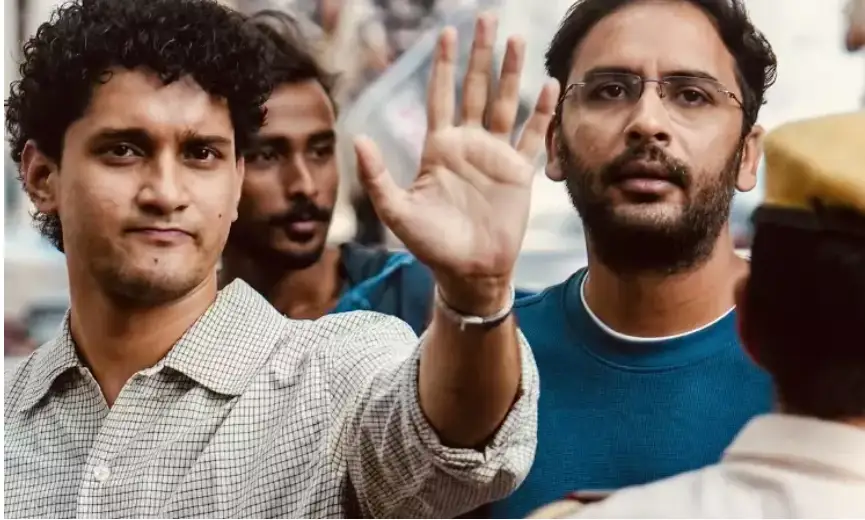
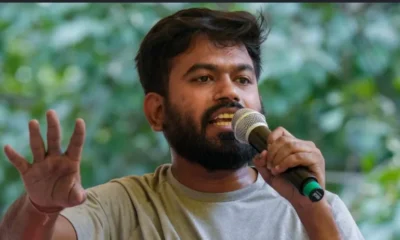
A day after the Congress party’s efforts to convince Patidar Andolan leader Hardik Patel to endorse their bid for power in the state paid off, Congress vice president Rahul Gandhi is, on Fridayevening, set to meet Dalit leader Jignesh Mevani, with the obvious hope that he too would back the grand old party in the state where the BJP has ruled for 22 consecutive years.
Mevani, who has been critical of the ruling BJP in the state, is expected to discuss the demands of his community when he meets Rahul in Navsari. If Rahul’s assurances to Mevani are in line with the latter’s expectations, then the Dalit leader could rally his massive army of supporters behind the Congress, giving the party a huge boost in its battle for Gujarat. The Congress has already roped in OBC leader Alpesh Thakore within its ranks.
The troika of Hardik Patel, Jignesh Mevani and Alpesh Thakore – representing a huge votebank of Patidars, Dalits and OBCs respectively – present a formidable electoral challenge to the BJP in Gujarat and if all of them openly back the Congress, the endorsement could prove to be a game-changer in the poll-bound state where BJP is currently projected to register another win.
[/vc_column_text][/vc_column_inner][/vc_row_inner][vc_column_text]
Reiterating his attack against the BJP and Prime Minister Narendra Modi over the Tata Nano project – the project was re-located from West Bengal to Gujarat when Modi was Gujarat chief minister – Rahul said: “The BJP’s truth is the amount of Rs. 33,000 crore, given to Tata for Nano cars. I haven’t seen a single Nano in the past 10-15 days. I’ve been looking for one, but couldn’t find it.”
“The Congress had provided employment to crores of people in the same amount of money through MNREGA,” Rahul said at another rally.
Addressing farmers in Valsad, the Nehru-Gandhi scion who is leading his party’s charge against the BJP in Gujarat raked up the issue of land acquisition for industrial corridors by the state government, alleging that this was “the biggest corruption” perpetrated by the saffron party in the state.
[/vc_column_text][vc_row_inner css=”.vc_custom_1509714505156{margin-bottom: 20px !important;background-color: #a2b1bf !important;}”][vc_column_inner][vc_custom_heading text=”Rahul to be elevated as Congress president by November-end?” font_container=”tag:p|font_size:20PX|text_align:left” google_fonts=”font_family:Open%20Sans%3A300%2C300italic%2Cregular%2Citalic%2C600%2C600italic%2C700%2C700italic%2C800%2C800italic|font_style:700%20bold%20regular%3A700%3Anormal” css=”.vc_custom_1509715142015{margin-top: 20px !important;}”][vc_column_text]
In a move, albeit only a formality, that is clearly aimed at giving Rahul Gandhi a much clearer and enhanced political profile in the run up to the high-stakes Gujarat elections (due in two phases scheduled for December 9 and 14), the Congress party could elevate the Nehru-Gandhi scion as party president by November-end.
Rahul’s elevation as Congress president has been a foregone conclusion ever since he joined the party but its actual implementation has been hastened in recent months due to an order expected from the Election Commission by December-end in a petition filed before the poll panel seeking organizational elections within the Congress.
With Congress president Sonia Gandhi’s poor health and frequent visits to hospitals becoming a cause for speculation on how long she can actively play the role of party chief, Congress sources say this is perhaps the best time for Rahul to replace his mother as head of the grand-old party.
“Elevating Rahul as Congress president before Gujarat goes to polls will give him a much larger political profile and is likely to play out well before the electorate as his image of a reluctant politician which was created by the BJP has now changed to one of a combative leader who can talk about the people and take on Narendra Modi. A string section within the party believes that there is now point in delaying the inevitable and that Rahul should be elevated as Congress president before the Gujarat polls,” a senior AICC general secretary told APNLive.
[/vc_column_text][/vc_column_inner][/vc_row_inner][vc_column_text]
Stressing that his party, if voted to power in Gujarat, would change the land acquisition laws in the state, Rahul said the incumbent state government under chief minister Vijay Rupani was “snatching away” the land of the poor and giving it to rich industrialists.
Farmers who have lost their land or have received notices for land acquisition had come to meet Rahul during the Valsad meeting. Most of these farmers claimed that their lands were being taken without consent for projects like the Delhi-Mumbai Industrial Corridor (DMIC), Vapi-Vadodara Express way, and the Mumbai-Ahmadabad bullet train – a pet project of Prime Minister Narendra Modi.
Rahul reminded the farmers of the Land Acquisition Act passed by the UPA government and stressed that the legislation was meant to empower farmers and make the acquisition process more transparent was opposed by the BJP at the Centre and that Modi, after becoming prime minister “tried to change the Land Acquisition Act thrice due to pressure from businessmen.
“If the panchayat opposes, no one can take an acre of land. We had made provisions that if land is acquired then the compensation should be four times… If our government comes to power in Gujarat we will not allow land to be taken without your permission,” Rahul announced.
[/vc_column_text][/vc_column][/vc_row]