English हिन्दी
Connect with us

India News

Shivraj Singh Chouhan expands MP cabinet, 2 Scindia loyalists return as ministers

Silawat and Rajput had to resign ahead of the bypolls as they failed to get elected to the state assembly within the mandatory six-month period owing to delay in the bypolls due to Covid-19.

Published

on

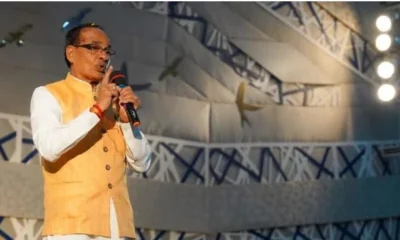
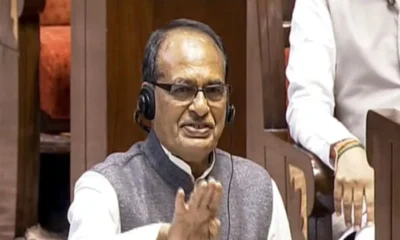
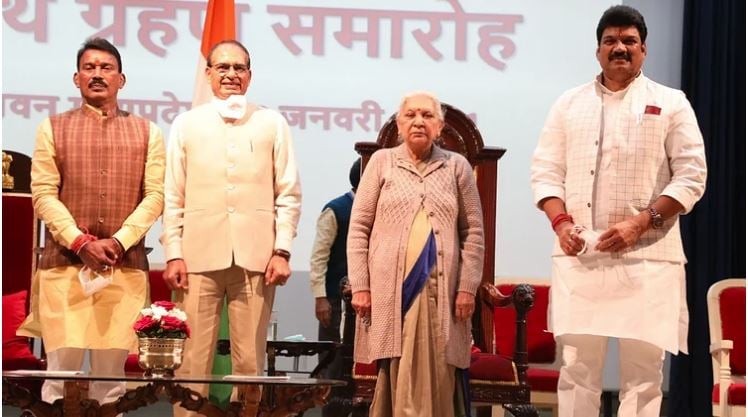
Shivraj Singh Chouhan with Anandiben Patel

Two BJP MLAs and former minister, Tulsiram Silawat and Govind Singh Rajput on Sunday took oath as ministers in the Shivraj Singh Chouhan cabinet at Raj Bhawan under the administration of Governor Anandiben Patel. Madhya Pradesh incumbent Chief Minister Shivraj Singh Chouhan, Protem Speaker Rameshwar Sharma and several ministers of the state cabinet were present during the ceremony held at the Raj Bhavan.

Following his mentor Jyotiraditya Scindia, both Silawat and Rajput had quit the Congress after resigning from the legislature in March last year which triggered a political storm in Madhya Pradesh politics. The two were inducted as ministers in the Shivraj Singh Chouhan government on April 21 last year.

The Shivraj Singh Chouhan-led Madhya Pradesh cabinet was expanded on Sunday around 53 days after BJP’s victory in Madhya Pradesh bypolls in 2019. It will be the third expansion of the state cabinet after Chouhan took oath as chief minister for the fourth term in March 2020 after the Congress government collapsed.

The second expansion of Chouhan”s cabinet took place on July 2 last year with induction of 28 ministers, including a dozen loyalists of Jyotiraditya Scindia. The first expansion was held on April 21 last year wherein five ministers, including Silawat and Rajput, were inducted.

Silawat and Rajput were among the Congress MLAs who had resigned and joined the BJP with Scindia in March 2020.

Silawat and Rajput had to resign ahead of the bypolls as they failed to get elected to the state assembly within the mandatory six-month period owing to delay in the bypolls due to Covid-19. There is a mandatory provision that a non-MLA, who got inducted in the cabinet, should get elected to the state assembly within six months.

Read Also: Omar Abdullah says vaccines belong to humanity not political parties

In the assembly bypolls held on November 3, the BJP had won 19 of the 28 seats, while the opposition Congress had bagged 9 seats. Silawat and Rajput won from Sanver and Surkhi respectively in the bypoll.

India News

PM Modi assures no discrimination in women’s quota, delimitation debate intensifies in Parliament

PM Narendra Modi has assured that women’s reservation will be implemented without discrimination, amid a heated debate over delimitation in Parliament.

Published

on

PM modi

Prime Minister Narendra Modi has assured that there will be no discrimination in the implementation of women’s reservation, as Parliament witnessed a sharp debate over the proposed linkage between the quota and delimitation exercise.

During the ongoing special session, the government reiterated its commitment to ensuring fair representation while addressing concerns raised by opposition parties regarding the timing and structure of the legislation.

The proposed framework aims to reserve 33 percent of seats for women in the Lok Sabha and state assemblies. However, its implementation is tied to a fresh delimitation exercise, which is expected after the next census.

Opposition questions timing and intent

Opposition leaders have raised concerns that linking the women’s quota to delimitation could delay its implementation. They argue that the process of redrawing constituencies may push the actual rollout further into the future.

The issue has triggered a broader political confrontation, with multiple parties questioning whether the move could alter representation across states.

Some critics have also alleged that the delimitation exercise could disproportionately benefit certain regions based on population, a charge the government has rejected.

Government reiterates commitment to fair implementation

Responding to these concerns, the Centre has maintained that the reforms are necessary to ensure accurate and updated representation based on population data.

Leaders from the ruling side have repeatedly emphasized that the process will be carried out transparently and without bias. The assurance that there will be “no discrimination” is aimed at addressing fears among states and opposition parties.

The debate marks a key moment in Parliament, with both sides engaging in intense exchanges over one of the most significant electoral reforms in recent years.

Continue Reading

India News

Give all tickets to Muslim women, Amit Shah says, attacking Akhilesh Yadav on sub-quota demand

A sharp exchange between Amit Shah and Akhilesh Yadav in Parliament over sub-quota for Muslim women highlights key divisions on women’s reservation implementation.

Published

on

A heated exchange broke out in Parliament during discussions on the women’s reservation framework, with Union Home Minister Amit Shah and Samajwadi Party chief Akhilesh Yadav locking horns over the demand for a sub-quota for Muslim women.

The debate unfolded as the government pushed forward key legislative measures to implement 33% reservation for women in the Lok Sabha and state assemblies.

Akhilesh Yadav argued that the proposed reservation must ensure representation for women from marginalised communities, including Other Backward Classes (OBCs) and Muslim women. He said that without such provisions, large sections could remain excluded from political participation.

He also questioned the timing of the bill, alleging that the Centre was avoiding a caste census. According to him, a census would lead to renewed demands for caste-based reservations, which the government is reluctant to address.

Government rejects religion-based quota

Responding to the demand, Amit Shah made it clear that reservation based on religion is not permitted under the Constitution.

He stated that any proposal to provide quota to Muslims on religious grounds would be unconstitutional, firmly rejecting the idea of a separate sub-quota for Muslim women within the broader reservation framework.

The government has maintained that the existing framework already includes provisions for Scheduled Castes (SC) and Scheduled Tribes (ST) women within the overall reservation structure.

Wider political divide over implementation

The issue of sub-categorisation within the women’s quota has emerged as a major flashpoint, even as most opposition parties broadly support the idea of women’s reservation.

Samajwadi Party leaders reiterated that their support for the bill depends on inclusion of OBC and minority women, while the government continues to defend its constitutional position.

The debate is part of a broader discussion during the special Parliament session, where multiple bills linked to delimitation and implementation of the women’s quota are being taken up.

Continue Reading

India News

No state will lose a seat, Centre assures as delimitation debate takes centre stage in Parliament

Parliament’s special session begins with key focus on implementing women’s reservation and delimitation, setting the stage for major electoral changes.

Published

on

Parliament

A special session of Parliament commenced on Thursday, with the Centre set to take up crucial legislation related to women’s reservation and delimitation of constituencies. The session, scheduled over three days, is expected to witness intense debate as the government pushes forward its legislative agenda.

At the centre of discussions is the proposal to operationalise the women’s reservation law, which seeks to allocate 33 percent of seats in the Lok Sabha and state assemblies to women. The law, passed earlier, requires enabling provisions before it can be implemented.

The rollout of the reservation is closely tied to the delimitation exercise — a process that redraws parliamentary constituencies based on updated population data. The implementation is expected only after the next census and delimitation process are completed.

The government is aiming to put in place the framework so that the reservation can be enforced in future elections, likely around 2029.

Delimitation and numbers at play

Delimitation is a key aspect of the proposed changes, as it will determine how seats are redistributed and which constituencies are reserved. The exercise is expected to reflect population shifts and may also involve an increase in the total number of Lok Sabha seats.

This linkage has made the issue politically sensitive, with several opposition parties backing women’s reservation in principle but raising concerns over how and when delimitation will be carried out.

Political reactions and expected debate

The session is likely to see sharp exchanges between the government and opposition. While there is broad agreement on increasing women’s representation, disagreements remain over the timing, process, and potential political implications of the delimitation exercise.

Some leaders have argued that delimitation could significantly alter the balance of representation among states, making it a contentious issue beyond the women’s quota itself.

The government, however, has framed the move as a step toward strengthening women’s participation in governance and ensuring more inclusive policymaking.

Continue Reading

Trending

© Copyright 2022 APNLIVE.com