English हिन्दी
Connect with us

Latest Politics News

Virulent intolerance unleashed in India under Modi govt: New York Times

Published

on

Virulent intolerance unleashed in India under Modi govt: New York Times
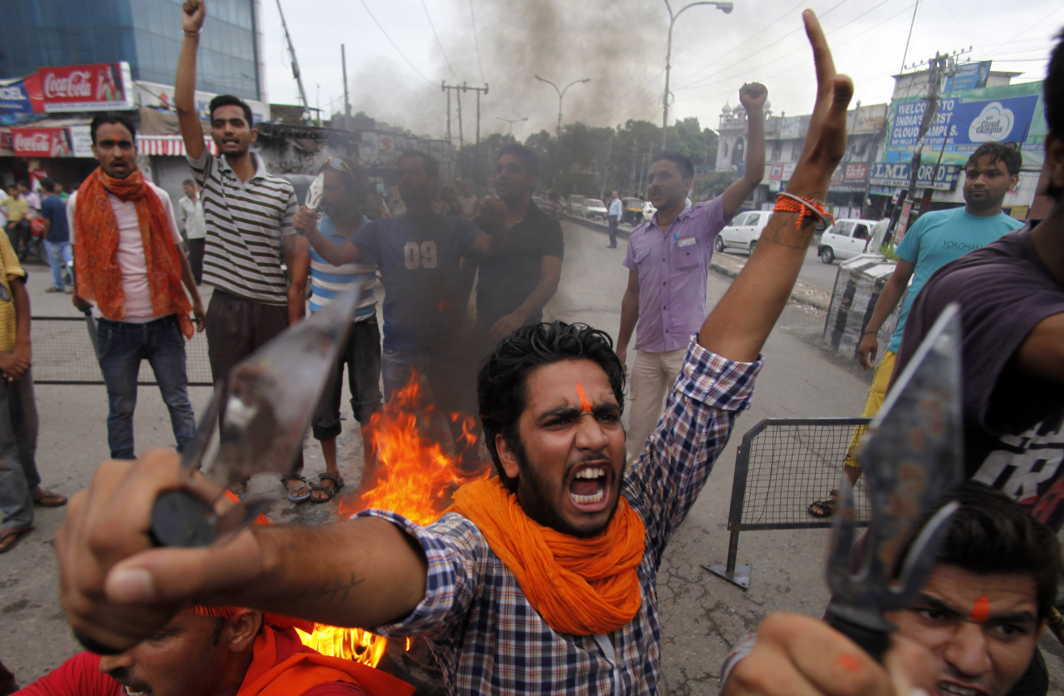
Criticising the Modi government, an editorial in a New York daily said there has been an “alarming rise” in mob attacks in India since he took office and “virulent intolerance” has been unleashed under his leadership, threatening the foundation of the secular nation.

“Narendra Modi‘s landslide victory as Prime Minister of India in 2014 was borne on his promises to unleash his country’s economic potential and build a bright future while he played down the Hindu nationalist roots of his Bharatiya Janata Party,” an editorial in New York Times titled ‘India’s Turn Toward Intolerance’ said.

The Prime Minister’s Office did not offer any comment when its attention was drawn to the editorial by PTI for a response.

The editorial noted that under Modi’s leadership “growth has slowed, jobs have not materialised, and what has actually been unleashed is virulent intolerance that threatens the foundation of the secular nation envisioned by its founders.”

It added that since Modi took office, there has been an “alarming rise” in mob attacks against people accused of eating beef or abusing cows and most of those killed have been Muslims.

The editorial also referred to India’s film censor board’s decision regarding a documentary on Nobel Prize- winning economist Amartya Sen. The board ruled that the documentary cannot be screened unless the director cuts the words “cow”, “Hindu India”, “Hindutva view of India” and “Gujarat“, where Modi was the chief minister at the time of anti-Muslim riots in 2002.

“This might seem like merely a farcical move by Hindu fanatics, if it were not so in line with much else that is happening in Modi’s India, and if the implications for India’s democracy weren’t so chilling. But this is where Modi has brought the nation as it prepares to celebrate 70 years of independence on August 15,” it said.(PTI)

India News

INDIA bloc likely to meet on September 30 over Gyanesh Kumar row

INDIA bloc parties are likely to meet in New Delhi on September 30 amid growing opposition to Chief Election Commissioner Gyanesh Kumar and the Special Intensive Revision of electoral rolls.

Published

on

Rahul-Gandhi

Opposition parties belonging to the INDIA bloc are set to meet in New Delhi on September 30 to discuss concerns surrounding the Election Commission, the Special Intensive Revision (SIR) of electoral rolls and a proposed removal motion against Chief Election Commissioner Gyanesh Kumar.
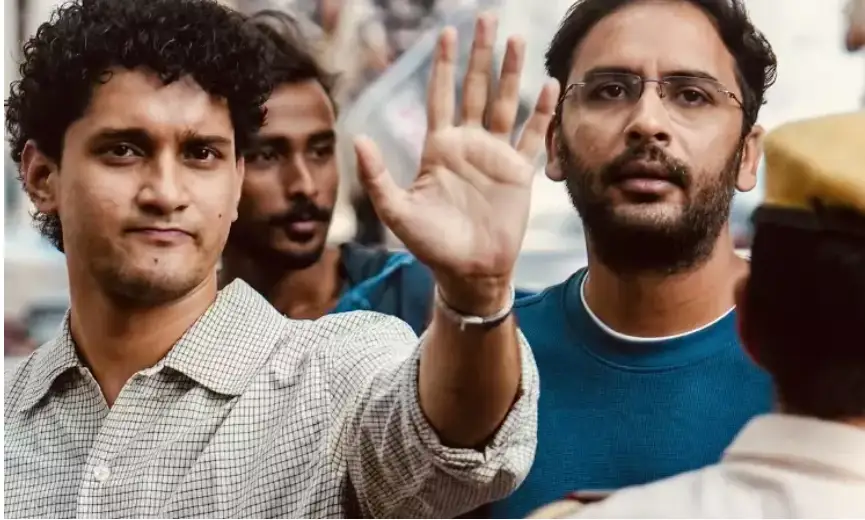
The proposed meeting comes amid growing coordination among opposition parties over the functioning of the poll panel and demands for action against Chief Election Commissioner Gyanesh Kumar. The parties are also discussing a possible joint response to the developments.

Why is the INDIA bloc meeting being planned?

The INDIA bloc meeting on September 30 comes amid reports of objections within the Election Commission over certain decisions and orders related to the SIR exercise. 

According to the report, Opposition leaders have been discussing a coordinated response to their concerns over the Election Commission and the electoral-roll revision process. 

The issue is also expected to be discussed at the Congress Working Committee meeting scheduled for September 29, a day before the proposed INDIA bloc meeting.

Gyanesh Kumar removal demand in focus

The demand for the removal of Chief Election Commissioner Gyanesh Kumar has become a major point of contention between the Opposition and the Election Commission.

The CPI(M), CPI and CPI(ML)-Liberation have demanded Kumar’s removal and an immediate halt to the SIR exercise. Congress has also intensified its criticism of the CEC.

Opposition parties are also working on a fresh removal motion against Gyanesh Kumar. The September 30 meeting is expected to finalise the strategy for the motion, including the collection of signatures. According to the report, this would be the Opposition’s third such attempt. 

What is the SIR controversy?

The political dispute is linked to the Special Intensive Revision of electoral rolls, or SIR.

The controversy intensified following a report that Election Commissioners Sukhbir Singh Sandhu and Vivek Joshi had recorded objections on several occasions concerning decisions and orders related to the SIR process.

The Election Commission has said that differing views and observations are part of normal deliberations in a multi-member constitutional body. The poll panel has also maintained that its orders have legal sanction and follow statutory procedures, while stating that the final decisions on the SIR were taken unanimously. 

TMC and Left parties coordinate over the issue

The developments have also brought the Trinamool Congress and the CPI(M) together on the Election Commission issue, despite their political differences in West Bengal.

CPI(M) general secretary M A Baby proposed an immediate meeting to discuss a joint strategy. According to the report, Mamata Banerjee spoke with M A Baby and Leader of Opposition Rahul Gandhi, after which the leaders settled on September 30 for the meeting. 

What could be discussed at the September 30 meeting?

The proposed meeting is expected to focus on:

  • Concerns surrounding the Election Commission
  • The Special Intensive Revision of electoral rolls
  • Opposition demands concerning CEC Gyanesh Kumar
  • A possible fresh removal notice against the CEC
  • A coordinated response by INDIA bloc parties

The exact agenda and participation will depend on the discussions among the opposition parties before the proposed meeting.

Continue Reading

India News

Gandhi Parivar vs Sangh Parivar, Revanth Reddy’s remark sparks BJP attack

Telangana Chief Minister Revanth Reddy’s remarks contrasting the Gandhi Parivar with the Sangh Parivar triggered a BJP response accusing Congress of prioritising the Gandhi family.

Published

on

Telangana Chief Minister Revanth Reddy’s remarks comparing the Gandhi Parivar and Sangh Parivar have triggered a political exchange, with the BJP hitting back at the Congress leader.

Speaking in Kerala on Friday, Mr Reddy described the contest over India’s future as a fight between the two “parivars”. He said the Gandhi family had made sacrifices for the country while accusing the Sangh Parivar of attempting to divide India on the basis of religion, caste, region and language.

What Revanth Reddy said

Mr Reddy cited Mahatma Gandhi, Indira Gandhi and Rajiv Gandhi while speaking about what he described as sacrifices made by the Gandhi family.

He also referred to Sonia Gandhi, Rahul Gandhi and Priyanka Gandhi, saying they had given up positions, power and high office.

The Telangana Chief Minister said he had no remaining personal political ambitions and described his objective as working towards a Congress-led government at the Centre with Rahul Gandhi as Prime Minister.

Mr Reddy also appealed to people to stand with the Gandhi Parivar and oppose the Sangh Parivar. He described the latter as a threat to India’s democracy.

BJP hits back

The BJP responded to Mr Reddy’s remarks on Saturday.

BJP spokesperson Pradeep Bhandari said the Telangana Chief Minister’s comments amounted to an admission that Congress’s objective was to bring the Gandhi family back to power.

He also linked Mr Reddy’s remarks to the ongoing political debate around “vote chori”, the Election Commission, the Constitution and democracy, arguing that the Congress’s focus was instead on the Gandhi family.

The exchange adds to the political confrontation between the BJP and Congress, with Mr Reddy presenting the Gandhi Parivar and Sangh Parivar as opposing forces in India’s political future, while the BJP has interpreted his remarks as evidence of Congress’s focus on the Gandhi family.

Continue Reading

India News

Veeramani POCSO case: Vijay questions Stalin over earlier probe

Tamil Nadu Chief Minister Vijay has questioned MK Stalin over the handling of the Veeramani POCSO case, while Stalin has rejected allegations that the previous DMK government protected anyone.

Published

on

Actor Vijay

Tamil Nadu Chief Minister and Tamilaga Vettri Kazhagam (TVK) president C Joseph Vijay has questioned DMK president MK Stalin over the handling of the POCSO case involving Gem Granites founder R Veeramani. The political exchange follows renewed investigation into allegations involving minor girls.

Vijay’s remarks came as the ruling TVK stepped up its questions about how the case was handled during the previous DMK government. The party’s IT wing has alleged that the earlier investigation was weakened and questioned why a final report was filed.

The allegations have been rejected by the DMK. Stalin has said that no order was issued by the DMK government to protect anyone in the case and has called the allegations false and defamatory.

What did Vijay say about the Veeramani case?

Vijay questioned Stalin over the handling of the case and demanded an explanation from the former chief minister.

The TVK has specifically questioned why action was not taken against Veeramani during the previous administration and why the earlier investigation resulted in a closure report.

The party has also raised questions about the role of officials involved in the earlier investigation. These are political allegations made by the TVK and have not been established as facts.

What is the Veeramani POCSO case?

The case concerns allegations of sexual abuse of minors involving R Veeramani, the founder of Gem Granites.

The case came under renewed scrutiny after a special POCSO court rejected an earlier closure report and ordered further investigation. The expanded probe has subsequently identified additional alleged survivors who were minors at the time of the alleged offences, according to current reporting.

The investigation is also examining the circumstances surrounding the earlier probe and whether there were any lapses in how the case was handled.

What has MK Stalin said?

Stalin has rejected allegations that the previous DMK government protected Veeramani.

He has said that no order was issued by the DMK government to shield anyone in the case. Stalin has also said that everyone responsible for the alleged offences, including anyone who aided or attempted to protect the accused, should face the law.

The DMK president has further said that the focus should remain on securing justice for the affected girls rather than making political allegations.

Why has the case become a political issue?

The Veeramani case has become the subject of a political dispute between the ruling TVK and the DMK over the handling of the earlier investigation.

The TVK is questioning the previous government’s handling of the case, while the DMK has denied that it intervened to protect the accused.

At this stage, claims about political interference or deliberate weakening of the earlier investigation should be treated as allegations unless established by the ongoing investigation or judicial proceedings.

Continue Reading

Trending

© Copyright 2022 APNLIVE.com