English हिन्दी
Connect with us

Latest Politics News

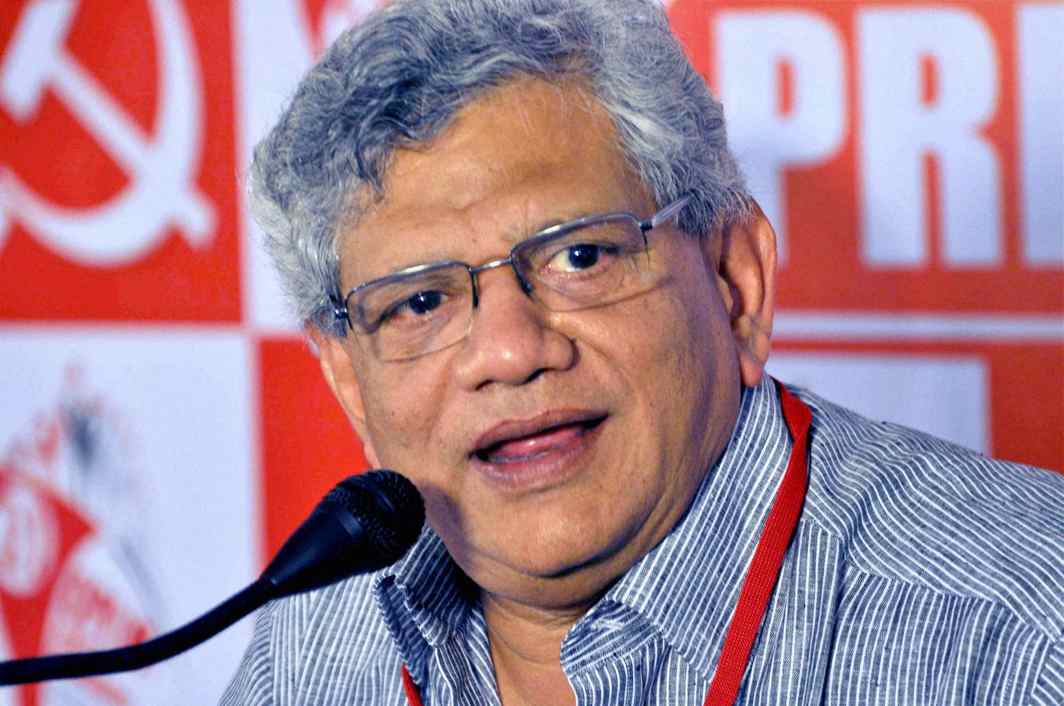
CPM to lose its best voice in RS, denies 3rd RS term to Sitaram Yechury

Published

on

CPM to lose its best voice in RS, denies 3rd RS term to Yechury

[vc_row][vc_column][vc_column_text]Struggling for political survival, Bengal and Kerala factions of the party fail to rise above their internal squabbles

By Puneet Nicholas Yadav

On Tuesday, after a prolonged debate among its senior leadership at the two-day-long Central Committee meeting of the Communist Party of India (Marxist), Sitaram Yechury – who is also the party’s chief and the Left Front’s most prolific and cogent speaker in Parliament – was denied a third re-nomination to the Rajya Sabha.

Sources within the senior CPM leadership confirmed that it was the Kerala faction of the party – led by chief minister Pinarayi Vijayan and with the backing of former party general secretary Prakash Karat – that queered the pitch for Yechury’s re-entry to the Upper House. Former Kerala chief minister, VS Achuthanandan, who in April 2015 was instrumental in getting Yechury elected as the party chief despite opposition from the Kerala faction, too could not help defeat the Vijayan-Karat lobby this time.

To be fair, Yechury had himself never officially demanded a third term. On the contrary, he had made it clear that he would not violate the party’s norm of not giving any member more than two terms in the Rajya Sabha. But then, the Bengal faction of the party – which is known for its allegiance to Yechury and an equal contempt for the Karat-Kerala party axis – had for over two months been pressing for breaking with the party norm and re-nominating the general secretary to the Upper House, given the major challenges that the Left parties face today: from the Narendra Modi-led BJP at the Centre and the Mamata Banerjee-led Trinamool Congress in Bengal.

For a party that has for long had an internal discourse of political pragmatism and tactical decision-making, the denial of a Rajya Sabha berth to Yechury comes as arguably the third biggest political blunder in Left politics. The first being their collective decision of disallowing then West Bengal chief minister Jyoti Basu from becoming Prime Minister in 1996 of a broad anti-BJP coalition and then, a little over a decade later, under the leadership of Yechury’s predecessor, Prakash Karat, of withdrawing support to the Congress-led UPA-I government of Dr Manmohan Singh in the aftermath of the Indo-US Nuclear Deal.

At a time when the Left parties in general, and CPM in particular, are facing their most grave fight for survival, not allowing the combined Left Front’s most prolific and cogent orator – who enjoys the respect and admiration of parliamentarians cutting across party lines – to re-enter Rajya Sabha as an MP, is certain to cost the CPM-Left narrative very dear.

A senior party leader who also supported a third term for Yechury said: “those who opposed his nomination to the Rajya Sabha either do not realize the cost of their action or have knowingly put the party in a far more perilous political spot than breaking the 2-term norm would ever have”.

Another party leader explained: “The CPM today needs to have a leader who can not only put the party’s stand on crucial issues coherently on the floor of Parliament but also reach out to other like-minded parties to build a strong narrative to counter the BJP-NDA combine. Yechury is that man but unfortunately internal feuds and ambitions of a few leaders prevailed over pragmatism at the CC meet.”

It is widely known now that Vijayan categorically rejected the Bengal faction’s plea for giving Yechury a third term and rallied the Karat/Kerala faction against the proposal. In an interview to the Indian Express, even before the CC had taken its final decision, Vijayan gave two key reasons for not allowing Yechury to be re-nominated: first, that the party was averse to taking the Congress’ support in Bengal assembly to ensure Yechury’s victory in the RS poll due in August and second, that since Yechury is party general secretary he would not be able to give his full attention to the role if he continued to be a parliamentarian.

Vijayan’s rationale sounds more hypocritical than pragmatic, say those who supported a third term for Yechury. “It is known that in Kerala, Congress has been our principal political rival but then in Bengal we fought the last assembly polls in an alliance. In Parliament too, the Congress and Left parties have stood together on a wide array of issues to counter the Modi government. So this argument of not taking the Congress’ support for Yechury’s election is flawed to begin with. Secondly, Yechury has been the party chief and an MP for over two years and has discharged both roles with equal dedication so what has changed now?” said a senior CPM leader.

For the Left, the absence of Yechury from Rajya Sabha would no doubt come at a heavy price. The Congress, which was set to support Yechury in the RS polls, is not likely to support any other Left candidate from Bengal. It seems to have made and received positive overtures from Mamata Banerjee’s Trinamool Congress for nominating Meira Kumar – as a reward for standing in the Presidential polls against BJP nominee Ram Nath Kovind and losing with the lowest margin in nearly five decades – to Rajya Sabha from Bengal. The Left is set to not only lose its best speaker in Parliament but also a seat that it could have easily won if it had allowed Yechury to contest.

Indications from both Kerala and Bengal are that the BJP is on an upswing in both the states that have hitherto been the only surviving bastions of Left politics (though Bengal has been lost since Banerjee’s victory and the north-eastern state of Tripura sadly doesn’t give the CPM any political heft at a national level).[/vc_column_text][/vc_column][/vc_row]

India News

PM Modi assures no discrimination in women’s quota, delimitation debate intensifies in Parliament

PM Narendra Modi has assured that women’s reservation will be implemented without discrimination, amid a heated debate over delimitation in Parliament.

Published

on

PM modi

Prime Minister Narendra Modi has assured that there will be no discrimination in the implementation of women’s reservation, as Parliament witnessed a sharp debate over the proposed linkage between the quota and delimitation exercise.

During the ongoing special session, the government reiterated its commitment to ensuring fair representation while addressing concerns raised by opposition parties regarding the timing and structure of the legislation.

The proposed framework aims to reserve 33 percent of seats for women in the Lok Sabha and state assemblies. However, its implementation is tied to a fresh delimitation exercise, which is expected after the next census.

Opposition questions timing and intent

Opposition leaders have raised concerns that linking the women’s quota to delimitation could delay its implementation. They argue that the process of redrawing constituencies may push the actual rollout further into the future.

The issue has triggered a broader political confrontation, with multiple parties questioning whether the move could alter representation across states.

Some critics have also alleged that the delimitation exercise could disproportionately benefit certain regions based on population, a charge the government has rejected.

Government reiterates commitment to fair implementation

Responding to these concerns, the Centre has maintained that the reforms are necessary to ensure accurate and updated representation based on population data.

Leaders from the ruling side have repeatedly emphasized that the process will be carried out transparently and without bias. The assurance that there will be “no discrimination” is aimed at addressing fears among states and opposition parties.

The debate marks a key moment in Parliament, with both sides engaging in intense exchanges over one of the most significant electoral reforms in recent years.

Continue Reading

India News

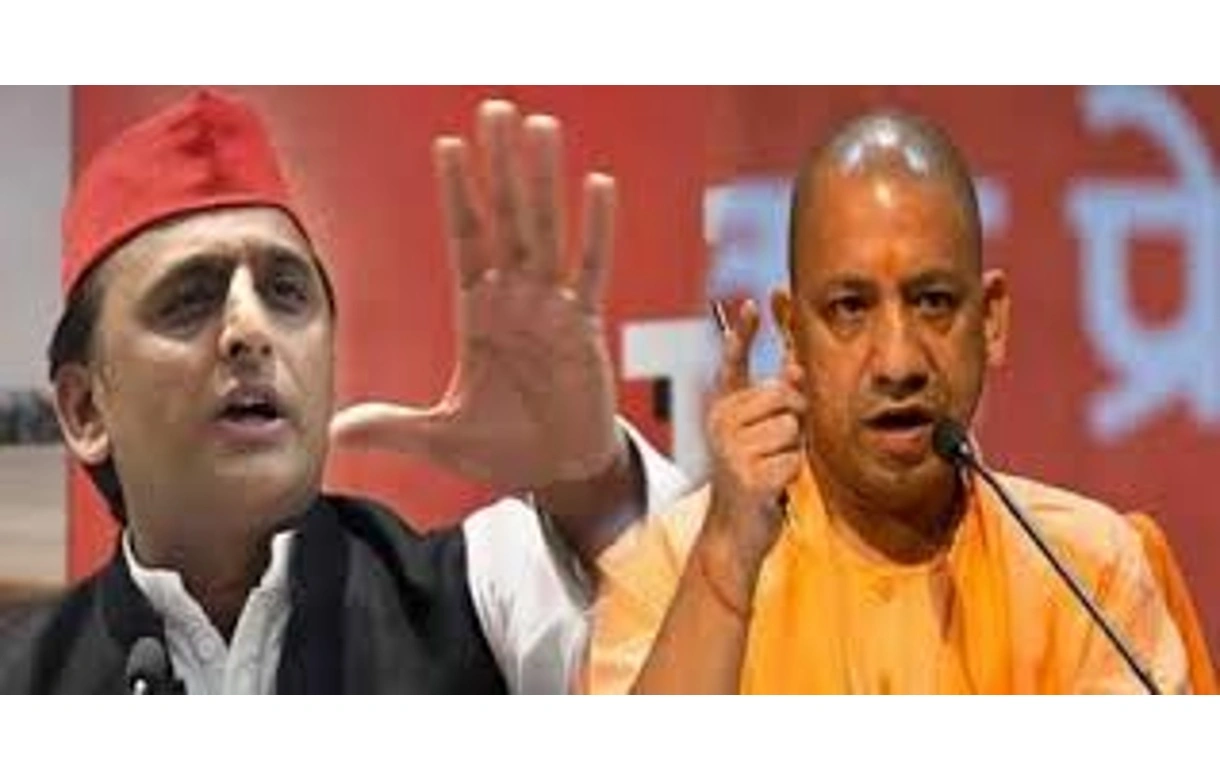
Give all tickets to Muslim women, Amit Shah says, attacking Akhilesh Yadav on sub-quota demand

A sharp exchange between Amit Shah and Akhilesh Yadav in Parliament over sub-quota for Muslim women highlights key divisions on women’s reservation implementation.

Published

on

A heated exchange broke out in Parliament during discussions on the women’s reservation framework, with Union Home Minister Amit Shah and Samajwadi Party chief Akhilesh Yadav locking horns over the demand for a sub-quota for Muslim women.

The debate unfolded as the government pushed forward key legislative measures to implement 33% reservation for women in the Lok Sabha and state assemblies.

Akhilesh Yadav argued that the proposed reservation must ensure representation for women from marginalised communities, including Other Backward Classes (OBCs) and Muslim women. He said that without such provisions, large sections could remain excluded from political participation.

He also questioned the timing of the bill, alleging that the Centre was avoiding a caste census. According to him, a census would lead to renewed demands for caste-based reservations, which the government is reluctant to address.

Government rejects religion-based quota

Responding to the demand, Amit Shah made it clear that reservation based on religion is not permitted under the Constitution.

He stated that any proposal to provide quota to Muslims on religious grounds would be unconstitutional, firmly rejecting the idea of a separate sub-quota for Muslim women within the broader reservation framework.

The government has maintained that the existing framework already includes provisions for Scheduled Castes (SC) and Scheduled Tribes (ST) women within the overall reservation structure.

Wider political divide over implementation

The issue of sub-categorisation within the women’s quota has emerged as a major flashpoint, even as most opposition parties broadly support the idea of women’s reservation.

Samajwadi Party leaders reiterated that their support for the bill depends on inclusion of OBC and minority women, while the government continues to defend its constitutional position.

The debate is part of a broader discussion during the special Parliament session, where multiple bills linked to delimitation and implementation of the women’s quota are being taken up.

Continue Reading

India News

Raghav Chadha’s security withdrawn by Punjab amid AAP rift, Centre steps in with cover

Punjab withdraws Raghav Chadha’s security amid party tensions, Centre offers fresh protection.

Published

on

The Punjab government has withdrawn the Z+ category security cover provided to Raghav Chadha, amid an ongoing rift within the Aam Aadmi Party.

According to sources, the security personnel deployed by Punjab Police have been asked to report back, marking a significant development in the political dispute involving the Rajya Sabha MP.

The move comes shortly after Chadha was removed from his position as deputy leader of the party in the Rajya Sabha, signalling deepening differences between him and the party leadership.

Centre offers fresh security arrangement

Soon after the withdrawal, the Ministry of Home Affairs stepped in to provide security cover to Chadha.

Sources indicate that he will now receive Z-category security in Delhi and Punjab, while a Y-category cover may be provided in other parts of the country.

This shift ensures continued protection for the MP despite the withdrawal of state-provided security.

Fallout linked to political disagreement

The development is part of a broader fallout between Chadha and his party. He was recently replaced as deputy leader in the Rajya Sabha, with the party reportedly expressing dissatisfaction over his political approach and conduct in Parliament.

Chadha, however, has denied the allegations, calling them baseless and asserting that his focus has been on raising public issues rather than engaging in political confrontation.

Growing divide within party ranks

Once considered a close associate of Arvind Kejriwal and a prominent face of the party, Chadha’s recent removal from key roles and the withdrawal of his security underline a widening internal divide.

He is among the few leaders in the party who have recently found themselves at odds with the leadership, indicating shifting dynamics within the organisation.

Continue Reading

Trending

© Copyright 2022 APNLIVE.com