English हिन्दी
Connect with us

Latest Politics News

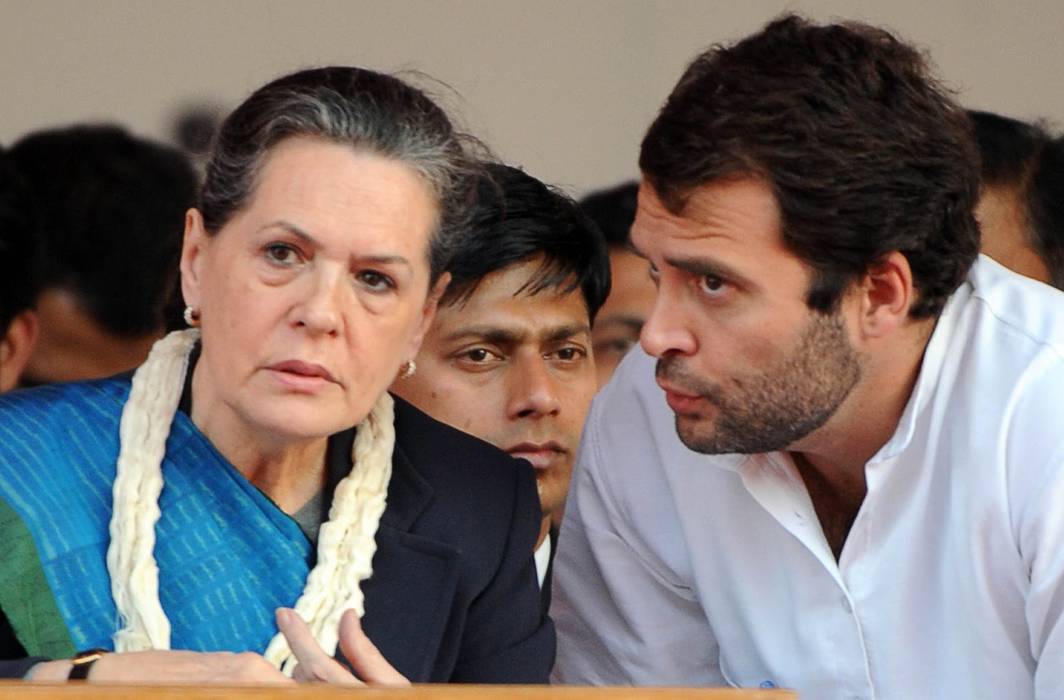
With Rahul to take over as Congress president tomorrow, Sonia says: My role is to retire

Published

on

With Rahul to take over as Congress president tomorrow, Sonia says: My role is to retire
~By Puneet Nicholas Yadav

Congress sources say Sonia Gandhi will continue to advise her son on crucial party matters, help him reach out to potential allies 

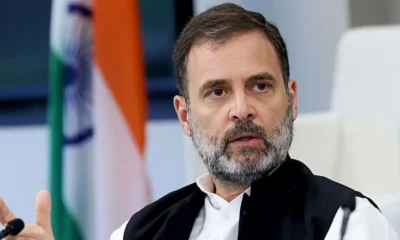
With her son, Rahul Gandhi set to formally take over as Congress president on Saturday, Sonia Gandhi has hinted that she will now retire from politics. 

“My role is to retire”, was Sonia’s cryptic reply to questions by television channel NDTV on Friday, as she reached the Parliament to attend the first day of the winter session. 

It remains to be seen whether Sonia’s remark would actually translate into her retirement from active politics and pave the way for Rahul firmly and comprehensively taking over command of the 131-year-old Congress party. Besides being Congress president – a post that she has held for 19 consecutive years since 1998 – Sonia Gandhi is currently also the leader of the Congress Parliamentary Party (CPP) which includes the party’s members from the Lok Sabha and Rajya Sabha. 

In the years before Sonia took over as party president, the CPP leader would be the Congress’ designated Leader of the Lok Sabha (a position held either by the Prime Minister or the leader of Opposition, depending on which position the Congress held in the House). The party would also have a Leader of the Rajya Sabha. After Sonia became the Congress president, the party constitution was amended and the Leader of the Lok Sabha as well as of the Rajya Sabha were made to report to Sonia as the CPP leader – giving her total control of the party leadership. 

Sonia Gandhi is also the current Lok Sabha MP from the Nehru-Gandhi bastion of Rae Bareli. It is unclear whether her decision to retire would mean that she will no longer contest from the seat too. Her health has been a cause of worry for nearly a decade now and while the exact details of what ails her have been closely guarded by the Congress party, she has been increasingly in and out of hospital for the past few years – the reasons for her hospitalisation, as declared by the party on different occasions, ranging from asthma, fever, food poisoning, chest congestion, et al. 

There is some speculation that if Sonia does indeed vacate her claim to Rae Bareli in the 2019 Lok Sabha polls, Rahul could contest from the constituency while his sister, Priyanka Gandhi, could be finally roped in by the party to contest from Amethi. Both Amethi and Rae Bareli have been pocketboroughs of the Nehru-Gandhi family for decades; sending to parliament the late Feroze Gandhi, the late Sanjay Gandhi, former Prime Ministers Indira Gandhi and Rajiv Gandhi. 

Shifting Rahul from Amethi to Rae Bareli could also be a politically savvy decision. Rahul’s popularity in Amethi has diminished in recent years and the constituency is being craftily nurtured by Smriti Irani, Union minister and close aide of Prime Minister Narendra Modi , for the past four years. Irani had unsuccessfully contested the 2014 general election against Rahul from Amethi but managed to substantially reduce his victory margin. In the years since 2014, Smriti has regularly been visiting Amethi while posters have often cropped up in the town declaring Rahul as “missing” and promising an award for information on his whereabouts. 

This is not to say that Rahul could lose Amethi in 2019, especially not after he becomes Congress president. But, the party might feel it prudent to project him as the candidate from his mother’s seat while getting Priyanka to make her much-awaited political debut from Amethi. Priyanka’s entry into active politics has long been speculated though she has remained silent on this issue, confining herself to just campaigning for the party in Amethi and Rae Bareli during Lok Sabha and UP Assembly polls. She is often credited with a much greater public appeal and political acumen than her brother and the sycophancy that Congress leaders have traditionally been prone to will no doubt trigger calls for her entry into electoral politics once Sonia firmly declares her exit. 

However, it is extremely unlikely that Sonia will completely disassociate herself from Congress politics. Highly placed sources in the party told India Legal that she will continue to play a behind-the-scenes role, helping a smooth transition of the party from the Old Guard of party veterans loyal to her to a New Guard of younger leaders who are confidantes of Rahul. The Old Guard v/s New Guard friction has afflicted the Congress for decades – right from the days when the late Indira Gandhi took over the strings of the party after her father, the late Pandit Jawaharlal Nehru all the way to 2004 when Rahul made his electoral debut. 

Congress media cell chief Randeep Singh Surjewala has already clarified that Sonia was not retiring from politics but only from the post of Congress president and that “her blessing, wisdom and innate commitment to Congress ideology shall always be our guiding light”. 

Senior party leaders told India Legal on condition of anonymity that contrary to earlier speculation of the party amending its constitution to craft a new role for Sonia, no new designation will be carved out for her. The reason for this seems to be the assumption that such a move would give Congress’ political rivals, especially the BJP, a chance to spread rumours of two parallel power centres within the Congress – as was the buzz when Sonia declined the Prime Minister’s chair in 2004 and named Dr Manmohan Singh as her choice for the role. By not formally giving Sonia a specific role, the party will also avoid the possibility of leaders unhappy with Rahul’s style of functioning – and there are quite a few of those – rushing to her at the slightest instance of a disagreement with her son. 

Sonia will, sources say, continue to steer Rahul and the party through crucial political decisions and wield significant power by the sheer enormity of her stature within the Congress – and undoubtedly also in public life. Perhaps more importantly, she is expected to be the go-between for Rahul when he tries to find new political allies and build bridges with existing ones – something that he will now have to do increasingly in the run up to 2019 if the Congress hopes to pose a formidable challenge to Prime Minister Narendra Modi and his BJP.

India News

Congress suspends 5 Haryana MLAs over cross-voting in Rajya Sabha polls

Congress suspends five Haryana MLAs for cross-voting in Rajya Sabha elections, citing serious indiscipline and anti-party activities.

Published

on

The Congress has suspended five of its MLAs in Haryana for cross-voting during the recent Rajya Sabha elections, taking disciplinary action over what it described as “anti-party activities”.

The move came after the state unit reviewed the conduct of certain legislators during the polls, where some were found to have voted against the party’s authorised candidate.

Five MLAs suspended after disciplinary process

According to party sources, the MLAs were issued show-cause notices seeking an explanation for their actions. After reviewing their responses, the Congress disciplinary committee recommended suspension.

The decision was approved by the party leadership, including Congress president Mallikarjun Kharge, and has been implemented with immediate effect.

Party calls it ‘grave indiscipline’

Haryana Congress chief Udai Bhan said the action was necessary to uphold party discipline, stressing that defying the official party line during elections weakens organisational unity.

He said the party takes such violations seriously and will continue to act against any form of indiscipline.

Leadership backs strict action

Senior Congress leader and Leader of Opposition Bhupinder Singh Hooda supported the decision, saying it was taken after due consideration.

He noted that while Rajya Sabha elections are conducted through an open ballot system, allowing legislators some flexibility, the party retains the authority to initiate internal disciplinary action in cases of deviation.

Background

The action follows cross-voting reported during the recent Rajya Sabha elections in Haryana, which led to internal concerns within the party. The development has highlighted organisational challenges and prompted the leadership to take corrective steps to reinforce discipline.

Continue Reading

India News

PM Modi assures no discrimination in women’s quota, delimitation debate intensifies in Parliament

PM Narendra Modi has assured that women’s reservation will be implemented without discrimination, amid a heated debate over delimitation in Parliament.

Published

on

PM modi

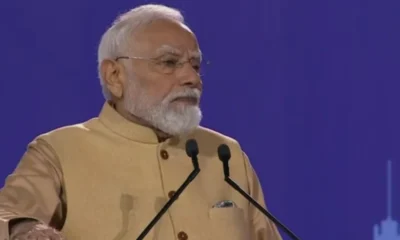
Prime Minister Narendra Modi has assured that there will be no discrimination in the implementation of women’s reservation, as Parliament witnessed a sharp debate over the proposed linkage between the quota and delimitation exercise.

During the ongoing special session, the government reiterated its commitment to ensuring fair representation while addressing concerns raised by opposition parties regarding the timing and structure of the legislation.

The proposed framework aims to reserve 33 percent of seats for women in the Lok Sabha and state assemblies. However, its implementation is tied to a fresh delimitation exercise, which is expected after the next census.

Opposition questions timing and intent

Opposition leaders have raised concerns that linking the women’s quota to delimitation could delay its implementation. They argue that the process of redrawing constituencies may push the actual rollout further into the future.

The issue has triggered a broader political confrontation, with multiple parties questioning whether the move could alter representation across states.

Some critics have also alleged that the delimitation exercise could disproportionately benefit certain regions based on population, a charge the government has rejected.

Government reiterates commitment to fair implementation

Responding to these concerns, the Centre has maintained that the reforms are necessary to ensure accurate and updated representation based on population data.

Leaders from the ruling side have repeatedly emphasized that the process will be carried out transparently and without bias. The assurance that there will be “no discrimination” is aimed at addressing fears among states and opposition parties.

The debate marks a key moment in Parliament, with both sides engaging in intense exchanges over one of the most significant electoral reforms in recent years.

Continue Reading

India News

Give all tickets to Muslim women, Amit Shah says, attacking Akhilesh Yadav on sub-quota demand

A sharp exchange between Amit Shah and Akhilesh Yadav in Parliament over sub-quota for Muslim women highlights key divisions on women’s reservation implementation.

Published

on

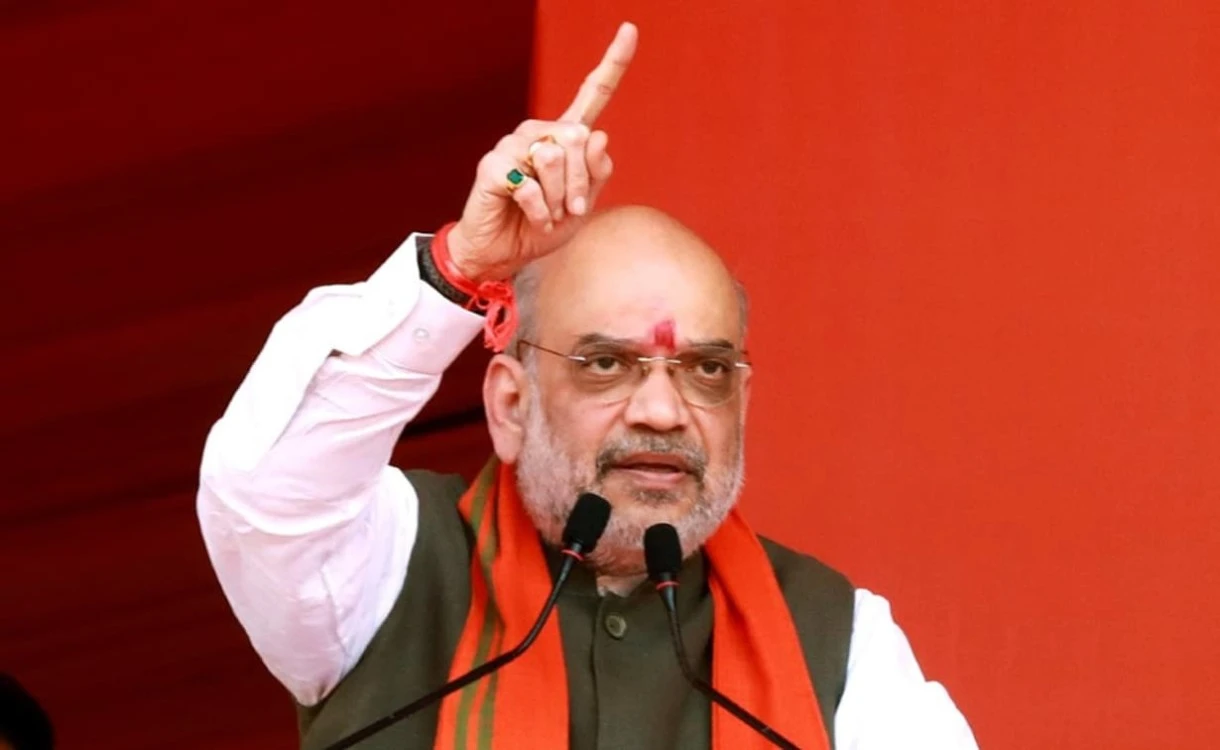
A heated exchange broke out in Parliament during discussions on the women’s reservation framework, with Union Home Minister Amit Shah and Samajwadi Party chief Akhilesh Yadav locking horns over the demand for a sub-quota for Muslim women.

The debate unfolded as the government pushed forward key legislative measures to implement 33% reservation for women in the Lok Sabha and state assemblies.

Akhilesh Yadav argued that the proposed reservation must ensure representation for women from marginalised communities, including Other Backward Classes (OBCs) and Muslim women. He said that without such provisions, large sections could remain excluded from political participation.

He also questioned the timing of the bill, alleging that the Centre was avoiding a caste census. According to him, a census would lead to renewed demands for caste-based reservations, which the government is reluctant to address.

Government rejects religion-based quota

Responding to the demand, Amit Shah made it clear that reservation based on religion is not permitted under the Constitution.

He stated that any proposal to provide quota to Muslims on religious grounds would be unconstitutional, firmly rejecting the idea of a separate sub-quota for Muslim women within the broader reservation framework.

The government has maintained that the existing framework already includes provisions for Scheduled Castes (SC) and Scheduled Tribes (ST) women within the overall reservation structure.

Wider political divide over implementation

The issue of sub-categorisation within the women’s quota has emerged as a major flashpoint, even as most opposition parties broadly support the idea of women’s reservation.

Samajwadi Party leaders reiterated that their support for the bill depends on inclusion of OBC and minority women, while the government continues to defend its constitutional position.

The debate is part of a broader discussion during the special Parliament session, where multiple bills linked to delimitation and implementation of the women’s quota are being taken up.

Continue Reading

Trending

© Copyright 2022 APNLIVE.com