English हिन्दी
Connect with us

Latest Science News

Cancer can recur from blood transfusion, warn researchers

Published

on

Cancer can recur from blood transfusion, warn researchers

[vc_row][vc_column][vc_column_text]In a study, researchers have claimed that receiving blood transfusion during liver cancer surgery (hepatocellular carcinoma) increases the risk of cancer recurrence and dying prematurely.

The risk was markedly increased even when only a small amount of blood was transfused, researchers said. The study is being presented at the ‘European Society of Anaesthesiology’ in Vienna, Austria (1-3 June).

Findings showed that transfusion of one to four units of blood increased the risk of cancer recurrence by 23 per cent and death by 55 per cent compared to matched controls.

“Our findings from a large cohort highlighted a significant association between red blood cell transfusions and the risk of cancer recurrence as well as a dose-response relationship between the number of transfusions and death after curative surgery for liver cancer,” said Dr Ying-Hsuan Tai from Taipei Medical University Shuang Ho Hospital in Taiwan who led the research.

“The reason why blood transfusions substantially worsen cancer prognosis remains unclear, but it is likely to be related to the suppressive effects on the immune system,” Dr Tai added.

Hepatocellular carcinoma (HCC) is the fifth most common form of cancer worldwide and the third most common cause of cancer-related deaths. It occurs frequently in people with cirrhosis (scarring of the liver) due to previous damage from hepatitis B or C virus, or long-term alcohol abuse. Surgery to remove cancer and a margin of healthy tissue that surrounds it (resection) is a curative treatment for people with early-stage liver cancers who have a normal liver function.

In this study, Tai and colleagues investigated the effect of perioperative blood transfusion on cancer prognosis following HCC resection in 1,469 patients without lymph node involvement or metastasis undergoing surgery between 2005 and 2016.

Researchers assessed postoperative disease-free survival and overall survival up to September 2018. Using statistical modelling (a technique called the inverse probability of treatment weighting) they were able to match patients who had equivalent age and health conditions when comparing their outcomes.

Almost one in three patients (30 per cent; 447 patients) received one to four units of allogeneic (from another individual) blood during or within seven days of surgery, while more than one in 10 (12 per cent; 179 patients) were given more than four units.

During a median 45 month follow-up, analyses showed that cancer was 23 per cent more likely to recur in patients who received a transfusion (1-4 units) compared to those not given a transfusion.

While those who received more than four units faced an 18 per cent greater risk of recurrence compared with those who received none.

Compared to those not given a transfusion, patients given 1-4 units of blood were 55 per cent more likely to die from any cause, while those receiving four or more units had almost double the risk of death.

(With ANI Inputs)[/vc_column_text][/vc_column][/vc_row]

India News

PM Modi hails ISRO after successful GSLV-F17 launch, calls it proud moment

PM Modi congratulated ISRO after GSLV-F17 successfully launched EOS-05, calling the achievement a proud moment for India.

Published

on

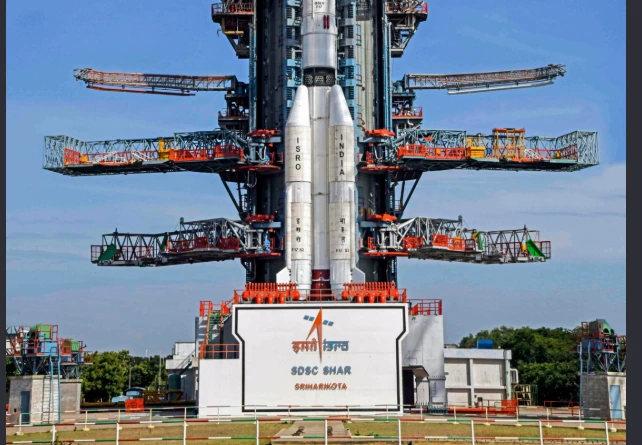
Prime Minister Narendra Modi on Friday congratulated the Indian Space Research Organisation (ISRO) after the successful launch of the GSLV-F17 rocket carrying the EOS-05 Earth observation satellite, describing the achievement as a proud moment for the nation.

The GSLV-F17 lifted off at 2:55 a.m. IST from the Satish Dhawan Space Centre in Sriharikota, Andhra Pradesh. The EOS-05 satellite was subsequently placed into its designated sub-geosynchronous transfer orbit.

PM Modi praises ISRO’s growing capabilities

In a post on X, PM Modi said the successful mission reflected the excellence, innovation and expanding capabilities of India’s space sector.

He also highlighted the growing partnership between ISRO and Indian industry, saying it was strengthening India’s space programme and expanding capabilities across the wider space ecosystem.

The prime minister described the successful launch of GSLV-F17 carrying EOS-05 as another outstanding achievement by ISRO and a matter of national pride.

EOS-05 strengthens earth observation capabilities

According to the report, EOS-05 is India’s first-ever imaging satellite from geosynchronous orbit. The satellite is designed to provide continuous observation of the country from an altitude of nearly 36,000 km above Earth.

The mission is expected to strengthen India’s earth observation capabilities and support advanced imaging and observation applications.

ISRO Chairman Dr V Narayanan expressed satisfaction with the mission, saying the satellite was precisely injected into its intended orbit.

Mission Director Thomas Kurian described the launch as a significant milestone for the GSLV programme. He said it was the 19th flight of the GSLV and noted that EOS-05 is the heaviest satellite the launch vehicle has placed into a geosynchronous transfer orbit or sub-GTO orbit.

GSLV-F17 launch vehicle details

The GSLV-F17 stands 51.7 metres tall and has an approximate liftoff mass of 420.5 tonnes.

Science and Technology Minister Jitendra Singh also congratulated the ISRO team following the successful mission. He described EOS-05 as a state-of-the-art Earth observation satellite capable of advanced imaging across visible, infrared, multispectral and hyperspectral bands.

Continue Reading

Latest Science News

Indian-origin astronaut Anil Menon begins first mission to International Space Station

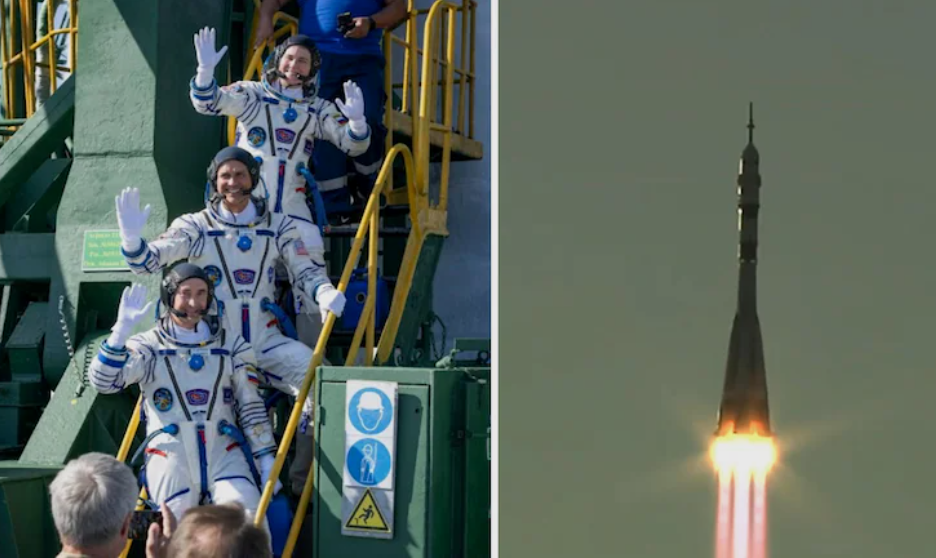
Indian-origin NASA astronaut Anil Menon has launched aboard Soyuz MS-29 on his first mission to the International Space Station, where he is expected to spend around eight months conducting research.
Published

on

Indian-origin NASA astronaut Anil Menon has embarked on his first journey into space after successfully launching aboard Russia’s Soyuz MS-29 spacecraft to the International Space Station (ISS).

The mission lifted off from the historic Baikonur Cosmodrome in Kazakhstan at 8:17 PM on Tuesday. Menon was accompanied by Russian cosmonauts Pyotr Dubrov and Anna Kikina as the three-member crew began their expedition to the orbiting laboratory.

Crew to spend about eight months aboard ISS

The Soyuz MS-29 spacecraft is expected to dock with the International Space Station a little over three hours after launch. Once aboard the ISS, the crew will carry out a range of scientific research and technology demonstration projects during their mission.

The expedition is scheduled to last approximately eight months, with the crew expected to return to Earth in 2027 after completing their planned activities in orbit.

Menon’s maiden spaceflight marks a significant milestone in his astronaut career as he joins the International Space Station crew for long-duration research and operational work.

Continue Reading

Latest Science News

Astronaut Shubhanshu Shukla to meet PM Modi after return from historic space mission

Astronaut Shubhanshu Shukla, who recently returned from the ISS as part of the Axiom-4 mission, will meet PM Modi this evening. Parliament will also hold a special discussion on his historic journey.

Published

on

Subhanshu shukla

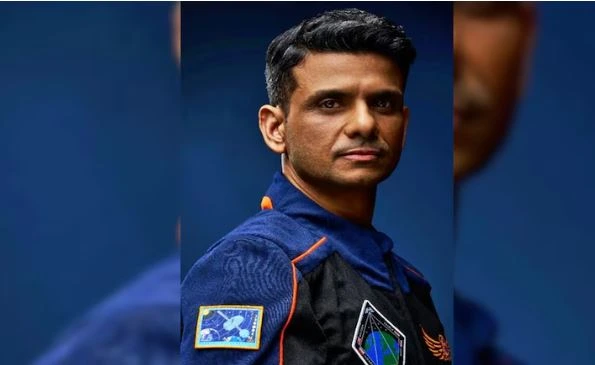
Indian astronaut Group Captain Shubhanshu Shukla, the first Indian to visit the International Space Station (ISS), will meet Prime Minister Narendra Modi this evening at his official residence in New Delhi.

PM Modi to host meeting with astronaut

According to officials, the meeting at 7 Lok Kalyan Marg is expected to take place between 5 pm and 5:30 pm. Shukla, who arrived in India on Sunday, will also be part of the National Space Day celebrations scheduled for August 23.

Warm welcome in India

The astronaut was greeted at the airport by his family, Science and Technology Minister Jitendra Singh, Delhi Chief Minister Rekha Gupta, and hundreds of citizens waving the national flag. Shukla had been in the United States for a year, preparing for the Axiom-4 mission, which launched from Florida on June 25 and docked at the ISS the next day. He served as the mission’s pilot.

Emotional note from Shukla

Before his return, Shukla shared an emotional post on Instagram, expressing mixed feelings of leaving his space colleagues while being eager to meet his loved ones and people of India. He also quoted a song from the film Swades, which he had chosen as his anthem on the launch day.

Parliament session on India’s space journey

In honour of Shukla’s mission, the Lok Sabha is holding a special session today to discuss “India’s first astronaut aboard the ISS – critical role of space programme for Viksit Bharat by 2047.” Union minister Kiren Rijiju said the discussion would highlight the importance of India’s space achievements and future goals.

Continue Reading

Trending

© Copyright 2022 APNLIVE.com