
Latest Science News
Scientists find natural food preservative from bacteria

[vc_row][vc_column][vc_column_text]By Bhavya Khullar
Outbreak of food-borne pathogens can cause havoc. Now Indian scientists have found a solution – a bacterial protein isolated from intestine of chicken. They say it can be used as a food preservative since it can prevent growth of agents that cause food poisoning.
This research has been conducted at the School of Life Sciences at Pondicherry University,. The researchers have obtained the natural food preservative from Enterococcus faecalis CV7 bacteria which were isolated from intestines of country chicken. Researchers cultured these bacteria in the lab under controlled conditions and isolated a short protein named bacteriocinCV7.
“BacteriocinCV7can be used as a natural food preservative, as we have seen that it inhibits the growth of Salmonella, a causal agent of food poisoning,” explained Arul Venkatesan, who conducted the study along with Venkatesh Perumal. “The demand for natural food preservatives has dramatically increased amongst consumers owing to the need for healthy, safe, and fresh products.”
The research results have been published in the journal Food Science and Technology.
Studies showed that BacteriocinCV7 remained functional even at high temperatures of 90 degree Celsius and killed disease-causing microbes in food in less than 18 hours even at a low concentration of 1 gram per liter. Therefore, using bacteriocinCV7 can reduce use of synthetic preservatives and make food safe for consumers, said Venkatesan.
In addition, he said, bacteriocinCV7 can also be used as a probiotic for poultry to control infections in place of synthetic antibiotics. This will make food safe for humans in the long run. The scientists have found that bacteriocinCV7 is non-toxic and safe by testing it on cultured human cell lines.

In Picture: Professor Arul Venkatesan (left) and his student VenkateshPerumal (right), who did the study.
[/vc_column_text][/vc_column][/vc_row][vc_row][vc_column][vc_column_text]Ashok Pandey, scientist at the Center of Innovative and Applied Bioprocessing in Mohali, who is not connected to the study, commented that bacteriocinCV7 could be used as a preservative in the food industry, but it would require more studies to evaluate the possibility of commercial exploitation. (India Science Wire)[/vc_column_text][/vc_column][/vc_row]



India News
PM Modi hails ISRO after successful GSLV-F17 launch, calls it proud moment
PM Modi congratulated ISRO after GSLV-F17 successfully launched EOS-05, calling the achievement a proud moment for India.


Latest Science News
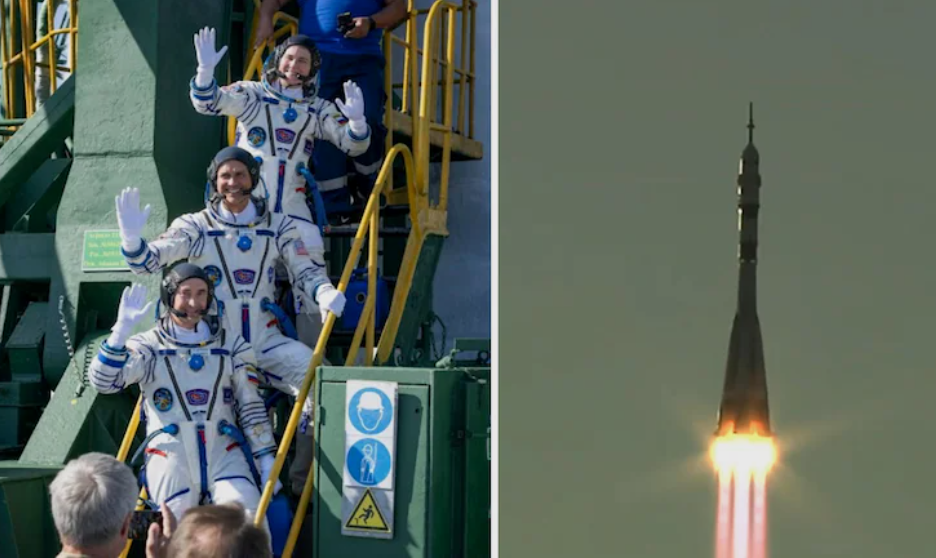
Indian-origin astronaut Anil Menon begins first mission to International Space Station
Indian-origin NASA astronaut Anil Menon has launched aboard Soyuz MS-29 on his first mission to the International Space Station, where he is expected to spend around eight months conducting research.
Latest Science News
Astronaut Shubhanshu Shukla to meet PM Modi after return from historic space mission
Astronaut Shubhanshu Shukla, who recently returned from the ISS as part of the Axiom-4 mission, will meet PM Modi this evening. Parliament will also hold a special discussion on his historic journey.


Supreme Court stays defamation case against Rahul Gandhi over PM Modi remarks

Rahul Gandhi hosts high tea for INDIA bloc after Gyanesh Kumar protests

L Murugan quits Union ministry to strengthen BJP in Tamil Nadu

Amit Shah attacks Rahul Gandhi over Congress poll losses, questions SIR row

BJP focuses on religion as opposition pushes BDM strategy in UP

PM Modi speaks to Mark Carney as India and Canada push to strengthen ties

S Jaishankar says India is a natural option for Russia amid Europe tensions

CJP leaders Saurav Das, Ashutosh Ranka, Ajinkya Shinde sent to 5-day judicial custody
BJP focuses on religion as opposition pushes BDM strategy in UP
L Murugan quits Union ministry to strengthen BJP in Tamil Nadu

Afghan Men Try To Hang With The Jet Engine Of The Aircraft in Kabul- Afghanistan News – Kabul News
Trending Top 10 News: 10000 Crore Fine on Flipkart, Apple to Launch Unique Feature, Hdfc Bank Job Ad

Trending Top 10 News: Nokia 6310, Apple sales, Bachpan ka Pyar Video Kid, Dainik Bhaskar IT Raid

Trending Top 10 News: Canada bans Indian flights, Rain in Delhi NCR, AIMIM Twitter hacked, Raj Kundra case

Trending Top 10 News: Shein India, Apple New Service, Pocket Oxygen, Oppo Launched New Phone
-
 India News24 hours ago
Supreme Court stays defamation case against Rahul Gandhi over PM Modi remarks
-
 India News16 hours ago
Rahul Gandhi hosts high tea for INDIA bloc after Gyanesh Kumar protests
-
 India News15 hours ago
L Murugan quits Union ministry to strengthen BJP in Tamil Nadu
-
 India News15 hours ago
Amit Shah attacks Rahul Gandhi over Congress poll losses, questions SIR row
-
 India News14 hours ago
BJP focuses on religion as opposition pushes BDM strategy in UP
-
 India News3 hours ago
CJP leaders Saurav Das, Ashutosh Ranka, Ajinkya Shinde sent to 5-day judicial custody
-
 Latest world news3 hours ago
S Jaishankar says India is a natural option for Russia amid Europe tensions
-
 India News3 hours ago
PM Modi speaks to Mark Carney as India and Canada push to strengthen ties
