English हिन्दी
Connect with us

LATEST SPORTS NEWS

Nathan Lyon achieves milestone, becomes the first bowler to play 100 consecutive Tests

No bowler has ever played 100 consecutive Test matches. Former England captain Alastair Cook is ranked first among batters.

Published

on

Nathan Lyon

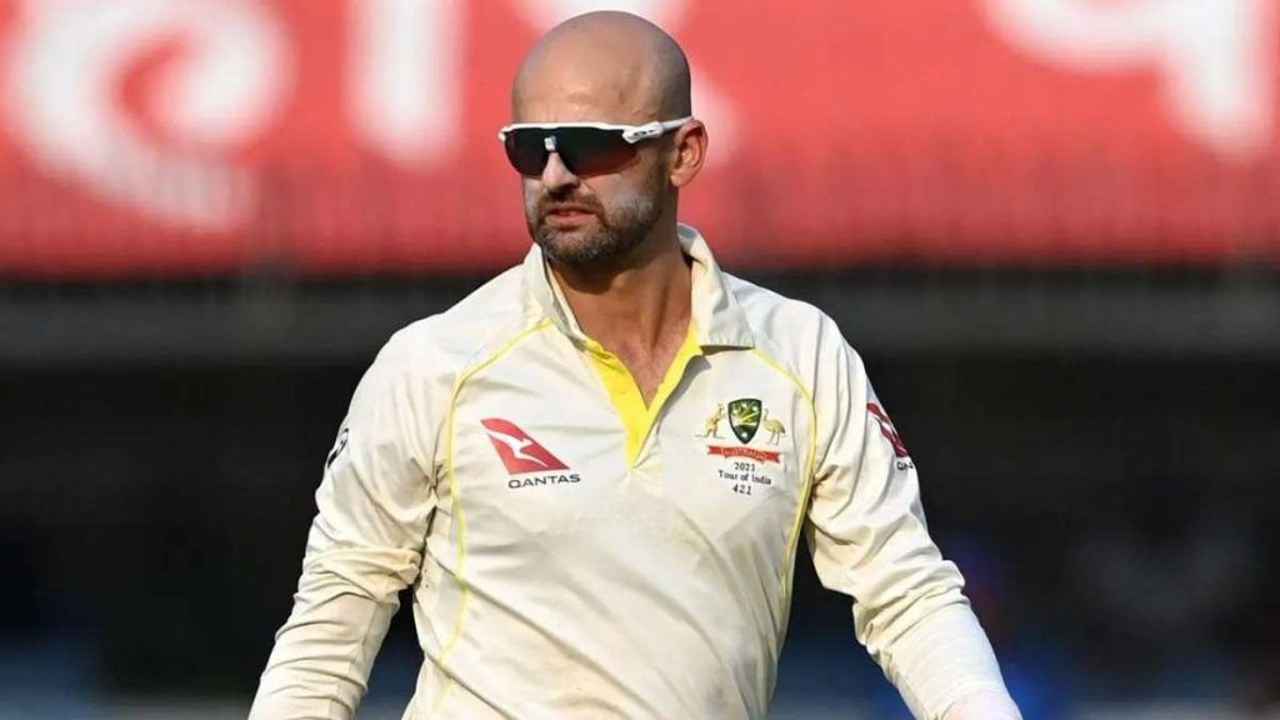
In the playing XI for the second Ashes Test against England at the Lord’s Cricket Ground on Wednesday, Australia spinner Nathan Lyon appeared for the 100th consecutive Test for the national side, marking a historic milestone. The historic event is a monument to the spinner’s durability and consistency in the game, no matter the circumstances or the opposition that side faced, he has been unstoppable in the longest version of the game.

He is currently the first bowler and sixth player overall to play 100 straight Tests. Alastair Cook (159), Allan Border (153), Mark Waugh (107), Sunil Gavaskar (106), and Brendon McCullum (101) are the other cricketers on the list.

No bowler has ever played 100 consecutive Test matches. Former England captain Alastair Cook is ranked first among batters.
Before starting the match, Lyon said, he don’t feel like he need to adjust that much for the game. He said, he actually really likes bowling here in the Lords since they can use the slope to their advantage. The task and the wicket, though, are different, he added. On day one, we have no idea how the wicket will appear or whether it will be cloudy or not. So it’s fine if the seamstresses do the work and I don’t have to do anything, he continued. Lyon said, in challenging circumstances, he was ready to go up, and the team will give it a shot and see how it goes.

At the pre-game media conference, the captain of Australia Pat Cummins, praised Lyon for his endurance, fitness, and form.

Lyon has taken 495 wickets at an average of 30.99 in 121 test matches. His greatest bowling stats include an innings total of 8/50 and a match total of 13/154.

Lyon’s value to Australia’s men’s Test team is evidently greater than just his remarkable skill set, as seen by the fact that he hasn’t been removed in 99 games.

Meanwhile, for this long effort, Lyon expressed gratitude to his family and support system, which also included his personal trainer Tom Carter of the New South Wales Waratahs.

Cricket news

India vs South Africa 5th T20I: Tilak Varma, Hardik Pandya power India past 230 in Ahmedabad

Hardik Pandya’s 16-ball fifty and Tilak Varma’s steady knock helped India post 231 for 5 against South Africa in the fifth T20I at Ahmedabad.

Published

on

Pandya tilak

India rode on explosive half-centuries from Tilak Varma and Hardik Pandya to post a commanding 231 for 5 against South Africa in the fifth and final T20I at the Narendra Modi Stadium in Ahmedabad on Friday.

After being asked to bat first, India lost Abhishek Sharma and Sanju Samson in quick succession, but the middle order ensured there was no slowdown. Tilak Varma and Hardik Pandya stitched together a crucial partnership that completely shifted the momentum in India’s favour and took the hosts beyond the 200-run mark with ease.

Tilak Varma anchors as wickets fall

India got off to a brisk start through Abhishek Sharma and Sanju Samson. Abhishek scored 34 off 21 balls before edging a short delivery, while Samson added 37 off 22, mixing timing with power. Suryakumar Yadav’s struggles continued as he was dismissed for 5, leaving India three down inside 12 overs.

Tilak Varma, however, showed composure amid the wickets. The left-hander reached his fifty off 30 balls, rotating strike efficiently and finding boundaries at regular intervals to keep the innings on track.

Hardik Pandya’s 16-ball fifty turns the tide

The highlight of the innings was Hardik Pandya’s brutal assault on the South African bowling attack. The all-rounder brought up his half-century in just 16 balls, the second-fastest by an Indian in T20 internationals. His knock featured four fours and five sixes, with one over yielding 27 runs as India surged ahead rapidly.

Hardik eventually fell for 63 off 25 balls after adding a 105-run stand with Tilak Varma for the fourth wicket, a partnership that laid the foundation for India’s imposing total.

India finish strong at 231/5

Despite some disciplined bowling spells, including a tidy final over from Lungi Ngidi, South Africa struggled to contain the flow of runs in the death overs. India crossed 200 in the 18th over and finished at 231/5 from their 20 overs.

Earlier, South Africa captain Aiden Markram won the toss and chose to bowl. Sanju Samson returned to the playing XI after Shubman Gill was ruled out with a niggle, as confirmed by skipper Suryakumar Yadav at the toss. India entered the match leading the five-match series 2-1, with the fourth T20I having been abandoned due to bad weather.

Continue Reading

Cricket news

India vs South Africa 5th T20I: Samson shines with 37 as India push on after Gill injury

Sanju Samson made the most of his return with a quick 37 as India batted first against South Africa in the fifth and final T20I in Ahmedabad.

Published

on

India made a steady start in the fifth and final T20I against South Africa at the Narendra Modi Stadium in Ahmedabad, riding on useful contributions from the top order after being asked to bat first. Sanju Samson, brought into the Playing XI in place of the injured Shubman Gill, scored a brisk 37 off 22 balls before being dismissed, while Abhishek Sharma added 34 off 21 deliveries.

South Africa captain Aiden Markram won the toss and opted to bowl on a surface that looked good for batting. India, who lead the five-match series 2-1 after the fourth game in Lucknow was abandoned due to bad weather, aimed to seal the series with a strong batting effort.

Samson, opening the innings, looked fluent after a nervy start and struck several clean shots, including a six off Marco Jansen. During his knock, he also completed 1,000 runs in T20I cricket, reaching the milestone in 679 balls, placing him joint third among Indian batters to do so in the fewest deliveries.

Abhishek Sharma provided early momentum before edging a short delivery from Corbin Bosch to the wicketkeeper. Samson’s innings ended when George Linde produced a sharply turning delivery that rattled the middle stump, reducing India to two wickets down.

At the other end, Tilak Varma continued to hold the innings together, rotating the strike and finding boundaries at regular intervals. India crossed the 100-run mark inside 10 overs, keeping themselves on course for a competitive total.

Captain Suryakumar Yadav, who walked in after Samson’s dismissal, looked to rebuild alongside Tilak. However, his lean patch with the bat continued as India looked to maintain the scoring rate through the middle overs.

Gill was ruled out of the contest after picking up a niggle in the previous match, a development confirmed by Suryakumar at the toss. The Indian captain said the team was keen to put runs on the board on a pitch expected to remain consistent through the evening.

Continue Reading

Cricket news

India vs South Africa T20I abandoned due to fog raises questions over BCCI scheduling

Hazardous air quality and dense fog forced the India vs South Africa fourth T20I in Lucknow to be abandoned without a ball bowled, prompting debate over winter scheduling.

Published

on

ind vs sa match abandoned due to fog

Indian cricket saw an unusual situation on Wednesday as the fourth T20I between India and South Africa in Lucknow was abandoned without a single delivery being bowled. The decision came after excessive fog and smog at the Ekana Stadium made playing conditions unsafe, once again bringing the Board of Control for Cricket in India’s scheduling choices under scrutiny.

The match officials inspected the ground multiple times, but visibility did not improve as the evening progressed. With air quality remaining in the hazardous range and a thick blanket of smog covering the stadium, the umpires eventually called off the contest.

Hazardous conditions halt play in Lucknow

The game, scheduled to begin at 7 pm, could not get underway due to poor visibility caused by dense smog. The Air Quality Index in Lucknow stayed above 400 through the day, raising concerns over player safety. Even after at least six inspections, umpires found conditions unsuitable for play.

Indian all-rounder Hardik Pandya was seen wearing a surgical mask during the team’s warm-up, underlining the severity of pollution at the venue. Players eventually abandoned their practice session by around 7:30 pm, while spectators also began leaving the stadium as the delay stretched on. The match was officially abandoned at about 9:30 pm.

Winter scheduling under the scanner

The abandonment has renewed criticism of hosting international matches in northern Indian cities during peak winter months. The India–South Africa series was scheduled across venues such as New Chandigarh, Dharamsala, Lucknow, Ranchi and Raipur in November and December, a period often marked by high pollution levels and fog in several of these regions.

This was not the first instance of challenging conditions during the series. The third T20I in Dharamsala was played in sub-10-degree temperatures, while air quality during earlier matches in New Chandigarh and Dharamsala ranged from poor to severe.

India spinner Varun Chakravarthy, after playing in Dharamsala, admitted that the cold conditions were difficult to cope with, especially for someone not accustomed to such weather.

No reserve day, series moves on

With no reserve day kept for the Lucknow T20I, both teams will now travel to Ahmedabad for the final match of the series on Friday. India currently lead the five-match T20I series 2-1.

During one of the inspections in Lucknow, BCCI vice-president Rajeev Shukla was seen interacting with match officials. His visible disappointment reflected the broader concern around the situation, though no immediate solution was available.

Could the disruption have been avoided?

The situation has sparked debate on whether the board could have planned better by considering historical weather and pollution data. An alternative could have been to allocate northern venues to a different window or swap venues with another international series scheduled later in the season.

Another option discussed is the possibility of afternoon starts during winter to reduce the impact of fog and smog, ensuring at least some play for fans who purchase tickets.

As extreme weather and pollution increasingly affect sporting events, the abandoned T20I in Lucknow serves as a reminder that scheduling decisions need to balance rotational policies with player welfare and local environmental conditions.

Continue Reading

Trending

© Copyright 2022 APNLIVE.com