English हिन्दी
Connect with us

Cricket news

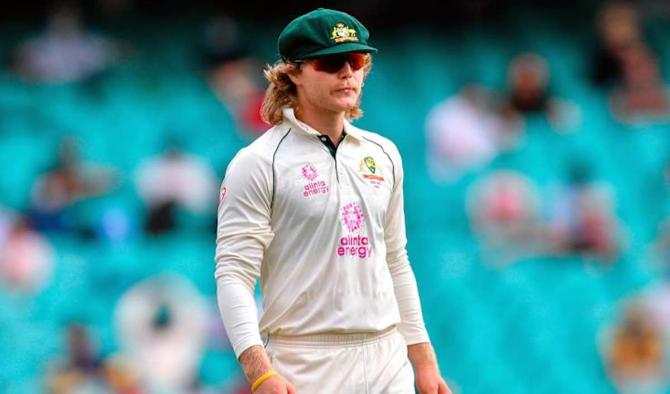
Why did Australian young opener retire from cricket at just 27?

Will Pucovski, a rising star in Australian cricket, retires at 27 after a series of concussions. He now looks forward to a coaching role at Melbourne Cricket Club.

Published

on

Young Australian opener's retirement announcement

In a heartbreaking development for Australian cricket, Will Pucovski has announced his retirement from all forms of the game at the age of 27, citing persistent health concerns — particularly recurring concussions — as the primary reason.

Despite being seen as one of Australia’s most promising young talents, Pucovski’s career was severely limited by injuries. He made a single Test appearance, against India during the 2020/21 series in Sydney, where he scored a commendable 62 and 10.

What led to Pucovski’s retirement?

The turning point came in March 2024, when Pucovski suffered yet another blow to the helmet during a Sheffield Shield match. The incident forced him to retire hurt and miss the remainder of the domestic season. Based on medical advice, Pucovski also withdrew from playing in the 2024 English county season with Leicestershire.

Speaking on SEN’s Whateley program, he said, “It’s been a really difficult year… the simple message is I won’t be playing cricket at any level again.” A medical panel’s recommendation, along with the mental and physical toll of his injuries, ultimately prompted his decision.

Although his career was brief, Pucovski showed flashes of brilliance. In just 36 first-class matches, he recorded seven centuries and nine fifties, including a career-best 255 not out against South Australia in 2020. Many had tipped him as a future regular in Australia’s Test setup before injuries derailed his path.

What’s next for Will Pucovski?

Pucovski is now preparing for a new chapter as a cricket coach. He will take charge of Melbourne Cricket Club’s Premier Cricket team, a place he’s been associated with since he was 11.

“I’m going to be coaching the MCC next year, which is really exciting. Coaching is always something I’ve wanted to scratch that itch with,” he shared, signaling his commitment to staying involved in the sport and shaping future talent.

Continue Reading

Cricket news

T20 2026 World Cup tickets go on sale with prices starting at Rs 100

Tickets for the 2026 T20 World Cup go on sale from December 11, with phase one prices starting at Rs100 in India.

Published

on

Ticket sales for the ICC Men’s T20 World Cup 2026 have been announced, with the first phase opening on December 11. The tournament will be hosted jointly by India and Sri Lanka, beginning February 7, and will feature 20 teams competing across 55 matches.

Affordable pricing in first phase

According to media, tickets in phase one will be available at highly accessible rates. Prices start from Rs100 at select venues in India, while tickets in Sri Lanka will be priced from LKR 1000. The ticket window opens at 6.45 pm IST and Sri Lanka time. Details for the second phase of ticket sales are expected to be announced at a later date.

Officials said the pricing strategy is aimed at ensuring wider access to the tournament for fans across different regions and income groups.

Tournament schedule and format

The 2026 edition of the T20 World Cup will follow the same format as the previous tournament. The 20 teams have been divided into four first-round groups, with the top two sides from each group advancing to the Super Eight stage.

Matches will be played in three time slots — morning, afternoon and evening — across venues in both host nations.

First-round groups

  • Group A: India, Pakistan, USA, Netherlands, Namibia
  • Group B: Sri Lanka, Australia, Ireland, Zimbabwe, Oman
  • Group C: England, West Indies, Bangladesh, Nepal, Italy
  • Group D: New Zealand, South Africa, Afghanistan, Canada, UAE

Super Eight and knockout stage

The Super Eight stage will consist of two groups of four teams each, based on first-round qualification. Each team will face the other three sides in its group, with the top two progressing to the semi-finals.

The semi-finals are scheduled for March 4 and March 5, while the final will be played on March 8. Venue arrangements for the knockout matches include Indian cities and Colombo, depending on team qualification scenarios.

Continue Reading

Cricket news

India’s batting reshuffle under Gautam Gambhir draws sharp criticism after 2nd T20I loss

Former players Robin Uthappa and Dale Steyn criticised Gautam Gambhir’s batting shuffle after India’s 51-run defeat in the second T20I against South Africa.

Published

on

Gautam Gambhir

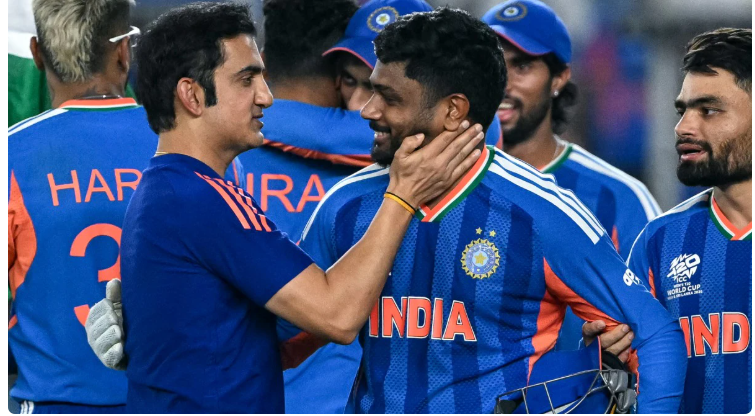
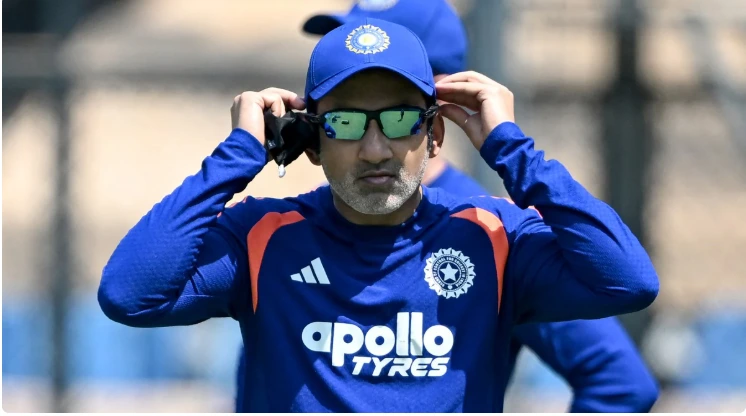
India’s heavy 51-run defeat against South Africa in the second T20I at Mullanpur has sparked intense scrutiny of head coach Gautam Gambhir’s tactical calls, particularly the decision to reshuffle the batting order. Former cricketers Robin Uthappa and Dale Steyn openly questioned the move, calling it a significant error that unsettled the Indian batting line-up

Experts question changes in India’s batting order

India’s chase of a daunting target never gained momentum after early wickets. Captain Suryakumar Yadav did not come in at his usual position, instead walking in after Axar Patel, and managed only five runs. The experiment raised eyebrows among experts, who felt India lost stability at a crucial phase of the innings.

Speaking during the post-match analysis, Robin Uthappa recalled Gambhir’s earlier comments about flexibility in the batting order but said the approach did not suit a high-pressure chase. He argued that when pursuing a big total, the team’s most dependable batters should take responsibility early rather than being pushed down the order.

Uthappa also pointed out that if Axar Patel was used as a pinch-hitter, the role demanded a far more aggressive approach. According to him, India needed calm and assurance after early setbacks, something the shuffled order failed to provide.

Dale Steyn calls decision a ‘major mistake’

Former South Africa pacer Dale Steyn echoed similar concerns, terming the move a “major mistake”. He stressed that Suryakumar Yadav is among India’s best batters and should not be treated as part of a trial-and-error strategy in a competitive T20I.

Steyn questioned the logic behind the left-right combination, noting that a right-handed batter had been dismissed, yet India ended up with two left-handers at the crease. He suggested that experimentation might be understandable in less critical situations, but not in a match where India had a chance to take a 2-1 lead in the series.

Call for clarity in top-order roles

Concluding his analysis, Uthappa urged Gambhir to settle on a fixed top three in the batting order. He emphasised that clarity of roles is essential in T20 cricket, especially during the powerplay overs. While flexibility can work later in the innings, constant changes at the top could harm the team’s rhythm.

Uthappa warned that prolonged experimentation might backfire at crucial moments in major tournaments, stressing that India cannot afford such uncertainty heading into high-stakes events.

Continue Reading

Cricket news

India vs South Africa 2nd T20I: Early collapse leaves India in trouble during 214 chase

India’s chase of 214 faltered early in the 2nd T20I as Shubman Gill and Abhishek Sharma fell inside two overs after South Africa posted 213/4, led by Quinton de Kock’s explosive 90.

Published

on

India’s chase of 214 began on a disastrous note in the second T20I in Mullanpur, with Shubman Gill and Abhishek Sharma falling inside two overs, putting immense pressure on skipper Suryakumar Yadav and the middle order.

India’s run chase unravelled quickly after South Africa posted 213/4, powered by a blistering 90 from Quinton de Kock, supported by Donovan Ferreira and David Miller’s late cameos. Varun Chakravarthy stood out with two wickets, while Jasprit Bumrah and Arshdeep Singh endured difficult spells, conceding 99 runs between them.

India stumbled early when Shubman Gill departed for a golden duck, edging one to slip. Abhishek Sharma tried counter-attacking with two sixes but soon fell to Marco Jansen’s sharp swing, leaving India at 19/2.

In a surprising move, Axar Patel walked in at No. 3—an aggressive tactical decision from the management. He struck a boundary but India remained under pressure at 25/2 after three overs.

Suryakumar Yadav, battling a lean patch, opened his account with a stylish four through backward point, trying to steady the chase.

South Africa, meanwhile, used Lungi Ngidi and Jansen effectively, tightening control after the early breakthroughs. India reached 32/3 by 3.5 overs and still needed 182 off 97 deliveries at 11.25 runs per over.

South Africa’s batting dominance sets India a stiff target

Quinton de Kock headlined the innings with 90 off 46 balls, smashing seven sixes. Ferreira and Miller capitalised late, while Bumrah’s last over leaked 18 runs. Arshdeep, struggling with his rhythm, bowled seven wides in a single over and finished with nine wides overall.

South Africa crossed 200 in the 20th over, closing on 213/4 and putting India under immense scoreboard pressure.

Continue Reading

Trending

© Copyright 2022 APNLIVE.com