English हिन्दी
Connect with us

Top Stories

4.3 magnitude earthquake strikes Bihar’s Araria

A user tweeted mentioning about the earthquake that he was sleeping and he felt like he is inside a train.

Published

on

Bihar earthquake

In the wee hours of Wednesday, an earthquake of magnitude 4.3 hits Araria in Bihar.

The National Center for Seismology reported through a tweet that an earthquake of magnitude 4.3 occured at around 5.35 AM IST on Wednesday, 140 kilometres southwest of Siliguri, West Bengal India in Bihar’s Araria district.

According to the official earthquake survey agency NCS the earthquake hit at a depth of 10 kilometres. A media reported the quake to have hit a shallow depth of 10 km beneath the epicentre located in Bihar’s Purnia.

The internet users took to twitter to share about the effects of earthquake they felt in Bihar. A user tweeted mentioning about the earthquake that he was sleeping and he felt like he is inside a train.
Read Also: Meghalaya church elders assaulted in Bihar’s Patna

A resident of Kathiar district which comes under the Purnia division also shared that he felt the jolts of the earthquake.

As per some media reports, the same earthquake with magnitude 4.0 was felt in the USA too.

News agency ANI reported that earlier on 9th April as per the National Center for Seismology, an earthquake of 5.3 magnitude on the Ritcher scale strike at a depth of 10 km in Nicobar Island.

Last month India experienced the jolts of first earthquake in 2023, when an earthquake whose epicentre was Afghanistan hit Delhi and its adjoining National Capital Region(NCR) in the evening of 21 March, 2023. The earthquake that was reported to be of magnitude 6.6 struck in North Afghanistan, the result of which was that the tremors were felt in Turkmenistan, China, Pakistan, India and parts of Kazakhstan.

Turkey that suffered with huge damage earlier this year due on February due to multiple earthquake strikes, in the morning today again felt the jolts of a 4.0 magnitude strike.

Eknath Shinde’s Shiv Sena to contest polls, launch outreach campaign in BJP-ruled Goa

Uddhav Thackeray hits back at BJP’s Babri demolition dissing, says CM Shinde should step down

Latest world news

India, Canada discuss trade pact to boost bilateral commerce

India and Canada discussed advancing negotiations on a proposed Comprehensive Economic Partnership Agreement aimed at expanding trade, investment and market access between the two countries.


Published

on

India canada trade pacts

India and Canada discussed advancing negotiations on a proposed trade agreement as the two countries seek to strengthen their economic and commercial ties.

Commerce and Industry Minister Piyush Goyal met Canada’s Minister of International Trade Maninder Sidhu, who is leading a Canadian delegation to India. The discussions focused on advancing negotiations for the proposed India-Canada Comprehensive Economic Partnership Agreement (CEPA).

The proposed pact is aimed at creating greater market access and opening up new opportunities for trade and investment between the two countries.

India-Canada CEPA talks

Both sides discussed the importance of a balanced and mutually beneficial agreement that can make use of the complementary strengths of the two economies.

The discussions also focused on deepening commercial engagement and creating new opportunities for businesses in both countries.

Goyal said the two sides reaffirmed their commitment to taking the India-Canada economic partnership to a higher level, with CEPA serving as a catalyst for deeper commercial engagement.

India and Canada are working towards concluding the CEPA negotiations by the end of 2026.

India-Canada trade

The proposed CEPA is aimed at improving market access and creating opportunities across sectors while strengthening the broader economic relationship between India and Canada.

The agreement is expected to provide greater opportunities for businesses in both countries and support deeper trade and investment ties.

Continue Reading

India News

Air pollution as big a health emergency as COVID, says former WHO chief Soumya Swaminathan

Former WHO Chief Scientist Dr Soumya Swaminathan said air pollution should be treated with the same urgency as COVID, highlighting its effects on children, pregnancy and multiple organs.

Published

on

air pollution

Air pollution should be treated as a major public health emergency requiring an urgent and coordinated response, former World Health Organisation (WHO) Chief Scientist Dr Soumya Swaminathan has said.

In an exclusive interview, Dr Swaminathan compared the scale of the air pollution health crisis with COVID and said its effects can extend across the body, including the brain, lungs and cardiovascular system. She also highlighted links between pollution exposure and conditions such as asthma and diabetes.

Why air pollution needs a COVID-like response

Dr Swaminathan said COVID triggered an immediate public response because it was sudden, visible and associated with an unknown virus. Air pollution, by contrast, is often less visible and its effects accumulate over time.

She said people may become accustomed to pollution because it is not always visible, particularly outside the winter months. But she stressed that prolonged exposure can still cause serious health damage.

She called for the issue to receive an “equal, urgent, coordinated and scientific” response, similar to the approach taken during the COVID crisis.

PM2.5 poses risks from pregnancy to childhood

Dr Swaminathan also highlighted concerns about exposure to fine particulate matter, particularly PM2.5, among pregnant women and children.

According to her, these tiny particles can enter the lungs and bloodstream and may also reach the placenta. She pointed to higher rates of premature births and low birth weight among babies born in areas where mothers are exposed to high levels of air pollution.

She also said children are particularly vulnerable because their brains and other organs are developing rapidly. Children breathe faster than adults, and those growing up in heavily polluted areas can have smaller lungs, she said.

Why AQI may not tell the full health story

Dr Swaminathan suggested moving beyond the conventional Air Quality Index (AQI) towards an Air Quality Health Index (AHQI).

The proposal would place greater emphasis on how individual pollutants affect different groups of people. She noted that the dominant pollutant can vary from one city to another, while its health impact may also differ for groups such as pregnant women and children.

The current AQI uses eight major pollutants as parameters: PM10, PM2.5, ozone, sulphur dioxide, nitrogen dioxide, carbon monoxide, lead and ammonia. The overall AQI is determined by the highest pollutant sub-index.

Swaminathan does not favour shutting schools

On protecting children from polluted air, Dr Swaminathan said she was not in favour of simply closing schools.

She argued that children from poorer families may continue breathing polluted air at home, while also losing access to education, social interaction and midday meals.

Instead, she suggested making school environments cleaner. Her proposals included installing air purifiers in classrooms, providing pick-and-drop bus facilities and encouraging older children to wear masks when outdoors.

Five measures suggested to tackle pollution

Dr Swaminathan outlined five key measures for addressing the pollution crisis:

  1. Launch a national clean air programme, which she suggested could be called the “Swachh Vaayu Abhiyan”.
  2. Prepare a costed, long-term plan with sustained investment and study lessons from countries such as China.
  3. Establish empowered leadership and accountability for tackling air pollution.
  4. Create a panel of experts to develop a science-based, multi-sectoral and multi-year plan.
  5. Put health at the centre of air pollution policy.

She also supported treating the right to clean air as a basic public health entitlement, linking it to the constitutional right to life.

Dr Swaminathan’s central argument was that air pollution should no longer be treated as a slow-moving or routine environmental problem, but as a serious health crisis requiring sustained action.

Continue Reading

India News

Terrorists open fire at CRPF personnel in Jammu and Kashmir’s Kulgam, search operation underway

Terrorists opened fire on CRPF personnel at a naka in Jammu and Kashmir’s Kulgam district. The attackers fled and a search operation was launched.

Published

on

jammu and kashmir encounter

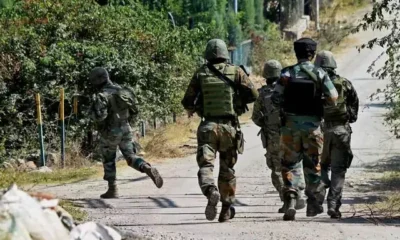
Unidentified assailants opened fire on Central Reserve Police Force (CRPF) personnel in Jammu and Kashmir’s Kulgam district on Wednesday afternoon, according to the CRPF.

The incident took place at a security naka in the Kulgam area. The attackers, who were reportedly travelling on a motorcycle, fled after opening fire on the security personnel.

According to the CRPF statement, the firing occurred at around 2:15 pm. The injured personnel were shifted to a hospital in Anantnag district for treatment.

Search operation launched for attackers

Following the firing, security forces launched a cordon and search operation to locate the attackers.

The assailants have not been identified so far, and further details about the incident are awaited.

What happened in Kulgam

The CRPF personnel were deployed at a naka when the unidentified motorcycle-borne assailants opened fire at them. After the attack, the assailants fled from the spot.

The CRPF said the injured personnel were taken to a hospital in Anantnag for medical treatment. A search operation was subsequently launched to track down those responsible for the attack.

Continue Reading

Trending

© Copyright 2022 APNLIVE.com