English हिन्दी
Connect with us

Top Stories

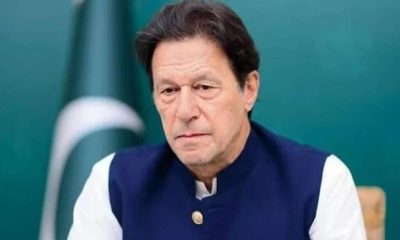
Pakistan Police lodge terrorism case against former PM Imran Khan

Khan was ousted from power in April last year after losing a no-confidence vote, becoming the first Pakistani prime minister to be voted out by the National Assembly.

Published

on

Pakistan Police lodge terrorism case against former PM Imran Khan

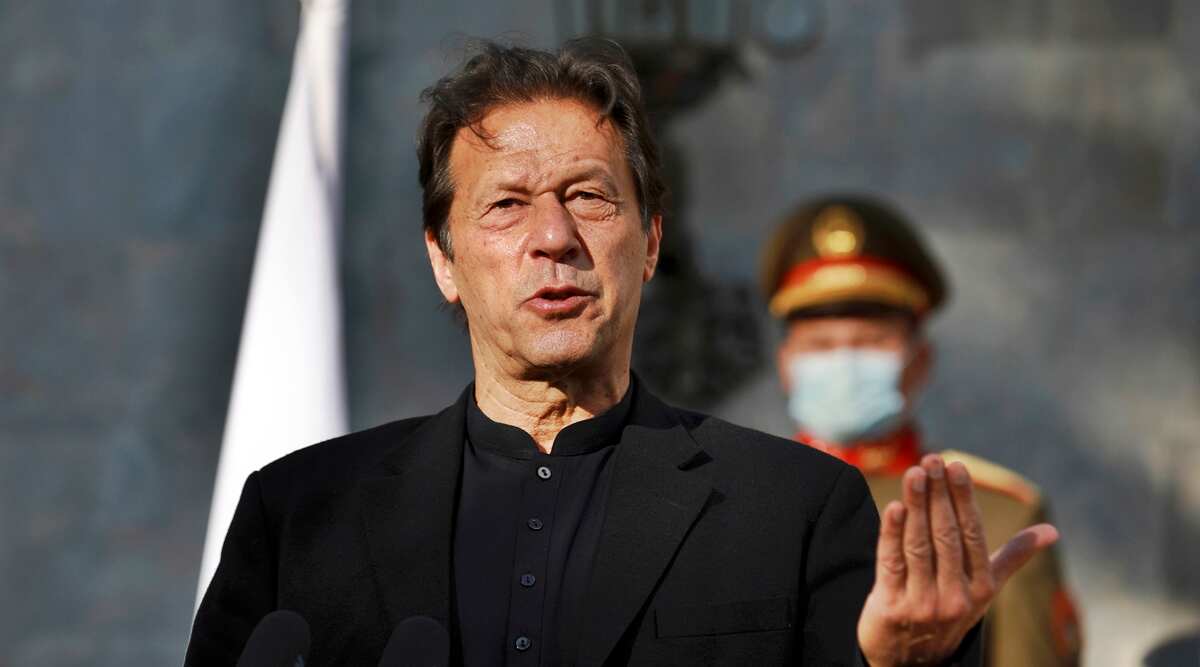
Islamabad Police on Sunday registered a terrorism case against former Pakistan Prime Minister Imran Khan and over a dozen PTI leaders for indulging in vandalism, beating security guards, and causing turmoil outside the courthouse in Islamabad prior to a hearing in a corruption case involving the former prime minister.

Amid clashes outside the Islamabad Judicial Complex on Saturday, the Pakistan Police arrested 61 people. The 70-year-old leader arrived at the Islamabad court from Lahore to attend a hearing in the Toshakhana case.

The PTI chief supporters blocked the lanes around Khan’s residence with trees, tents, concrete blocks and parked trees when the police came to arrest him. The situation became so intensified that the police had to go for tear gas.

More than 25 security personnel were injured during the clash between PTI workers and police which led to extending the hearing date to March 30.

The police checkpoint and the main gate of the judicial complex were allegedly destroyed by the employees, according to the FIR. Up to 18 people were detained for setting the judicial complex on fire, throwing stones, and damaging the structure.

It further stated that the station house officer’s (SHO) official vehicle had been destroyed and that about two police cars and seven motorcycles had been set on fire.

The cricketer-turned-politician has been charged with receiving presents as the premier and then purchasing them from the state depository Toshakhana at a discount in order to resell them for a profit, including a pricey Graff wristwatch.

The Toshakhana, a department under the administrative supervision of the Cabinet Division, was established in 1974 and holds valuable gifts that foreign dignitaries and heads of other countries and nations have given to rulers, lawmakers, bureaucrats, and officials.

Khan was ousted from power in April last year after losing a no-confidence vote, becoming the first Pakistani prime minister to be voted out by the National Assembly.
India News

Supreme Court flags risk of lawlessness, pauses FIRs against ED officers in Bengal case

The Supreme Court paused FIRs against ED officers in the Bengal I-PAC raid case, warning that obstruction of central probes could lead to lawlessness and seeking responses from the Centre and state.

Published

on

Supreme Court

The Supreme Court on Wednesday delivered a sharp rebuke to the Mamata Banerjee-led West Bengal government, pausing FIRs lodged against officers of the Enforcement Directorate over searches linked to political consultancy I-PAC. The court said the case raises serious questions about interference in investigations and warned that failure to address them could lead to “lawlessness”.

A bench of Justice Prashant Mishra and Justice Vipul Pancholi sought replies from the Ministry of Home Affairs, the Department of Personnel and Training, Chief Minister Mamata Banerjee and the Trinamool Congress government on the ED’s plea. The central agency has also sought the suspension of Bengal Director General of Police Rajeev Kumar and Kolkata Police Commissioner Manoj Kumar Verma, and a probe by the CBI. The matter will be heard next on February 3.

The ruling follows a standoff between the ED and the Bengal government after the agency conducted searches at premises linked to I-PAC, which manages election campaigns for the Trinamool Congress, in connection with a corruption case.

Court questions obstruction of central probes

Recording its prima facie view, the Supreme Court said the petition raised a “serious issue” concerning investigations by central agencies and possible obstruction by state authorities.

“There are larger questions which emerge and if not answered shall lead to lawlessness. If central agencies are working bona fide to probe a serious offence, a question arises: Can they be obstructed by party activities?” the bench observed.

Earlier in the day, the court also expressed disturbance over scenes of chaos in the Calcutta High Court during a hearing related to the same dispute.

ED alleges interference, seeks action against top cops

The Enforcement Directorate accused the West Bengal administration of interfering with its searches and investigation. Appearing for the agency, Solicitor General Tushar Mehta alleged that evidence was removed from the residence of an I-PAC co-founder and argued that such actions could encourage state police officers to aid and abet obstruction. He sought suspension of senior police officials.

Describing the disruption in the Calcutta High Court on January 9, Mehta called it “mobocracy”, saying a group of lawyers unconnected to the case disrupted proceedings, forcing an adjournment. The bench asked whether the high court had been turned into a protest site, to which Mehta responded that messages had circulated calling lawyers to gather at a specific time.

Banerjee’s counsel defends move, cites election confidentiality

Senior advocate Kapil Sibal, appearing for Mamata Banerjee, questioned the timing of the ED’s presence in Bengal ahead of Assembly elections. He said the last development in the coal scam case dated back to February 2024 and argued that I-PAC handled election-related work under a formal contract with the Trinamool Congress.

According to Sibal, election data stored at the premises was confidential and critical to campaign strategy. He said the party leadership had a right to protect such information.

Representing the Bengal government and the DGP, senior advocate Abhishek Singhvi referred to the January 9 disruption but argued it could not justify parallel proceedings in different courts. The bench responded that emotions “cannot go out of hand repeatedly”.

Continue Reading

Latest world news

US freezes immigrant visa processing for 75 countries, India not in list

The United States suspends immigrant visa processing for 75 countries, excluding temporary visas, as part of stricter immigration measures.

Published

on

The United States has indefinitely suspended immigrant visa processing for 75 countries, targeting individuals seeking permanent residency based on nationality. The move, set to take effect on January 21, excludes tourist and temporary work visas, but is expected to have a significant impact on family-based immigration.

Reasons behind the visa freeze

The US State Department said the suspension aims to prevent the entry of foreign nationals likely to require government welfare and public benefits. “The Trump administration is bringing an end to the abuse of America’s immigration system by those who would extract wealth from the American people,” said State Department spokesman Tommy Pigott.

While the administration cites the risk of immigrants draining government resources, studies by the Cato Institute and other research groups suggest immigrants generally use fewer benefits than US-born citizens.

Who will not be affected

Temporary visas for tourists, business travelers, and sports fans remain unaffected. Exceptions are also allowed for individuals with dual nationality, a valid passport from a country not on the list, or travel serving an “America First” national interest. Approved visas that have not yet been printed must be refused according to the State Department.

Countries affected

The visa freeze covers nations across Africa, Asia, Latin America, the Middle East, and Eastern Europe. Some of the most affected countries include Pakistan, Bangladesh, Somalia, Russia, Iran, Afghanistan, Brazil, Nigeria, and Thailand.

Other countries on the full list include Albania, Algeria, Armenia, Azerbaijan, Bahamas, Barbados, Belarus, Belize, Bhutan, Bosnia and Herzegovina, Myanmar, Cambodia, Cameroon, Cape Verde, Colombia, Côte d’Ivoire, Cuba, Democratic Republic of the Congo, Dominica, Egypt, Eritrea, Ethiopia, Fiji, The Gambia, Georgia, Ghana, Grenada, Guatemala, Guinea, Haiti, Iraq, Jamaica, Jordan, Kazakhstan, Kosovo, Kuwait, Kyrgyzstan, Laos, Lebanon, Liberia, Libya, North Macedonia, Moldova, Mongolia, Montenegro, Morocco, Nepal, Nicaragua, Republic of the Congo, Rwanda, St Kitts and Nevis, St Lucia, St Vincent and the Grenadines, Senegal, Sierra Leone, South Sudan, Sudan, Syria, Tanzania, Togo, Tunisia, Uganda, Uruguay, Uzbekistan, and Yemen.

Trump administration immigration record

The Trump administration has already imposed stricter vetting procedures over the past year, revoking over 100,000 visas and deporting more than 605,000 people, with 2.5 million others leaving voluntarily. Critics highlight that the policy disproportionately affects immigrants from non-European countries.

Continue Reading

India News

Indian Army symbolizes selfless service and duty, says PM Modi on Army Day

PM Narendra Modi on Army Day praised the Indian Army as a symbol of selfless service and unwavering duty, saluting the courage and sacrifice of its soldiers.

Published

on

pm modi speech

On the occasion of Army Day, Prime Minister Narendra Modi on Thursday paid tribute to the Indian Army, describing its soldiers as a symbol of selfless service who protect the nation with unwavering resolve, even in the most challenging circumstances.

In a message shared on social media platform X, the prime minister said the country salutes the courage and steadfast commitment of Indian Army personnel. He noted that their dedication to duty inspires confidence and gratitude among citizens across the country.

“Our soldiers stand as a symbol of selfless service, safeguarding the nation with steadfast resolve, at times under the most challenging conditions,” PM Modi said. He added that the nation remembers with deep respect those who have laid down their lives while serving the country.

Army Day is observed every year on January 15 to commemorate a historic moment in India’s military history. The day marks the appointment of Field Marshal K M Cariappa as the first Indian Commander-in-Chief of the Indian Army in 1949, when he took over from British officer General Sir F R R Bucher.

The occasion serves as a reminder of the Indian Army’s role in defending the country’s sovereignty and honour, as well as the sacrifices made by its personnel in the line of duty.

Continue Reading

Trending

© Copyright 2022 APNLIVE.com

Left Menu Icon