English हिन्दी
Connect with us

Top Stories

Assam Police arrest Congress leader Pawan Khera at Delhi airport over remarks against PM Modi

Khera has been charged with making derogatory remarks about Prime Minister Narendra Modi at the Haflong Police Station in Assam.

Published

on

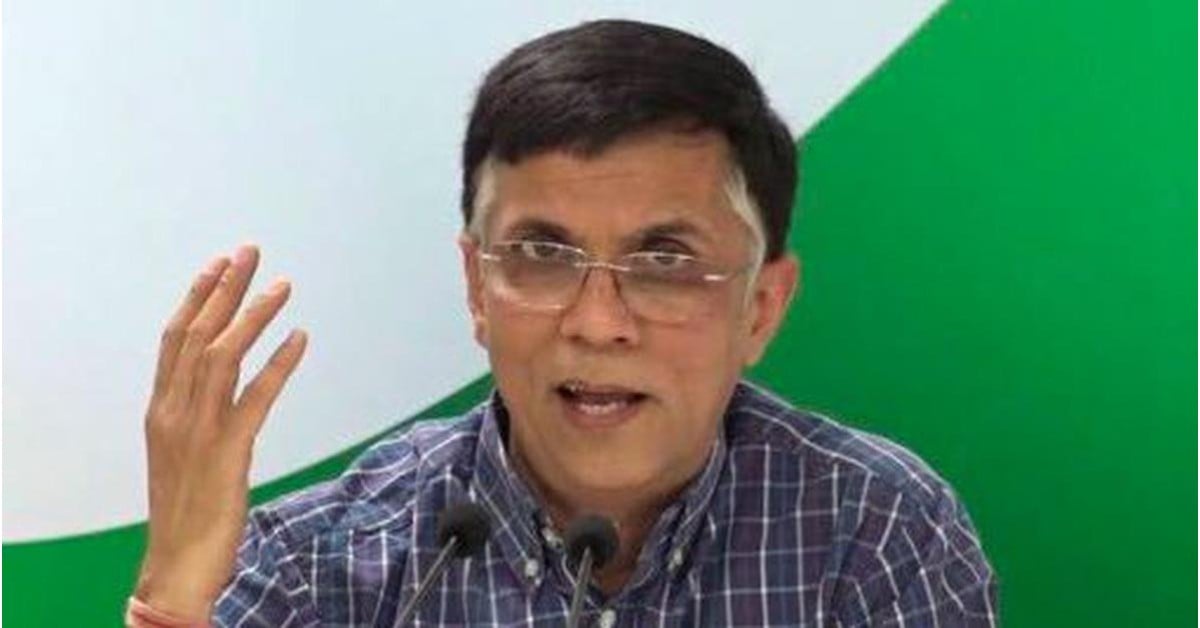
Congress leader Pawan Khera

Assam Police on Thursday arrested Congress leader Pawan Khera for his alleged remarks against Prime Minister Narendra Modi. Khera was arrested at the Delhi airport while he was on his way to fly to Chhattisgarh’s Raipur.

Supreme Court has granted interim bail to Pawan Khera after being produced before the competent magistrate. The above order will remain operational till Tuesday (February 28), the bench, also comprising Justices M R Shah and P S Narasimha, said and listed the matter for February 27.

Khera was flying from the Indira Gandhi International Airport with a large group of Congress leaders for a meeting of the All India Congress Committee (AICC) when he was forced to deplane the IndiGo flight.

Soon after, Congress leaders began sloganeering and staging a dharna on the runway in protest of Khera’s arrest without a warrant. They started protesting alleging that Khera’s arrest was an attempt to disrupt the Plenary Session in Chhattisgarh.

Congressman Randeep Surjewala escorted Khera to the airport’s police station, where a sizable CISF personnel was present.

Khera alleged that he was first asked to deboard after being told that there was an issue with his luggage, even though he had only one handbag. He said when he came down from the flight, he was told that he can’t deboard the flight as DCP is on his way and he will the reason behind it.

Read Also: CR Kesavan quits Congress due to ideological rift, says not seen any vestiges of the values that made him work for the party

Congress took a dig at BJP stating that First ED was sent to Chhattisgarh. And now Pawan Khera who was going to attend the Congress session was stopped from boarding the flight. This dictatorship will not be tolerated at all. We will fight and win, the tweet added.

Khera has been charged with making derogatory remarks about Prime Minister Narendra Modi at the Haflong Police Station in Assam. An FIR has been lodged against him under Sections 153 A, 295 A, and 505 of the Indian Penal Code (IPC).
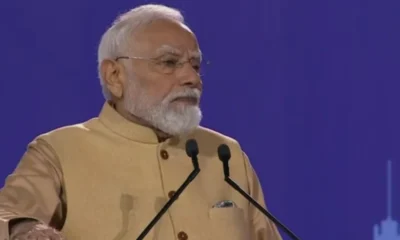
The move comes after Khera took a jibe at Modi’s father’s name during a press conference while demanding a joint parliamentary probe into the Adani-Hindenburg row. He said, If Narasimha Rao could form a JPC (Joint Parliamentary Committee), if Atal Bihari Vajpayee could form a JPC, then what problem does Narendra Gautam Das — sorry, Damodardas — Modi have?

Later, he said Naam Damordas hai, kaam Gautam Das ka hai. (While his name is Damordas, his work is of a Gautam Das). PM Modi’s full name is Narendra Damordas Modi and his father’s name is Damodardas Mulchand Modi.

His remarks were a sly dig at Prime Minister Narendra Modi, who has been silent about Gautam Adani and the stock market free fall of his shares after the US-based Hindenburg study exposed stock manipulation and fraud by the Adani Group.

Railways cancel over 450 trains, reschedule and divert around 100 trains, check full list here

Conman Sukesh Chandrasekhar in tears during raid in cell; authorities recover Rs 1.5 lakh Gucci sandals, jeans worth Rs 80K | WATCH

India News

PM Modi to visit Punjab on July 17, launch railway projects as BJP prepares for solo poll battle

Prime Minister Narendra Modi will visit Punjab on July 17 to inaugurate the redeveloped Jalandhar Cantonment Railway Station and launch key railway projects as the BJP prepares to contest future elections independently in the state.

Published

on

Prime Minister Narendra Modi will visit Punjab on July 17 to inaugurate and lay the foundation for multiple railway projects, marking his first visit to the state since the Bharatiya Janata Party (BJP) decided to contest future elections independently in Punjab.

During the visit, the Prime Minister will inaugurate the redeveloped Jalandhar Cantonment Railway Station, which has been modernised under the Centre’s Amrit Bharat Station Scheme. The 110-year-old station is among 75 railway stations across the country scheduled to be inaugurated as part of the government’s railway modernisation programme.

The redevelopment aims to improve passenger amenities, enhance station accessibility and transform railway stations into modern transport hubs.

New train service between Jalandhar and Varanasi

Apart from inaugurating the upgraded station, PM Modi will also lay the foundation stone for the Shri Guru Ravidass Ji Maharaj Express, a new train service connecting Jalandhar and Varanasi.

Named after Guru Ravidass Ji Maharaj, the train is intended to strengthen connectivity between Punjab and Varanasi, where the revered saint spent a significant part of his life. Guru Ravidass is widely respected for promoting equality and social justice, and his teachings continue to hold special significance in Punjab, particularly among the Scheduled Caste community.

Visit comes amid changing political landscape

The Prime Minister’s visit comes at a time when political activity has intensified in Punjab ahead of the upcoming Assembly elections.

The BJP recently announced that it would contest future elections in Punjab without entering into alliances, making this visit politically significant as the party seeks to strengthen its independent presence in the state.

Party leaders have projected the visit as development-focused, highlighting infrastructure initiatives and improved connectivity. In social media posts, Punjab BJP leaders welcomed the Prime Minister and described the visit as an important occasion for the state.

Security and preparations underway

Authorities have stepped up preparations for the Prime Minister’s programme in Jalandhar. Security arrangements are being reviewed while logistical preparations at the railway station are underway to ensure the smooth conduct of the visit.

Continue Reading

India News

Rs 1,160 crore rice diversion case widens, 56 mills and 22 ethanol plants under investigation

Authorities have expanded the alleged Rs 1,160 crore government rice diversion investigation, bringing 56 rice mills and 22 ethanol plants under scrutiny over suspected misuse of subsidised rice meant for ethanol production.

Published

on

Government agencies have widened their investigation into an alleged Rs 1,160 crore rice diversion case, bringing 56 private rice mills and 22 ethanol plants across 17 districts under scrutiny. The probe is focused on determining whether subsidised government rice allocated for ethanol production was diverted through private mills instead of being used for its intended purpose.

Investigation expands after truck found at private rice mill

The investigation began after a truck transporting government rice from a Food Corporation of India (FCI) warehouse to an ethanol plant was allegedly found inside a private rice mill. What initially appeared to be an isolated incident has now expanded into a multi-district probe involving 17 seized trucks, over 50 witness statements and multiple accused.

Authorities are trying to establish how much of the nearly 5 lakh metric tonnes of government rice supplied to ethanol plants was actually converted into ethanol and whether a portion of it was diverted before returning to government warehouses.

Alleged circular trade under investigation

Investigators suspect that subsidised rice supplied to ethanol plants at around Rs 2,320 per quintal may have been sold to private rice mill operators at higher prices instead of being processed into ethanol.

According to the investigation, the rice was allegedly repacked by private mills and deposited back into government warehouses as custom-milled rice. Officials are also examining whether the original paddy supplied for milling was sold separately in the open market or transported to other states, potentially allowing multiple profits from the same stock.

Authorities believe the alleged arrangement, if established, could have enabled financial gains at several stages while avoiding actual ethanol production.

Officials examining monitoring failures

The investigation is also looking into whether lapses in monitoring or possible collusion allowed government rice to re-enter official warehouses without proper verification.

Officials are checking whether rice previously released under the ethanol scheme was accepted again as newly milled stock through the custom milling system.

Police register FIR, arrest four accused

Balaghat Superintendent of Police Aditya Mishra said the case began after authorities received information about three trucks carrying government rice from FCI warehouses to the AVJ Agrico ethanol plant. During a joint inspection by Revenue, Food and Police officials, one truck was allegedly found inside Sancheti Rice Mill, leading to the registration of an FIR for cheating.

A Special Investigation Team (SIT) comprising 20 to 25 members was subsequently formed.

According to the police, investigators have so far:

  • Arrested four people
  • Identified more than 13 accused
  • Recorded statements of over 50 witnesses
  • Issued notices to 56 rice mills
  • Seized 17 trucks
  • Obtained non-bailable warrants against two individuals

Police said the investigation remains ongoing and further action will be taken based on new evidence.

Production records and transport data under verification

Investigators are comparing FCI dispatch records with ethanol production data, transport logs, warehouse receipts and custom milling records.

Authorities are also examining production capacity, electricity consumption, machinery usage and raw material records at ethanol plants to verify whether the quantity of rice supplied matches actual ethanol output.

Similar verification is underway at rice mills to determine whether their claimed milling operations correspond with electricity consumption, labour deployment and machinery records.

Use of fortified rice raises additional questions

The case has drawn additional attention because the grain under scrutiny was fortified rice, which is enriched with iron, folic acid and Vitamin B12 to help address anaemia and malnutrition among children, pregnant women and adolescent girls.

Investigators are examining why fortified rice was supplied for ethanol production when distilleries generally use broken rice as feedstock. They are also looking into whether FCI followed stock rotation norms while allocating rice under the scheme.

Collector sought wider scrutiny

Confidential communications from the Balaghat Collector reportedly recommended verification of whether rice released for ethanol production actually reached the designated plants. The Collector also sought scrutiny of the allocation process, transportation chain, utilisation certificates and the roles of FCI officials, ethanol companies, transporters and rice mill owners.

The investigation currently covers nearly 5 lakh metric tonnes (50 lakh quintals) of government rice, valued at approximately Rs 1,160 crore at the subsidised allocation price.

Continue Reading

Latest world news

US-Iran tensions escalate as Tehran claims drone fleet destroyed in Bahrain

Iran claimed it destroyed a US military drone fleet in Bahrain after fresh American strikes targeted multiple sites across the country, further escalating tensions in the Gulf region.

Published

on

The military confrontation between the United States and Iran intensified on Sunday as both countries exchanged fresh attacks across the Gulf region. Iran claimed it destroyed a US military drone fleet in Bahrain after Washington launched another round of strikes targeting multiple military sites inside the country.

The latest escalation comes amid growing tensions over the strategically important Strait of Hormuz, a key global shipping route for oil and natural gas exports.

US says fresh strikes targeted Iran’s military capabilities

The US Central Command (CENTCOM) said it carried out precision strikes on dozens of targets across Iran to weaken Tehran’s ability to threaten international shipping passing through the Strait of Hormuz.

According to the US military, the targets included Iranian air defence systems, coastal radar installations, missile and drone infrastructure, and small military boats. CENTCOM also said it deployed fighter aircraft, naval vessels, one-way attack aerial drones and one-way attack sea drones during the operation.

US officials said the latest offensive followed an alleged attack by Iran’s Islamic Revolutionary Guard Corps (IRGC) on a commercial vessel transiting the Strait of Hormuz. Washington has maintained that the strikes were intended to protect maritime security in the region.

US President Donald Trump also defended the operation, saying the American military had carried out extensive strikes against Iranian targets.

Iran claims attacks on US military bases

Iran responded by announcing strikes on several American military installations across the Gulf. Iranian state media reported that US bases in Bahrain, Kuwait, Qatar, Jordan and Oman came under attack as Tehran expanded its military response.

Iran’s IRNA news agency claimed that drone operations were continuing against American positions and alleged that an entire US military drone fleet stationed in Bahrain had been destroyed. However, the United States has not confirmed this claim.

In a statement, the IRGC said its aerospace forces targeted helicopter maintenance facilities, a hangar housing a P-8 surveillance aircraft and a US military drone command-and-control centre. Iranian media also reported attacks on defence systems, bunkers and support shelters at US facilities in Kuwait, including the Ali Al Salem and Ahmad Al-Jaber air bases.

Casualties reported in Iran

Iranian authorities said at least one person was killed and four others were injured after a projectile struck an agricultural water pumping station in Mahshahr in Khuzestan province.

According to local officials, the person killed was a security guard stationed at the facility. Iranian authorities said the attack occurred during the early hours of Sunday.

Explosions reported across multiple provinces

Iranian media reported explosions in several provinces following the latest US strikes.

In Hormozgan province, blasts were reported in Jask, Sirik, Qeshm Island and Bandar Abbas, where several radar installations and military facilities are located.

Explosions were also reported in Omidiyeh, Mahshahr, Behbahan, Dezful and areas near Ahvaz in Khuzestan province. Additional strikes were reported near Chabahar in Sistan-Baluchestan province and around Khondab in Markazi province, where Iran’s heavy water facilities are situated.

Diplomatic efforts face setback

Tehran said the latest US attacks had rendered months of diplomatic efforts ineffective, signalling a further deterioration in relations between the two countries.

The latest exchange of strikes has heightened concerns over regional stability and the security of maritime traffic through the Strait of Hormuz, one of the world’s most important energy corridors.

Continue Reading

Trending

© Copyright 2022 APNLIVE.com