English हिन्दी
Connect with us

Top Stories

Gujarat High Court suspends life sentence of former BJP MP’s nephew Shiva Solanki in 2010 RTI Activist’s murder

On July 20, 2010, Amit Jethwa was shot dead outside the Gujarat High Court after he tried to reveal illegal mining activities that allegedly involved Dinu Solanki.

Published

on

RTI Activist's murder

The Gujarat High Court on Monday suspended the life sentence of Pratapbhai alias Shiva Solanki, nephew of former BJP MP Dinu Solanki. He was convicted of murdering RTI activist Amit Jethwa outside the Gujarat High Court premises in 2010 in conspiracy with six others including Dinu.

The two-judge bench of Justices S H Vora and Mauna Bhatt released Solanki on bail with the conditions that he continues to stay in Gujarat while his appeal is being heard, surrender his passport, mark his monthly presence at the police station, and appear in court for the hearing.

As per the prima facie, the court stated in its judgement that Shiva Solanki’s conviction by the CBI court is erroneous because there is a violation of all principles settled by the Supreme Court with regard to the circumstantial evidence and requirement for conviction.

Read Also: Jamia Nagar violence case: Delhi Police move HC challenging discharging of Sharjeel Imam, 10 others

In 2019, the CBI court in July 2019 sentenced seven people to life imprisonment and charged them under Sections 302 (murder), 201 (causing disappearance of evidence of offence) and 120B (criminal conspiracy to commit an offence) of the Indian Penal Code (IPC). The court also ordered them to pay a fine of Rs 15 lakh in a case of murder and criminal conspiracy.

On July 20, 2010, Amit Jethwa was shot dead outside the Gujarat High Court after he tried to reveal illegal mining activities that allegedly involved Dinu Solanki. The Criminal Investigation Department (CID) took over the investigation after an FIR was filed against two unidentified assailants and issued a chargesheet.
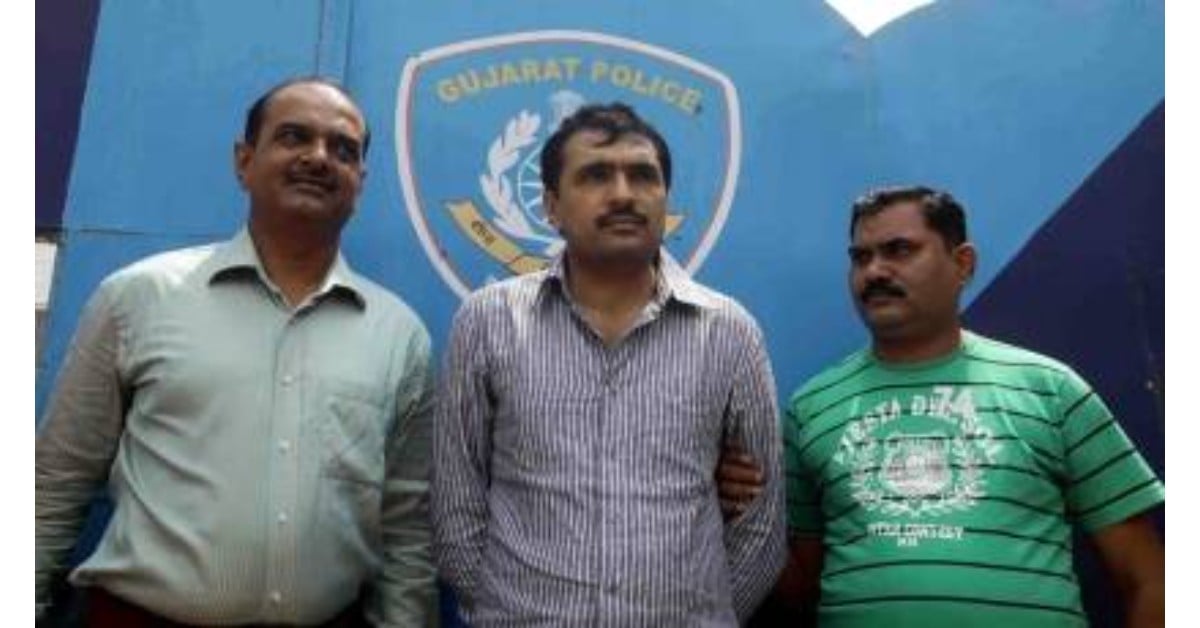
Seven defendants were found guilty and sentenced to life imprisonment on June 7, 2019, by a judge after the High Court handed over the investigation to the Central Bureau of Probe (CBI) the investigation in September 2012.

Indian origin man from Italy arrested for posing as vice-president of India

Video of elderly saree clad women diving into Tamil Nadu river leaves Twitter users amazed | Watch

India News

 Akhilesh Yadav launches SP’s 2027 UP poll campaign from Rahul Gandhi’s seat

Akhilesh Yadav launched the Samajwadi Party’s 2027 Uttar Pradesh Assembly election campaign from Rae Bareli, represented by Rahul Gandhi in the Lok Sabha.

Published

on

Akhilesh Yadav

Samajwadi Party chief Akhilesh Yadav has formally begun the party’s campaign for the 2027 Uttar Pradesh Assembly elections, launching the outreach from Rae Bareli, the Lok Sabha constituency represented by Congress leader Rahul Gandhi.

Yadav travelled through the area on the party’s newly launched PDA Rath before addressing a public meeting. The campaign vehicle carries the Samajwadi Party’s PDA messaging, referring to its focus on backward classes, Dalits and minorities.

Akhilesh Yadav discusses alliance with Congress

During his Rae Bareli visit, Yadav said the Samajwadi Party would contest the 2027 election as part of an alliance and indicated that seat-sharing would be decided on the basis of winnability.

He said the party would give a seat to whichever alliance partner is considered capable of winning it. The remarks come against the backdrop of the SP and Congress having contested the 2024 Lok Sabha election together in Uttar Pradesh.

Rae Bareli has particular political significance for the Congress as Rahul Gandhi is its sitting Lok Sabha MP. Yadav’s decision to begin the campaign from the constituency therefore placed the SP’s alliance with the Congress in focus.

PDA Rath becomes centrepiece of campaign

The PDA Rath was rolled out as part of the SP’s mobilisation ahead of the 2027 Assembly election. The vehicle prominently carries the party’s PDA messaging, with PDA standing for Pichhde, Dalit and Alpsankhyak.

The campaign is aimed at taking the SP’s social-justice messaging to voters across Uttar Pradesh as the party prepares for the Assembly election.

During the programme, Yadav also attacked the BJP and raised issues including the Election Commission and what he described as the alleged misuse of election machinery. These are political allegations made by the SP chief and should be understood as such.

BJP reacts to Akhilesh Yadav’s campaign

The launch of the PDA Rath comes as political activity intensifies in Uttar Pradesh ahead of the 2027 Assembly election.

The BJP has responded to Yadav’s campaign and his political messaging, while the SP has continued to focus its outreach on the PDA social coalition and its alliance strategy with the Congress.

The 2027 contest is still ahead, with parties using the period before the election to strengthen their organisational networks, public outreach and alliance arrangements.

Continue Reading

India News

Cockroach Janta Party gives CEC Gyanesh Kumar 48 hours to resign, warns of nationwide protests

Cockroach Janta Party founder Abhijeet Dipke has demanded the resignation of Chief Election Commissioner Gyanesh Kumar within 48 hours, warning of a nationwide agitation if the demand is not met.

Published

on

Cockroach Janta Party (CJP) founder Abhijeet Dipke has demanded that Chief Election Commissioner Gyanesh Kumar resign within 48 hours, warning that the organisation will launch a nationwide agitation if he does not step down.

The demand was made during a press conference on Thursday amid a wider controversy surrounding the Election Commission’s handling of electoral-roll-related matters and the ongoing Special Intensive Revision (SIR).

Dipke alleged that the functioning of the Election Commission under Kumar had raised concerns over the electoral process. These claims are allegations made by Dipke and should not be treated as established facts.

What did Abhijeet Dipke demand?

Dipke called for Gyanesh Kumar’s resignation within 48 hours. He warned that the CJP would begin a nationwide protest if the Chief Election Commissioner did not step down within the deadline.

The organisation said the proposed agitation would follow the lines of its earlier protest at Delhi’s Jantar Mantar.

The CJP also raised other demands related to the electoral process, including a halt to ongoing electoral exercises and the Special Intensive Revision of electoral rolls.

Why is CJP demanding Gyanesh Kumar’s resignation?

The demand comes amid a controversy over the Election Commission’s electoral-roll processes.

The demand came amid a controversy over the Election Commission’s handling of the Special Intensive Revision (SIR) of electoral rolls, following a report that Election Commissioners Sukhbir Singh Sandhu and Vivek Joshi had raised questions about the exercise. 

However, the Election Commission has rejected the suggestion that these differences represented a division within the three-member poll panel. The Commission said that differing views, written notes and internal checks are part of its deliberative process and maintained that decisions, including those concerning SIR, were taken unanimously.

What has Abhijeet Dipke alleged?

Dipke has alleged that more than 13 crore votes were deleted from electoral rolls and questioned the reasons behind the deletions.

He also alleged that voter deletions had affected Opposition leaders and referred to several political figures while making his claims.

These figures and allegations were presented by Dipke during the press conference. They should therefore be attributed to him rather than stated as independently verified facts.

Dipke also questioned whether the alleged deletions could affect the political balance in elections.

What happens if Gyanesh Kumar does not resign?

According to Dipke, the CJP will launch a nationwide agitation if the Chief Election Commissioner does not resign within 48 hours.

He said the organisation would continue its campaign until its demand for Kumar’s resignation was met.

The CJP has also announced a broader campaign against the Election Commission, while warning of further protests.

Continue Reading

India News

Rahul Gandhi attacks CEC Gyanesh Kumar, says vote chori leads to kanoon chori

Rahul Gandhi accused the Election Commission of failing to protect voters and linked his “vote chori” allegation to what he called “kanoon chori”.

Published

on

Congress leader and Leader of Opposition in the Lok Sabha Rahul Gandhi on Thursday launched a fresh attack on Chief Election Commissioner Gyanesh Kumar and the Narendra Modi government, alleging irregularities in India’s electoral process.

Addressing a press conference in Delhi, Mr Gandhi linked his earlier allegations of “vote chori” with what he described as “kanoon chori”, arguing that alleged manipulation of votes would have consequences for the country’s law-making and institutional systems.

“From vote chori comes kanoon chori,” Mr Gandhi said, arguing that if votes had been stolen, laws and institutional changes made by lawmakers elected through those votes would also be affected.

Rahul Gandhi attacks Gyanesh Kumar

Mr Gandhi specifically targeted Chief Election Commissioner Gyanesh Kumar and questioned the Election Commission’s handling of the electoral process.

His remarks came amid reports of differences within the poll body over the Special Intensive Revision (SIR) exercise. Mr Gandhi referred to reported concerns involving the Election Commission and alleged that questions raised about the functioning of the poll panel had not been adequately addressed.

He also alleged that the Election Commission had failed in its responsibility to protect the vote, which he described as the foundation of India’s democratic and constitutional system.

‘Vote chori’ claim

Mr Gandhi reiterated his allegations of irregularities in elections and said the issue went beyond individual voters.

He argued that the vote gives power to the Constitution, while the Constitution provides the basis for laws and institutions. On that basis, he said alleged destruction of the voting process would have wider consequences for the country’s constitutional system.

Mr Gandhi also questioned what he described as the disappearance of anti-incumbency in elections involving the BJP, comparing recent electoral outcomes with earlier political trends.

He alleged that the 2024 Lok Sabha and Assembly elections had been manipulated. These remain allegations made by Mr Gandhi and should not be presented as established facts.

Attack on Modi and Amit Shah

During the press conference, Mr Gandhi also targeted Prime Minister Narendra Modi and Union Home Minister Amit Shah while making his allegations about the electoral process.

He questioned the role of the Election Commission and its leadership, and called for accountability over what he described as irregularities affecting India’s voting system.

Mr Gandhi said he was presenting evidence for his allegations and maintained that the issue concerned not only elections but also the functioning of democratic institutions.

The Election Commission’s reported internal differences over the SIR exercise formed part of the backdrop to his remarks. The claims made by Mr Gandhi concern his interpretation of those developments and are distinct from established findings about election manipulation.

Continue Reading

Trending

© Copyright 2022 APNLIVE.com