English हिन्दी
Connect with us

Top Stories

Swiggy delivery boy rides horse to drop off food packages amid heavy rain in Mumbai | WATCH

Published

on

A viral video from Mumbai has been doing the rounds on social media platforms, where a Swiggy delivery boy, who was reportedly frustrated by the pouring rain and flooded roads skipped his usual ride and took a horse to drop off food orders to customers.

A user recorded the unique style of delivering food and shared it on Youtube and Twitter. The video has gained thousands of views and a lot of shares in no time.

Take a look at the video of a man delivering food order on a horse

https://www.youtube.com/watch?v=H54-MYgEiTc&t=5s

Seeing the clever style of delivering food, several internet users started praising the man’s loyalty and dedication to his work. One of the users shared the video on Twitter and sarcastically wrote that the man took the normal food delivery to the next level, adding, this is what I call Shahi delivery. Another wrote in Hindi that reads, “Bhai ne apne kaam ko kuch zada hi serious le lia hai (brother took his work seriously).” While another asked Swiggy to give him a hike and make him employee of the year. Other users just simply filled the comment section with laugh emoticons.

Meanwhile, Mumbai has been witnessing heavy rainfall over the past few days. The India Meteorological Department (IMD) has issued an orange alert warning. It has also been predicted that the city is likely to receive very heavy showers in the upcoming days.

Amid this, two incidents of building collapse were also reported in Kalbadevi and Sion areas. Reports said there were no casualties apart from loss of property. People were evacuated safely from the collapsed structures, the report said.

Continue Reading

India News

Deve Gowda hits back at Kharge’s married PM jibe, calls congress tie-up abusive relationship

HD Deve Gowda rebuts Mallikarjun Kharge’s remarks, saying JD(S) did not desert Congress and was forced to exit an “abusive” alliance.

Published

on

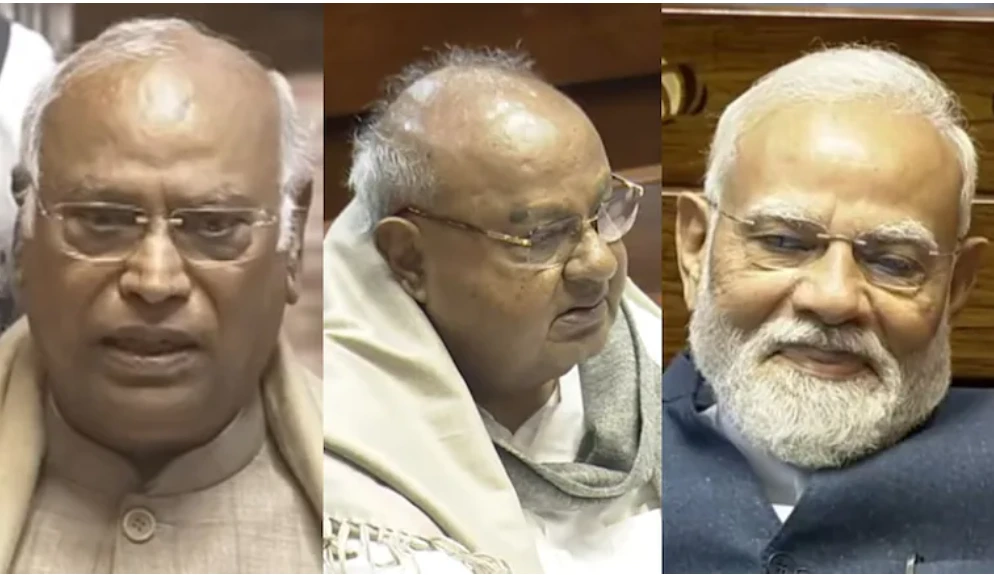
Former Prime Minister H. D. Deve Gowda has responded sharply to remarks made by Congress president Mallikarjun Kharge in the Rajya Sabha, rejecting the suggestion that he chose to align with Prime Minister Narendra Modi over the Congress.

War of words in rajya sabha

During his farewell speech in the Upper House, Kharge made a light-hearted remark about Deve Gowda’s political journey, saying he had “dated” the Congress but ultimately “married” Modi. The comment drew laughter across the House, including from the Prime Minister, who was present at the time.

Kharge also noted his long association with Deve Gowda, saying he had known him for over five decades but was unsure why the Janata Dal (Secular) leader shifted alliances.

Deve gowda’s ‘forced marriage’ reply

In a statement issued later, Deve Gowda said he was not present in the House when the comment was made as he had left for Bengaluru for Ugadi celebrations. Responding in similar metaphorical language, he said his association with the Congress was a “forced marriage” that eventually turned into an “abusive relationship.”

He asserted that his party did not leave the Congress alliance, but was instead compelled to move on after being sidelined.

Reference to 2018 karnataka alliance

Deve Gowda also revisited the 2018 Karnataka political developments, stating that the Congress leadership, including Ghulam Nabi Azad, had proposed his son H. D. Kumaraswamy as Chief Minister. He claimed he had instead suggested Kharge’s name, in the presence of leaders like Siddaramaiah.

Despite this, Kumaraswamy eventually took charge as Chief Minister after the Congress-JD(S) alliance formed the government.

Alliance collapse and aftermath

The coalition government collapsed in 2019 after multiple MLAs from both parties defected, leading to the fall of the government. Deve Gowda alleged that the Congress failed to act against those responsible for triggering the defections.

He maintained that the breakdown of the alliance left JD(S) with no option but to seek a “more stable” political partnership later.

Political context

Deve Gowda briefly served as Prime Minister following the 1996 Lok Sabha elections, heading a United Front government supported by the Congress. His party later allied with the Congress in Karnataka in 2018 before parting ways after the coalition government’s collapse.

Continue Reading

India News

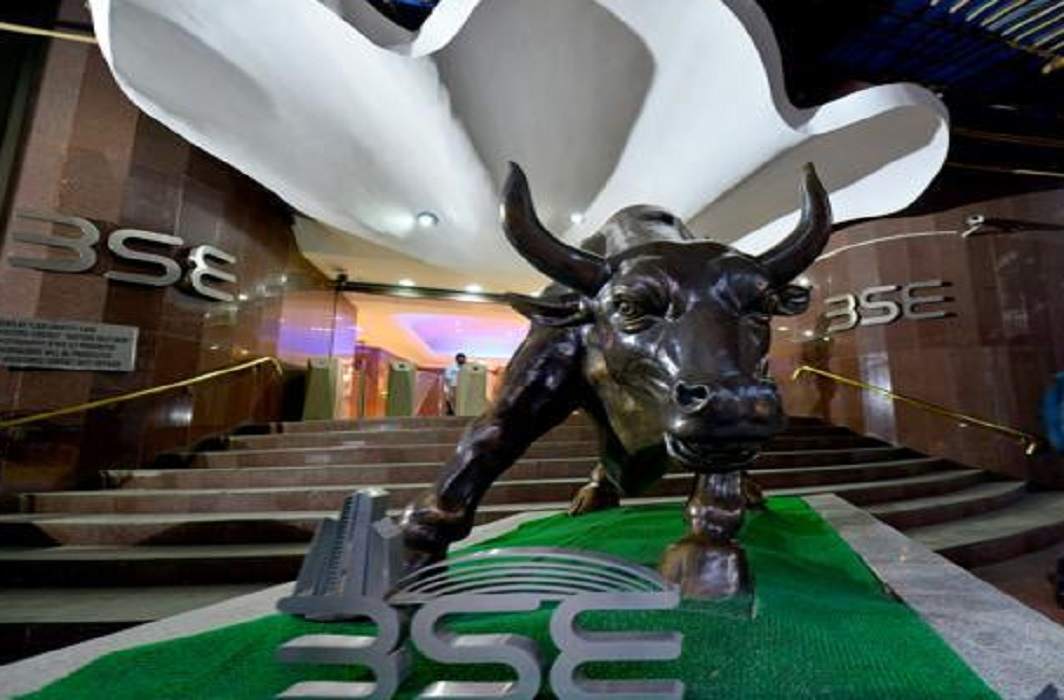
Markets tumble as oil crosses $110, sensex falls over 1,900 points

Markets opened sharply lower with Sensex plunging over 1,900 points as crude oil crossed $110 and global factors weighed on sentiment.

Published

on

Sensex

Indian stock markets opened sharply lower on Thursday, snapping a three-session gaining streak, as rising global crude oil prices and geopolitical tensions weighed heavily on investor sentiment.

Benchmark indices witnessed a gap-down opening, with the Sensex plunging over 1,900 points at the open, while the Nifty dropped more than 450 points. The decline follows reports of Iran targeting key energy infrastructure in the Gulf region, pushing Brent crude oil prices above the $110 per barrel mark.

At around 9:17 AM, the Sensex was trading at 75,235.05, down by 1,469.08 points. Meanwhile, the Nifty stood at 23,291.85, slipping 485.95 points.

Oil spike, global cues pressure equities

The surge in crude oil prices is a major concern for Indian markets, as higher oil costs can widen the current account deficit and fuel inflation. This often leads to cautious investor behaviour and triggers selling in equities.

Adding to the negative sentiment, the US Federal Reserve maintained its interest rates at current levels. Stable rates in the US tend to keep bond yields attractive, which can result in foreign institutional investors (FIIs) pulling money out of emerging markets like India.

Early indicators had already pointed to a weak start. GIFT Nifty futures were trading at 23,324, down 453 points, signalling a negative opening for domestic indices.

Expert view signals sectoral shift

According to InvestorAi’s strategic outlook, there has been a noticeable shift in market positioning towards IT large-cap stocks. The move reflects a preference for companies with stable earnings visibility, especially those earning in dollars amid a weakening rupee.

The analysis highlights that IT exporters benefit from currency depreciation, as revenues are largely dollar-denominated while costs remain in rupees. However, the outlook remains sensitive to crude prices. A sustained rise above $110 could force policy tightening and impact valuations.

Key stocks in focus

Among the top conviction picks highlighted:

  • Mphasis seen as a strong mid-cap IT play with AI and cloud exposure
  • Wipro emerging as a turnaround candidate with improving margins
  • TCS acting as a sector bellwether reflecting broader IT trends
  • PB Fintech offering a high-margin digital growth story
  • KEI Industries representing domestic infrastructure and electrification demand

What investors should watch

Market participants are closely tracking the rupee’s movement against the US dollar. A sustained breach beyond 90.5–91 levels could further support IT stocks but may also signal broader macroeconomic stress.

Additionally, crude oil prices and geopolitical developments will remain key triggers for market direction in the near term.

Continue Reading

Latest world news

Trump warns of escalation after Iran hits Qatar LNG sites amid Gulf tensions

Trump warns of massive retaliation if Iran targets Qatar again after LNG facility attacks, as Gulf tensions push oil prices higher
Published

on

Donald Trump statement

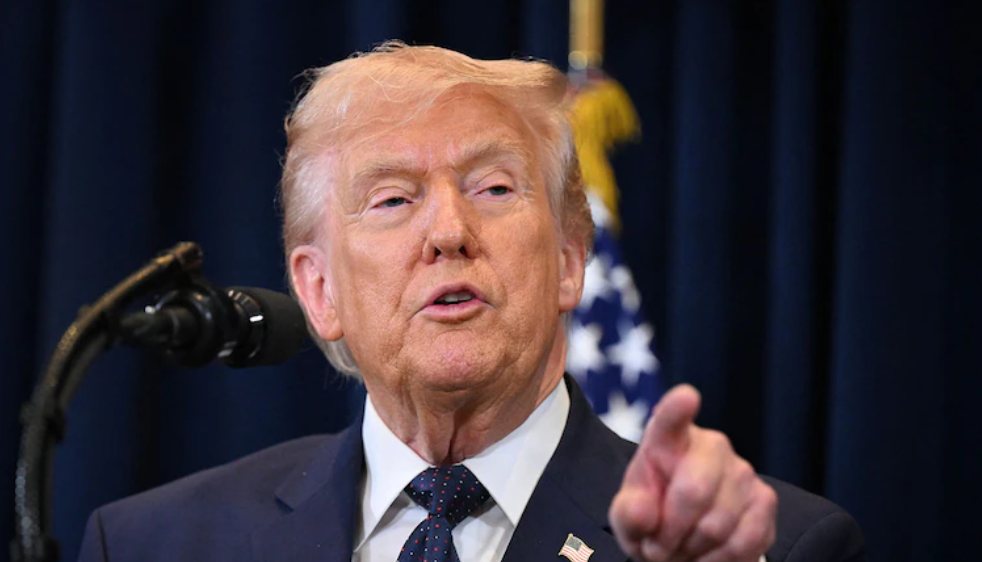
US President Donald Trump has said Israel will refrain from launching further attacks on Iran’s South Pars gas field unless Tehran chooses to strike Qatar again, amid a sharp escalation in tensions across the Gulf region.

In a statement posted on his Truth Social platform, Trump claimed that Israel’s earlier strike on Iran’s South Pars offshore liquefied natural gas (LNG) field was carried out “out of anger” over the ongoing conflict. He added that the United States had no prior knowledge of the Israeli action.

Trump also emphasised that Qatar had no involvement in the incident. “The United States knew nothing about this particular attack, and the country of Qatar was in no way, shape, or form involved with it,” he said.

According to Trump, Iran responded to the situation without full information and carried out what he described as an “unjustified” attack on Qatar’s LNG infrastructure.

He warned that Israel would not target the South Pars field again unless Iran escalates by attacking Qatar. However, he issued a strong warning that the United States could take direct action if such a scenario unfolds.

“If Qatar’s LNG is again attacked, the United States, with or without the help or consent of Israel, will respond with overwhelming force,” Trump said, while adding that he would prefer to avoid such escalation due to long-term consequences.

Iran strikes Qatar energy facilities

QatarEnergy confirmed that Iranian missile strikes hit LNG facilities in the country, causing fires and significant damage. Emergency teams were deployed to control the situation, and no casualties have been reported so far.

Qatar, one of the world’s leading exporters of natural gas, had already halted production earlier due to the conflict. The latest damage could further delay supply recovery, raising concerns in global energy markets.

Regional tensions widen

The situation intensified after Israel targeted Iran’s South Pars gas field, a major shared energy resource between Iran and Qatar. In retaliation, Iran expanded its strikes across the Gulf region.

Reports indicate that Iranian attacks also targeted gas infrastructure in the United Arab Emirates, including the Habshan facility and Bab field. Authorities described the strikes as a “dangerous escalation,” though operations had been shut down following defensive interceptions.

Qatar has reportedly asked Iranian embassy officials to leave the country within 24 hours, signalling a further deterioration in diplomatic ties.

Oil prices surge amid supply fears

The ongoing conflict has significantly impacted global energy markets. Oil prices rose by around 5 per cent, crossing $108 per barrel, as concerns grew over supply disruptions.

The Strait of Hormuz, a critical shipping route for nearly one-fifth of global oil supply, remains under pressure, contributing to market volatility. Brent crude prices have surged करीब 50 per cent since the conflict began on February 28.

In response to tightening supplies, the US administration has moved to ease certain sanctions on Venezuela, allowing American companies to engage with its state-owned oil sector to stabilise supply.

Continue Reading

Trending

© Copyright 2022 APNLIVE.com