English हिन्दी
Connect with us

Top Stories

Yasin Malik, Kashmiri separatist leader, convicted by Delhi court in terror funding case

Yasin Malik, a Kashmiri separatist leader, has been convicted by an NIA court in Delhi in the terror funding case. It is reported that the arguments on the quantum of sentence will take place on May 25.

Published

on

Yasin Malik

Yasin Malik, a Kashmiri separatist leader, has been convicted by an NIA court in Delhi in the terror funding case. It is reported that the arguments on the quantum of sentence will take place on May 25. The court also asked Malik to furnish an affidavit on his financial assets before the next date of hearing.
Earlier, in this case, Malik pleaded guilty to all the charges, including those under the stringent Unlawful Activities Prevention Act (UAPA), before the court in the terrorism and secessionist activities case that disturbed the Valley in 2017.

In the court, Yasim Malik told that he was not contesting the charges that were levelled against him including section 16 (terrorist act), 17 (raising funds for the terrorist act), 18 (conspiracy to commit terrorist act), and 20 (being member of terrorist gang or organisation) of the UAPA and sections 120-B (criminal conspiracy) and 124-A (sedition) of the Indian Penal Code.

Read Also: Shri Krishna Janmabhoomi case: UP court says plea demanding removal of Shahi Idgah Mosque maintainable

Several people including Shabbir Shah, Masarat Alam, former MLA Rashid Engineer, businessman Zahoor Ahmad Shah Watali, Bitta Karate, Aftab Ahmad Shah, Avatar Ahmad Shah, Naeem Khan, Bashir Ahmed Bhat, alias Peer Saifullah and others have also been framed under the charges for criminal conspiracy, waging war against the country and other unlawful activities.

In the earlier order by the NIA special Judge Praveen Singh had said that the above analysis reflects that the statements of witnesses and documentary evidence have connected almost all the accused with each other and to a common object of secession, to the commonality of means they were to use, their close association to terrorist/terrorist organisations under the guiding hand and funding of Pakistani establishment.

In other news, in the Gyanvapi mosque case, Supreme Court will hear the case tomorrow on May 20 at 3 pm. The top court even asked the trial court in Varanasi not to proceed with the Gyanvapi Mosque case till Friday, 20th May.

Gyanvapi Mosque case: Kangana Ranaut says Shiva doesn’t need a structure, here’s WHAT happened next

India News

BJP-AAP Clash Over Yamuna on Chhath Puja In Delhi

The Yamuna has become the centre of a political clash between the BJP and AAP in Delhi on Chhath Puja, with both sides trading claims over pollution, cleanliness and arrangements for devotees.

Published

on

Chhath puja

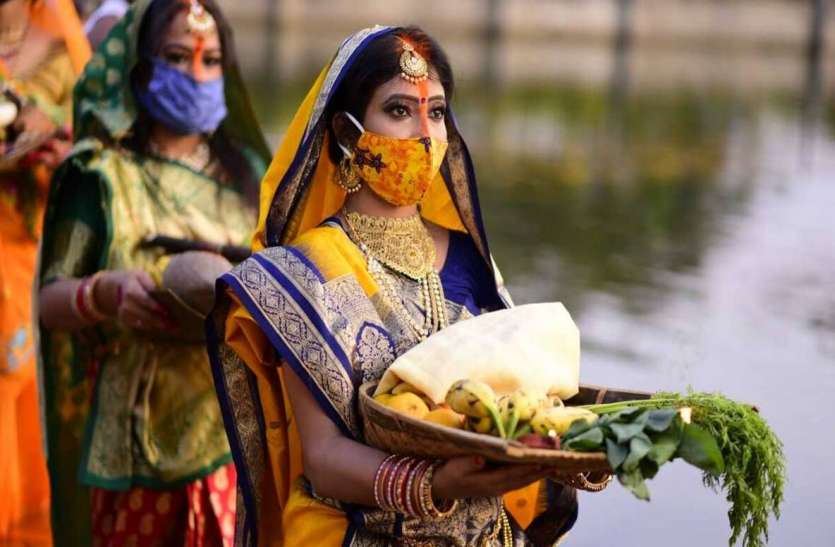
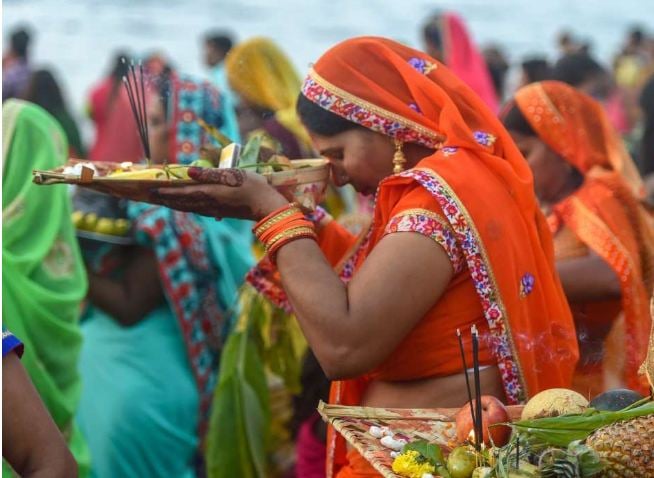
The BJP and Aam Aadmi Party (AAP) have traded accusations over the condition of the Yamuna during Chhath Puja celebrations in Delhi, with the ruling party defending its arrangements and the Opposition questioning the river’s cleanliness.

The political exchange intensified after the AAP shared videos on X showing devotees standing in the Yamuna amid layers of thick white foam. The party accused the BJP-led government of failing to address pollution in the river and said devotees were facing the consequences.

The BJP, meanwhile, accused the AAP of politicising the issue and pointed to the arrangements made across Delhi for the festival. BJP leaders also criticised the previous AAP government, claiming that Chhath celebrations at Yamuna ghats had been banned during its tenure.

BJP defends Chhath arrangements, targets AAP

Delhi BJP MP Manoj Tiwari defended the arrangements for Chhath Puja, saying devotees were satisfied with the preparations across the national capital.

He claimed that the situation was different two years ago, when Chhath celebrations were banned at Yamuna ghats in Delhi during the AAP government’s tenure.

Tiwari also accused the AAP and Congress of engaging in what he described as “shameful” politics by circulating visuals from Kalindi Kunj ghat.

Delhi Minister Kapil Mishra also criticised the previous administration, claiming that worshippers had been barred from accessing ghats during its tenure.

In a post on X, Mishra said the BJP government had rolled out the red carpet for devotees and that grand Chhath celebrations were being held at more than 1,400 ghats across Delhi.

AAP targets BJP over Yamuna pollution

The AAP intensified its criticism of the BJP government by sharing videos showing devotees performing Chhath rituals in the Yamuna amid thick white foam.

In one of its posts on X, the party alleged that claims about cleaning the river were false and accused the BJP government of forcing devotees to celebrate Chhath in polluted water.

In another post accompanied by footage of the froth-covered river, the AAP directly questioned Chief Minister Rekha Gupta over the condition of the Yamuna.

The party described the river as toxic and criticised the government over the presence of foam during the festival.

Rekha Gupta participates in Usha Arghya at ITO ghat

Amid the political exchange, Chief Minister Rekha Gupta participated in the concluding ritual of Usha Arghya at ITO ghat on November 16. The ritual involves offering prayers to the rising Sun.

Before the ceremony, she inspected Yamuna ghats by boat. On Sunday, she had offered Sandhya Arghya at Sonia Vihar.

Addressing reporters at ITO ghat, Gupta said the government had tried to ensure that Chhath Puja was celebrated with grandeur and devotion. She also sought forgiveness for any shortcomings in the arrangements and promised better preparations next time.

The four-day Chhath festival began on November 13 with Nahay Khay, followed by Kharna on November 14. It concluded on November 16, with devotees breaking their 36-hour waterless fast through Parana after offering Usha Arghya.

Continue Reading

India News

PM Modi prays to Chhathi Maiya for blessings on Chhath Puja

PM Narendra Modi extended Chhath Puja greetings on Monday and prayed to Chhathi Maiya to bless devotees observing the fast and his family members across the country.

Published

on

Chhat Puja

Prime Minister Narendra Modi on Monday extended greetings to devotees on the fourth and final day of Chhath Puja, as the four-day festival concluded with devotees offering arghya to the rising Sun.

In a post on X, PM Modi said the festival dedicated to nature reflected determination and spiritual practice. He prayed to Chhathi Maiya to bless those observing the fast as well as his family members across the country.

PM Modi’s Chhath Puja message

PM Modi said the four-day ritual concluded with prayers offered to the rising Sun. He described Chhath as a festival dedicated to nature and highlighted the combination of spiritual practice and resolve associated with the occasion.

“I pray to Chhathi Maiya to bestow her blessings on all the devotees observing the fast, as well as on my family members across the country,” he said in his post.

The Prime Minister had also extended greetings on the occasion of the Sandhya Arghya on November 15, praying that the grace of the Sun God would illuminate people’s lives and that the festival would strengthen harmony and social cohesion.

Political leaders participate in Chhath celebrations

Political leaders across several states participated in Chhath Puja rituals on the festival’s final day.

In Bihar, BJP national president Nitin Nabin was seen carrying a daura as his wife Deepmala performed the rituals in Patna. Bihar Chief Minister Samrat Chaudhary offered morning arghya in Munger.

In Chhattisgarh’s Jashpur, Chief Minister Vishnu Deo Sai and his wife participated in the rituals and offered arghya to the rising Sun. Sai also said that a groundbreaking ceremony was being held for the construction of a Chhath Ghat in his Assembly constituency, Kunkuri.

In Uttar Pradesh’s Gorakhpur, BJP MP Ravi Kishan performed the morning arghya ritual at Bhim Sarovar within the Gorakhnath Temple premises. In Delhi, BJP MP Manoj Tiwari offered arghya at Sonia Vihar Ghat.

Devotees gathered at ghats in several cities, including Patna, Delhi, Gorakhpur, Chandigarh, Kolkata and Ayodhya, for the morning rituals marking the conclusion of Chhath Puja.

Continue Reading

India News

India-US trade deal nears finish line, Jaishankar says most issues resolved

India and the US have resolved most issues concerning their proposed trade agreement, External Affairs Minister S Jaishankar said, expressing hope that the deal would be concluded soon.
Published

on

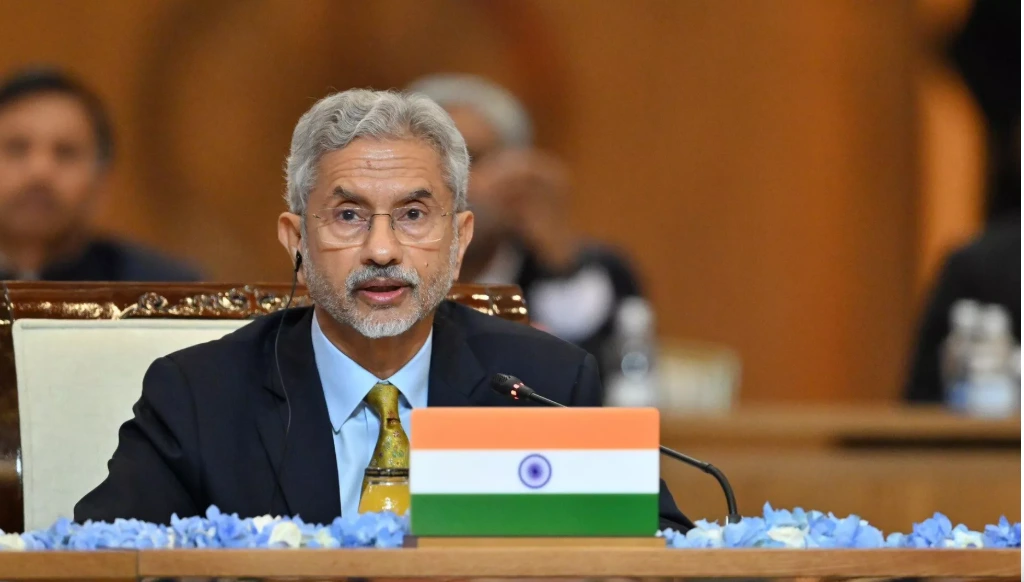
India and the United States have resolved most of the issues concerning their proposed trade agreement, with negotiations now approaching the final stage, External Affairs Minister S Jaishankar said on Saturday.

Speaking at an interactive session at the HT Leadership Summit, Jaishankar expressed hope that the agreement would be concluded soon. He indicated that several of the remaining concerns were not on India’s side, with more changes having taken place on the American side.

Describing the negotiations as being close to the “finishing line”, the minister said both countries had already worked through the bulk of the issues, including tariff-related matters.

Responding to a question about the progress of the proposed trade pact, Jaishankar said, “Well, it’s certainly our hope, and in many ways anticipation that we are at the last stretch. That’s not a secret.”

He added that the remaining issues were being addressed and that both sides were keen to complete the negotiations.

“The hope is that we should close it out soon. It’s always the case that in that last period, everybody’s impatient,” he said.

India-US trade deal could be announced during Modi-Trump meeting

Jaishankar’s remarks come ahead of Prime Minister Narendra Modi’s likely visit to the United States next month for the G20 Summit.

There has been speculation that India and the US could announce the trade agreement following a meeting between Modi and US President Donald Trump on the sidelines of the summit, scheduled to take place in Miami on December 14 and 15.

However, no formal announcement of the trade deal has been made.

Last month, US Secretary of State Marco Rubio had also indicated during his visit to Mumbai that both countries were very close to finalising the agreement.

India and the US have been negotiating the proposed trade pact since early 2025. The discussions aim to address tariff-related differences, eliminate non-tariff barriers and improve market access for businesses in both countries.

India has been seeking favourable tariff terms for its exports to the US compared with competing economies.

What India wants from the proposed trade agreement

Jaishankar said India’s priority was to secure an agreement that would be beneficial and balanced while providing the country with a comparative advantage over economies competing in similar sectors.

“For us the key is that we want a trade deal which is beneficial, it is balanced and which would give us a comparative advantage over groups of comparable economies,” he said.

The minister also highlighted the importance of evaluating trade agreements from a broader economic perspective rather than focusing only on their immediate benefits.

Referring to India’s earlier free trade agreements with several Asian economies, he said the expected gains from some of those arrangements had not fully materialised.

However, he noted that India’s more recent trade agreements had been assessed more carefully, both strategically and economically.

Jaishankar said the US was one of India’s biggest markets and that an agreement with the world’s largest economy would benefit the country.

He also observed that US President Donald Trump was seeking bilateral trade agreements with several countries to improve market opportunities for American businesses. The challenge, he said, was to find an acceptable outcome for both sides.

Jaishankar explains why negotiations have taken time

Explaining the extended negotiations, Jaishankar said trade agreements involving tariffs and market access could not be concluded simply through quick decisions.

He stressed that the discussions required detailed examination of individual tariff lines, a process that takes considerable time.

“If you are serious, you go tariff line by tariff line. That takes time. Now we’ve done it the painstaking way,” he said.

The minister added that the negotiations involved important economic considerations, particularly because the outcome could affect people’s jobs and livelihoods.

He reiterated that India had made considerable efforts to work through the issues and that negotiations had now reached an advanced stage.

Jaishankar expressed hope that the remaining differences would be resolved and the proposed agreement would be concluded soon.

Continue Reading

Trending

© Copyright 2022 APNLIVE.com