English हिन्दी
Connect with us

Trending

Caught on cam: Teenage driver drags traffic cop on car’s bonnet for 1.5 km in Maharashtra’s Palghar | WATCH

In a shocking incident of road rage, a teenager dragged a traffic policeman on the hood of his speeding car for nearly 1.5 kilometers after the cop had tried to stop the 19-year-old driver who jumped a traffic signal in Maharashtra’s Palghar district.


Published

on

Teenage driver drags traffic cop

In a shocking incident of road rage, a teenager dragged a traffic policeman on the hood of his speeding car for nearly 1.5 kilometers after the cop had tried to stop the 19-year-old driver who jumped a traffic signal in Maharashtra’s Palghar district.
According to reports, the incident happened in Vasai area, nearly 60 kms from Mumbai, on Sunday evening, when traffic police constable, Somnath Chaudhary, stationed at a busy junction in Vasai, spotted a car bearing Uttar Pradesh registration jumping traffic signal.

The traffic cop asked the driver to stop, however, the accused suddenly accelerated the vehicle and hit the constable, who fell on the car’s bonnet and was dragged for around 1.50 km. A police official said that Choudhary sustained injuries in the incident and has been hospitalized.

Visuals showing the constable being dragged on the car’s bonnet were captured on nearby CCTV cameras.

https://twitter.com/AhmedKhabeer_/status/1625324263820636161

Reports said the driver was soon forced to stop his car due to a traffic jam. The driver was jumped by bystanders who pinned him down and handed him over to the cops.

Read Also: UP court sentences SP leader Azam Khan, son to 2 years in jail in 2008 case

A senior official said that the 19-year-old accused was driving without a license and has booked under under sections 307 (attempt to murder), 308 (attempt to commit culpable homicide) and 353 (assault or criminal force to deter public servant from discharge of his duty) of the Indian Penal Code (IPC) and other provisions of the Motor Vehicles Act.

Further investigation is ongoing, he added.

In a similar incident, an unidentified man was dragged under a speeding car for nearly 12 kilometers after allegedly being run over by the vehicle on the Yamuna Expressway in Uttar Pradesh during early hours on last Tuesday morning.

According to the police, the body was caught in the under-frame of the car and dragged for nearly 12 km. The erring driver– Virender Singh, a resident of Delhi– who has been arrested, has claimed that the victim had died in a different accident and his corpse got stuck under his car, police said.

The accused driver, who was driving from Agra to Noida at around 4 AM on Tuesday morning when security personnel at a toll booth near Mathura on the Yamuna Expressway noticed the mangled body caught under his car.

Singh blamed low visibility for not realizing there was a body caught under his vehicle and claimed that the man had already died in some other accident. He told the police that he was unable to see due to the thick fog on the Expressway and never noticed the body stuck under his car.

Union Home Minister Amit Shah talks about Adani row, says BJP has nothing to hide

Supreme Court rejects CBI plea seeking cancellation of ex-NSE chief Chitra Ramakrishna’s bail

Cricket news

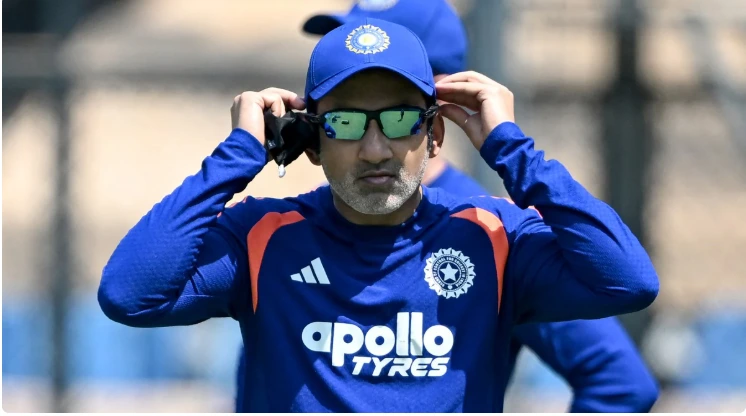
India’s batting reshuffle under Gautam Gambhir draws sharp criticism after 2nd T20I loss

Former players Robin Uthappa and Dale Steyn criticised Gautam Gambhir’s batting shuffle after India’s 51-run defeat in the second T20I against South Africa.

Published

on

Gautam Gambhir

India’s heavy 51-run defeat against South Africa in the second T20I at Mullanpur has sparked intense scrutiny of head coach Gautam Gambhir’s tactical calls, particularly the decision to reshuffle the batting order. Former cricketers Robin Uthappa and Dale Steyn openly questioned the move, calling it a significant error that unsettled the Indian batting line-up

Experts question changes in India’s batting order

India’s chase of a daunting target never gained momentum after early wickets. Captain Suryakumar Yadav did not come in at his usual position, instead walking in after Axar Patel, and managed only five runs. The experiment raised eyebrows among experts, who felt India lost stability at a crucial phase of the innings.

Speaking during the post-match analysis, Robin Uthappa recalled Gambhir’s earlier comments about flexibility in the batting order but said the approach did not suit a high-pressure chase. He argued that when pursuing a big total, the team’s most dependable batters should take responsibility early rather than being pushed down the order.

Uthappa also pointed out that if Axar Patel was used as a pinch-hitter, the role demanded a far more aggressive approach. According to him, India needed calm and assurance after early setbacks, something the shuffled order failed to provide.

Dale Steyn calls decision a ‘major mistake’

Former South Africa pacer Dale Steyn echoed similar concerns, terming the move a “major mistake”. He stressed that Suryakumar Yadav is among India’s best batters and should not be treated as part of a trial-and-error strategy in a competitive T20I.

Steyn questioned the logic behind the left-right combination, noting that a right-handed batter had been dismissed, yet India ended up with two left-handers at the crease. He suggested that experimentation might be understandable in less critical situations, but not in a match where India had a chance to take a 2-1 lead in the series.

Call for clarity in top-order roles

Concluding his analysis, Uthappa urged Gambhir to settle on a fixed top three in the batting order. He emphasised that clarity of roles is essential in T20 cricket, especially during the powerplay overs. While flexibility can work later in the innings, constant changes at the top could harm the team’s rhythm.

Uthappa warned that prolonged experimentation might backfire at crucial moments in major tournaments, stressing that India cannot afford such uncertainty heading into high-stakes events.

Continue Reading

Cricket news

India vs South Africa 2nd T20I: Early collapse leaves India in trouble during 214 chase

India’s chase of 214 faltered early in the 2nd T20I as Shubman Gill and Abhishek Sharma fell inside two overs after South Africa posted 213/4, led by Quinton de Kock’s explosive 90.

Published

on

India’s chase of 214 began on a disastrous note in the second T20I in Mullanpur, with Shubman Gill and Abhishek Sharma falling inside two overs, putting immense pressure on skipper Suryakumar Yadav and the middle order.

India’s run chase unravelled quickly after South Africa posted 213/4, powered by a blistering 90 from Quinton de Kock, supported by Donovan Ferreira and David Miller’s late cameos. Varun Chakravarthy stood out with two wickets, while Jasprit Bumrah and Arshdeep Singh endured difficult spells, conceding 99 runs between them.

India stumbled early when Shubman Gill departed for a golden duck, edging one to slip. Abhishek Sharma tried counter-attacking with two sixes but soon fell to Marco Jansen’s sharp swing, leaving India at 19/2.

In a surprising move, Axar Patel walked in at No. 3—an aggressive tactical decision from the management. He struck a boundary but India remained under pressure at 25/2 after three overs.

Suryakumar Yadav, battling a lean patch, opened his account with a stylish four through backward point, trying to steady the chase.

South Africa, meanwhile, used Lungi Ngidi and Jansen effectively, tightening control after the early breakthroughs. India reached 32/3 by 3.5 overs and still needed 182 off 97 deliveries at 11.25 runs per over.

South Africa’s batting dominance sets India a stiff target

Quinton de Kock headlined the innings with 90 off 46 balls, smashing seven sixes. Ferreira and Miller capitalised late, while Bumrah’s last over leaked 18 runs. Arshdeep, struggling with his rhythm, bowled seven wides in a single over and finished with nine wides overall.

South Africa crossed 200 in the 20th over, closing on 213/4 and putting India under immense scoreboard pressure.

Continue Reading

Cricket news

Hardik Pandya calls selflessness his biggest USP after match-winning knock vs South Africa

Hardik Pandya’s blistering half-century and his emphasis on team-first cricket shaped India’s dominant win over South Africa in the first T20I in Cuttack.

Published

on

Hardik Pandya delivered a clinical all-round performance as India secured a dominant win over South Africa in the first T20I in Cuttack. His unbeaten 59 off just 28 balls not only revived India’s innings but also earned him the Player of the Match award. Speaking after the victory, Pandya said his ability to put the team’s needs above everything else remains his strongest asset.

Pandya reflects on his explosive knock and mindset

Walking in at a tense moment, Pandya counterattacked with calculated aggression, helping India post 175/6 — a total that eventually proved far beyond South Africa’s reach. He said adapting to the pitch quickly and trusting his game was key.

“I had to back my shots. I realised the wicket had a bit of spice. It was more about timing the ball, not breaking the ball,” Pandya said. He added that he was satisfied with how he paced his innings.

Pandya, who has spent the past several months working on his fitness, described the performance as personally rewarding. “These last 50 days, being away from loved ones, being at NCA, making sure that all these things are covered… it was satisfying when the results come like this,” he said.

‘What India wants, not what Hardik Pandya wants’

Pandya stressed that his biggest strength lies in being flexible and team-centric.
“As a cricketer, I have never been fussy about what roles I have. It doesn’t matter what Hardik Pandya wants, it is about what India wants. That is my biggest USP and that is what has helped me,” he stated.

He also explained the approach behind attacking spinner Keshav Maharaj, saying he simply capitalised when the ball entered his hitting zone.

India dominate with ball to seal 1-0 lead

India’s total, built by crucial contributions from Tilak Varma (26), Axar Patel (23) and Pandya’s late flourish, proved more than enough. Lungi Ngidi picked three wickets for South Africa, while Lutho Sipamla claimed two.

South Africa faltered early in the chase and were bowled out for 74 in 12.3 overs, with Dewald Brevis offering the only brief resistance. India’s bowlers — Jasprit Bumrah, Arshdeep Singh, Varun Chakravarthy and Axar Patel — all picked two wickets each, while Pandya and Shivam Dube took one apiece.

With leadership presence and batting brilliance, Pandya played a defining role in giving India a 1-0 advantage in the five-match series.

Continue Reading

Trending

© Copyright 2022 APNLIVE.com