English हिन्दी
Connect with us

Latest world news

Over 100 signatories urge Leonardo DiCaprio to withdraw support for Cauvery Calling campaign of Sadhguru’s Isha Foundation

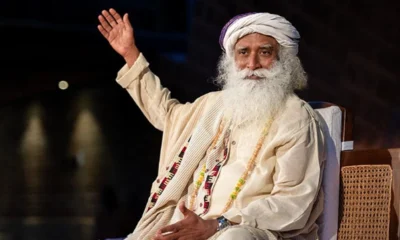
After Hollywood actor and climate activist Leonardo DiCaprio expressed his support for the ‘Cauvery Calling’ campaign launched by Isha Foundation and headed by ‘Sadhguru’ Jaggi Vasudev, a total of 95 civil society groups and 18 individuals have written to him.

Published

on

Sadhguru' Jaggi Vasudev

[vc_row][vc_column][vc_column_text]

After Hollywood actor and climate activist Leonardo DiCaprio expressed his support for the ‘Cauvery Calling’ campaign launched by Isha Foundation headed by ‘Sadhguru’ Jaggi Vasudev, a total of 95 civil society groups and 18 individuals have written to him urging him to withdraw his support for the campaign.

The actor, on September 21, in a Facebook post urges people to join the campaign – Cauvery Calling saying, “India’s rivers are severely endangered with many of its smaller rivers vanishing. Join Sadhguru and the Isha Foundation in their fight to preserve the Cauvery River.”

m text block. Click edit button to change this text. Lorem ipsum dolor sit amet, consectetur adipiscing elit. Ut elit tellus, luctus nec ullamcorper mattis, pulvinar dapibus leo.[/vc_column_text][/vc_column][/vc_row][vc_row][vc_column][vc_raw_html]JTNDaWZyYW1lJTIwc3JjJTNEJTIyaHR0cHMlM0ElMkYlMkZ3d3cuZmFjZWJvb2suY29tJTJGcGx1Z2lucyUyRnBvc3QucGhwJTNGaHJlZiUzRGh0dHBzJTI1M0ElMjUyRiUyNTJGd3d3LmZhY2Vib29rLmNvbSUyNTJGTGVvbmFyZG9EaUNhcHJpbyUyNTJGcG9zdHMlMjUyRjEwMTU2Mjg1NjEyNTMyMTE2JTI2d2lkdGglM0Q1MDAlMjIlMjB3aWR0aCUzRCUyMjUwMCUyMiUyMGhlaWdodCUzRCUyMjUzMCUyMiUyMHN0eWxlJTNEJTIyYm9yZGVyJTNBbm9uZSUzQm92ZXJmbG93JTNBaGlkZGVuJTIyJTIwc2Nyb2xsaW5nJTNEJTIybm8lMjIlMjBmcmFtZWJvcmRlciUzRCUyMjAlMjIlMjBhbGxvd1RyYW5zcGFyZW5jeSUzRCUyMnRydWUlMjIlMjBhbGxvdyUzRCUyMmVuY3J5cHRlZC1tZWRpYSUyMiUzRSUzQyUyRmlmcmFtZSUzRSUwQQ==[/vc_raw_html][/vc_column][/vc_row][vc_row][vc_column][vc_column_text]However, a letter compiled by Leo Saldanha of the Environment Support Group backed by 95 organisations and 19 individuals urged him to withdraw his support. 

 “It is our considered view that you may have been poorly advised, or not have had the time to personally investigate the background of the promoters of ‘Cauvery Calling’, before you embraced the programme with this message on Facebook: Indeed the first part of your message is most welcome. However, we urge you to withdraw the second part of the message, as it amounts to promoting Isha Foundations ‘Cauvery Calling’,” the letter read.  

The letter claims that Cauvery Calling is not a programme that “comprehends the river basin’s realities and her future well-being”.

“It appears to be a programme that presents, rather simplistically, that the river can be saved by planting trees on banks of her streams, rivulets, tributaries and the floodplains of the river,” it read.

The letter further claims that the campaign, which aims to plant 2,42,00,00,000 trees funded by donations, may “result in drying up of streams and rivulets, and destruction of wildlife habitats. Further, it can also lead to encroachments of the floodplains and riverbeds, as has happened at numerous places.”

Also Read: Sabah Hamid resigns from Gates Foundation in protest against Global goalkeeper Award conferred to PM Modi

Moreover, a Public Interest Litigation (PIL) in the Karnataka High Court has raised questions on how the foundation was allowed to raise funds to plant trees on public land. The same was also mentioned in the letter sent to DiCaprio, while claiming that Rajendra Singh, Waterman of India, had remarked that “Cauvery Calling is a campaign ‘just to earn name and money'”.

“The link you have shared on your Facebook page of the Isha website reveals that the volume of money being gathered is over Rs 10,000 crores ($1.5 billion). The implications of such massive funds being made available to a private foundation, particularly one that as a very weak, and rather dubious, record of compliance of human rights and environmental laws is quite worrying,” the letter read.

Questions on the credibility of Isha Foundation were also raised by many environmentalists.

The letter stated, “Isha Foundation has very low credibility in conforming with Indian laws protecting human rights and environment. No less an authority than the Comptroller and Auditor General of India, a constitutional body, has reported that the foundation has built its headquarters into an elephant corridor and on land belonging to Adivasis (original inhabitants of India, who are indigenous communities).”

“This is not a programme that will protect Cauvery, her forests, her biodiversity, her children and her children’s children. It will certainly not save Cauvery. On the contrary, support for this kind of a campaign sets a very wrong precedent,” the letter argued.

The signatories also hit out at the NGO, accusing it of using “populist and simplistic methods”, which suggests that the imperiled river can be saved just by planting trees. The letter claimed that the Cauvery Calling project would rather result in the “denigration of systematic and serious efforts” to address environmental and social justice issues. It was also noted that a slew of urban and industrial projects, not resulting out of informed and democratic decision-making, had polluted the river, which is a critical resource for four southern states.

Also Read: US House of Representatives to hold impeachment inquiry against Donald Trump

The letter concluded by inviting DiCaprio to visit the Cauvery basin to experience the situation on-ground. “We would like you to join our grassroots based, consultative, collective and networked efforts, to rejuvenate Cauvery. Meanwhile, we urge you to withdraw your call for support to Cauvery Calling,” the letter read.

It also suggested that tree plantation is a process to be conducted after consultations on local needs, local ecological dynamics and to be executed with appropriate social action.

The signatories to the letter include Plachimada Solidarity Committee, South Asia Network on Dams, Rivers and People (New Delhi), Equations (Bengaluru), Henri Tiphagne, People’s Watch (Madurai), India Climate Justice, Alternative Law Forum (Karnataka), Chennai Solidarity Group, Narmada Bachao Andolan, environmental lawyer Namrata Kabra, environmental activist Nityanand Jayaraman and author-journalist Paranjoy Guha Thakurta, among others.

The Cauvery Calling campaign was launched in July with an aim to revitalise the dying river which is the source of livelihood, irrigation and drinking water for 84 million people, a release said. The movement aims at supporting lakhs of farmers in the Cauvery basin to plant 242 crore trees in an economic plan that is expected to revive not just the river but the fortunes of farmers in the basin as well.[/vc_column_text][/vc_column][/vc_row]

Latest world news

Hindu man lynched and set on fire in Bangladesh during anti-India protests

A Hindu man was lynched and set on fire in Bangladesh’s Mymensingh district amid rising anti-India protests after the death of a radical student leader.

Published

on

Hindu man set to fire in Bangladesh

A disturbing incident of mob violence against a minority community has been reported from Bangladesh, where a Hindu man was lynched and his body set on fire amid escalating anti-India protests following the death of a radical student leader.

Mob lynching reported from Mymensingh district

A 30-year-old Hindu man, Dipu Chandra Das, was lynched by a mob in Bhaluka Upazila of Mymensingh district after allegations surfaced that he had insulted Islam. According to media reports, the incident took place on Thursday night at an industrial area where Das was employed.

Das was accused of making derogatory remarks about Islam and Prophet Muhammad during an event organised at his workplace to mark World Arabic Language Day. The allegations spread rapidly within the factory premises and nearby areas, leading to heightened tension.

Eyewitness accounts cited in media reports said Das was assaulted by an angry crowd and died on the spot. After his death, the mob allegedly tied his body to a tree, beat it while raising slogans, and later set it on fire.

Body burnt at multiple locations, traffic disrupted

The violence did not stop there. Reports suggest the mob later moved Das’s body to a nearby bus stand area and again set it ablaze. Subsequently, the body was taken to the Dhaka–Mymensingh highway, where it was burned once more, leading to panic among locals and a temporary disruption of traffic on the busy stretch.

Confirming the incident, the local administration said a person was killed following allegations of insulting the Prophet. Officials added that the body has been taken into police custody and the situation is being monitored.

Interim government condemns violence

The lynching took place against the backdrop of widespread protests across Bangladesh following the death of Sharif Osman Hadi, a prominent leader linked to the July Uprising. The Muhammad Yunus-led interim government strongly condemned the killing, stating that there is no place for such violence in the country.

In an official statement, the government appealed to citizens to reject hatred and violence, stressing that those responsible for the crime would not be spared.

Anti-India sentiment intensifies after Hadi’s death

Tensions have been high in Bangladesh since Hadi’s death, with protests, vandalism and arson reported in several cities. Demonstrators targeted prominent media offices and symbolic locations linked to the country’s political history.

Hadi was known for his sharp criticism of India and the former prime minister, whose government was ousted during last year’s uprising. Groups formed after the political upheaval have been actively mobilising street protests and campaigns that fuel anti-India sentiment, particularly after the former premier went into exile in India.

The lynching of Dipu Chandra Das has further raised concerns over the safety of minority communities amid the ongoing unrest in the country.

Continue Reading

Latest world news

Bangladesh rocked by violent protests after student leader Sharif Osman Hadi’s death, anti-India slogans raised

Bangladesh has witnessed widespread violence and protests following the death of student leader Sharif Osman Hadi, with arson, anti-India slogans and a nationwide security clampdown.

Published

on

Bangladesh

Violent protests erupted across Bangladesh after the death of student leader and political figure Sharif Osman Hadi, triggering fresh instability in the country and a sharp rise in anti-India sentiment. The situation turned volatile in Dhaka and several other cities as thousands of demonstrators poured onto the streets demanding swift action against those responsible for his killing.

Hadi, 32, was shot in the head by masked assailants while launching his election campaign in Dhaka last Friday. He was later airlifted to Singapore for treatment, where he succumbed to his injuries. Known for his polarising views and strong anti-India rhetoric, Hadi had emerged as a prominent face during the 2024 student uprising that led to the ouster of former prime minister Sheikh Hasina.

Fires, arson and tense streets in Dhaka

Soon after news of Hadi’s death broke, protests intensified in the Bangladeshi capital. Several buildings, including those housing leading media organisations, were set on fire, with authorities confirming that staff members were trapped inside during the blaze. Fire services later said the situation was brought under control, while security forces were deployed in large numbers to prevent further violence.

Demonstrators were seen chanting slogans invoking Hadi’s name, vowing to continue protests until those behind the attack were arrested. Multiple areas in Dhaka remained tense late into the night as police and paramilitary units attempted to restore order.

Protests spread, Indian mission targeted in Chittagong

Violence was not limited to the capital. In the port city of Chittagong, protesters gathered outside the Indian Assistant High Commission, raising anti-India slogans amid heightened anger on the streets. Similar unrest was reported from other parts of the country, signalling the widening scale of the crisis.

In Rajshahi, demonstrators torched Bangabandhu Sheikh Mujibur Rahman’s residence and an Awami League office, causing extensive damage. Authorities have not yet released a detailed assessment of losses, but security has been tightened across sensitive locations.

Anti-India sentiment deepens diplomatic strain

The latest unrest comes amid deteriorating ties between India and Bangladesh following Sheikh Hasina’s flight to Delhi. Earlier in the week, protesters under the banner of “July Oikya” marched towards the Indian High Commission in Dhaka, demanding Hasina’s return and raising hostile slogans against India.

India has formally conveyed its concerns to Dhaka over threats to its diplomatic missions and inflammatory statements by Bangladeshi political figures. New Delhi has rejected allegations linking India to the attack on Hadi, calling such claims false and misleading.

Yunus calls for calm, state mourning announced

In a televised address, interim chief Muhammad Yunus described Hadi’s death as an “irreparable loss” to Bangladesh’s political and democratic space. He urged citizens to exercise restraint, warning that continued violence could derail the country’s path towards a credible election.

The interim administration has announced a day of state mourning in Hadi’s honour, with national flags to fly at half-mast and special prayers planned nationwide. Bangladesh has been under an interim government led by Yunus since August 2024, with national elections scheduled for February 12.

India issues advisory for its nationals

Amid the unrest, the Indian High Commission in Dhaka issued an advisory asking Indian nationals in Bangladesh to avoid non-essential travel and limit movement outside their residences. Emergency contact details of Indian missions have been shared for assistance.

Manhunt launched for attackers

Bangladesh police have launched a manhunt for those behind Hadi’s killing, releasing photographs of two suspects and announcing a reward of five million taka for information leading to their arrest. Yunus has described the attack as a premeditated attempt by a powerful network to sabotage the electoral process.

Continue Reading

Latest world news

India closes two more visa centres in Bangladesh amid worsening security concerns

India has temporarily closed visa application centres in Rajshahi and Khulna, citing security concerns following protests near Indian establishments in Bangladesh.

Published

on

India closes two more visa centres in Bangladesh amid worsening security concerns

India has shut two additional Indian Visa Application Centres (IVACs) in Bangladesh — in Rajshahi and Khulna — citing the prevailing security situation in the country. The move comes a day after protests were held near the Indian High Commission in Dhaka by radical groups, raising concerns over safety around Indian establishments.

An official notification issued on the IVAC website said the centres in Rajshahi and Khulna were closed on December 18 due to security reasons. Applicants who had appointments scheduled for the day have been assured fresh slots at a later date.

The decision follows the temporary shutdown of the visa application centre in Dhaka earlier, even as New Delhi flagged a rise in open hostility towards India, particularly targeting the northeastern region, under the interim government led by Muhammad Yunus.

Bangladesh rejects India’s security assessment

Bangladesh’s Foreign Affairs Advisor Touhid Hossain dismissed India’s concerns and denied any deterioration in law and order. He distanced the interim administration from recent inflammatory remarks made by National Citizen Party (NCP) leader Hasnat Abdullah, who had publicly threatened to cut off India’s “seven sisters” and also issued comments against the Indian High Commissioner.

Hossain said the individual was not part of the government and termed his statements irrelevant. He also claimed that security arrangements were in place and that the shutdown of the Dhaka visa centre coincided with a local programme, which raised security-related questions.

Political backdrop and India’s response

The NCP, which emerged from student-led protests that led to the fall of the previous Awami League government, has extended support to the Yunus-led interim setup. Though the party has limited political presence, radical elements associated with it have organised anti-India demonstrations in Dhaka.

India, in an earlier statement, urged the interim government to ensure internal law and order and hold peaceful elections so that Bangladesh can return to an elected administration. However, the interim government appeared dismissive of this advice, with Hossain stating that India need not advise Dhaka on conducting elections.

Observers in Bangladesh have pointed out that delays in elections could benefit the unelected interim government, while radical groups may attempt to create disruptions by projecting India as a hostile actor. New Delhi has so far maintained a measured stance, despite remarks that directly question India’s sovereignty and territorial integrity, particularly in the northeastern region.

Continue Reading

Trending

© Copyright 2022 APNLIVE.com