
Latest world news
Afghan President declare temporary ceasefire against Taliban


No response from Taliban as yet
In a surprise development on Thursday, Afghanistan President Ashraf Ghani has announced a temporary eight day ceasefire with the Taliban militant group following a fatwa against the ongoing war issued by religious scholars in Kabul on Monday.
According to Kabul based Tolo News network, President Ghani uploaded a video message on his official Facebook page saying, “With the ceasefire announcement, we epitomize the strength of the Afghan government and the will of the people for a peaceful resolution to the Afghan conflict.”
“This ceasefire is an opportunity for the Taliban to realize that their violent campaign is not winning them hearts and minds but further alienating the Afghan people from their cause,” Ghani said.
“The Government of the Islamic Republic of Afghanistan announces a ceasefire from the 27th of Ramadan until the fifth day of Eid-ul-Fitr following the historic ruling (Fatwa) of the Afghan Ulema,” he added. According to Roman calendar it could run from June 12 to 19.
Read More: Taliban Urges Trump for Withdrawal from Afghanistan
Aljazeera reports from Kabul that President, in a televised address said that fighting against other armed groups such as Daesh (IS) will continue. He told security forces to cease operations against the armed group until June 20 after fasting month ends.
 On Monday more than 2,000 Afghan religious scholars from around the country issued a fatwa saying “the ongoing war in Afghanistan is forbidden under Islamic law”.
Khuda Bakhsh Mohseni, a religious scholar, while reading the joint fatwa said, “We the scholars of Afghanistan declare this war as unjust and in contradiction to the Sharia (Islamic law). Only the blood of Muslims is shed in this war and nothing else, therefore we issue a fatwa to end this war as soon as possible.”
Another religious scholar Enayatullah Baligh said, “We call on the warring factions to announce a ceasefire.”
Read More: Afghan District Governor among 15 killed in Taliban attack
However, at the end of the gathering, a suicide bomber targeted the gathering where 14 people were killed and 17 others wounded. The Loya Jirga, the Grand Assembly was held in a tent close to Kabul Polytechnic University. Taliban denied any involvement in the attack.
On Thursday as well, the religious scholars repeated their call to the Taliban to accept the Afghan government’s “unconditional” peace offer. “We the religious scholars call on the Taliban to give a positive response to the Afghan government’s peace offer in order to prevent further bloodshed,” the religious scholars said.
In February President Ashraf Ghani had offered recognition of the Taliban as a legitimate political group in a proposed political process that could lead to talks to end more than 16 years of war.
Read More: Afghan govt. offers to recognise Taliban as political group
In March this year, US Defense Secretary Jim Mattis, while on a trip to Kabul, said that his country was seeing signs of interest from elements of Taliban insurgency about talks to end the war.
At that time Reuters reported that Mattis offered few details about the Taliban outreach and it was unclear whether the latest reconciliation prospects would prove any more fruitful than previous, frustrated attempts to move towards a negotiated end to America’s longest war.
For decades Afghanistan has been witnessing continuing violence by militants, who often use suicide bombers and claim that their struggle is a holy war to impose Islamic rule. According to a report Taliban have wounded or killed more than 10,000 Afghani civilians in 2017.
Taliban have not responded to the ceasefire announcement so far.







Latest world news
S Jaishankar says India is a natural option for Russia amid Europe tensions
External Affairs Minister S Jaishankar said India remained a natural option for Russia as Moscow increasingly turned towards Asia amid strained relations with Europe. He highlighted the continuity of India-Russia ties and their significance for the balance of power in Asia.


Latest world news
Putin praises PM Modi, says he has very good ideas on Ukraine war
Russian President Vladimir Putin has praised Prime Minister Narendra Modi for repeatedly raising the need to end the Ukraine war, describing his ideas for a settlement as “very good”.

Latest world news
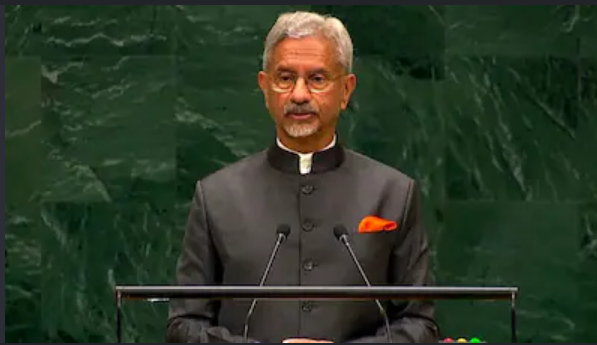
S Jaishankar calls Pakistan a “serial practitioner of terrorism” at UN
S Jaishankar criticised Pakistan at the UN General Assembly, referring to a “serial practitioner of terrorism” and warning against attempts to normalise terrorism.

Dhruv Rathee gets fresh summons in 2018 BJP IT cell video case

Nobody can browbeat judiciary, Chief Justice warns over Rahul Gandhi’s march

India-US trade deal first phase finalised, drafting underway

Election Commission orders voter roll revision in 17 states, UTs

Actor Imran Khan asked to leave India after CJP protest

Delhi Police offers 11-person limit for CJP’s Connaught Place protest
Actor Imran Khan asked to leave India after CJP protest
Election Commission orders voter roll revision in 17 states, UTs
India-US trade deal first phase finalised, drafting underway
Nobody can browbeat judiciary, Chief Justice warns over Rahul Gandhi’s march

Afghan Men Try To Hang With The Jet Engine Of The Aircraft in Kabul- Afghanistan News – Kabul News
Trending Top 10 News: 10000 Crore Fine on Flipkart, Apple to Launch Unique Feature, Hdfc Bank Job Ad

Trending Top 10 News: Nokia 6310, Apple sales, Bachpan ka Pyar Video Kid, Dainik Bhaskar IT Raid

Trending Top 10 News: Canada bans Indian flights, Rain in Delhi NCR, AIMIM Twitter hacked, Raj Kundra case

Trending Top 10 News: Shein India, Apple New Service, Pocket Oxygen, Oppo Launched New Phone
-
 India News19 hours ago
Dhruv Rathee gets fresh summons in 2018 BJP IT cell video case
-
 India News15 hours ago
Nobody can browbeat judiciary, Chief Justice warns over Rahul Gandhi’s march
-
 India News11 hours ago
India-US trade deal first phase finalised, drafting underway
-
 India News8 hours ago
Election Commission orders voter roll revision in 17 states, UTs
-
 India News8 hours ago
Actor Imran Khan asked to leave India after CJP protest
-
 India News7 hours ago
Delhi Police offers 11-person limit for CJP’s Connaught Place protest
