English हिन्दी
Connect with us

Latest world news

China dismisses India’s allegation of aiding Pakistan in Operation Sindoor

China has dismissed India’s allegations of extending military support to Pakistan during Operation Sindoor, calling the claim factually unverified and reiterating its neutral stance.

Published

on

In response to India’s claim that China supported Pakistan militarily during the recent Operation Sindoor, Beijing has denied any direct involvement, calling the assertions baseless and inconsistent with its diplomatic stance. The Chinese Foreign Ministry emphasized its standard policy of maintaining peaceful regional relations and reiterated that China-Pakistan cooperation is not directed against any third party.

China’s official response

Chinese Foreign Ministry spokesperson Mao Ning, addressing a press briefing on Monday, stated, “China and Pakistan are close neighbours enjoying traditional friendship. Defence and security cooperation is part of the normal cooperation between the two countries and does not target any third party.” She dismissed any claim suggesting China used the India-Pakistan clash as a testing ground for its military technology.

When specifically asked about allegations that China provided real-time intelligence to Pakistan during the May 7-10 conflict, Mao replied, “I am not sure how that allegation came about. Different people may have different perspectives.” She further added that China’s ties with Pakistan are rooted in long-standing cooperation and are not aimed at undermining other nations.

India’s claim on China’s indirect involvement


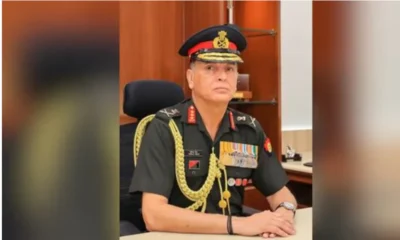
Indian Army’s Deputy Chief, Lt Gen Rahul R Singh, recently remarked at a seminar in New Delhi that while Pakistan acted as the frontline adversary, China was offering significant support behind the scenes. He suggested that China used its satellite capabilities to monitor Indian troop movement and that this information was possibly passed on to Pakistan in real time.

Gen Singh also pointed to Turkiye’s involvement, noting its role in supplying military equipment to Pakistan, and said India faced a three-front challenge during the hostilities in early May.

Background on Operation Sindoor


India launched Operation Sindoor on May 7, targeting terror camps in Pakistan-controlled territories, in retaliation for the April 22 terror attack in Jammu and Kashmir’s Pahalgam. The situation escalated into four days of conflict, which concluded with both countries agreeing to cease military actions on May 10 following communication between their Director Generals of Military Operations (DGMOs).

India maintains that its strong military retaliation forced Pakistan to seek a cessation of hostilities.

Pakistan denies foreign support


Pakistan, on its part, has refuted India’s claims. Army Chief General Asim Munir stated that insinuations about foreign support during Pakistan’s military response, dubbed Operation Bunyanum Marsoos, are “factually incorrect”. Speaking to graduating officers at the National Defence University, Islamabad, Munir said Pakistan’s success was a reflection of its indigenous capability and strategic preparedness.

China on relations with India


In a related context, Mao Ning acknowledged that the current phase of India-China relations is “critical”, but stressed that China is committed to fostering positive ties with New Delhi. “We stand ready to work with India to move bilateral relations forward on a sound and steady track,” she said.

Latest world news

Mojtaba Khamenei warns against expecting US policy shift after midterms

Iran’s Supreme Leader Mojtaba Khamenei has warned against expecting a change in US policy towards Tehran following the Democratic Party’s victory in the US midterm elections. He also cautioned that any renewed American attacks on Iran would widen the ongoing Middle East war.

Published

on

Mojtaba

Iran’s Supreme Leader Mojtaba Khamenei has warned against expecting a change in US policy towards Tehran following the Democratic Party’s victory in the US midterm elections. He said those hoping that political changes in Washington would lead to a shift in America’s approach towards Iran were seriously mistaken.

His remarks came after Democrats secured control of both the US House of Representatives and the Senate, dealing a major electoral setback to President Donald Trump and his Republican Party.

In a message posted on the social media platform X on Wednesday, November 4, Khamenei said Iranians understood their position towards the United States more clearly than ever. He also said that examining the reasons behind what he described as US hostility and Iran’s resistance would provide guidance for the country’s future course.

Khamenei cautioned against viewing changes in the political balance in Washington as an indication that American policy towards Iran would become less hostile.

Khamenei Warns Of Wider Middle East War

The Iranian Supreme Leader also warned that the ongoing Middle East war could expand further if the United States resumed its attacks on Iran.

“Should such aggressions be repeated, its (the war) scope will become much wider,” he said.

His warning comes amid continuing tensions between Washington and Tehran, with the conflict involving the two countries remaining a major issue in US politics.

Democrats Take Control Of Both Houses Of Congress

The Democratic Party secured control of both chambers of the US Congress in the midterm elections, marking a significant setback for Trump’s Republicans.

The party benefited from public dissatisfaction with Trump and gained greater power to scrutinise and challenge his administration during the final two years of his presidency.

Trump, meanwhile, struck a conciliatory tone in an interview with The New York Times, saying he was “absolutely willing to accept those results” and was prepared to work with Democrats.

Iran War Emerged As A Key Election Issue

The war involving Iran was among the major issues during the US midterm election campaign.

Democratic candidates criticised Trump over the conflict and linked it to economic difficulties that had contributed to frustration among voters across the country.

Khamenei’s remarks, however, indicated that Tehran does not expect the change in congressional control to result in a fundamental shift in Washington’s approach towards Iran.

Continue Reading

Latest world news

Trump says Republicans would have won US midterms if he was on ballot

US President Donald Trump claimed Republicans would have won the 2026 midterm elections in a landslide if he had been on the ballot, as Democrats made significant gains in key congressional contests.
Published

on

donald-trump

US President Donald Trump has reacted to the Republican Party’s setbacks in the 2026 US midterm elections, claiming that the party would have secured a landslide victory if he had been on the ballot.

Trump made the remark as Democrats registered significant gains in congressional contests, putting Republican control of Congress under pressure.

The November 3 midterm elections were widely seen as an important test of Trump’s presidency, with all 435 seats in the House of Representatives and 35 Senate seats up for election.

According to Trump’s assessment, his presence on the ballot would have changed the outcome for Republicans.

The President’s remarks came after Democrats made significant advances in several closely watched races, challenging Republican control of both chambers of Congress.

Democrats make gains in key congressional races

The election results indicated a strong performance by Democrats in several important contests.

In the Senate, Democrats flipped multiple Republican-held seats, including victories in Texas, South Carolina and Ohio. In the House of Representatives, Democratic candidates also defeated several Republican incumbents, bringing the party closer to securing a majority.

The developments raised the possibility of Democrats taking control of both chambers, although some contests were still being counted.

A change in congressional control would have significant implications for Trump’s remaining presidential term, potentially making it more difficult for his administration to advance its legislative agenda.

Why the 2026 US midterm elections matter

The US midterm elections take place halfway through a president’s four-year term. Unlike presidential elections, voters elect members of Congress, including representatives and a portion of the Senate.

The elections are particularly important because the party controlling Congress has considerable influence over legislation, government spending and oversight of the administration.

For Trump, the 2026 elections were a major political test as Republicans sought to maintain their congressional majorities.

Democratic gains could change the political balance in Washington during the final two years of his presidency.

Continue Reading

Latest world news

Trump approval rating near record low at 32% ahead of US midterms

US President Donald Trump’s approval rating remained at 32% ahead of the congressional midterm elections, just above his record-low reading of 31% recorded two weeks earlier, according to a nationwide poll.
Published

on

Donald Trump

US President Donald Trump’s approval rating remained close to its lowest level ahead of Tuesday’s congressional midterm elections, with a nationwide poll indicating that a significant section of American voters viewed their ballots as an opportunity to express opposition to the Republican leader.

According to the latest poll completed on Monday, November 2, only 32% of respondents approved of the job Trump was doing as President. The figure was unchanged from the previous week and just one percentage point above his record-low reading of 31%, recorded two weeks earlier.

The findings come as Republicans seek to retain their majorities in Congress, with all 435 seats in the House of Representatives up for grabs and several closely contested races expected to shape the Senate.

Although Trump himself is not on the ballot, his presidency has emerged as a significant factor in the midterm elections.

Democrats lead Republicans in nationwide congressional preference

The poll found that Democrats held an eight-percentage-point advantage over Republicans when respondents were asked which party they preferred to see in charge of Congress.

Around 46% of respondents favoured Democrats, compared with 38% who preferred Republicans.

However, the Democratic lead was narrower than the 11-percentage-point advantage recorded in a similar poll conducted a week earlier.

The so-called generic ballot question provides an overall indication of voters’ preferences between the two parties for control of Congress. However, it does not account for differences between individual states and congressional districts, which ultimately determine the composition of the House and Senate.

Political strategists from both parties believe Democrats have a stronger opportunity to take control of the House of Representatives. Their prospects in the Senate are considered more difficult, with the party facing challenges in states including Alaska and Michigan.

Half of independent voters see their vote as opposition to Trump

The survey also highlighted the extent to which Trump is influencing voters’ decisions despite not contesting the election himself.

Among registered independent voters, 50% said they viewed their congressional vote as a vote against Trump.

In comparison, 13% said their vote was in support of the President, while 33% said Trump was not a factor in their voting decision.

These findings indicate that voters’ views of the President are an important consideration for a section of the electorate heading into the congressional elections.

Rising cost of living emerges as a major election issue

Economic concerns, particularly the rising cost of living, featured prominently in the poll.

Around 78% of respondents said the cost of living would be either a very important or the most important issue in determining their voting decisions.

When asked which party was better equipped to handle the issue, 43% chose Democrats, compared with 32% who favoured Republicans.

The poll also pointed to concerns over rising fuel prices following the US military campaign against Iran, which began in February.

The increase in fuel prices has added to the economic challenges facing the Trump administration ahead of the elections.

Democrats report greater enthusiasm about voting

The survey also found a difference in voting enthusiasm between supporters of the two major political parties.

Around 49% of Democratic voters said they were very enthusiastic about voting in the midterm elections.

Among Republican voters, the corresponding figure stood at 33%.

The difference in enthusiasm is an important factor for both parties as they seek to mobilise their supporters and secure votes across the country.

The latest poll surveyed 1,765 US adults online and had a margin of error of two percentage points.

Continue Reading

Trending

© Copyright 2022 APNLIVE.com