English हिन्दी
Connect with us

Latest world news

Five news stations receive letter bombs in Ecuador, one explodes in journalist’s face

Minister says the bombs were sent as a clear message to silence journalists in violence-ridden Ecuador


Published

on

Police officials searching for bombs in a new station in Ecuador

Ecuadorean authorities have reported that a series of letter bombs were mailed to five different TV and radio new stations in Ecaudor. The explosive devices were delivered to journalists on Monday, March 20.

Interior Minister Juan Zapata informed that one of these letters exploded in Guayaquil’s Ecuavisa private TV station. The bomb burst in the middle of the newsroom in presenter Lenin Artieda’s face. He was injured but not severely. Lenin informed the police that the device was structured like a USB drive, and it exploded as he plugged it into his computer.

Zapata added that all the devices were similar and sent from the town of Quimsaloma, on the Los Rios coast. The Ecuadorean attorney-general’s department has begun their investigation on the letters as an act of terrorism. Journalists have said that the bombs were sent to intimidate the free press and silence the media.

 Zapata also said that the government condemns such attacks and freedom of expression is a right that must be respected. The other four explosives sent through post never exploded as they failed or were never opened.

Police officer Xavier Chango informed the USB drive sent to Artieda seemed to be loaded with a military-type explosive RDX.

Ecuador lies between Colombia and Peru, the world’s two largest cocaine producers, and has become a hub for global drug trade in the recent years. The increased violence is a result of competition and clashes between drug criminal gangs for territory and charge.

In 2022, the RTS TV station came under gunfire attack and in 2020, a bomb exploded at Teleamazonas. President Guillermo Lasso had declared war on the gangs controlling drug trade from prisons, and has led to the death of more than 400 inmates since 2021. Ecuador’s murder rate has jumped from 14 per 100,000 inhabitants in 2021 to 25 per 100,000 in 2022.

Two local gangs, the Lobos and Los Tiguerones, working with Mexico’s Jalisco New Generation cartel, have been responsible for these deadly prison riots. The Jalisco cartel is considered one of the five most dangerous criminal organizations in the world and its leader, Nemesio Oseguera, aka El Mencho, is among the most wanted by both Mexican and U.S. authorities.

Latest world news

Will Russian oil imports be cut? India reiterates energy security as top priority

India has reiterated that its energy security needs remain paramount, even as the US pushes for a halt to Russian oil imports and links trade concessions to energy sourcing.

Published

on

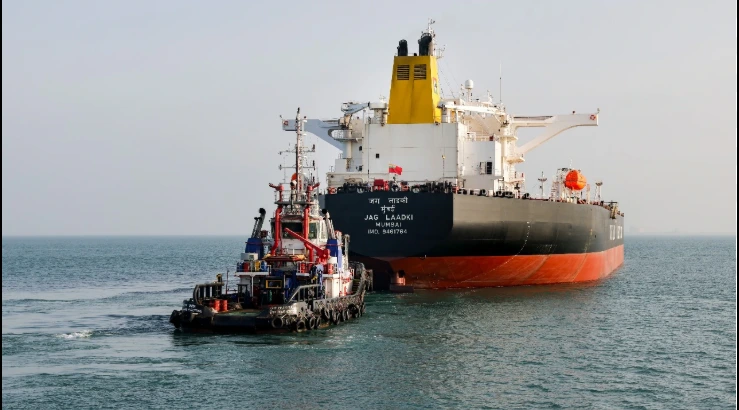
India has reiterated that its energy security requirements will continue to guide decisions on crude oil imports, amid renewed pressure from the United States to halt purchases from Russia.

Responding to questions on India’s oil sourcing strategy, the Ministry of External Affairs (MEA) said the country’s priority remains meeting the energy needs of its 1.4 billion population. The government emphasised that diversification of energy supplies is central to ensuring stable and affordable access to fuel.

“Insofar as India’s energy sourcing is concerned, ensuring the energy security of 1.4 billion Indians is the supreme priority of the government,” MEA spokesperson Randhir Jaiswal said during a press briefing.

He added that India’s approach involves sourcing energy in line with market conditions and evolving global dynamics, a position the government has consistently articulated over time.

US pressure and tariff rollback linked to trade framework

The remarks come after the White House stated that India had committed to stopping direct or indirect imports of Russian oil and would instead increase purchases from the United States. This claim formed part of the context under which Washington decided to withdraw additional tariffs earlier imposed on Indian goods over New Delhi’s purchases of Russian crude.

The US has repeatedly argued that revenues from Russian oil exports are being used to fund the ongoing war in Ukraine, an allegation that Moscow has denied.

India, however, has not announced any formal change in its oil import policy and has continued to stress that energy decisions are driven by national interest.

Russia says India free to choose suppliers

The Kremlin has also weighed in on the issue, saying India is free to procure oil from any source it chooses. Kremlin spokesperson Dmitry Peskov noted that Russia is not India’s sole supplier of oil and petroleum products.

“India has always purchased these products from other countries. Therefore, we see nothing new here,” Peskov said.

Trade deal outlines tariff changes on both sides

Under the broader trade framework with the US, India has agreed to eliminate or reduce tariffs on all US industrial goods and a wide range of agricultural and food products. These include dried distillers’ grains, red sorghum for animal feed, tree nuts, fresh and processed fruits, soybean oil, as well as wine and spirits.

In return, the US will impose a reciprocal tariff of 18 per cent on Indian-origin goods under the relevant executive order. The tariff will apply to sectors such as textiles and apparel, leather and footwear, plastics and rubber, organic chemicals, home decor, artisanal products, and certain categories of machinery.

Continue Reading

Latest world news

PM Modi thanks President Trump, says India-US trade framework reflects strong partnership

PM Modi said the India-US interim trade framework reflects growing trust between the two countries and offers tariff relief and new opportunities for Indian exporters.

Published

on

Modi trump

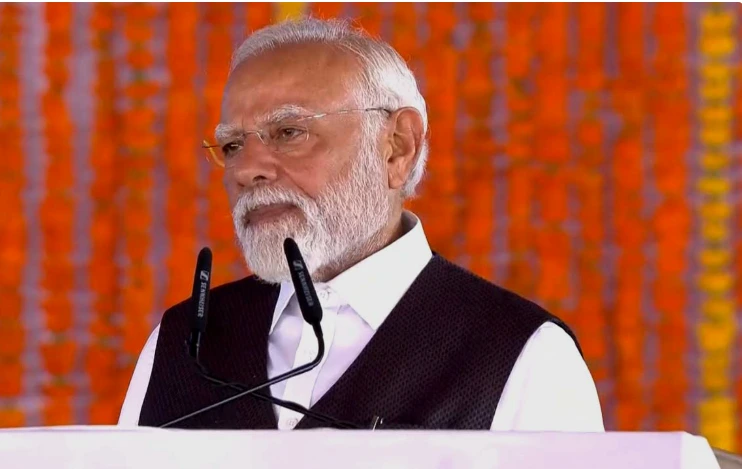
Prime Minister Narendra Modi has welcomed the newly announced interim trade framework between India and the United States, describing it as a reflection of the “growing depth, trust and dynamism” in bilateral relations.

The Prime Minister said the agreement highlights US President Donald Trump’s “personal commitment to robust ties between our countries” and opens up fresh opportunities across multiple sectors of the Indian economy.

Under the framework, the United States will apply a reciprocal tariff rate of 18 per cent on Indian goods. The uniform rate places India in a comparatively stronger position than several countries in the region and provides a competitive advantage for Indian exporters.

Focus on employment, innovation and supply chains

In a post on X, PM Modi said the interim framework is expected to generate large-scale employment, particularly for women and young people. He added that the agreement would deepen cooperation in investment and technology while strengthening resilient and trusted supply chains.

According to the Prime Minister, both countries share a commitment to promoting innovation, and the framework would contribute to global economic growth by enhancing trade and industrial collaboration.

Key sectors set to benefit from tariff relief

The 18 per cent tariff rate is expected to support Indian exporters in sectors such as textiles, apparel, leather goods, chemicals and engineering products. The framework also strengthens India’s position against regional competitors that rely heavily on cost-based exports.

The agreement further opens a path to tariff removal on a wide range of Indian goods, including generic pharmaceuticals, gems and diamonds, and aircraft parts. These sectors already have a strong global presence and face steady demand in the US market.

Washington will also remove tariffs on certain Indian aircraft and aircraft components, while India will receive a preferential tariff rate quota for automotive parts. However, outcomes related to generic drugs and pharmaceutical ingredients will depend on the findings of a US Section 232 investigation.

Preferential market access beyond tariffs

Beyond tariff measures, both countries have agreed to provide preferential market access in sectors of sustained mutual interest, marking another step toward closer economic cooperation under the interim framework.

Continue Reading

Latest world news

Suicide bombing at Islamabad imambargah kills 69, over 160 injured

At least 69 people were killed after a suicide bomber detonated explosives at a Shia shrine in Islamabad’s Shehzad Town area, triggering a city-wide emergency.

Published

on

Suicide bombing at Islamabad Shrine

A suicide bombing at a Shia place of worship in Pakistan’s capital Islamabad left at least 69 people dead and more than 160 injured on Friday, according to media reports.

The explosion took place at Tarlai Imambargah, located in the Shehzad Town area, when a suicide bomber detonated explosives near the main gate of the shrine during afternoon hours.

Attacker stopped at entrance, officials say

Security officials were quoted as saying that the attacker was intercepted by guards at the entrance, preventing him from entering the main hall where worshippers had gathered. Despite this, the blast caused extensive damage to the gate and nearby structures.

Visuals from the scene showed shattered windows of surrounding buildings and debris scattered across the road following the explosion.

Emergency declared, injured shifted to hospitals

Following the blast, the Islamabad Inspector General of Police declared a city-wide emergency, as rescue and law enforcement teams rushed to the site amid fears of high casualties.

The injured were shifted to Pakistan Institute of Medical Sciences (PIMS) and Polyclinic Hospital for treatment.

Prime minister condemns attack

Pakistan Prime Minister Shehbaz Sharif expressed deep grief over the attack and strongly condemned the bombing at the Shiite mosque in Islamabad.

In a statement, he said the incident was a tragic act of violence and offered condolences to the families of those killed. Official statements noted that dozens were injured in the attack, with treatment ongoing at city hospitals.

Previous attack referenced

The incident comes less than three months after a suicide blast outside a district and sessions court building in Islamabad on November 11, 2025, in which 12 people were killed and over 30 injured.

Continue Reading

Trending

© Copyright 2022 APNLIVE.com