
Latest world news
GCC Summit cuts short, delegates leave without any major breakthrough

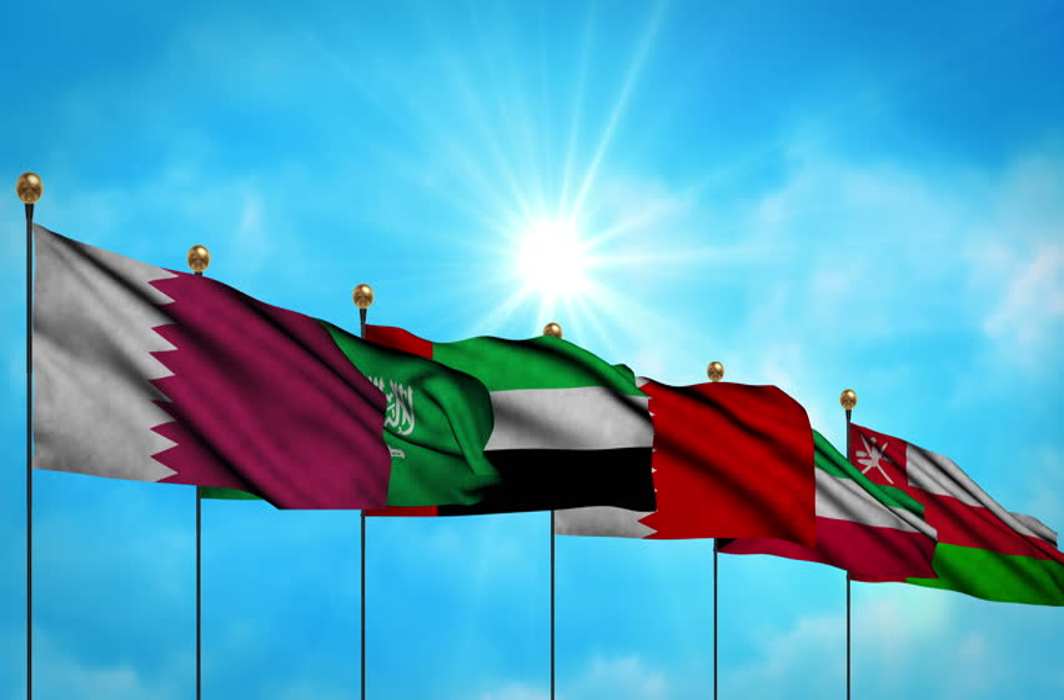
[vc_row][vc_column][vc_column_text]Saudi Arabia-UAE forms separate military-trade partnership
In a fast moving development in Middle East, the much awaited GCC summit was cut short by a day due to ongoing diplomatic rift on Tuesday while rulers of three boycotting countries Saudi Arabia, Bahrain and UAE skipped the event. Moreover Saudi Arabia and UAE have formed a new military and trade partnership separate from GCC.
Aljazeera reports that all the delegates will be leaving Kuwait after a closed door session on Tuesday. Qatar’s Emir Sheikh Tamim bin Hamad Al-Thani was the only head of state touching down at Kuwait airport on Tuesday.
Saudi Arabia’s foreign Minister Adel Al-Jubeir, Oman’s Deputy PM for cabinet affairs Fahad bin Mahmoud Al-Saeed and Bahrain’s Deputy Pm Sheikh Mohammad bin Mubarak Al-Khalifa reached Kuwait for participating in the summit on Tuesday. This marked the lowest attendance at any GCC summit since its inception in 1981.
The preparatory ministerial level meeting could not set the agenda and priorities on Monday for the summit meeting scheduled for Tuesday.
The announcement of UAE and Saudi Arabia forming a new military and trade partnership separate from GCC came early on Tuesday ahead of Gulf Cooperation Council (GCC) summit. The statement issued by UAE foreign ministry said that country’s ruler and president Sheikh Khalifa bin Zayed Al Nahyan has approved the proposal.
The UAE foreign ministry statement says that the new committee “is assigned to cooperate and coordinate between the UAE and Saudi Arabia in all military, political, economic, trade and cultural fields, as well as others, in the interest of the two countries”.
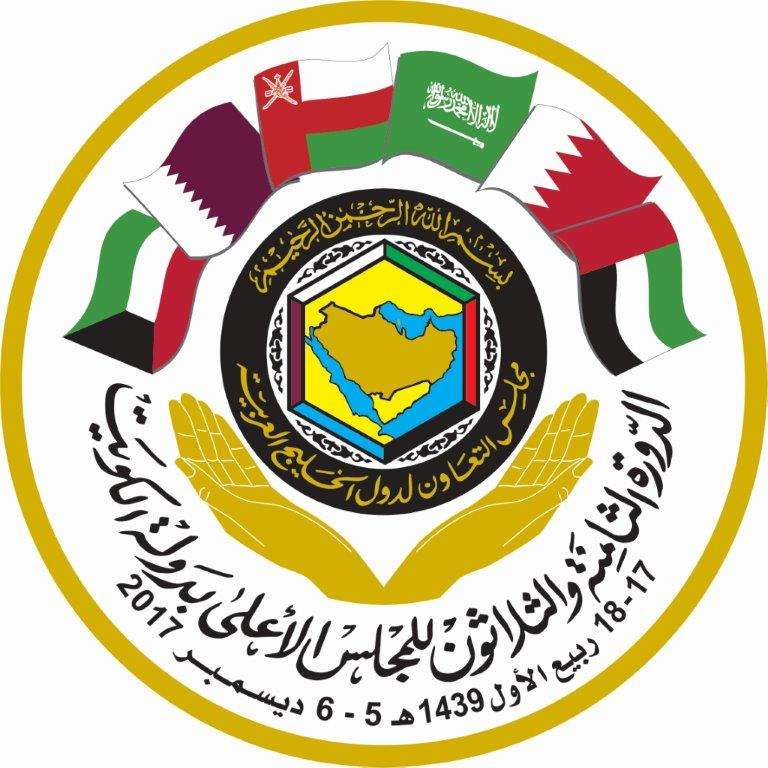
However, Saudi authorities have not yet announced about the new joint move with UAE.
The Kuwait’s official news agency KUNA carried a curtain raiser on Tuesday morning saying that “GCC will kick off its summit amid aspirations to maintain further stability, security and integration amongst its member nations.”
It further elaborated that “participants are set to discuss several matters at the two day session, including regional and international developments, particularly political and security challenges.”
The GCC, which was established in the early years of Iraqi imposed war on Iran (1980-88), has been passing through unprecedented crisis after June 5, when Saudi Arabia, UAE, Bahrain and Egypt severed their ties with Qatar.
Jaman Elshayyal, Aljazeera correspondent reports from Kuwait that the new partnership “would be seen a very antagonising towards the GCC as an organisation, an organisation that has been under threat very much because of the actions of Saudi Arabia and the UAE in terms of imposing a blockade which has gone on for six months now”.
Volatile relationship among Saudi Arabia, Kuwait and Oman were felt once again on Monday evening while Yemen’s Ansarullah leader Abdul Malik al-Houthi warned foreign investors to leave Saudi Arabia and UAE and advised them to invest in Kuwait, Oman and Yemen’s capital Sana’a for conducting secure business.
Houthis were facing aerial campaign from Saudi-led coalition for over two years and are considered to be pro-Iran and Hezbollah. Houthi leader’s recommendation in favor of Kuwait and Oman carry lot of meaning in the regional diplomacy.
In October, Kuwait’s emir Sheikh Sabah Al Ahmad Al Sabah, who was engaged in mediating in the Qatar crisis, warned of the potential collapse of the GCC.
Around the same time, Bahrain’s King al Khalifa had indicated that his country would not take part in any summit or meeting attended by Qatar unless it “corrects its approach”.
Despite that Qatar’s emir had agreed to resolve the crisis through dialogue but blockading Saudi-led quartet did not accept the proposal.
Killing of Saudi ally and former president of Yemen Ali Abdullah Saleh at the hands of Houthis has also created new complex situation in the region. Saudi sponsored resignation of Lebanese Prime Minister Saad Hariri could not get the desired result as well.
Washington Post, while reporting the developments surrounding the summit says, that only organizing summit won’t be enough “to salvage the GCC, a group of American allied Gulf Arab nations formed in part in 1981 as a counterbalance to Shiite power Iran.”
It also indicated that US and its European allies have told GCC members that region remains stronger with them working together as a whole, while “the countries themselves still appear divided” over their future.[/vc_column_text][/vc_column][/vc_row]





Latest world news
S Jaishankar says India is a natural option for Russia amid Europe tensions
External Affairs Minister S Jaishankar said India remained a natural option for Russia as Moscow increasingly turned towards Asia amid strained relations with Europe. He highlighted the continuity of India-Russia ties and their significance for the balance of power in Asia.


Latest world news
Putin praises PM Modi, says he has very good ideas on Ukraine war
Russian President Vladimir Putin has praised Prime Minister Narendra Modi for repeatedly raising the need to end the Ukraine war, describing his ideas for a settlement as “very good”.

Latest world news
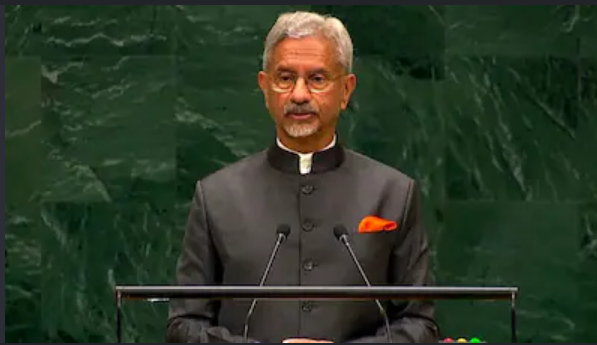
S Jaishankar calls Pakistan a “serial practitioner of terrorism” at UN
S Jaishankar criticised Pakistan at the UN General Assembly, referring to a “serial practitioner of terrorism” and warning against attempts to normalise terrorism.

L Murugan quits Union ministry to strengthen BJP in Tamil Nadu

Rahul Gandhi hosts high tea for INDIA bloc after Gyanesh Kumar protests

Amit Shah attacks Rahul Gandhi over Congress poll losses, questions SIR row

BJP focuses on religion as opposition pushes BDM strategy in UP

CJP leaders Saurav Das, Ashutosh Ranka, Ajinkya Shinde sent to 5-day judicial custody

PM Modi speaks to Mark Carney as India and Canada push to strengthen ties

S Jaishankar says India is a natural option for Russia amid Europe tensions
CJP leaders Saurav Das, Ashutosh Ranka, Ajinkya Shinde sent to 5-day judicial custody
BJP focuses on religion as opposition pushes BDM strategy in UP
L Murugan quits Union ministry to strengthen BJP in Tamil Nadu

Afghan Men Try To Hang With The Jet Engine Of The Aircraft in Kabul- Afghanistan News – Kabul News
Trending Top 10 News: 10000 Crore Fine on Flipkart, Apple to Launch Unique Feature, Hdfc Bank Job Ad

Trending Top 10 News: Nokia 6310, Apple sales, Bachpan ka Pyar Video Kid, Dainik Bhaskar IT Raid

Trending Top 10 News: Canada bans Indian flights, Rain in Delhi NCR, AIMIM Twitter hacked, Raj Kundra case

Trending Top 10 News: Shein India, Apple New Service, Pocket Oxygen, Oppo Launched New Phone
-
 India News18 hours ago
L Murugan quits Union ministry to strengthen BJP in Tamil Nadu
-
 India News19 hours ago
Rahul Gandhi hosts high tea for INDIA bloc after Gyanesh Kumar protests
-
 India News19 hours ago
Amit Shah attacks Rahul Gandhi over Congress poll losses, questions SIR row
-
 India News17 hours ago
BJP focuses on religion as opposition pushes BDM strategy in UP
-
 India News7 hours ago
CJP leaders Saurav Das, Ashutosh Ranka, Ajinkya Shinde sent to 5-day judicial custody
-
 Latest world news6 hours ago
S Jaishankar says India is a natural option for Russia amid Europe tensions
-
 India News6 hours ago
PM Modi speaks to Mark Carney as India and Canada push to strengthen ties
