
Latest world news
Imran Khan Face Tough Challenge after SC Verdict On Asia Bibi


SC verdict acquitting Christian woman Asia Bibi triggered protests
Pakistan seems to have been plunged into a fresh crisis on Wednesday when nation-wide protests erupted following Supreme Court’s verdict to acquit Asia Bibi, a Christian woman, who was sentenced to death by lower court and confirmed by Lahore High Court on charges of committing blasphemy.
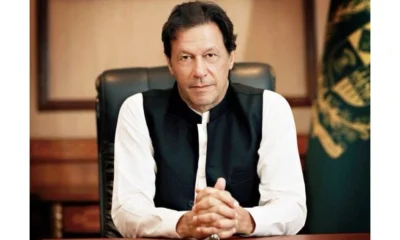
Prime Minister Imran Khan was forced to issue a stark warning to religio-political groups that have been agitating against the apex court verdict. He addressed the matter in a short video message focused on the Asia Bibi verdict and its aftermath. The message was broadcast on state-run Pakistan TV.
Dressed in a gray Pathani suit, cricketer turned politician said he had been “compelled” to communicate with the nation due to the reaction given and language used by a “small segment” in response to the court verdict.
Ina painstaking manner Khan addressed the basic ideology of establishing Pakistan. He said the country was founded “in the name of Islam” and the verdict given by the SC is in accordance with the Constitution, which is in line with the teachings of the Holy Quran and Sunnah, the traditions of Prophet Mohammad.
 He sharply criticised the protests that broke out, and are still underway, across the country in response to the judgement, saying people’s livelihood was being harmed through the roadblocks and demonstrations.
Read More: Saudi Extends Bail-Out- Package To Debt Ridden Pakistan
The premier regretted the language used by hardliners against SC judges, the raising of questions against the army chief’s faith and the call for a rebellion amongst the armed forces.
Prime Minister Imran Khan assures that state will fulfill its responsibility of protecting the lives and properties of people and take strict action against violators.#PMIKAddress pic.twitter.com/JstqzL1SG4
— Govt of Pakistan (@pid_gov) October 31, 2018
“It is my belief that the principles on which Pakistan was founded… if they are not adhered to Pakistan has no future. Our faith is incomplete if we don’t love our Prophet [PBUH],” he said, and highlighted his government’s efforts to fight blasphemous content.
“Which government can function when people say that kill the judges, rebel against the army chief?” he questioned.
Describing the financial woes the country is passing through, Imran Khan said, “We are already facing such tough economic hurdles. My cabinet and I have yet to take a day off… we are struggling continuously to uplift the people [and] to improve the conditions of the underprivileged.”
 Read More: Pakistan Alleges India of Delaying Visit To Power Projects In Kashmir
Criticising the protesters who have disrupted normal life across the country, he said: “If the Supreme Court does not issue a verdict according to their wishes, does that mean they will come out on the roads and paralyse the country? The people are to bear the brunt of this. The labourers who are reliant on daily wages… how will they feed their children?”
Reacting to Supreme Court’s verdict acquitting Asia Bibi, Tehreek-e-Labbaik Pakistan (TLP), Hafiz Saeed led Jamaatud Dawa, Jamiat-e-Ulema and several other religious-political organizations organised huge violent protests and blocked vehicular traffic in several important cities.
Thursday also witnessed the continuing protests in various parts of the country.
Meanwhile, Chief Justice of Pakistan Mian Saqib Nisar, reacting to the situation arisen after the court’s ruling, said on Thursday that how the court punish someone in the absence of proof. “We can sacrifice our lives for the Prophet Muhammad (peace be Upon Him). But how we can punish someone when there is no ground to build a case against them,” he said.






Latest world news
Top US counterterrorism official resigns over Iran war, cites conscience
Joseph Kent steps down as US counterterrorism chief, questioning the justification for the Iran war and citing moral concerns.


Latest world news
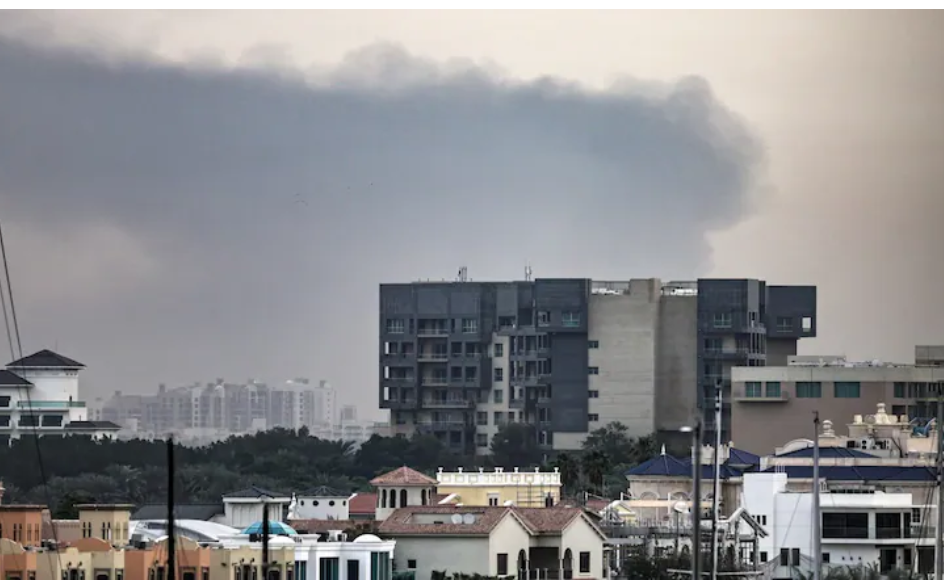
Fire near Dubai International Airport after drone incident, flights temporarily suspended
Flights at Dubai International Airport were temporarily suspended after a drone-related incident caused a fuel tank fire near the facility. Authorities confirmed the blaze was contained and no injuries were reported.

Latest world news
Dubai hit again within 24 hours as debris strikes building, drone targets US embassy in Baghdad
A building in Dubai’s financial hub was struck by debris from an intercepted attack while a drone targeted the US embassy in Baghdad, officials said.

Om Birla likely to move motion to revoke suspension of 8 opposition MPs today

Pakistan airstrike allegations on Kabul hospital leave hundreds dead, claims Taliban

Mamata Banerjee writes to poll chief over officers’ reshuffle, calls move arbitrary

Maharashtra passes freedom of religion bill with jail term up to 10 years

Centre assures action on LPG supply disruption, court closes distributors’ plea

Top US counterterrorism official resigns over Iran war, cites conscience

Mamata Banerjee warns BJP, EC over Bengal polls, says they will be accountable
Centre assures action on LPG supply disruption, court closes distributors’ plea
Om Birla likely to move motion to revoke suspension of 8 opposition MPs today
Maharashtra passes freedom of religion bill with jail term up to 10 years

Afghan Men Try To Hang With The Jet Engine Of The Aircraft in Kabul- Afghanistan News – Kabul News
Trending Top 10 News: 10000 Crore Fine on Flipkart, Apple to Launch Unique Feature, Hdfc Bank Job Ad

Trending Top 10 News: Nokia 6310, Apple sales, Bachpan ka Pyar Video Kid, Dainik Bhaskar IT Raid

Trending Top 10 News: Canada bans Indian flights, Rain in Delhi NCR, AIMIM Twitter hacked, Raj Kundra case

Trending Top 10 News: Shein India, Apple New Service, Pocket Oxygen, Oppo Launched New Phone
-
 India News16 hours ago
Om Birla likely to move motion to revoke suspension of 8 opposition MPs today
-
 India News18 hours ago
Pakistan airstrike allegations on Kabul hospital leave hundreds dead, claims Taliban
-
 India News17 hours ago
Mamata Banerjee writes to poll chief over officers’ reshuffle, calls move arbitrary
-
 India News17 hours ago
Maharashtra passes freedom of religion bill with jail term up to 10 years
-
India News8 hours ago
Centre assures action on LPG supply disruption, court closes distributors’ plea
-
 India News6 hours ago
Mamata Banerjee warns BJP, EC over Bengal polls, says they will be accountable
-
 Latest world news6 hours ago
Top US counterterrorism official resigns over Iran war, cites conscience
