English हिन्दी
Connect with us

Latest world news

India rejects Hague court proceedings on Indus Waters Treaty

India has reiterated it will not participate in Hague arbitration proceedings under the Indus Waters Treaty, stating the agreement remains in abeyance following the Pahalgam attack.

Published

on

Indus Water Treaty

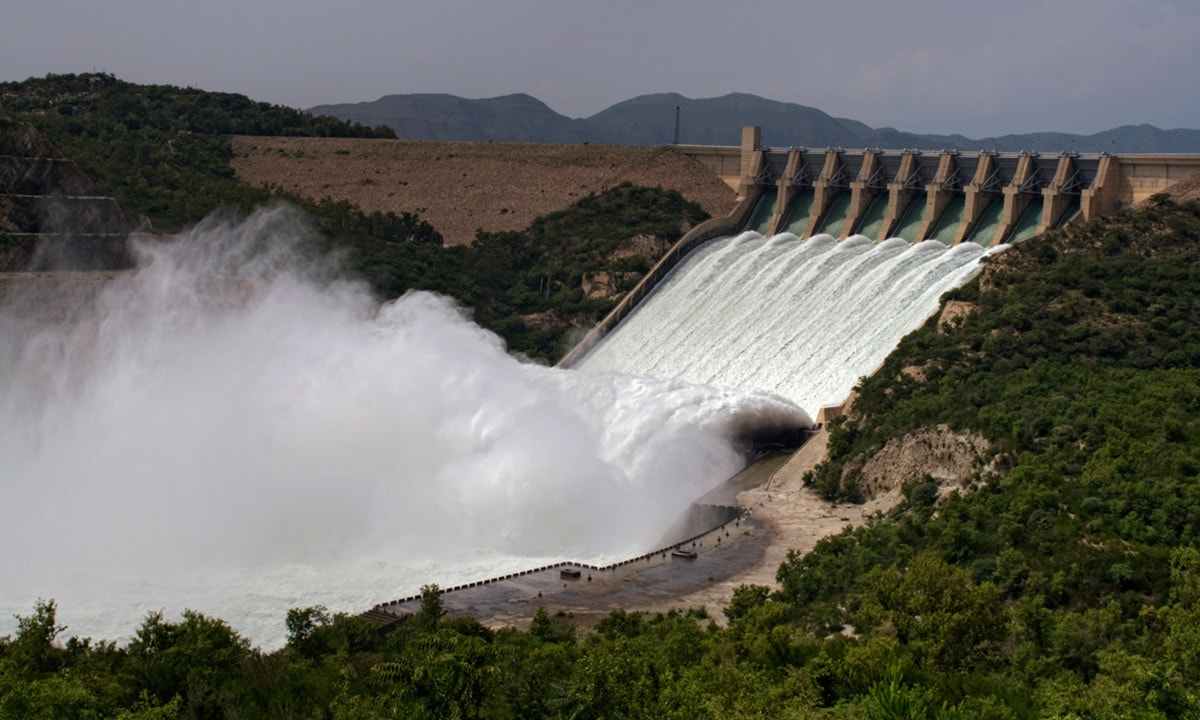
India has reiterated its refusal to recognise or participate in proceedings initiated by a Court of Arbitration in The Hague under the Indus Waters Treaty framework, asserting that the treaty itself remains in abeyance following the Pahalgam terror attack last year.

Despite the arbitration court moving ahead with fresh hearings and procedural orders, New Delhi has made it clear that it does not consider the panel legally constituted and will not respond to its communications.

India dismisses court orders as illegitimate

The latest development centres on an order issued by the Court of Arbitration directing India to submit operational pondage logbooks of the Baglihar and Kishanganga hydroelectric projects. The documents were sought as part of what the court described as the “second phase on the merits” of the dispute.

Hearings have been scheduled for February 2 and 3 at the Peace Palace in The Hague. The court has noted that India has neither filed counter submissions nor indicated its participation in the process.

However, government sources said the arbitration panel was “so-called and illegally constituted” and accused it of conducting parallel proceedings alongside the neutral expert mechanism prescribed under the treaty. According to the sources, India does not acknowledge the court’s authority and therefore does not engage with its directions.

They further stated that since the Indus Waters Treaty has been placed in abeyance, India is under no obligation to respond to such requests, describing the move as an attempt by Pakistan to draw New Delhi back into the process.

Treaty placed in abeyance after Pahalgam attack

India’s decision to suspend the treaty dates back to April 23, 2025, a day after a terror attack in Pahalgam claimed the lives of 26 civilians. The government formally placed the six-decade-old water-sharing agreement in abeyance, linking cooperation under the treaty to Pakistan’s continued support for cross-border terrorism.

The move marked a significant shift in policy, signalling that bilateral arrangements could not operate independently of security considerations.

Pakistan escalates international outreach

Since the decision, Pakistan has stepped up diplomatic and legal efforts, approaching international forums, sending delegations abroad and initiating multiple legal actions to challenge India’s stance.

The Indus river system remains critical for Pakistan’s economy, with a large share of its agriculture dependent on its waters. Limited storage capacity and stressed reservoirs have further heightened Islamabad’s concerns, turning what was once a technical dispute into a strategic issue.

Neutral expert versus arbitration court

Under the treaty’s dispute resolution mechanism, technical disagreements are to be examined by a neutral expert, while legal disputes may be referred to a Court of Arbitration. India has consistently maintained that the current issues fall within the technical domain and has accused Pakistan of forum shopping by activating arbitration proceedings.

The arbitration court has, however, proceeded with the case, stating that India’s position on suspending the treaty does not affect its competence. It has also warned that adverse inferences could be drawn if India fails to comply with its directions.

New Delhi rejects this interpretation and continues to recognise only the neutral expert process, viewing attempts to link the two mechanisms as illegitimate.

Strategic standoff continues

Officials believe the ongoing proceedings in The Hague, conducted without India’s participation, are unlikely to result in binding outcomes. Instead, they see the situation as part of a broader strategic contest, with India choosing disengagement and Pakistan seeking internationalisation of the dispute.

India has consistently maintained that treaties cannot function in isolation from ground realities and that cooperation will remain suspended until what it describes as persistent hostility is addressed.

Latest world news

Bangladesh’s BNP seeks stronger India ties based on mutual respect

Bangladesh’s new BNP-led government has signalled a diplomatic reset with India, emphasising mutual respect, trade and broader people-to-people engagement.

Published

on

Tarique Rehman

The newly elected government in Bangladesh, led by Tarique Rahman and the Bangladesh Nationalist Party (BNP), has expressed its intent to strengthen ties with India through mutual respect, trade and deeper people-to-people engagement.

Humayun Kabir, who oversees international relations for Rahman and is expected to play a key role in the new administration, said the focus will be on building stronger cooperation between citizens of both countries rather than limiting ties to official exchanges.

He indicated that India would be among the countries the new leadership plans to visit, though no specific timeline was shared. “Obviously there are certain domestic priorities and then international engagements. Of course India will be one of the countries that we will visit among other countries in the region,” Kabir said in an interaction with media.

Expanding engagement beyond official visits

Kabir underlined the importance of expanding the scope of bilateral relations beyond high-level diplomatic visits. While acknowledging that reciprocal visits between senior officials are a normal feature of ties between neighbouring nations, he stressed the need to widen engagement across broader sections of society.

He said the BNP-led government intends to deepen cooperation through trade and investment while strengthening grassroots-level connections.

On regional balance and Pakistan ties

Responding to questions about Bangladesh’s approach towards Pakistan during the interim administration led by Muhammad Yunus, Kabir said Dhaka’s foreign policy would not be guided by choosing sides in regional tensions.

“It’s normal and we need to normalise relations in the region and regardless of the tensions between India and Pakistan, for us it is not to take sides on this issue,” he said, adding that relations would be shaped by mutual respect and national interest.

Kabir also criticised former prime minister Sheikh Hasina, alleging that her foreign policy approach was perceived as one-sided in its engagement with India. He said the new government seeks to avoid what he described as a country-centric or country-dependent model of diplomacy.

New Delhi’s cautious optimism

From India’s perspective, the decisive electoral outcome in Bangladesh, which delivered a landslide to the BNP, marks the end of the interim phase and opens the possibility of a diplomatic reset.

Indian officials are said to be cautiously optimistic about engaging with Rahman’s leadership. While acknowledging past differences with BNP governments, New Delhi believes the new administration may adopt a pragmatic approach shaped by economic priorities and regional stability concerns.

Continue Reading

Latest world news

Finland PM Petteri Orpo to attend India AI Impact Summit, meet PM Modi

Finland Prime Minister Petteri Orpo will visit India from February 17 to 20 to attend the AI Impact Summit and hold bilateral talks with PM Narendra Modi.

Published

on

finland pm modi

Petteri Orpo will travel to India from February 17 to 20 to participate in the India AI Impact Summit and hold bilateral discussions with Narendra Modi.

Prime Minister Orpo is scheduled to meet PM Modi on February 18. He will also attend the India AI Impact Summit on February 19, which is being hosted in New Delhi.

The Finnish Prime Minister is accompanied by a business delegation comprising representatives of 22 Finnish companies. According to an official release, the visit aims to strengthen cooperation between the two countries, particularly in digitalisation and sustainability.

Focus on AI governance and innovation

The India AI Impact Summit, being held from February 16 to 20 at Bharat Mandapam, will bring together Heads of State and Government, international organisations, AI experts and leading companies from across the globe.

The summit is designed to promote a shared understanding of global AI governance principles and foster international cooperation. Prime Minister Orpo had also taken part in the AI Action Summit in Paris in 2025.

“At the summit, we will highlight Finland’s strengths in the fields of AI policy and innovation. Finland has world-class expertise in AI and the potential to lead the way in its use. At the same time, we will also promote the safe and responsible use of AI,” Orpo said, according to the release.

He noted that geopolitical and economic competition is intensifying, underlining the need for Finland to remain active in global technology discussions. He also emphasised cooperation with like-minded countries while seeking broader international consensus.

During the summit, Orpo will deliver Finland’s national address, visit country pavilions and participate in side events organised by the Finnish Innovation Fund Sitra and National Association of Software and Service Companies. The programme also includes a dinner hosted by PM Modi and other high-level engagements.

Strategic partnership and trade opportunities

The release highlighted India’s growing global role and described bilateral ties as strong and expanding. The inauguration of Finland’s new Consulate General in Mumbai in 2022 was cited as a significant step in strengthening engagement.

Orpo said Finland aims to deepen cooperation with India in the areas of digitalisation and sustainability, reinforcing the new strategic partnership between the two nations.

He also referred to the conclusion of negotiations on the EU-India Free Trade Agreement on January 27, 2026. Talks on the agreement had been underway since 2007, with some interruptions. The pact is expected to improve access for European companies to India’s expanding market and enhance the broader EU-India partnership.

Summit structure and agenda

The India AI Impact Summit will revolve around three pillars — People, Planet and Progress. Discussions will focus on employment and skilling, sustainable and energy-efficient AI, and economic as well as social development.

Seven thematic working groups, co-chaired by representatives from the Global North and Global South, will present deliverables such as proposals for AI Commons, trusted AI tools, shared compute infrastructure and sector-specific AI use case compendiums.

The event will also address AI safety, governance, ethical use, data protection and India’s approach to sovereign AI, including the development of indigenous foundation models for strategic sectors.

An AI Impact Expo will showcase practical AI applications in healthcare, agriculture, education, climate action, energy efficiency and accessibility. The summit will further spotlight national skilling initiatives, including “Yuva AI for All”, a free course aimed at building basic AI awareness among students and professionals.

Continue Reading

Latest Politics News

Tarique Rahman-led BNP set for landslide win in Bangladesh elections

BNP led by Tarique Rahman has crossed the majority mark in Bangladesh’s national elections, with projections suggesting a two-thirds majority. Jamaat has conceded defeat.

Published

on

Tariq Rehman

The Bangladesh Nationalist Party (BNP), led by Tarique Rahman, is heading towards a decisive victory in Bangladesh’s national elections, with projections indicating a clear parliamentary majority.

Early media projections at 8:00 am local time suggested that the BNP had comfortably crossed the 150-seat mark required to form the government in the 300-member parliament. One projection placed the party at 212 seats, putting it well on course for a two-thirds majority.

The BNP has already declared that it is prepared to form the next government after securing what it described as a majority mandate from voters.

Meanwhile, the Islamist-led alliance headed by Shafiqur Rahman of Jamaat-e-Islami was projected to win 70 seats. Although a significant improvement compared to its previous performance, the tally fell short of its expectations. Shafiqur Rahman conceded defeat and said his party would avoid confrontational opposition politics, adding that it would engage in “positive politics.”

Final results awaited, US extends congratulations

The Election Commission is yet to announce the final results for 299 constituencies where voting took place. An additional 50 seats reserved for women will be allocated based on party lists.

Even before the official declaration, the United States embassy in Dhaka congratulated Tarique Rahman and the BNP, describing the outcome as a “historic victory.”

Political transition under way

Bangladesh’s interim leader Muhammad Yunus is expected to step down once the new government assumes office. The Nobel Peace Prize winner has led the country since the ouster of Sheikh Hasina in August 2024 following a mass student-led uprising.

Yunus’s administration had barred the Awami League from contesting the elections by suspending its registration.

This election marked the first in decades without the participation of two dominant political figures — Sheikh Hasina and former prime minister Khaleda Zia, who passed away in December last year.

After nearly 17 years in exile, Tarique Rahman, 60, returned to Bangladesh following his mother Khaleda Zia’s death and quickly emerged as the frontrunner for the prime minister’s post.

Referendum on reforms held alongside polls

Voters also participated in a referendum on the July National Charter, a reform package negotiated by the Yunus-led interim administration and multiple political parties. The proposals include limiting prime ministers to two terms, forming an upper house of parliament, and restoring a caretaker government system to oversee elections for 90 days to ensure neutrality.

Sheikh Hasina criticised the election process, calling it “deceptive” and alleging low voter turnout. In a statement, she demanded cancellation of what she described as an “illegal and unconstitutional election” and sought Yunus’s resignation.

India watching developments closely

India is closely monitoring the situation due to its strategic and diplomatic interests in the region. Following recent political shifts in Dhaka and concerns over minority safety, New Delhi has emphasised that it will assess the mandate once results are officially declared.

When asked about the polls, MEA spokesperson Randhir Jaiswal said India would wait for the final outcome before commenting further.

With final results expected soon, Bangladesh appears set for a major political transition, with the BNP poised to return to power in a significant comeback.

Continue Reading

Trending

© Copyright 2022 APNLIVE.com