English हिन्दी
Connect with us

Latest world news

India hits back at Shehbaz Sharif’s UN speech, calls it absurd theatrics

Published

on

Shahbaz sherif

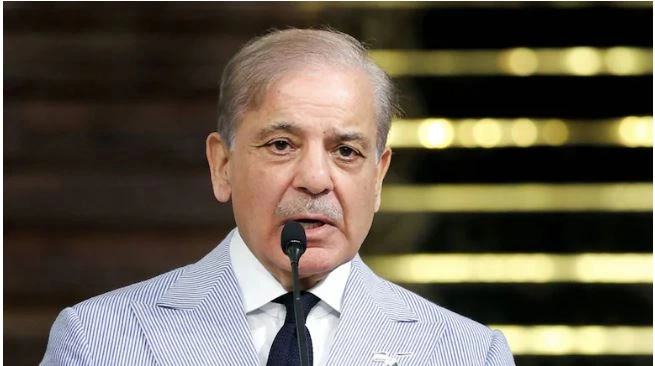
India has strongly criticised Pakistan Prime Minister Shehbaz Sharif’s remarks at the United Nations General Assembly (UNGA), calling them “absurd theatrics” and accusing Islamabad of once again glorifying terrorism.

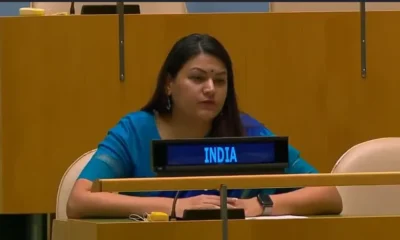
Exercising the right of reply at the 80th UNGA session, Indian diplomat Petal Gahlot said terrorism remains “central to Pakistan’s foreign policy”.

Mr. Sharif, in his address on Friday, referred to India’s Operation Sindoor, calling it “unprovoked aggression”. He claimed Pakistan’s armed forces had repelled the attack with “stunning professionalism, bravery and acumen”.

India’s Strong Rebuttal

Responding, Ms. Gahlot highlighted Pakistan’s record of sheltering terrorists. She accused Islamabad of protecting ‘The Resistance Front’, the group behind the April 22 Pahalgam terror attack, and reminded the UN that Pakistan had harboured Osama bin Laden for a decade.

“No degree of drama and no level of lies can conceal the facts. This is the very same Pakistan which shielded The Resistance Front from responsibility for the barbaric massacre of tourists in Jammu and Kashmir,” she said.

Ms. Gahlot described Pakistan as a nation “long steeped in the tradition of exporting terrorism”. She dismissed Sharif’s claim of “victory” in Operation Sindoor, citing evidence of destroyed runways and hangars.

“If destroyed runways and burnt-out hangars look like victory, Pakistan is welcome to enjoy it,” she remarked.

India’s Demands To Pakistan

India said the path to peace is clear if Islamabad is sincere: shut down terror camps and hand over terrorists wanted in India.

On Mr. Sharif’s call for “result-oriented dialogue”, Ms. Gahlot asserted that all outstanding issues will be addressed bilaterally, leaving “no room for any third party”.

Indus Water Treaty & Trump’s Claim

Mr. Sharif also accused India of violating the Indus Water Treaty, warning that such violations would be treated as an “act of war”.

He further thanked US President Donald Trump for allegedly facilitating a ceasefire after Operation Sindoor. India, however, reiterated that no such intervention occurred and dismissed any third-party role in India-Pakistan matters.

India’s Final Word

India stressed that it will never bow to terrorism or nuclear blackmail.

“India’s message to the world is clear: there must be zero tolerance for terrorism,” Ms. Gahlot said.

Cricket news

Bangladesh refuses to play T20 World Cup in India after ICC rejects venue shift request

Bangladesh have declined to play the ICC T20 World Cup in India after their request for shifting matches was rejected by the ICC, citing political tensions.

Published

on

Bangladesh

Bangladesh have decided not to travel to India for the upcoming ICC T20 World Cup, scheduled to begin on February 7, after their request to shift matches out of the country was rejected by the International Cricket Council (ICC).

The decision was announced on Thursday following a meeting involving Bangladesh national team players and Youth and Sports Adviser Asif Nazrul. The Bangladesh Cricket Board (BCB) had been given a 24-hour deadline by the ICC on Wednesday to confirm its participation in the tournament.

The board clarified that it is keen to take part in the global event but expressed its inability to do so in India amid prevailing political tensions between the two countries. The BCB said it would continue discussions with the ICC in the hope of finding an alternative solution to the impasse.

However, with the tournament drawing closer, Bangladesh’s withdrawal has placed the ICC in a difficult position. As things stand, Scotland are likely to be brought in as a replacement team if Bangladesh’s stance remains unchanged.

The ICC has not yet issued an official statement on Bangladesh’s decision, but preparations for the tournament are continuing as per the original schedule.

Continue Reading

Latest world news

Trump backs off Europe tariff threat after Greenland talks with NATO

Donald Trump has withdrawn his planned tariffs on European allies following talks with NATO, even as his remarks on Greenland continue to raise diplomatic concerns.

Published

on

donald-trump

President Donald Trump on Wednesday announced that he would not proceed with planned tariffs on European allies following discussions with NATO Secretary General Mark Rutte over Arctic security and Greenland.

In a post on his social media platform, Trump said the tariffs scheduled to take effect on February 1 would be cancelled after the two sides agreed on what he described as a “framework of a future deal”. He did not provide details of the agreement.

The decision marked a sharp reversal from Trump’s earlier remarks the same day, when he had reiterated his desire for the United States to acquire Greenland, insisting on “right, title and ownership” of the island, while claiming military force would not be used.

Greenland remarks trigger concern among allies

Speaking at the World Economic Forum in Davos, Trump described Greenland as strategically important for global security, citing threats in the Arctic region from Russia and China. He argued that the US had long protected Europe and suggested that acquiring Greenland was a reasonable demand in that context.

Trump said he did not intend to use military force, but warned that pressure could increase if negotiations failed. His comments raised concerns among European leaders and NATO members, as Greenland is a semi-autonomous territory under Danish sovereignty.

Denmark and other NATO allies have consistently stated that Greenland is not for sale. Danish officials have said they are open to discussions on security cooperation but stressed that sovereignty remains a non-negotiable issue.

Denmark and Greenland respond

After Trump’s speech, a Danish government official said Copenhagen was willing to discuss US security concerns, but made it clear that Denmark’s sovereignty over Greenland was a firm red line.

Greenland’s government, meanwhile, advised residents to be prepared for potential crises. Authorities released guidance urging citizens to keep basic supplies at home for several days. Some residents said they viewed Trump’s statements as threats but preferred to be cautious.

Local voices in Greenland expressed concern over the rhetoric, with residents describing the remarks as unsettling and dismissive of the island’s people and identity.

Tariff threat eased, tensions remain

Trump had earlier warned that the US could impose import tariffs starting at 10 percent on Denmark and seven other European allies, potentially rising to 25 percent by June, unless negotiations progressed. Those threats drew strong responses from European leaders, who warned of firm and united countermeasures if tariffs were imposed.

Economists cautioned that renewed trade tensions could disrupt economic stability on both sides of the Atlantic. Markets reacted nervously to the tariff threats before recovering later in the day.

Despite cancelling the immediate tariff plan, Trump continued to push for negotiations over Greenland, framing the issue as one of long-term national and international security.

Continue Reading

Latest world news

India withdraws diplomats’ families from Bangladesh amid rising security concerns

India has recalled the families of its diplomats posted in Bangladesh as a precautionary measure amid growing security concerns linked to extremist activity and political unrest.

Published

on

India has decided to withdraw the families and dependents of its diplomats posted in Bangladesh in view of growing security concerns linked to increased extremist activity in the country.

According to official sources, the decision applies to the Indian High Commission in Dhaka as well as other diplomatic posts across Bangladesh. The move comes weeks before the country is scheduled to hold parliamentary elections.

“Given the security situation, as a precautionary measure, we have advised the dependents of our officials in the high commission and other posts to return to India,” sources said, adding that all Indian missions in Bangladesh will continue to remain open and fully operational.

Non-family postings signal heightened alert

The advisory effectively places Indian diplomatic postings in Bangladesh under a “non-family” status, a step generally adopted in locations considered unstable or facing elevated security risks. However, there is no official clarity yet on the timeline for the withdrawal of families or when they may be allowed to return.

India currently maintains its high commission in Dhaka along with consulates in Chattogram, Khulna, Rajshahi, and Sylhet.

Strain in bilateral ties amid internal unrest

India-Bangladesh relations have faced strain since the interim government led by Muhammad Yunus assumed power in 2024 following the collapse of the Sheikh Hasina administration. Both countries have heightened security at their respective diplomatic missions in recent weeks amid protests and political unrest.

Concerns have also been raised over a spike in incidents of violence against minorities, particularly Hindus, following the death of student leader Sharif Osman Hadi on December 12.

India has repeatedly flagged these incidents with Bangladeshi authorities, urging firm action against communal violence.

“We continue to witness a disturbing pattern of recurring attacks on minorities as well as their homes and businesses by extremists,” the External Affairs Ministry spokesperson said, expressing concern over attempts to attribute such incidents to personal or political disputes.

New Delhi has maintained that such explanations risk emboldening perpetrators and deepening fear among minority communities.

Continue Reading

Trending

© Copyright 2022 APNLIVE.com