English हिन्दी
Connect with us

Latest world news

Trump reiterates India-Pak ceasefire claim, says 11 jets were shot down

Donald Trump has renewed his claim that he mediated the 2025 India-Pakistan ceasefire, alleging he threatened 200% tariffs and that 11 jets were shot down. India continues to deny any third-party role.

Published

on

Donald Trump

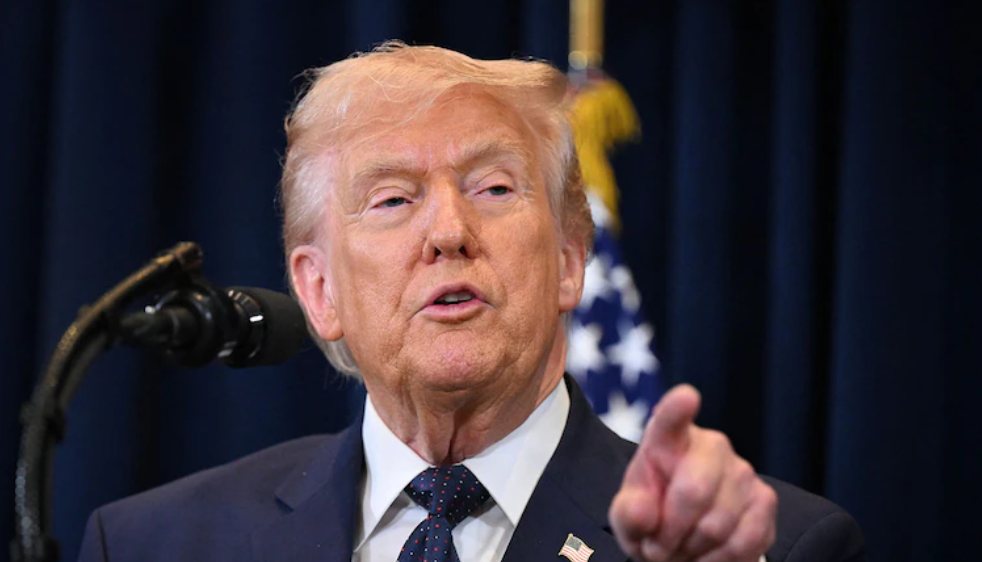
US President Donald Trump has once again asserted that he played a decisive role in halting last year’s military confrontation between India and Pakistan, claiming he warned both countries of steep trade penalties if they did not de-escalate tensions.

Speaking at his “Board of Peace” event, Trump said he threatened to impose 200 per cent tariffs on the two countries during the 2025 standoff. He further alleged that 11 fighter jets were shot down during the confrontation, raising the number from his earlier claim of seven aircraft losses.

India, however, has consistently rejected assertions of third-party mediation and has denied any aircraft losses during the conflict.

Trump’s remarks at event

During the event, Trump asked Pakistan’s Prime Minister Shehbaz Sharif to stand up while recounting what he described as his diplomatic intervention. He repeated his claim that Sharif had credited him with saving “25 million lives” by brokering a truce between New Delhi and Islamabad.

“That war was raging. Planes were being shot down,” Trump said, adding that he personally contacted leaders from both nations and warned them against continuing hostilities.

He claimed that trade leverage played a crucial role in persuading both sides to step back. “If you fight, I’m going to put 200 per cent tariffs on each of your countries,” Trump said, adding that economic consequences prompted them to agree to what he described as a deal.

The US President has repeatedly stated that he prevented multiple global conflicts during his second term, including the India-Pakistan standoff, and has mentioned his role in the matter more than 80 times since May 10 last year.

India maintains no external mediation

India has firmly maintained that the cessation of hostilities in May 2025 followed direct communication between the Directors General of Military Operations (DGMOs) of the two countries.

The confrontation followed India’s launch of Operation Sindoor on May 7, targeting terror infrastructure in Pakistan and Pakistan-occupied Kashmir. The operation was carried out in response to the April 22 Pahalgam attack, in which 26 civilians were killed.

New Delhi has consistently denied claims of foreign intervention in the de-escalation process as well as assertions regarding the loss of fighter jets during the military engagement.

Latest world news

Trump tells Xi US and China will have fantastic future together at Beijing summit

Donald Trump and Xi Jinping opened a major summit in Beijing with positive remarks as the two leaders prepared to discuss trade tensions, Taiwan, AI and the Iran crisis.

Published

on

Trump and Xi hold high-stakes summit in Beijing

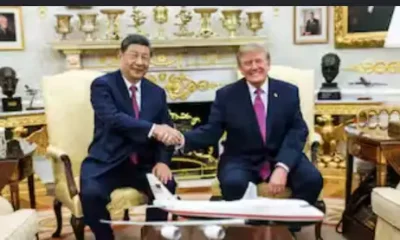
US President Donald Trump met Chinese President Xi Jinping in Beijing on Thursday for a closely watched summit expected to address trade disputes, Taiwan, artificial intelligence and the ongoing Iran crisis.

During the opening remarks at the Great Hall of the People, Trump expressed confidence about ties between Washington and Beijing, saying the two countries were “going to have a fantastic future together.”

The summit marks Trump’s first official visit to China during his second term and the first visit by a sitting US president to the country in nearly a decade.

Both leaders were seen exchanging warm remarks at the start of the meeting despite continuing disagreements over tariffs, Taiwan and strategic competition in technology and artificial intelligence. Reports said discussions are also expected to cover the Iran conflict and global trade stability.

Ahead of the summit, Trump had indicated he would discuss US arms sales to Taiwan with Xi, an issue that remains one of Beijing’s biggest concerns in relations with Washington.

Chinese officials earlier outlined what Beijing described as “red lines” in ties with the United States, including matters related to Taiwan and national sovereignty.

The Beijing visit includes bilateral meetings, ceremonial events and a state banquet, with both sides aiming to stabilise relations after months of geopolitical and economic tensions.

Continue Reading

Latest world news

Trump rejects Iran peace proposal, warns Tehran over uranium dispute

Donald Trump has rejected Iran’s latest response to a US peace proposal, escalating tensions over uranium enrichment, sanctions relief and control of the Strait of Hormuz.

Published

on

Donald Trump statement

US President Donald Trump has rejected Iran’s latest response to a US-backed peace proposal, calling Tehran’s position “totally unacceptable” as negotiations aimed at ending the ongoing conflict remain stalled.

According to reports, Iran responded to the American proposal by demanding war reparations, the removal of sanctions, recognition of its sovereignty over the Strait of Hormuz, and the release of frozen Iranian assets. Tehran also warned it would retaliate against any fresh US military strikes and oppose the deployment of additional foreign warships in the region.

The dispute has intensified over Iran’s nuclear programme, particularly uranium enrichment. The US proposal reportedly sought strict limits on Iran’s nuclear activities, including a long-term halt to uranium enrichment and tighter international oversight. However, Iran’s counter-response did not accept key American demands related to dismantling or restricting its nuclear infrastructure.

Iran has maintained that its nuclear programme is for civilian purposes, while the US and its allies continue to push for stronger safeguards amid concerns over regional security.

The latest exchange comes amid continuing tensions in the Strait of Hormuz, a strategically important shipping route for global oil supplies. Concerns over disruptions in the region have already pushed oil prices higher in international markets.

Reports also suggest that the US proposal aimed to expand the current ceasefire framework and create conditions for broader negotiations involving regional conflicts and maritime security. However, both sides remain far apart on major issues, including sanctions relief and nuclear restrictions.

Continue Reading

Latest world news

Trump approves nearly $9 billion weapons sales to Israel, UAE and other allies amid Iran tensions

The US has fast-tracked nearly $9 billion in weapons sales to Israel, UAE and other allies as tensions linked to the Iran conflict continue despite a fragile ceasefire.

Published

on

Donald Trump statement

The United States has approved nearly $9 billion worth of weapons sales to key Middle Eastern allies, including Israel and the United Arab Emirates, amid ongoing tensions linked to the Iran conflict.

The decision, cleared by the administration of Donald Trump, includes expedited military transfers to Israel, the UAE, Qatar, and Kuwait. The approvals were granted under an emergency provision, allowing authorities to bypass the usual congressional review process.

Emergency clearance amid ongoing conflict

Officials said the move was necessary due to the evolving security situation in the region, particularly as the conflict involving Iran continues despite a fragile ceasefire. The war, which began earlier in 2026, has heightened instability across West Asia.

US Secretary of State Marco Rubio invoked emergency powers to fast-track the deals, citing urgent defence requirements for allied nations.

What the arms package includes

The approved package includes a mix of advanced defence systems and precision weapons:

  • Patriot missile defence replenishments worth over $4 billion for Qatar
  • Precision-guided weapon systems for multiple countries
  • Integrated battle command systems for Kuwait
  • Additional advanced weapons support for Israel and the UAE

The total value of these deals is estimated at over $8.6 billion, often rounded to nearly $9 billion.

Timing linked to iran war

The approval comes nearly nine weeks into the conflict involving the US, Israel, and Iran, with tensions still high despite a ceasefire that has been in place for several weeks.

Analysts note that the move signals continued US military backing for its regional allies, particularly in strengthening air defence and precision strike capabilities during uncertain conditions.

Criticism and concerns

The decision to bypass congressional oversight has drawn criticism from some quarters, particularly over transparency and the broader implications of increasing arms supplies in a conflict-prone region.

Continue Reading

Trending

© Copyright 2022 APNLIVE.com