
Latest world news
Isolated Trump gets Saudi Arabia, Israel support on Iran deal withdrawal


[vc_row][vc_column][vc_column_text]Iran to remain with JCPOA along with other signatories, says Rouhani
Amidst worldwide criticism and condemnation of US President Donald Trump’s move of withdrawing from Iran nuclear deal, Israel and Saudi Arabia were the only countries which have welcomed and supported the most controversial diplomatic step.
The official statement from Riyadh says, “The kingdom of Saudi Arabia supports and welcomes the steps announced by President Donald Trump regarding the United States’ withdrawal from the Iran nuclear deal. The Kingdom also supports reinstating economic sanctions on the Iranian regime, which have been suspended under the nuclear deal”.
The official statement, while describing the reason of change in its stance, says, “The Kingdom’s previous support for the nuclear deal concluded by Iran and the P5+1 group of countries was based on Saudi Arabia’s conviction in the need to take all possible steps that may assist in non-proliferation of weapons of mass destruction in the Middle East and the world.”
Read Also:- Donald Trump Facing Isolation on Iran Nuclear Compliance
It further adds, “The Iranian regime however, took advantage of the economic benefits afforded by the lifting of sanctions and used them to continue its destabilizing activities in the region, especially by developing its ballistic missiles and supporting terrorist organizations in the region, including Hizbollah and the Houthi militias, which used the capabilities provided by Iran to target civilians in the Kingdom of Saudi Arabia and Yemen, as well as, repeatedly targeting international shipping lanes in a blatant violation of UN Security Council resolutions.”

Toeing completely US position, Saudi Arabia said, “The Kingdom reaffirms its support of the strategy previously announced by President Trump towards Iran, and hopes the international community will take a firm and unified stance against the Iranian regime, and its destabilizing aggression in the region, its support to terrorist groups, particularly Hizbollah and the Houthis militias, and its support of the Assad regime-who has committed heinous crimes against its people that led to the death of more than half a million civilians, including through the use of chemical weapons.”
Read Also:- Trump’s announcement is awaited Tuesday on Iran n-deal
The official statement further said, “Based on this position, the Kingdom asserts its commitment to work with its partners in the United States and the international community to reach the goals announced by President Trump, and the necessity to address the dangers posed by the policies of Iran on international peace and security through a holistic approach, that is not limited to its nuclear program, but addresses its hostile activities, including Iran’s interference in the internal affairs of countries in the region, its support of terrorism, and to prevent Iran from ever possessing weapons of mass destruction.”
This was the rare activity on Saudi Press Agency, which has carried a 347 word statement in English language within three hours of Trump’s announcement. Generally Saudi official statements are very short with poor English issued after long thought process applied on each word. But the quick reaction to Trump’s move indicated that it was prepared in advance in much better English language. Observers believe that the statement could have been prepared in some other capital on dotted lines.
Meanwhile Israeli Prime Minister Benjamin Netanyahu welcomed U.S. President Donald Trump’s announcement on the U.S. withdrawal from the Iran nuclear deal and hailed the move as a “courageous” and “right” decision.
Exerting further pressure on Iran, Netanyahu accused Tehran of preparing to attack ‘Israel’ saying “For the past months, Iran has been transferring weapons to its forces in Syria.”
Addressing live on television late on Tuesday night, Netanyahu said, “We will react with force” to any attack, he said. “The army is prepared, the army is strong, and whoever will try us will feel well the strength of our arm,” he warned.
Israeli PM called on the ‘international community’ to join the US and revoke the landmark deal and act against “the Iranian aggression.” He reiterated his allegations that the deal would have enabled Iran to enrich uranium “in quantities sufficient to produce a whole arsenal of nuclear bombs.”
President Donald Trump on Tuesday pulled the US out of the multilateral nuclear deal with Iran, raising the risk of conflict in the Middle East, upsetting European allies and casting uncertainty over global oil supplies.
Trump said in a televised address from the White House that he would reimpose U.S. economic sanctions on Iran to undermine “a horrible one-sided deal that should have never, ever been made.”
The 2015 agreement, worked out by the United States, five other world powers and Iran, lifted sanctions on Iran in exchange for Tehran limiting its nuclear program. The pact was designed to prevent Iran from obtaining a nuclear bomb.
But Trump complained that the accord, the signature foreign policy achievement of his Democratic predecessor, Barack Obama, did not address Iran’s ballistic missile program, its nuclear activities beyond 2025 or its role in conflicts in Yemen and Syria.
However, Iranian President Hassan Rouhani, while reacting to Trump’s move, has said that Tehran will stay in the JCPOA with other signatories, stressing that his country has always has complied with its commitments to the deal, while the US has never complied with its provisions.
Read Also:- Russia, China to Continue Support Iran Nuclear Deal
Addressing the nation late on Tuesday night, Rouhani stressed that Trump’s decision was a historical experience for his country and noted that US President has a history of undermining international treaties. He further said that Iran would remain in the nuclear deal without US presence.
Rouhani added that he has ordered the Atomic Energy Organisation of Iran to be prepared for resuming nuclear enrichment at the industrial level.
Moreover, Iran’s foreign minister Javad Zarif posted his reaction in a tweet.[/vc_column_text][vc_raw_html]JTNDYmxvY2txdW90ZSUyMGNsYXNzJTNEJTIydHdpdHRlci10d2VldCUyMiUyMGRhdGEtbGFuZyUzRCUyMmVuJTIyJTNFJTNDcCUyMGxhbmclM0QlMjJlbiUyMiUyMGRpciUzRCUyMmx0ciUyMiUzRUluJTIwcmVzcG9uc2UlMjB0byUyMFVTJTIwcGVyc2lzdGVudCUyMHZpb2xhdGlvbnMlMjAlMjZhbXAlM0IlMjB1bmxhd2Z1bCUyMHdpdGhkcmF3YWwlMjBmcm9tJTIwdGhlJTIwbnVjbGVhciUyMGRlYWwlMkMlMjBhcyUyMGluc3RydWN0ZWQlMjBieSUyMFByZXNpZGVudCUyMFJvdWhhbmklMkMlMjBJJTI2JTIzMzklM0JsbCUyMHNwZWFyaGVhZCUyMGElMjBkaXBsb21hdGljJTIwZWZmb3J0JTIwdG8lMjBleGFtaW5lJTIwd2hldGhlciUyMHJlbWFpbmluZyUyMEpDUE9BJTIwcGFydGljaXBhbnRzJTIwY2FuJTIwZW5zdXJlJTIwaXRzJTIwZnVsbCUyMGJlbmVmaXRzJTIwZm9yJTIwSXJhbi4lMjBPdXRjb21lJTIwd2lsbCUyMGRldGVybWluZSUyMG91ciUyMHJlc3BvbnNlLiUzQyUyRnAlM0UlMjZtZGFzaCUzQiUyMEphdmFkJTIwWmFyaWYlMjAlMjglNDBKWmFyaWYlMjklMjAlM0NhJTIwaHJlZiUzRCUyMmh0dHBzJTNBJTJGJTJGdHdpdHRlci5jb20lMkZKWmFyaWYlMkZzdGF0dXMlMkY5OTM5NDA1OTk1NzYzMzAyNDAlM0ZyZWZfc3JjJTNEdHdzcmMlMjU1RXRmdyUyMiUzRU1heSUyMDglMkMlMjAyMDE4JTNDJTJGYSUzRSUzQyUyRmJsb2NrcXVvdGUlM0UlMEElM0NzY3JpcHQlMjBhc3luYyUyMHNyYyUzRCUyMmh0dHBzJTNBJTJGJTJGcGxhdGZvcm0udHdpdHRlci5jb20lMkZ3aWRnZXRzLmpzJTIyJTIwY2hhcnNldCUzRCUyMnV0Zi04JTIyJTNFJTNDJTJGc2NyaXB0JTNFJTBB[/vc_raw_html][vc_column_text]Though there has been lot of activity throughout night in Middle Eastern capitals, Iranian position was supported by its closest ally Syrian government headed by Bashar al-Assad.
According to official SANA news agency, Syria has strongly condemned US President’s decision to withdraw from the nuclear deal with Iran and renewed full solidarity with Iran and expressed confidence on Iran’s capability to overcome the repercussions of the US administration hostile stance.
An official source at the Ministry of Foreign and Expatriates in Damascus reportedly said, “Syria strongly condemns the US president decision which proves once again the US non-commitment to the international agreements and conventions.”
The source further added that the international reactions to the US decision which condemn and denounce it show the isolation of the US and its wrong policies which would increase tensions in the world.
Read More:- Trump’s pull out of Iran N-deal may escalate oil prices
The Syrian official said, “Syria which renews its full solidarity with Iran, as people and leadership, is confident that Iran is able to overcome the repercussions of the US administration’s hostile stance which affects the security of the region and the world.”
Besides, Britain, Germany and France have jointly slammed Trump’s decision to quit Iran nuclear deal. British PM Theresa May expressed “regret and concern” and condemned Trump’s decision in a joint statement with leaders of Germany and France, Angela Markel and Emmanual Macron.
“It is with regret and concern that we, the leaders of France, Germany and the United Kingdom take note of President Trump’s decision to withdraw the United States of America from the Joint Comprehensive Plan of Action.
The statement further said that “Together, we emphasise our continuing commitment to the JCPOA. This agreement remains important for our shared security. We recall that the JCPoA was unanimously endorsed by the UN Security Council in resolution 2231. This resolution remains the binding international legal framework for the resolution of the dispute about the Iranian nuclear programme.”[/vc_column_text][/vc_column][/vc_row]







Latest world news
Magnitude 7 earthquake strikes Tibet after floods
A magnitude 7 earthquake struck northern Tibet on Thursday, October 22. The tremor came weeks after deadly flash floods and landslides hit the mountainous region near the Nepal-China border. Initial reports did not confirm casualties or damage from the earthquake.


Latest world news
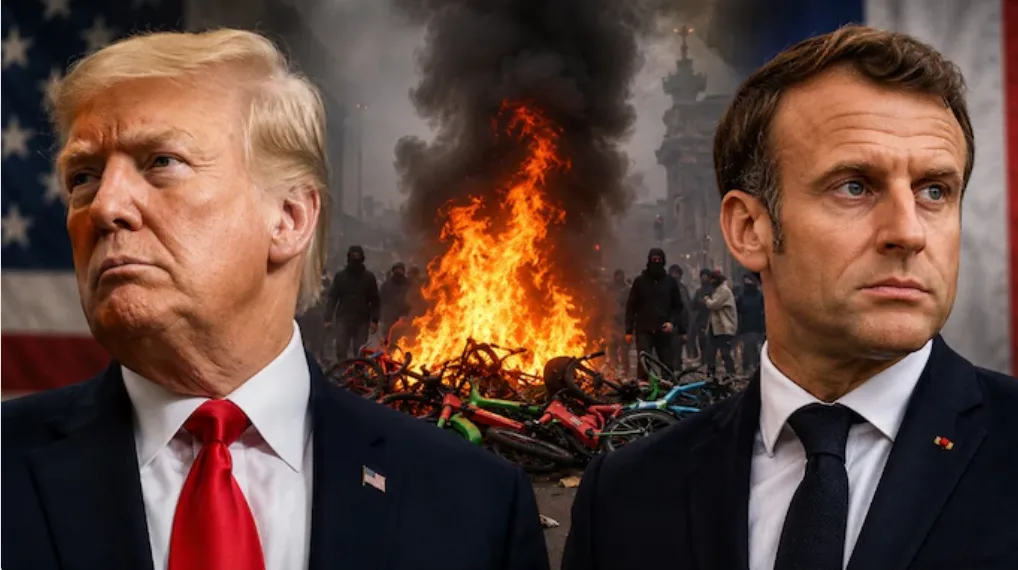
Macron rejects Trump’s immigration claims over France riots
French President Emmanuel Macron criticised Donald Trump and other foreign leaders over their comments on France’s recent unrest. Macron rejected claims that the country was being overrun by migrants and Islamists, calling such assertions false.
Latest world news
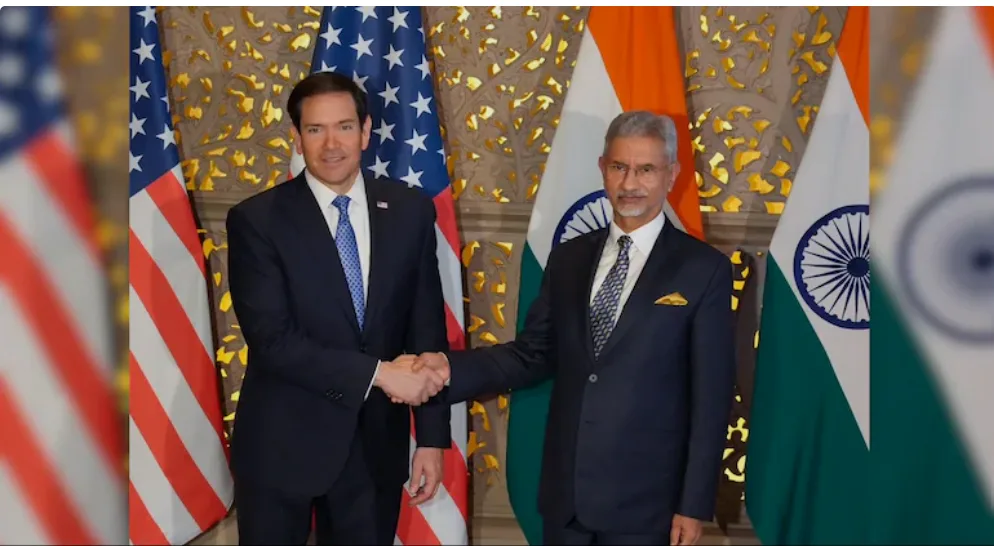
Marco Rubio says India and US share extraordinary alignment on key issues
US Secretary of State Marco Rubio said India and the United States share an extraordinary alignment on core issues, even though disagreements between the two countries may arise.

Om Prakash Mathur sworn in as Keralam Governor

PM Modi to inaugurate Rs 169-crore RBI data centre in Odisha on October 25

MEA responds after ITBP chief flags ongoing face-offs with China in Arunachal

Delhi High Court rejects Neha Bora’s plea against peace bond notice

Thousands bang utensils, beat drums in Manipur protest over continued killings

Congress seeks 175-200 seats in UP, Samajwadi Party stresses on winnability
Thousands bang utensils, beat drums in Manipur protest over continued killings
MEA responds after ITBP chief flags ongoing face-offs with China in Arunachal
Delhi High Court rejects Neha Bora’s plea against peace bond notice
PM Modi to inaugurate Rs 169-crore RBI data centre in Odisha on October 25

Afghan Men Try To Hang With The Jet Engine Of The Aircraft in Kabul- Afghanistan News – Kabul News
Trending Top 10 News: 10000 Crore Fine on Flipkart, Apple to Launch Unique Feature, Hdfc Bank Job Ad

Trending Top 10 News: Nokia 6310, Apple sales, Bachpan ka Pyar Video Kid, Dainik Bhaskar IT Raid

Trending Top 10 News: Canada bans Indian flights, Rain in Delhi NCR, AIMIM Twitter hacked, Raj Kundra case

Trending Top 10 News: Shein India, Apple New Service, Pocket Oxygen, Oppo Launched New Phone
-
 India News20 hours ago
Om Prakash Mathur sworn in as Keralam Governor
-
 India News19 hours ago
PM Modi to inaugurate Rs 169-crore RBI data centre in Odisha on October 25
-
 India News17 hours ago
MEA responds after ITBP chief flags ongoing face-offs with China in Arunachal
-
 India News18 hours ago
Delhi High Court rejects Neha Bora’s plea against peace bond notice
-
 India News5 hours ago
Thousands bang utensils, beat drums in Manipur protest over continued killings
-
 India News4 hours ago
Congress seeks 175-200 seats in UP, Samajwadi Party stresses on winnability
