
Latest world news
Israel claims most significant attacks on Syria, Russia cautions Tel Aviv


Iran praises Syria for shooting Israeli fighter jet, says era of “hit-and-run” ended
Conflicting assessments are emerging from the Israel-Syria theatre after downing of Israeli F-16 warplane by Syrian forces and shooting down of an alleged Iranian drone by Israelis on Saturday.
Israel’s PM Benjamin Netanyahu, has described his country’s most significant air attacks on Syria in decades as a heavy blow to Syria and Iran. However, Tehran has praised Syria’s military for downing Israeli fighter jet saying the era of “hit and run” has ended. It has also threatened that Tel Aviv must get ready to face the consequences of its aggression against Syria.
According to Aljazeera, Israeli PM claimed that the attacks were in response to Syrian government forces shooting down an Israeli fighter jet and an Iranian drone entered Israeli airspace.
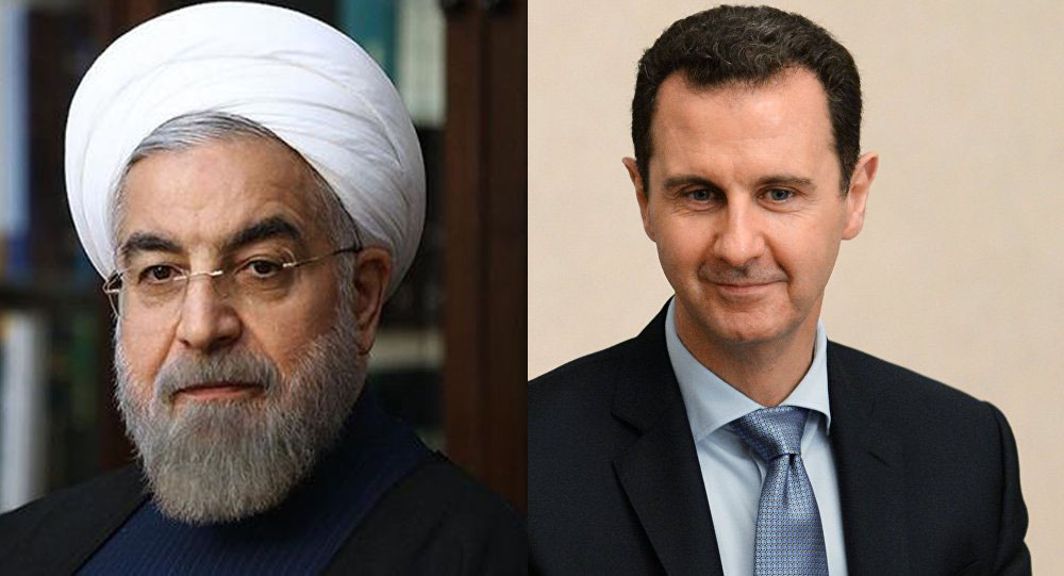 The Israeli attacks have reportedly hit an airport near al-Suwayda, in northern Syria and a weapons depot near Damascus. Moreover, Israel has sounded several warnings about perceived increased Iranian involvement along its borders with Syria and Lebanon.
According to Tehran based Press TV, Secretary of Iran’s Supreme National Security Council (SNSC) Ali Shamkhani, on Sunday, praised Syrian military for downing an Israeli jet fighter saying that the move shows that the era of “hit-and-run” has ended.
The network further reported that a “Pro-Syrian military alliance said later on Saturday that the Israeli claim about a drone intrusion was bogus, noting that Israel had targeted a drone base in Syria whose unmanned aircraft were used against the Daesh terrorist group.”
The Iranian media outlet observed that “over the past years, Israel has frequently attacked targets in Syria, often claiming that it hit positions or convoys belonging to Iran. This is while Iran has no military presence in Syrian government fighting an all-out foreign sponsored militancy.”
Meanwhile Russia’s President Vladimir Putin has urged Israeli PM Benjamin Netanyahu to avoid any steps that could escalate tension. Russian forces have been involved in supporting Syrian government in its fight against different terror groups in the country.
Netanyahu has held several consultations with Putin in the recent past. On Saturday Netanyahu conveyed Israel’s intention to counter Iran’s actions.
However, Russia’s foreign ministry criticised Israel’s actions saying, “It is absolutely unacceptable to create threats to the lives and security of Russian servicemen who are in Syria at the invitation of its legitimate government,” it said.
However, Netanyahu told a cabinet meeting on Sunday that Israel would continue to strike against any aggression. He reportedly said, “Yesterday, we dealt severe blows to the Iranian and Syrian forces,” Netanyahu said.
He further said, “We made it unequivocally clear to everyone that our rules of action have not changed one bit. We will continue to strike at every attempt to strike at us. This has been our policy and it will remain our policy.”









Latest world news
Magnitude 7 earthquake strikes Russia’s Kamchatka Peninsula
A magnitude 7 earthquake struck Russia’s Kamchatka Peninsula region on Friday. The initial report placed the earthquake at a depth of 140 kilometres.


Latest world news
S Jaishankar says India is a natural option for Russia amid Europe tensions
External Affairs Minister S Jaishankar said India remained a natural option for Russia as Moscow increasingly turned towards Asia amid strained relations with Europe. He highlighted the continuity of India-Russia ties and their significance for the balance of power in Asia.

Latest world news
Putin praises PM Modi, says he has very good ideas on Ukraine war
Russian President Vladimir Putin has praised Prime Minister Narendra Modi for repeatedly raising the need to end the Ukraine war, describing his ideas for a settlement as “very good”.


Mallikarjun Kharge’s ‘Your Friends’ jab at Rahul Gandhi over congress exits

Magnitude 7 earthquake strikes Russia’s Kamchatka Peninsula

Delhi deploys 25,000 personnel, installs CCTV cameras ahead of CJP march

Abhijeet Dipke detained ahead of CJP’s national flag march in Delhi

Mallikarjun Kharge seeks all-party meeting with PM Modi on delimitation

Centre sends 3 letters to Punjab government after anti-drug activist’s killing
Mallikarjun Kharge seeks all-party meeting with PM Modi on delimitation
Abhijeet Dipke detained ahead of CJP’s national flag march in Delhi
Magnitude 7 earthquake strikes Russia’s Kamchatka Peninsula
Delhi deploys 25,000 personnel, installs CCTV cameras ahead of CJP march

Afghan Men Try To Hang With The Jet Engine Of The Aircraft in Kabul- Afghanistan News – Kabul News
Trending Top 10 News: 10000 Crore Fine on Flipkart, Apple to Launch Unique Feature, Hdfc Bank Job Ad

Trending Top 10 News: Nokia 6310, Apple sales, Bachpan ka Pyar Video Kid, Dainik Bhaskar IT Raid

Trending Top 10 News: Canada bans Indian flights, Rain in Delhi NCR, AIMIM Twitter hacked, Raj Kundra case

Trending Top 10 News: Shein India, Apple New Service, Pocket Oxygen, Oppo Launched New Phone
-
 India News12 hours ago
Mallikarjun Kharge’s ‘Your Friends’ jab at Rahul Gandhi over congress exits
-
 Latest world news12 hours ago
Magnitude 7 earthquake strikes Russia’s Kamchatka Peninsula
-
 India News12 hours ago
Delhi deploys 25,000 personnel, installs CCTV cameras ahead of CJP march
-
 India News3 hours ago
Abhijeet Dipke detained ahead of CJP’s national flag march in Delhi
-
 India News2 hours ago
Mallikarjun Kharge seeks all-party meeting with PM Modi on delimitation
-
 India News47 mins ago
Centre sends 3 letters to Punjab government after anti-drug activist’s killing
