English हिन्दी
Connect with us

Latest world news

Israel orders Gaza residents to leave, UN warns of devastating consequences

The United Nation has urged Tel Aviv to take back its evacuation order to avoid devastating consequences.

Published

on

Israel orders Gaza residents to leave, UN warns of devastating consequences

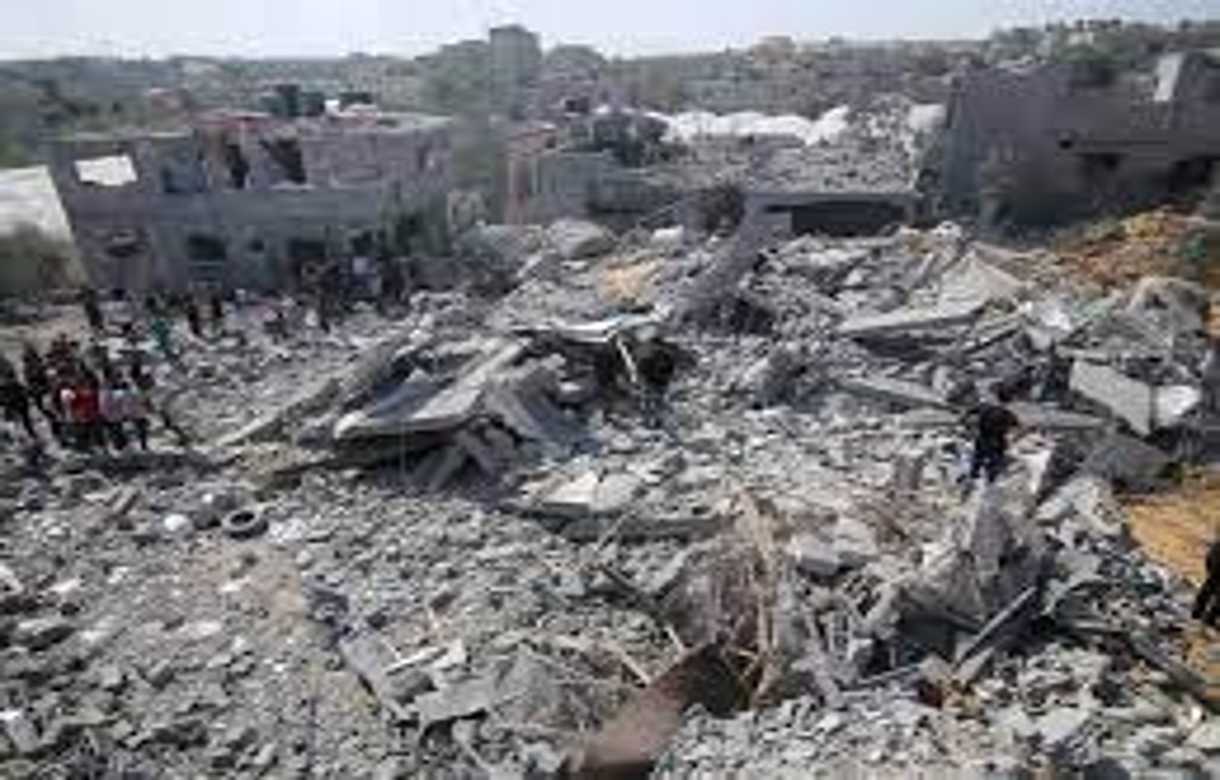
Israeli forces continued to attack the Gaza strip, leading to a possible ground invasion as the conflict with Hamas entered its sixth day. On Friday, Israel informed the United Nations that it has ordered 1.1 million residents of northern Gaza to move further south within 24 hours amidst speculation of a ground invasion of the territory ruled by Hamas. 

The United Nation has urged Tel Aviv to take back its evacuation order to avoid devastating consequences. Furthermore, Iran’s UN has warned that if Israel does not cease its bombardment, the war may open on other fronts. However, Iran denied involvement in the Hamas attack.

So far, the Israeli artillery has been firing on the Hamas-ruled Gaza Strip every 30 seconds. In a statement, the Israeli army stated that it has bombarded Gaza with approximately 6,000 munitions containing a total of 4,000 tonnes of explosives since Saturday when it began striking Hamas targets.

Reportedly, in response to the surprise attack by Hamas, Israel has mobilized 360,000 reservists, massed forces near Gaza, and evacuated tens of thousands of residents from nearby communities. In addition, a new war Cabinet, which includes a longtime opposition politician, was sworn in to direct the fight.

Previously, Prime Minister Benjamin Netanyahu has vowed to destroy Hamas following its deadly assault on Israeli communities on Saturday, October 7. Nonetheless, Gaza is teetering on the verge of a humanitarian catastrophe as the death toll surpassed 1,500 and vital supplies ran low.

As the war escalates, several international bodies and leaders are calling for an immediate ceasefire and the protection of civilians caught in the crossfire. On Thursday, the United Nations issued an emergency appeal for $294 million to address the most urgent needs in Gaza and the occupied West Bank, where over 400,000 Palestinians have fled from their homes in recent days.

Latest world news

Trump may join Iran-US peace talks in Pakistan, attendance uncertain

Donald Trump could join Iran-US peace talks in Pakistan either in person or virtually, as discussions move forward amid uncertainty over participation.

Published

on

Donald Trump statement

Peace talks between the United States and Iran are being considered in Islamabad, with uncertainty over participation and format

Peace talks between the United States and Iran are being considered in Islamabad, according to media reports, with the possibility that former US President Donald Trump may participate either in person or virtually. However, no final decision on the venue, format or participation has been confirmed.

According to reports citing a Pakistani source, preparations for the talks are moving ahead as scheduled, and both sides are expected to engage in discussions aimed at resolving ongoing tensions.

The proposed talks come at a critical time, as diplomatic efforts continue to stabilise relations amid heightened geopolitical strain. Pakistan is expected to host or facilitate the discussions, hosting the discussions and coordinating with both Washington and Tehran to facilitate dialogue.

Officials familiar with the development indicated that Trump’s participation remains uncertain, with reports indicating he may attend either in person or virtually. His presence—either physically in Islamabad or through virtual means—would signal the importance of the outcome and potentially influence the direction of the talks.

Despite the progress in planning, uncertainty remains over the final composition of delegations and the level of participation from each side. Separate reports suggest that while preparations are underway, clarity over Iran’s attendance and broader engagement is still evolving.

The talks are expected to focus on easing tensions and exploring pathways toward a broader agreement, though key sticking points between the two sides remain unresolved.

Continue Reading

Latest world news

Trump warns of escalation as Iran signals counter-strategy amid Hormuz blockade tensions

As the US-Iran ceasefire nears its end, tensions escalate over the Hormuz blockade with strong warnings from both sides.

Published

on

Donald Trump statement

Ceasefire between US and Iran nears deadline as both sides trade sharp warnings over blockade and military response

Tensions between the United States and Iran have intensified as a fragile ceasefire approaches its deadline, with both sides issuing strong warnings amid ongoing disputes over the Strait of Hormuz.

US President Donald Trump has cautioned that severe military action could follow if negotiations fail, signalling that “bombs will go off” in the absence of a deal. His remarks come as Washington continues a naval blockade targeting Iranian oil exports and maritime movement, a move Tehran has strongly opposed.

Iran, on the other hand, has indicated it is prepared with what it described as “new cards,” suggesting a potential shift in its strategy if the situation escalates further. The standoff reflects deep mistrust between the two sides, even as diplomatic efforts continue in the background.

The current crisis is centred around the Strait of Hormuz, a critical global oil transit route. The United States imposed the blockade after talks failed to produce a breakthrough, aiming to restrict Iran’s oil shipments and increase economic pressure.

Tehran has accused Washington of violating the ceasefire by maintaining the blockade and taking aggressive actions, including the seizure of vessels near the strategic waterway. These developments have further complicated efforts to sustain peace.

A temporary ceasefire, agreed earlier this month, had paused hostilities for two weeks following threats of major escalation. However, with the truce nearing its end, uncertainty looms over whether it will be extended or collapse into renewed conflict.

The situation has also raised concerns globally, as disruptions in the Strait of Hormuz can significantly impact oil supply and international markets. Analysts warn that prolonged tensions could lead to economic instability and further geopolitical strain.

Diplomatic channels remain open, but the sharp rhetoric from both Washington and Tehran indicates that the path to a lasting agreement remains uncertain.

Continue Reading

Latest world news

Japan earthquake triggers tsunami warning after strong 7.4 magnitude tremor off northern coast

A powerful earthquake off northern Japan triggered tsunami warnings and evacuation alerts as authorities monitored waves and aftershocks.

Published

on

A powerful earthquake of magnitude 7.4 struck off the northern coast of Japan on Monday evening, prompting authorities to issue a tsunami warning and urge residents in coastal areas to move to safer locations.

According to officials, the earthquake occurred in the Pacific Ocean near the northeastern region of the country at around 4:53 pm local time. The tremors were strong enough to be felt across a wide area, including parts of Tokyo.

Following the quake, Japan’s meteorological agency issued a tsunami warning for several coastal regions, cautioning that waves of up to 3 metres could hit affected areas.

Initial tsunami waves were recorded shortly after the earthquake, with water levels reaching around 70 to 80 centimetres at some ports in northern Japan. Authorities warned that subsequent waves could be larger and more dangerous.

Emergency alerts were broadcast across the region, urging residents to evacuate coastal zones and move to higher ground. Visuals showed ships leaving ports and emergency messages being displayed on television screens.

As a precautionary measure, bullet train services in parts of northern Japan were temporarily halted, while authorities began assessing the situation and monitoring for aftershocks.

There were no immediate reports of major damage or casualties, but officials said the situation remained under close observation, with warnings still in place for coastal communities.

Japan, located along the seismically active “Ring of Fire,” frequently experiences earthquakes, making rapid response systems and tsunami alerts critical for public safety.

Continue Reading

Trending

© Copyright 2022 APNLIVE.com