
Latest world news
Nawaz Sharif in sub-standard jail facility, alleges son


Nawaz Sharif, former three-time Prime Minister of Pakistan is languishing in sub-standard facilities in the high-security Adiala jail in Rawalpindi, alleges his son Hussain Nawaz Sharif.
Hussain, who has been making important announcements through his tweets on developments surrounding his father, has alleged that his father was deprived of a bed in the jail and that the bathroom was extremely dirty, “probably no cleaned for ages.”
I am told that my father was not given a bed to sleep on and the bathroom was extremely dirty probably not cleaned for ages. There’s no precedence of treating people’s representatives with dignity in this country but these are basic rights withdrawal of which constitutes torture.
— Hussain Nawaz Sharif (@Hussain_NSharif) July 14, 2018
Hussain had earlier made his father and sister’s return journey details public through his twitter post.
Read More: Ousted Pakistan PM Nawaz Sharif sentenced to 10 years in prison
Nawaz Sharif’s legal team was allowed to meet him only for five minutes, a day after he was shifted to Adiala jail. The legal team has also confirmed that there is no bed, no AC has been provided to Nawaz Sharif. A senior police official was present throughout the meeting. He was not given a newspaper, his bed was a mattress on the floor and the washroom at his disposal was in despicable conditions.
 Meanwhile, Dawn reports that Pakistan Muslim League-Nawaz president Shahbaz Sharif, the younger brother of ousted PM Nawaz Sharif, along with his mother and other family members visited Nawaz Sharif, his daughter Maryam Nawaz and son-in-law retired Capt Mohammad Safdar, on Saturday night. They began serving their prison terms in the Avenfield properties reference.
Read More: Nawaz Sharif admits Pakistan’s role in 2008 Mumbai terror attack?
Earlier in the day, the family members, including Maryam Nawaz’s daughter Meharun Nisa and Shahbaz’s son Hamza Shahbaz were flown to Islamabad from Lahore on a special plane for the meeting. The daily claimed that the meeting took place in the jail superintendent’s room which continued for more than two hours.
No other party leader or worker visited Nawaz Sharif and Maryam Nawaz on their first day in jail, as the authorities had allocated Thursday for the visitors. The family members’ meeting was arranged on a special permission of the government.
Before visiting the jail, former Chief Minister of Punjab Shahbaz, one of the strongest political figure in the country, told a press conference in Lahore that the party would use all available options, legal and political, to challenge the caretaker government’s decision about the jail trial of the former premier. He expressed the hope that the Sharif family would get relief in the London properties case from the high court.
Read More: Pakistan: PML-N distances from Nawaz Sharif Mumbai terror remarks
Nawaz Sharif and Maryam Nawaz were handed down 10 and seven years’ imprisonment, respectively, in the London properties case last week.
After their return from UK on Friday night, the caretaker law ministry issued a notification declaring that the accountability court will conduct trial in the Flagship Investment and Al Azizia Steel Mills references against Nawaz Sharif in Adiala jail.








Latest world news
Magnitude 7 earthquake strikes Tibet after floods
A magnitude 7 earthquake struck northern Tibet on Thursday, October 22. The tremor came weeks after deadly flash floods and landslides hit the mountainous region near the Nepal-China border. Initial reports did not confirm casualties or damage from the earthquake.


Latest world news
Macron rejects Trump’s immigration claims over France riots
French President Emmanuel Macron criticised Donald Trump and other foreign leaders over their comments on France’s recent unrest. Macron rejected claims that the country was being overrun by migrants and Islamists, calling such assertions false.

Latest world news
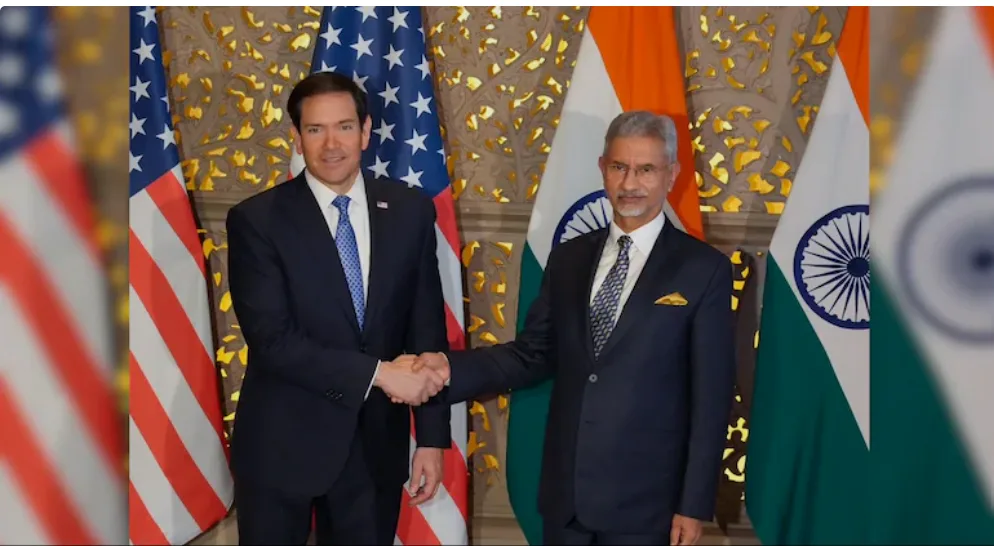
Marco Rubio says India and US share extraordinary alignment on key issues
US Secretary of State Marco Rubio said India and the United States share an extraordinary alignment on core issues, even though disagreements between the two countries may arise.

Punjab strike hits public services as 3 lakh employees and roadways workers protest

Two election commissioners complained against senior poll officer, RTI reveals

Om Prakash Mathur sworn in as Keralam Governor

PM Modi to inaugurate Rs 169-crore RBI data centre in Odisha on October 25

Delhi High Court rejects Neha Bora’s plea against peace bond notice

MEA responds after ITBP chief flags ongoing face-offs with China in Arunachal
Delhi High Court rejects Neha Bora’s plea against peace bond notice
PM Modi to inaugurate Rs 169-crore RBI data centre in Odisha on October 25
Om Prakash Mathur sworn in as Keralam Governor
Two election commissioners complained against senior poll officer, RTI reveals

Afghan Men Try To Hang With The Jet Engine Of The Aircraft in Kabul- Afghanistan News – Kabul News
Trending Top 10 News: 10000 Crore Fine on Flipkart, Apple to Launch Unique Feature, Hdfc Bank Job Ad

Trending Top 10 News: Nokia 6310, Apple sales, Bachpan ka Pyar Video Kid, Dainik Bhaskar IT Raid

Trending Top 10 News: Canada bans Indian flights, Rain in Delhi NCR, AIMIM Twitter hacked, Raj Kundra case

Trending Top 10 News: Shein India, Apple New Service, Pocket Oxygen, Oppo Launched New Phone
-
 India News15 hours ago
Punjab strike hits public services as 3 lakh employees and roadways workers protest
-
 India News15 hours ago
Two election commissioners complained against senior poll officer, RTI reveals
-
 India News4 hours ago
Om Prakash Mathur sworn in as Keralam Governor
-
 India News4 hours ago
PM Modi to inaugurate Rs 169-crore RBI data centre in Odisha on October 25
-
 India News2 hours ago
Delhi High Court rejects Neha Bora’s plea against peace bond notice
-
 India News2 hours ago
MEA responds after ITBP chief flags ongoing face-offs with China in Arunachal
