Latest world news
Pakistan elections marred with suicide attack -25 killed in Quetta


Polling in progress for National Assembly and Provincial Assemblies
In a bid to sabotage elections in Pakistan, a suicide bomber killed twenty-five people and injured several others in Quetta, the capital of Balochistan in Pakistan. Polling is in progress for national assembly and provincial assemblies.
According to Geo News “At least 25 persons were martyred and 30 others injured in the suspected suicide attack in Quetta’s Eastern Bypass area”.
However, official Associate Press of Pakistan (APP) report does not speak of any death due the attack. It said, “At least ten people were injured in a blast explosion near Temir-nu-polling station at Eastern Bypass area of Quetta on Wednesday.”
APP, quoting police sources, said that the blast was occurred when people were standing in row to cast their votes near polling station. The injured were shifted to civil hospital for medical aid. Law enforcement agencies reached the site and cordoned off it and started investigation.
Read More:Pakistan: Hafiz Saeed’s JuD to contest elections in 2018
Meanwhile polling began on Wednesday morning at 85,058 polling stations amid tight security arrangements across the country for the General Election-2018. The 10-hour polling that started at 8:00am will continue without any break till 6 pm.
 The police teams are patrolling in sensitive areas all across the country to avoid any untoward incident. Enthusiastic citizens were seen lined-up outside their polling stations before start of the polling process.
Political leaders from different parties began casting their votes as Pakistan Muslim League-Nawaz (PML-N) president Shehbaz Sharif cast his vote in Model Town, Lahore while Pakistan Tehreek-e-Insaf (PTI) leader Asad Umar cast his vote in NA-54 constituency of Islamabad.
Read More: Ousted Pakistan PM Nawaz Sharif sentenced to 10 years in prison
Jamiat Ulema-e-Islam’s (JUI-F) Maulana Fazl-Ur-Rehman , National Assembly Speaker Sardar Ayaz Sadiq ,Pakistan Peoples Party (PPP) leader Syed Khursheed Shah, Pak Sarzameen Party (PSP) founder Mustafa Kamal and Muttahida Qaumi Movement-Pakistan (MQM-P) leader Dr Farooq Sattar cast their votes in their respective constituencies. This report was written around the lunch time.
The election commission has established around 85,058 polling stations and 244,687 polling booths, besides deputing a total of 819,119 polling staff. There are 105,955,409 registered voters while 11,673 candidates are contesting elections. Of them 3,428 are for National Assembly while 8,245 are for provincial assemblies. Pakistan National Assembly has 272 seats.
Read More: Pakistan: PML-N distances from Nawaz Sharif Mumbai terror remarks
Most of the opinion polls suggest an overall Pakistan Muslim League (N) lead with Pakistan Tehreek-e-Insaf (PTI) being the close second. PML-N is led by Shehbaz Sharif, the younger brother of ousted PM Nawaz Sharif while PTI is headed by cricketer turned politician Imran Khan.
There have been allegations of pre-poll rigging being conducted by judiciary, military and intelligence agencies to sway the election results in favour of PTI and against PML-N. Bilawal Bhutto Zardari led Pakistan Peoples’ Party is expected to remain distant third.








Latest world news
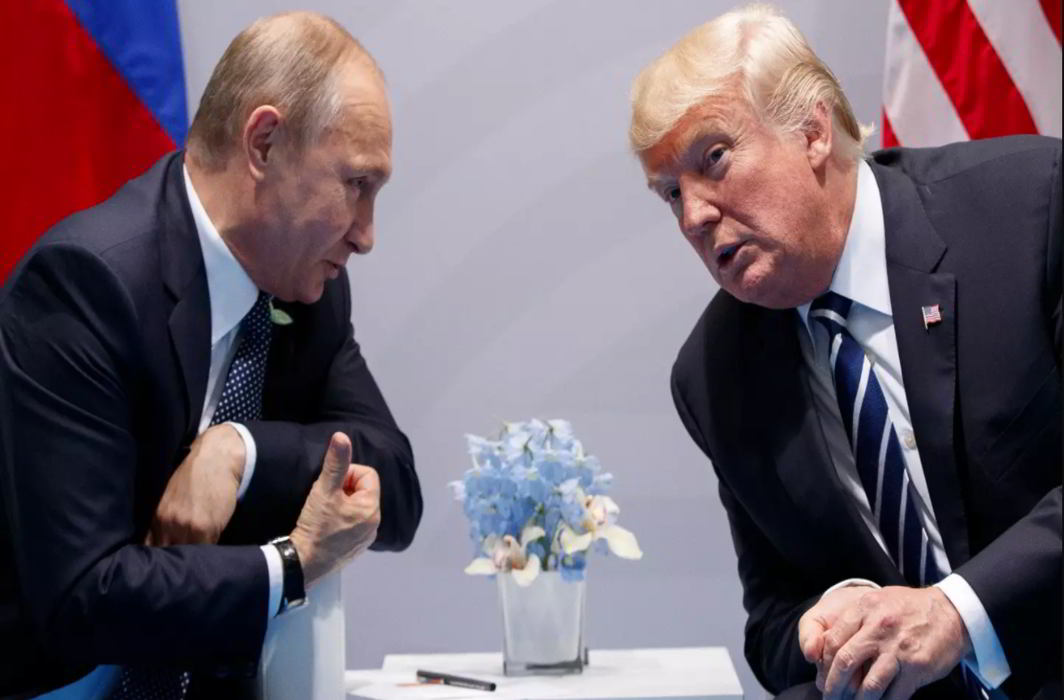
Trump waives Russia-related sanctions, tariffs in relief for India
Donald Trump has waived several Russia-related sanctions, restrictions and duties under a new US law, potentially easing tariff pressure on India and China, two major buyers of Russian energy.

Latest world news
Magnitude 7 earthquake strikes Russia’s Kamchatka Peninsula
A magnitude 7 earthquake struck Russia’s Kamchatka Peninsula region on Friday. The initial report placed the earthquake at a depth of 140 kilometres.

Latest world news
S Jaishankar says India is a natural option for Russia amid Europe tensions
External Affairs Minister S Jaishankar said India remained a natural option for Russia as Moscow increasingly turned towards Asia amid strained relations with Europe. He highlighted the continuity of India-Russia ties and their significance for the balance of power in Asia.


Anirudh Ravichander to marry Kavya Maran in November, reception on November 21

Journalist files police complaint against Rahul Gandhi over push allegation

Delhi court orders release of CJP founder Abhijeet Dipke
Journalist files police complaint against Rahul Gandhi over push allegation
Delhi court orders release of CJP founder Abhijeet Dipke
Anirudh Ravichander to marry Kavya Maran in November, reception on November 21

ED summons Pinarayi Vijayan in money laundering case

LK Advani, 98, hospitalised in Delhi with chest infection

Afghan Men Try To Hang With The Jet Engine Of The Aircraft in Kabul- Afghanistan News – Kabul News
Trending Top 10 News: 10000 Crore Fine on Flipkart, Apple to Launch Unique Feature, Hdfc Bank Job Ad

Trending Top 10 News: Nokia 6310, Apple sales, Bachpan ka Pyar Video Kid, Dainik Bhaskar IT Raid

Trending Top 10 News: Canada bans Indian flights, Rain in Delhi NCR, AIMIM Twitter hacked, Raj Kundra case