
Latest world news
Pakistan rejects India’s protest on Gilgit-Baltistan order


India earlier summoned Pakistan Deputy High Commissioner
Pakistan has rejected India’s protest on Gilgit Baltistan order 2018 and New Delhi’s claim over Pakistan occupied Kashmir (PoK) saying Indian propaganda could not cover up, what it called, the “atrocities being perpetrated by Indian forces against innocent and unarmed Kashmiris”.
On Sunday, India summoned the Pakistan deputy high commissioner Syed Haider Shah to protest against a recent Pakistan government order to change the status of Gilgit Baltistan. India told the Pakistani diplomat that the entire state of Jammu and Kashmir is an integral part of India and Islamabad had no legal basis for its actions.
“Any action to alter the status of any part of the territory under forcible and illegal occupation of Pakistan has no legal basis whatsoever, and is completely unacceptable. Instead of seeking to alter the status of the occupied territories, Pakistan should immediately vacate all areas under its illegal occupation,” the Ministry of External Affairs said.
Pakistan cabinet, in its May 21 order, extended Gilgit-Baltistan the same rights as the other four provinces. India regards the move illegal as an effort to integrate the disputed territory into Pakistan.
Reacting to India’s action, Pakistan foreign office issued a statement late on Sunday. The press release available on its official website says “The Government of Pakistan categorically rejects India’s protest against the Gilgit-Baltistan Order 2018 and its claim over the Indian occupied State of Jammu & Kashmir as an ‘integral part’ of India. Everything from history to law to morality to the situation on the ground belies India’s spurious claim.”

The Pakistan’s foreign office further claimed that “The entire state of Jammu & Kashmir is a “disputed” territory. Its disputed status is enshrined in the relevant United Nations Security Council resolutions, which stipulate that the final status of Jammu & Kashmir will be determined through the democratic method of a free and impartial plebiscite administered by the United Nations. These resolutions, pledging the right to self-determination to the people of Kashmir, were accepted by India, Pakistan and the international community,” the statement said.
Read More: Gilgit-Baltistan region Pak-occupied Kashmir erupts in protest against Pakistan government
The statement said, “India should take steps to vacate its illegal occupation and create the conditions for faithful implementation of the UN Security Council resolutions, so that this longstanding dispute between India and Pakistan is peacefully resolved in accordance with the wishes of the Kashmiri people.”
Pakistan has also raised the issue of so-called “gross and systematic violations of human rights” in Jammu and Kashmir to what they call Indian Occupied Kashmir (IOK). Islamabad said, “The baseless Indian propaganda about Gilgit-Baltistan can neither cover up the atrocities being perpetrated by the Indian security forces against the innocent, unarmed Kashmiris in IOK, nor can it succeed in diverting the attention of the international community from the deplorable situation in Indian occupied Kashmir.”
Read more: Pak alerts Gilgit-Baltistan of India’s alleged secret plan to hit CPEC
Pakistan also defended its recent measure in Gilgit Baltistan saying “The latest measure is no exception, as its aim is to further empower the people of Gilgit and Baltistan. We will continue to abide by the UN Security Council resolutions until this dispute is finally resolved through peaceful means,” it claimed.
India claim Jammu and Kashmir, including under Pakistani occupation,as its integral part while Pakistan entire state of Jammu and Kashmir as disputed and demand “right to self determination” for the Kashmir people. Both sides claim areas under rival’s control as “occupied”.
Pakistan call Jammu and Kashmir areas under its occupation as “Azad Kashmir” and areas in India’s control as “Indian occupied Kashmir (IoK)” while India call the other side of Kashmir as “Pakistan occupied Kashmir (PoK)”.








Latest world news
Magnitude 7 earthquake strikes Tibet after floods
A magnitude 7 earthquake struck northern Tibet on Thursday, October 22. The tremor came weeks after deadly flash floods and landslides hit the mountainous region near the Nepal-China border. Initial reports did not confirm casualties or damage from the earthquake.


Latest world news
Macron rejects Trump’s immigration claims over France riots
French President Emmanuel Macron criticised Donald Trump and other foreign leaders over their comments on France’s recent unrest. Macron rejected claims that the country was being overrun by migrants and Islamists, calling such assertions false.

Latest world news
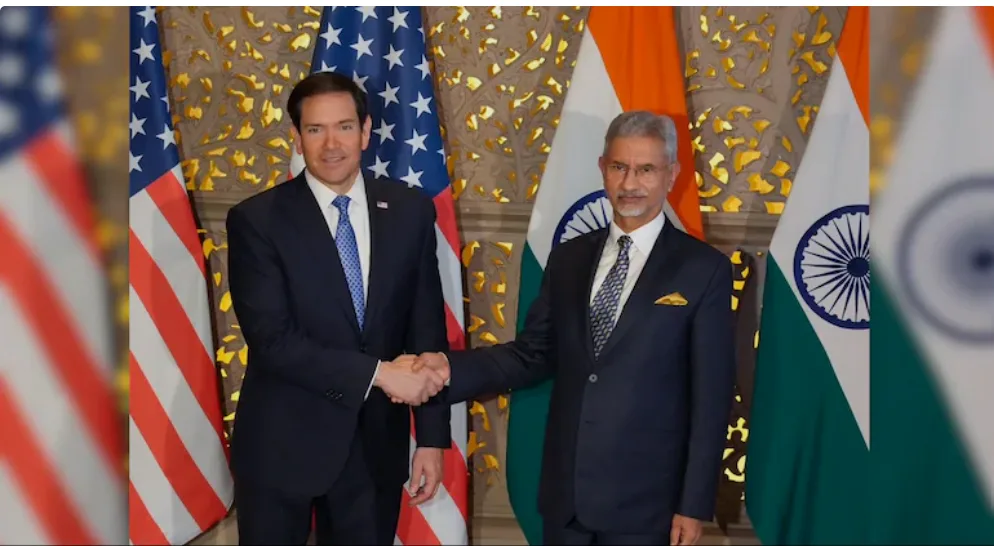
Marco Rubio says India and US share extraordinary alignment on key issues
US Secretary of State Marco Rubio said India and the United States share an extraordinary alignment on core issues, even though disagreements between the two countries may arise.

Punjab strike hits public services as 3 lakh employees and roadways workers protest

Two election commissioners complained against senior poll officer, RTI reveals

Om Prakash Mathur sworn in as Keralam Governor

PM Modi to inaugurate Rs 169-crore RBI data centre in Odisha on October 25

Delhi High Court rejects Neha Bora’s plea against peace bond notice

MEA responds after ITBP chief flags ongoing face-offs with China in Arunachal
Delhi High Court rejects Neha Bora’s plea against peace bond notice
PM Modi to inaugurate Rs 169-crore RBI data centre in Odisha on October 25
Om Prakash Mathur sworn in as Keralam Governor
Two election commissioners complained against senior poll officer, RTI reveals

Afghan Men Try To Hang With The Jet Engine Of The Aircraft in Kabul- Afghanistan News – Kabul News
Trending Top 10 News: 10000 Crore Fine on Flipkart, Apple to Launch Unique Feature, Hdfc Bank Job Ad

Trending Top 10 News: Nokia 6310, Apple sales, Bachpan ka Pyar Video Kid, Dainik Bhaskar IT Raid

Trending Top 10 News: Canada bans Indian flights, Rain in Delhi NCR, AIMIM Twitter hacked, Raj Kundra case

Trending Top 10 News: Shein India, Apple New Service, Pocket Oxygen, Oppo Launched New Phone
-
 India News15 hours ago
Punjab strike hits public services as 3 lakh employees and roadways workers protest
-
 India News15 hours ago
Two election commissioners complained against senior poll officer, RTI reveals
-
 India News4 hours ago
Om Prakash Mathur sworn in as Keralam Governor
-
 India News4 hours ago
PM Modi to inaugurate Rs 169-crore RBI data centre in Odisha on October 25
-
 India News3 hours ago
Delhi High Court rejects Neha Bora’s plea against peace bond notice
-
 India News2 hours ago
MEA responds after ITBP chief flags ongoing face-offs with China in Arunachal
