
Latest world news
China protest against US Warship sailing in South Sea


China has voiced strong dissatisfaction and firm opposition to two U.S. warships trespassing into China’s territorial waters off the Xisha Islands on Sunday. The US has sailed two warships past a handful of “disputed islands” in the South China sea for the first time.
CNN quoting US official reports that the guided missile destroyer USS Higgins and the cruiser USS Antietam sailed with 12 miles of four of the Paracel islands in its, what the US Navy calls a “freedom of navigation operation” meant to enforce the right of free passage in international waters.
China’s official Xinhua news agency, quoting foreign ministry spokesperson Lu Kang’s statement released on Sunday night, reports that the “U.S. warships trespassed into China’s territorial waters off the Xisha Islands” on Sunday without permission of the Chinese government. The official claimed that the Chinese navy identified the U.S. warships, warned and expelled them.
 Beijing claimed that the Xisha Islands are China‘s inherent territory in accordance with the Chinese law on the territorial sea and the contiguous zone. It said that Chinese government had promulgated the baseline of the territorial sea off the Xisha Islands in 1996.
Lu clarified that the relevant Chinese law has explicit provisions on foreign military vessels’ entry into the territorial sea of China.
Chinese foreign ministry spokesman further said, “The Chinese side strongly urges the U.S. side to immediately stop such kind of provocative operations that violate China’s sovereignty and threaten China’s security,” noting that the Chinese side will continue to “take all necessary measures to defend national sovereignty and security”.
Read More: Trade war erupts; China slaps heavy duty on US products
According to Chinese official media, the U.S. side once again sent warships to trespass into China’s territorial waters off the Xisha Islands, violating the Chinese and relevant international laws, seriously infringed upon China’s sovereignty, disrupted peace, security and good order of the relevant waters.
CNN quoted Ian Storey, fellow at the Singapore based Southeast Asian Studies (ISEAS) Yusof Ishak Institute, saying that it was the first time under the Obama and Trump administrations that more than one US ship had been involved in such an operation.
He said, “It appears that the US it pursuing a harder line against China in the South China Sea … Of course whether these will actually have any impact on China’s behavior is unclear.”
Read More: China, Russia criticise US for Cold War mentality and Imperialism
One of the islands involved in the US “freedom of navigation operation” (FONOP) was Woody Island, believed to have been used for military drills that involved Chinese nuclear-capable bombers earlier this month.
China’s defense ministry has also accused Washington of encroaching on Beijing’s territory by sailing past the islands.










Latest world news
Magnitude 7 earthquake strikes Tibet after floods
A magnitude 7 earthquake struck northern Tibet on Thursday, October 22. The tremor came weeks after deadly flash floods and landslides hit the mountainous region near the Nepal-China border. Initial reports did not confirm casualties or damage from the earthquake.


Latest world news
Macron rejects Trump’s immigration claims over France riots
French President Emmanuel Macron criticised Donald Trump and other foreign leaders over their comments on France’s recent unrest. Macron rejected claims that the country was being overrun by migrants and Islamists, calling such assertions false.

Latest world news
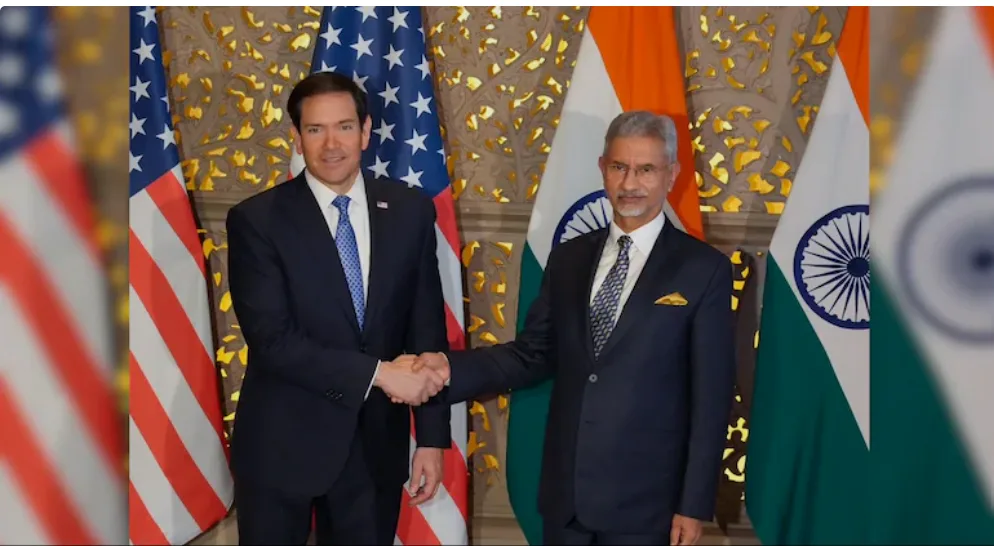
Marco Rubio says India and US share extraordinary alignment on key issues
US Secretary of State Marco Rubio said India and the United States share an extraordinary alignment on core issues, even though disagreements between the two countries may arise.

Punjab strike hits public services as 3 lakh employees and roadways workers protest

Two election commissioners complained against senior poll officer, RTI reveals

Om Prakash Mathur sworn in as Keralam Governor

PM Modi to inaugurate Rs 169-crore RBI data centre in Odisha on October 25

Delhi High Court rejects Neha Bora’s plea against peace bond notice

MEA responds after ITBP chief flags ongoing face-offs with China in Arunachal
Delhi High Court rejects Neha Bora’s plea against peace bond notice
PM Modi to inaugurate Rs 169-crore RBI data centre in Odisha on October 25
Om Prakash Mathur sworn in as Keralam Governor
Two election commissioners complained against senior poll officer, RTI reveals

Afghan Men Try To Hang With The Jet Engine Of The Aircraft in Kabul- Afghanistan News – Kabul News
Trending Top 10 News: 10000 Crore Fine on Flipkart, Apple to Launch Unique Feature, Hdfc Bank Job Ad

Trending Top 10 News: Nokia 6310, Apple sales, Bachpan ka Pyar Video Kid, Dainik Bhaskar IT Raid

Trending Top 10 News: Canada bans Indian flights, Rain in Delhi NCR, AIMIM Twitter hacked, Raj Kundra case

Trending Top 10 News: Shein India, Apple New Service, Pocket Oxygen, Oppo Launched New Phone
-
 India News14 hours ago
Punjab strike hits public services as 3 lakh employees and roadways workers protest
-
 India News14 hours ago
Two election commissioners complained against senior poll officer, RTI reveals
-
 India News3 hours ago
Om Prakash Mathur sworn in as Keralam Governor
-
 India News3 hours ago
PM Modi to inaugurate Rs 169-crore RBI data centre in Odisha on October 25
-
 India News2 hours ago
Delhi High Court rejects Neha Bora’s plea against peace bond notice
-
 India News1 hour ago
MEA responds after ITBP chief flags ongoing face-offs with China in Arunachal
